Category Archives: Healthy Aging

Unhappy nurses leaving nursing profession in mass

Unhappy nurses

Unhappy nurses leaving nursing profession in mass because of very many reasons including poor management

Unhappy nurses leaving nursing profession in mass

It is amazing that at a time when the job market is saturated with unemployment so many nurses are quitting their jobs in numbers. Statistics has it that very many unhappy nurses leaving nursing profession today than ever before. The question that then follows is why? To address this we spoke to the experts at AWAREmed Health and Wellness Resource Center under the able leadership of doctor Dalal Akoury. It is a fact that many nurses are leaving their professions for others and this is worrying she says. In her many decades of experience working with nurses, doctor Akoury has sighted the following as some of the reasons why nurses are unhappy:

  • Poor management
  • Lack of upward mobility
  • Underpayment
  • Too many tasks
  • Under staffing

To better understand why unhappy nurses leaving nursing profession in mass, we are going to discuss each of the reasons in a five part series elaborately in the next five blogs. This is one honest engagement you do not want to miss out on and so we want to invite you to keep on the link to learn with us and where possible find solutions together.

Poor management

Poor management has been sighted as one of the major reasons why unhappy nurses are leaving the profession. Nurses and in particular the bedside nurses feels that they are not getting the support they need from their counterparts in the management levels. The list of complain is long but for a quick preview the following are some of the concerns:

  • Poor communication between the two levels with no value attached to the feedback from staff
  • In equality and favoritism among staff and particular shift. The night shift nurses feels left out by the management.
  • Lack of support this is the common denominator to all nurses. All unhappy nurses are of the opinion that as their colleagues get promotion to the managerial positions, they often forget where they have come from and the daily struggles the bedside nurses go through.

Under poor management a lot could come out. Like in most cases luck of support to the bedside nurses comes because the managers are so much consumed into their job that they are often unaware of the stressors their staff go through. Negligence is also another reason, once promoted you feel comfortable and just don’t care to attend to the needs of your staff.

Night shift

Many unhappy nurses are frustrated because of luck of consideration to those working in the night shift. The feeling is that they are completely ignored by the management and this is one major reason for the discomfort and eventual exodus to the profession. These sentiments are not just coming from the night shift nurses, but it cuts across the board. There is the general feeling that the management doesn’t value their contribution as part of the health care team. This feeling is killing the profession and the rate of unhappy nurses leaving needs to be re-look into with a view of making corrections.

A diplomatic leadership approach needs to be adopted where managers engages with their staff and listen to their opinions and inputs. Diplomacy enables each voice to be listen to and appreciated. It also encourages active participation among employees and dissipate some of the negative feelings some nurses feel towards their management team, if a system of inclusion can be adopted, we can avoid mass exodus and any unhappy nurse will be comfortable that his/her problem will be addressed.

Unhappy nurses leaving nursing profession in mass

http://regenerativepotential.com/integrativeaddictioninstitute


Facebooktwitterpinterestlinkedin

Substance abuse pregnancy complications

Substance abuse pregnancy complications

Substance abuse pregnancy complications are a serious threat to both the mother and the unborn child.

Substance abuse pregnancy complications

Are you suffering from your parents past mistakes? Parents often make certain mistakes whose consequences flows down to their next generation. A lot of health issues we are faced with today are closely associated with substance abuse pregnancy complications. First I salute mothers across the globe for their role in child bearing. Second I challenge them, did they do a good job in raising healthy generations? For us to raise up a healthy community, it has to begin with us and our behaviors. Our choices in lifestyle matters most to the health of our children. Therefore when pregnant anything you do afterwards in a way will affect your unborn child.

The consequences of substance abuse pregnancy complications will be manifested by what you consume. It is therefore important that you consider carefully what you allow into your body system. Substance addiction is very cruel not just for you as a mother, but also to the child you are carrying. This is because anything you get it including the air you breathe has an impact to your unborn child. Like for instance, if you are smoking or using alcohol and other illicit drugs, you’re in essence introducing your baby to the same. Doctor Akoury while acknowledges that these substances are addictive, professionally you must have just to stop for your safety and that of your baby.

In appreciation of the struggle of mothers and all other users of drugs, the pain and suffering they face alongside their loved ones. Doctor Dalal Akoury made a decision to establish a medical center (AWAREmed Health and Wellness Resource Center) whose main objective is to transform each individual’s life through increasing awareness about health and wellness and by empowering individuals to find their own inner healing power. Pregnant mothers can take advantage of this act of kindness by consulting with doctor Akoury today so that we can redeem and save lives both today and for the future.

It will father interest you to note that when it comes to substance abuse pregnancy complications, Dr. Akoury’s practice focuses on personalized medicine through healthy lifestyle choices that deal with primary prevention and underlying causes instead of patching up symptoms. Your addiction problem will be safe with doctor Akoury. All you need to do on your part is to call AWAREmed Health and Wellness Resource Center today on telephone number 843 213 1480. Your health and that of your unborn child is our responsibility and we will help you recover from your addiction professionally. Call us today and be counted as one of the hero’s and champions of addiction eradication out of our boarders. It start with you. So never be afraid of what others will say or to. It is your life and your children we are talking about. The time for action is today and now.

Substance abuse pregnancy complications

http://www.awaremednetwork.com/

Facebooktwitterpinterestlinkedin
women-sexual

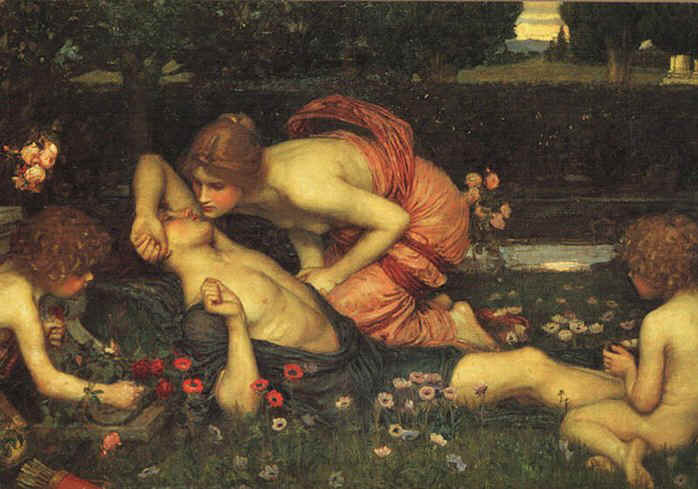
Women’s Sexuality In The 19th Century

The Great Awakening encouraged a commitment to a new standard of morality. Women’s Sexuality in the 19th Century: The concept of Homosexuality as a sexual orientation appeared in America during the late 1800’s.

Women sexual revolutionConsidering both physical and psychological wellbeing, Masculine anxieties in the 19th century are repeatedly seen to be focusing on the purportedly malevolent impacts of masturbation, which was apparently there as one of a broad range of physical and psychological ailments, and on venereal illnesses, specifically syphilis. This carries us precisely into the topic of nineteenth century sexuality, which has been an ongoing subject of arguments and captivation.


When most people of this age were questioned, their responses suggested that they were both plainly ignorant and emotionally aloof when it came to sexual issues. But soon enough another side of these people was revealed, a hypocritical one, in the shape of a secret world where prostitution and pornography were very common. This social contrast was highlighted in a number of societies and the argument mainly presented was that sex was not something to be treated as a taboo but the exact opposite of it. People highlighting these ‘dark sides’ of their societies argued that this matter must be discussed obsessively on every forum and regulation would be far more fruitful for the society rather than suppression of the issue. One can argue that these were the reason why the subjects like art and medicine of that era were so influenced by sexuality.

Sexuality in that era was also highly gender biased. At that time, it was a common misconception that females don’t really like the ‘taste’ of sex, i.e. they merely did it to satisfy their partners and if it was up to them, women might not even want to do it. Lately, however, this misconception was cleared by scientific research as well as the involvement of more and more married women being involved in extra-marital affairs. It was also revealed by later studies that many couples actually did enjoy mutual pleasure as it is common nowadays. And thus the 19th century moralism, which was tantamount to slogans like “men are polygamous, women are monogamous’ with the added detail that majority of women don’t even have sexual urges as compared to males, was thrown in the trash can through social and biological ideas based on scientific investigation.

On one hand where women were being oppressed is the name of morality, these ‘moralists’ also proposed and, to some level, also imposed a socio-medical binding on the males grounded on male self-control to encourage the middleclass standards of familial life. These initiatives were taken to control males’ chronic desires, and also in regard of ancient predictions that population upsurge would inescapably exceed the planet’s food supplies. For similar motives, ‘irregular sexual activity’ was also slammed. There is sufficient proof that numerous working-class people were expected to be married or at least married once a pregnancy has happened. The proportion of illegal deliveries was comparatively small.

Prostitution, on the other hand, continued to be the most upsetting issue. Moral alarm were buzzing at full intensity in the mid-19th century as urban population was on the rise which consequently increased ‘flesh selling’ on the streets, theatres and public parks. To some extent it gave women the visible female freedom that they were wanting from the controlled society. From their point of view, women were subject to male dominance in roles of daughters, workers or domestic help. However, as prostitutes, they at least possessed personal and financial liberty. To curb this thinking, a ‘Contagious Diseases Acts’ was formalized which made a binding on female prostitutes to be medically examined for venereal disease from time to time. Those found positive were to be detained.  The enforcement of this act gave rise to one of the most triumphant and distinguishing sexual restructuring campaigns of that epoch.

Feminists however still insisted and focused on both physical and mental sexual liberation for women. The quest for sexual satisfaction for women was the main philosophy which consequently set the groundwork for female autonomy.

How couples behave in private is no doubt hard to evaluate, but there has been evidence that partners who did not enforce intercourse were appreciated. This behavior is also evident by the indicator that 19th century families of eight to ten people were disappearing by the start of twentieth century. Couples during the last three decades were opting to plan and restrict their family size regardless of which social class they belonged to. Family size restrictions were escorted by hurdles for growing viewpoints to sexual relations from the modern woman and her male benefactors.

In a period where heterosexuality was not allowed to be discussed despite being considered both normal and natural, one can imagine how homosexuality would have been dealt with. But even with all the opposition during that era, homosexuality still increased, mainly in men (the literati kind to specific). While homosexuality was frowned upon in public, acts of this specific ‘indecency’ were not openly and harshly legislated by the last decade of nineteenth century. As a result of this law, gay sex was declared a disgraceful crime even in private. This new law even led to the infamous incarceration of Oscar Wilde in the year 1896. If we talk about females, the most famous association during that time was that of Anne Lister in west Yorkshire and her lesbian lover. The relationship, as described, is filled with sensuality and passion. Another affair in the same era that gained a lot of attention was that of Charlotte Cushman (an American actress) and her European lover Rosa Bonheur (a painter). The couple was famous for their outright boyish freedom and appearance.

In the end we can safely conclude that in the domains of gender, medication and sexuality, the 19th century people rarely conformed to their stereotypes. Unlike in other fields that involved complex ideas and experimentation, it took them much longer to realize that the basic human right to what a person does in their own time and space cannot be curbed. Unless someone is getting hurt, a human being is entitled to have and promote his opinions, live up to his own preferences and be what or whoever he wants to be.

Facebooktwitterpinterestlinkedin
female sex addiction2

Simultaneous treatment of sex and drug addiction

Simultaneous treatment of sexual addiction and drug abuse: Multiple addictions solutions

Simultaneous treatment

Simultaneous treatment of sexual addiction and drug abuse is very fundamental if recovery is to be meaningful and sustainable.

The trend with which addiction is changing is one that needs all the stake holders to join hand together and fight the problem from one common front. For a very long time all we have known is the monolistic addiction where one could be seen to be struggling with only one kind of substance say being an alcoholic. Things are now changing and multiple addictions are becoming the order of the day. This has necessitated experts including those from AWAREmed Health and Wellness Resource Center under the leadership of doctor Dalal Akoury to think outside the box on the best treatment approach. In most cases multiple kind of addiction will involve substance abuse and sexual addiction. Therefore experts are now applying the simultaneous treatment where a number of addiction are treated all at the same time a patient enroll in addiction medical facility for treatment.

Looking at addiction critically, we have actually been brought up in the full knowledge that drugs whether illicit or prescription drugs are actually all candidates for abuse and because of this upbringing many people wallowing in that school of thought. The question that follows next is that really the true position of the understanding of what addiction is all about? Let’s get some expert opinion from AWAREmed Health and Wellness Resource Center. From the discussion with the experts from this facility, it is very obvious that there are different kinds of addictions. That is to say that one could be addicted to drugs and alcohol, or to certain behaviors (e.g. sex) or even both. And just for clarity it is important to note that behavioral addiction may be so many and that may include addiction to sexual activities, gaming from the computer devices, gambling and many others. We are therefore at risk of either becoming victims of either of them or even both and that is when simultaneous treatment becomes relevant. Simultaneous treatment is very important in the sense that while on the surface, different addictions seem to be associated with their own unique set of behaviors they are often fueled by the same underlying feelings of guilt, shame, avoidance and trauma. Addictions interact within the individual making it difficult to tease them apart.

Simultaneous treatment of sexual addiction and drug abuse: The trends of problematic substances

When examining the trends of problematic substance use in individuals seeking help for a sexual addiction, it becomes clear that the two are indistinctly linked together. The available statistics also indicate that majority of people who are struggling with sexual addiction also meet the criteria for alcohol or drug addiction. Studies have also established that many individuals who are struggling with sexual addiction problems have actually admitted to using substances mostly to help them in dealing with, or escaping from, the pain that is caused by their sexual behavior. Besides that it is also very common that many people are currently using substances to get over their inhibitions in order to engage in sexual behaviors that might be uncharacteristic for them if they were not drunk or high. This further explains the significance of multi addiction and the need for simultaneous treatment.

We must therefore seek for information by way of investigating how multiple addictions can feed into one another. This is very important because it is possible that individuals may use one of their addictions to mask or dismiss the other addiction and this could be influenced by various reasons including fear and shames especially those elements that are considered shameful addiction. Like for instance, an individual may deny having a problem with sexual addiction and insist completely that their problematic sexual behavior is only caused by intoxication. However, the truth of the matter in this case may be that the drugs or alcohol are merely concealing the pain and shameful acts that are associated with the sexual addiction thereby helping the person to be spared from the emotional consequences of his or her actions. By the same token, both addictions may work on intensifying one another in such a way that the person only engages in their sexual addiction under the influence of alcohol or drugs. These rituals then serve to protect the addiction and ensure that patterns of use are stable and predictable and this can be very dangerous if not dealt with expeditiously.

A major concern with treatment of substance use disorder alone is that any untreated sexual addiction often precipitates a relapse of substance use. Dealing with one addiction while ignoring the other may end up intensifying the problem that has not been addressed. A good example would be when a person in early recovery from a substance addiction turns to sexual performance enhancers in order to continue the ritualized sexual behavior that was previously enhanced by the substance use. This sexual behavior can continue to be problematic for the individual. The individual may continue to feel a sense of shame and pain. Therefore recovery is about addressing the entire addictive process, not just those associated with a particular substance or behavior. The addictive process, whether it be related to sexual behavior or substances is often characterized by a pattern of secrecy, cognitive distortions and rituals. Therefore recovery from addiction regardless of type, would involve embracing and attempting to live a life of honesty, authenticity and emotional growth.

Fortunately, many underlying similarities between multiple addictions mean that the underlying framework for concurrent treatment is quite effective. According to a recent study conducted at Bellwood Health Services confirms that individuals with a comorbid sexual addiction and substance use disorder attending the same treatment centre as those with only sexual addiction, have comparable treatment outcomes at six months follow-up. Both groups demonstrated substantial improvement not only on measures of substance use and sexual impulse control but also on self-reported measures of well-being and quality of life.

Simultaneous treatment of sexual addiction and drug abuse: Replacing the maladaptive coping strategies

Finally, looking at some of the past psychological trauma, sexual abuse, abandonment and neglect, doctor Akoury reiterates that these are some of the very important issues that need to be addressed in treatment. Therefore any recovering addict must commit to learning on how to identify the signs of being actively involved in the addictive process and work hard primarily at replacing all the maladaptive coping strategies with positive and affirming ones. Moreover the individual addict needs to be empowered and be given the necessary tools to be able to function effectively in their environment and successfully meet all life’s challenges without turning to substance use or problematic sexual behavior. We know that this can be very difficult to some of you and if you’re that person, then you need not to give up because there is help on the way upon calling doctor Dalal Akoury today to schedule for a one on one meeting with her and your life will never be the same again thereafter.

Simultaneous treatment of sexual addiction and drug abuse: Multiple addictions solutions

http://regenerativepotential.com/integrativeaddictionconference/

Facebooktwitterpinterestlinkedin
Drug Addiction recovery

Alternative addiction treatment the better option

Alternative addiction treatment the better option: Being consistent on the recovery path

Alternative addiction treatment

Alternative addiction treatment is offering great hope for all kinds of addiction recovery

The problems relating to drug addiction are not new to us in this twenty first century and even though a lot is being done to contain the a lot more still needs to be done. One of the treatment options that is becoming popular is the alternative addiction treatment practices which many health workers are in cooperating in the addiction treatment. And to help us understand this treatment option, we are going to be speaking to doctor Dalal Akoury MD, President and founder of AWAREmed Health and Wellness Resource Center for more clarity about alternative addiction treatment. This is a conversation you don’t want to miss and we want to encourage you to keep on the link and together let us learn from the experts on some of the reasons why alternative addiction treatment is becoming popular with many people across the globe.

Alternative addiction treatment the better option: The revelation of drug addiction

There are a number of reasons why people often choose alternative treatment. Some of those reasons may include the following options:

One of the most common reasons for why people choose alternative treatment options is because there is the feeling that the available medical treatments are not meeting their needs. In the event that the scientific medications fail to work then naturally people will be tempted to look elsewhere for solutions.

Due to the fewer number of clients that alternative therapists attend to, it is believed that they offer more personalized care. This may be because physicians are overworked or in some cases they will treat patients like puzzles instead of people.

It is believed that alternative medication has little or no side effects further crediting their use by many people to be fewer side effects associated with many alternatives.

Many times physicians have recommended alternative medicine for their patients, this communicate strongly that if they believe it will complement the current treatment or if they feel unable to find an appropriate treatment within western medicine then alternative medicine is the way to go.

People can follow a spiritual path where there is a belief in healing energies that have not yet been discovered by science. Those individuals who believe in healing energies will want to benefit from them.

People come from different cultural backgrounds where they have their own way of doing things including treatment. It therefore means that some people may be comfortable with their approaches to treatment and not be keen on the main stream medications like for example, traditional Chinese medicine or Ayurveda medicine from India.

There are some theories that claim that standard western only treats the disease but alternative medicine treats the whole person. It is suggested that a more holistic approach really gets to the root of problems it does more than just treat the symptoms.

There is a common perception in the public that alternative treatments are more natural, and that natural means they are better and safer free from chemicals.

Those individuals who have had success with alternative treatments can convince family and friends to consider these options. A common reason for why people first experiment with complimentary is due to a recommendation for a friend.

Alternative addiction treatment the better option: Samples of alternative treatment for addiction

There are many alternative addiction treatments available including:

Some individuals do seem to be able to recover from an addiction by purely relying on their own inner resources; this could be described as true natural recovery. This is not an option for everyone, and most people who seek treatment will already have tried and failed many times to quit by themselves.

There are a number of herbal remedies that may be of value to those who are trying to escape addiction. An example of this would be passion flower which is said to help with the mental aspects of addiction withdrawal.

There are many addicts who claim to have benefited from reiki, acupuncture, and other energy treatments. These techniques tend to enhance and not replace traditional treatments.

There is growing evidence that practices such as mindfulness meditation and yoga can be of great value to people in recovery. These continue to be considered alternative treatments by many in the establishment, but this is likely to change in the future under the weight of evidence that supports them.

Alternative addiction treatment the better option: Hitches related to alternative addiction treatment

In everything that people do there will always be the merits and demerits and so even with alternative addiction treatment there will be a number of problems some of which may include the following:

If these treatments had sufficient evidence to support them they would not be considered alternatives. This of course does not mean that such evidence will not appear in the future a common problem with complementary therapies is that they have not been adequately researched on.

Meditation techniques can be highly effective for people in recovery, but it is also possible to overdo it. In rare instances people have developed meditation-related psychosis as a result of their practice.

Some alternative therapists make claims for their methods that are exaggerated. This may be because they actually believe such claims or because they are out to make money and they have no scruples about this.

Some alternative treatments could prove to be dangerous. This is particularly likely to happen when untrained individuals begin offering medical advice like for instance they may tell their clients to stop taking medications prescribed by their physician which is very wrong.

There are undoubtedly people out there who are willing to scam those who looking for help for their addiction. Almost anyone can claim a new addiction wonder cure and try to sell this to other people – those who are cunning enough will be able to do this and remain within the law.

There can be unpleasant side effects associated with most of the herbal remedies. It is not recommended that people begin taking any of these natural medicines without first consulting their physician this is particularly important for those who are already taking prescribed medications because there will be the risk of negative interactions.

Finally things could be worse for some addicts particularly those who only have one more chance at recovery. Doctor Akoury says that if such people make what they call their final attempt using alternative medication and this fails to work, they are likely to give up on ever recovering from their addiction. It would be advisable that patients consult widely before taking any action. If you are worried on where to start from, then look no further and schedule for an appointment with doctor Dalal Akoury today for a more professional approach on your struggle with an addiction.

Alternative addiction treatment the better option: Helping addicts to remain focus in recovery process

http://regenerativepotential.com/integrativeaddictionconference/


Facebooktwitterpinterestlinkedin