Category Archives: Dr. Dalal Akoury

The long and short term effects of cocaine

The long and short term effects of cocaine: The chronic nature of Cancer
The long and short term effects of cocaine

The long and short term effects of cocaine are all manageable is only preventive measures can be taken

There is no doubt that cocaine is very addictive substance. Its power of addictiveness makes it to be very unpredictable and thus users may not be able to tell or control the extent to which they will continue to want or use the drug. Doctor Akoury says that with these characteristics, if one is to become addicted, the risk for relapse will be very high even after long periods of abstinence. Some studies have established that during periods of abstinence, the memory of the cocaine experience or exposure to cues associated with drug use can trigger tremendous craving and relapse to drug use. It is this craving element that will necessitate the long and short term effects of cocaine which is going to form the basis of this discussion.

Cocaine causes a short-lived, intense high that is immediately followed by the opposite intense depression, edginess and a craving for more of the drug. Users of cocaine often don’t eat or sleep properly. They can experience greatly increased heart rate, muscle spasms and convulsions. The drug can make them feel paranoid, angry, hostile and anxious even when they are just sober and not high. Doctor Akoury says that irrespective of the quantity of drugs used or frequency with which it is used, cocaine increases the vulnerability of addicts into contracting chronic diseases like heart attack, stroke, seizure or respiratory (breathing) failure. These conditions can be life threatening and any of them can result in sudden death.

The long and short term effects of cocaine: What are the long term effects of cocaine?

The phrase “dope fiend” was originally coined many years ago to describe the negative side effects of constant cocaine use. As tolerance to the drug increases, it becomes necessary to take greater and greater quantities to get the same high. Prolonged daily use causes sleep deprivation and loss of appetite. A person can become psychotic and begin to experience hallucinations. And because cocaine interferes with the way the brain processes chemicals, users will in many instances need more and more of the drug just to feel “normal.” People who become addicted to cocaine and even addicts of other drugs may lose interest in other areas of life. Doctor Akoury says that coming down from the drug causes severe depression that an addict will do all that it takes to get the supply even if it would mean that he has to commit murder. In the event that the individual fails to get the drug (cocaine) he or she will suffer even greater depression that can be so much intense that can push them beyond the limit and even turn suicidal. That is the power of cocaine and the reason why we all need to know the long and short term effects of cocaine. This way we will be able to take timely precaution and remedy the situation before it stretches beyond the redeemable levels. Now let us consider some of the long term effect which is associated with cocaine abuse.

The long and short term effects of cocaine: Long term effects

When people abuse cocaine over a period of time, a lot of things can happen in the lives of such individuals. Some of those health implications may include the following:

  • Permanent damage to blood vessels of the heart and the brain
  • High blood pressure that will occasionally leads to other chronic health conditions including heart attacks, strokes and even death
  • The damage of vital organs like the liver, kidney and the lungs
  • Damages of the nose tissues especially when sneezing
  • Respiratory failure if smoked
  • Infectious diseases and abscesses if injected
  • Malnutrition, weight loss
  • Severe tooth decay
  • Auditory and tactile hallucinations
  • Sexual problems, reproductive damage and infertility which will affect both men and women in the same way
  • Disorientation, apathy, confused exhaustion
  • Irritability and mood disturbances
  • Increased frequency of risky behavior
  • Delirium or psychosis
  • Severe depression
  • Tolerance and addiction (even after just one use)

The point we have highlighted may not be conclusive as far as the long term effects is concern. It would be better if you are up to date will all health information surrounding this substance abuse. Such information in their conclusiveness is available at AWAREmed Health and Wellness Resource Center. This is a facility with was founded by doctor Dalal Akoury primarily to offer her exclusive NER Recovery Treatment to everyone including other physicians and health care professionals through training, clinical apprenticeships, webinars and seminars. It may not matter what kind of addiction you are struggling with, there is hope for you with the experts at this facility. All you need to do is to seek for help by scheduling for an appointment with doctor Dalal Akoury any your condition will be professionally addressed timely leaving you to enjoy life to the fullest. In spite of the long term effects of cocaine abuse, there are also other factors which may not necessarily be of long term but of short term. They may include the following:

The long and short term effects of cocaine: Short term effects

  • Loss of appetite causing the addict not to feed properly
  • Intense drug craving
  • Bizarre, erratic, sometimes violent behavior
  • Convulsions, seizures and sudden death from high doses (even one time)
  • Tactile hallucination that creates the illusion of bugs burrowing under the skin
  • Increased heart rate, blood pressure, body temperature
  • Contracted blood vessels
  • Dilated pupils
  • Disturbed sleep patterns
  • Nausea
  • Hyper-stimulation
  • Intense euphoria
  • Depression
  • Panic and psychosis
  • Increased rate of breathing
  • Hallucinations, hyper-excitability, irritability
  • Anxiety and paranoia

Finally it is not just enough to know the long and short term effects of cocaine but it is equally very important that you learn from the past people who had gone through the same experience. And I want to conclude this discussion with a testimony from one former addict who is now sober and he says “don’t touch cocaine. I had to spend four years behind bars just because of this drug (cocaine). And when I got out he continues, life was so hard and unbearable. I started taking the drug again. In this drug business, I have known 10 girls who were full of life but who became prostitutes because of cocaine. It’s much more extreme and degrading than we believe. At the time we don’t realize to what degree it destroys us he concludes.” Choose life and seek for help doctor Akoury will be waiting for your call.

The long and short term effects of cocaine: The chronic nature of Cancer


Facebooktwitterpinterestlinkedin

The inversion of Cocaine in your brain

The inversion of Cocaine in your brain: Effects of Cocaine in the Nerve system

The inversion of Cocaine in your brain

The inversion of Cocaine in your brain. Cocaine has an extremely rapid euphoric effect on the user, especially when smoked or snorted.

Cocaine is very addictive and a psychoactive drug affecting the central nervous system primarily. Originally it is prepared from the leaf of the Erythroxylon coca bush, which grows mainly in Peru and Bolivia. The simplicity of its usage has made the inversion of cocaine in your brain more chronic and threatening. As a matter of facts this drug is self-administered in several ways explains doctor Dalal Akoury. The most common method of cocaine abuse is snorting in its powder form into the nasal sinuses, either alone or with the accompaniment of heroin (speedball). This drug is easily available in the streets as a hydrochloride salt which is a fine, white crystalline powder known in several street manes as coke, C, snow, flake, or blow. Besides snorting, the drug can also be administered through smoking which for many is effective in producing quick result as crack cocaine.

According to the experts at AWAREmed Health and Wellness Resource Center, cocaine produces a wide range of physiological effects in humans, including the stimulation of a plethora of emotional experiences. When people take in cocaine, they become euphoric, over exited, highly active and more talkative than normal. When they use this drug, they experience the feelings of extreme power and alertness. This initial high is followed by sessions of severe anxiety, paranoia, and depression, which often lead to addiction. Those who become addicted to the drug often turn the habit into an obsession, so that they devote more, and more of their time and money to acquiring and using the drug explains doctor Akoury. Therefore what are some of the notable symptoms of addiction for users?

The inversion of Cocaine in your brain: Symptoms of addiction

People who abuse these drugs regularly often exhibit psychotic behavior such as:

  • Hallucinations
  • Delusions of persecution
  • Mood disturbances
  • Repetitive behaviors

All these closely resemble the symptoms of paranoid schizophrenia. Trained mental health professionals have difficulties in telling a schizophrenic and cocaine addict apart unless they know the patient’s background. Although the psychological and behavioral effects of cocaine use in humans have been well documented, the current knowledge of the neurological basis for the abuse of cocaine in humans is still limited. The majority of knowledge we possess about the mechanisms of the effects of cocaine comes from animal studies performed over the last 20 years. These studies have clearly demonstrated the crucial role of the neurotransmitter dopamine in initiating many of the effects of cocaine use.

The inversion of Cocaine in your brain: Effects on the brain

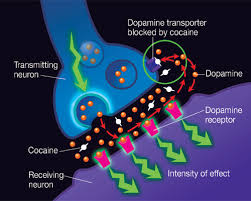
Cocaine is an indirect dopamine agonist. Once in the brain, it works in large part by occupying, or blocking, dopamine transporter sites in the terminal buttons of neurons in the brain. This prevents the reuptake of dopamine by the neurons that release it, allowing higher concentrations of dopamine to remain in the synapse for an extended period of time. This abnormally long presence, and high concentration, of dopamine in the synapse is believed to cause the high associated with cocaine use. Dopamine has been implicated in several important functions, including movement, attention, learning, and the reinforcing effects of drug use. Therefore, its extended presence in high concentrations will be effective in the particular parts of the brain that control these functions, such as the basal ganglia and the limbic system.

The inversion of Cocaine in your brain: Cocaine and the dopamine transporter

Studies have confirmed that the reinforcing effects of cocaine involve dopamine transporter molecules. In a dopamine study, a group of scientists produced a targeted mutation of the gene responsible for production of the dopamine transporter protein in mice. In their findings, it was established that several compensatory mechanisms in an animal’s brain help it to adapt to the chronically higher level of dopamine resulting from their mutation induced reuptake inability. One of these mechanisms is a large decrease in post-synaptic dopamine receptors, rendering dopamine less effective. Another strategy is a corresponding decrease in the concentration of tyrosine hydroxylase (enzyme responsible for the synthesis of dopamine), decreasing the availability of dopamine. So, when cocaine was administered to these animals, it had no effect on the animal’s behavior since dopamine reuptake no longer occurred due to lack of functional dopamine transporters. This therefore is a demonstration that the dopamine transporter is essential for cocaine to be able to produce its effects.

The inversion of Cocaine in your brain: A quick fix

Cocaine has an extremely rapid euphoric effect on the user, especially in the case of the smoking method of use, because the drug directly enters the pulmonary blood stream when smoked. Cocaine has a relatively short half-life in the plasma and in the brain. When administered intravenously (IV) to humans, the half-life is in the range of 16 to 87 minutes. This short half-life accounts for the rapid euphoric effects of the drug. Typically, when the drug is administered intravenously, it produces a fast “hit-and-run” effect on the potentiation of the extracellular levels of dopamine. Nonetheless when rats are given a continuous flow of dopamine intravenously, they experience a peak in dopamine levels in just 10 minutes followed by a return to regular levels after 20 to 30 minutes. Because the initial high experienced by cocaine abusers lasts for only a short time, the initial stimulatory actions of cocaine can be attributed to the elevation of synaptic dopamine levels.

Finally the use of drugs not necessarily cocaine is not your portion. Nothing actually comes good out of the use or abuse of drugs in whichever way you look at it. Being safe and free from drugs is the best thing you can do for yourself especially if you are already deeply addicted to it. There is help around you and doctor Dalal Akoury made one of the best decisions to give her professional contribution in helping the struggling societies with addiction. She decided to create a medical center whose main objective is to transform each individual’s life through increasing awareness about health and wellness and by empowering individuals to find their own inner healing power. You can also be part of this by scheduling for an appointment with her today and your life will be completely transformed for greater productivity ahead of you. Remember that doctor Akoury’s practice focuses on personalized medicine through healthy lifestyle choices that deal with primary prevention and underlying causes instead of patching up symptoms and this will be very good for you too.

The inversion of Cocaine in your brain: Effects of Cocaine in the Nerve system


Facebooktwitterpinterestlinkedin

How can I help myself cope with cancer

How can I help myself cope with cancer: The Attitude and Beliefs?

How can I help myself cope with cancer

How can I help myself cope with cancer? By practicing moderate exercise and seeking for professional opinion

People value the care they get from their cancer care team, but many also want to take an active role in dealing with their illness. Dr. Dalal Akoury the MD and founder of AWAREmed Health and Wellness Resource Center has been in the medical practice for well over two decades and she is going to help us in putting this question “how can I help myself cope with cancer?” into perspective. She says that for a better understanding of these concerns, it is important to segment the useful ideas on coping with cancer in to two categories. The divisions is based on attitudes and beliefs that clearly are beneficial (and she calls them the Do’s) and those that are harmful (which she referred to as the Don’ts). The following are some of the doable.

How can I help myself cope with cancer: The Doable Attitudes?

Only go for those coping ways that have been helpful for you in the past in solving problems – It is important to note that everyone will only want to associate with those people who will add value to their lives. Therefor be selective and only go for those whom you will feel comfortable sharing and talking with about your illness freely. In the event that you can’t talk to anyone, you could opt for meditation, relaxation or listening to music as alternatives of calming you down. Do what it takes and only apply what has worked for you before and in the unlikely event that nothing works and coping is becoming difficult, then at this point getting professional help becomes necessary.

Deal with cancer “one day at a time – For effective dealing with cancer, it is very important that you keep distance from elements of worries. The business of coping with cancer will be less tasking when broken into smaller units which are manageable. By doing this, you will be able to handle your daily objectives.

Register for support and self-help groups – Only associate with value additions groups and leave any group that makes you feel worse.

Find a doctor who lets you ask all your questions – In the journey of answering this question “how can I help myself cope with cancer?” it will be very important that you in all your association there must be the feelings of mutual respect and trust. Always insist on being a partner in your treatment. Doing this will enable you to be informed of the problems you are likely to face before they come, and addressing them will become even easier.

Explore spiritual and religious beliefs and practices, such as prayer, that may have helped you in the past – If you don’t consider yourself a religious or spiritual person, get support from any belief systems that you value. This may comfort you and even help you find meaning in the experience of your illness.

Keep a personal notebook of your doctors’ numbers, dates of treatments, lab values, x-rays, scans, symptoms, side effects, medicines, and general medical status – Information about the cancer and your treatment is important to have, and no one can keep it better than you.

Keep a journal if you find a need to express yourself without holding back – It can help you process the journey, and you may be amazed by how helpful it can be.

How can I help myself cope with cancer: The Don’ts Elements?

  • Believe the old saying that “cancer equals death – remember that many cancer survivors are healthy today thereby disqualifying this statement.
  • Blame yourself for causing your cancer – There is no scientific proof linking certain personalities, emotional states, or painful life events to getting cancer. Even if you may have raised your cancer risk through smoking or some other habit, it does not help to blame yourself or beat yourself up.
  • Feel guilty if you can’t keep a positive attitude all the time, especially when you don’t feel well – The saying “you have to be positive to beat cancer” is not true. Low periods will come, no matter how great you are at coping. There is no proof that those times have a bad effect on your health or tumor growth. But if they become frequent or severe, getting professional help would be ideal.
  • Suffer in silence – Make cancer a communal problem and refuse to struggle with it alone. Get support from your family, loved ones, friends, doctor, clergy, or those you meet in support groups who understand what you are going through. With these supports, you are certainly going to cope better.
  • Be embarrassed or ashamed to get help from a mental health expert – If it becomes necessary to seek for the services of a mental specialist for conditions like anxiety or depression that disrupts your sleep, eating, ability to concentrate, ability to function normally, or if you feel your distress is getting out of control, don’t feel embarrassed and proceed boldly.
  • Abandon your regular treatment for an alternative therapy – If you use a treatment that your doctor didn’t recommend, use only those that you know do no harm. Find out if the treatment can be safely used along with your regular therapies to improve your quality of life. Psychological, social, and spiritual approaches are helpful and safe, and medical professional across the board are encouraging the use of such treatment modes. As we had mentioned things like relaxation and meditation are good ways to deal with distress.

How can I help myself cope with cancer: Other coping methods: Exercise

Doctor Akoury says that exercise is not only safe for most people during cancer treatment, but it can also help you feel better. Moderate exercise has been shown to help with tiredness, anxiety, muscle strength, and heart and blood vessel fitness. And in fact most people with cancer can do some form of exercise. Like for instance, walking is a good way to get started and a good way to keep moving when you are feeling stressed. Remember that with cancer involve not all cancer patients can be engaged in all types of exercises. Get the opinion of your doctor about your exercise plans before you start. Keep in mind that even though exercise may help lower distress levels in some people, exercise alone is usually not enough to help people with moderate to severe distress. Therefore, for comprehensive health information about our discussion topic “how can I help myself cope with cancer?” schedule for an appointment with doctor Dalal Akoury today and your healthy will never be the same again.

How can I help myself cope with cancer: The Attitude and Beliefs?


Facebooktwitterpinterestlinkedin

The Neurochemistry of Female Sex Addiction

The Neurochemistry of Female Sex Addiction

Female sex addictionSex addiction is a problem that many people are battling with in the US and the world over. However in the past it was thought that men were the main victims of sex addiction but research has since proved that this is a lie as women are more prone to this vice as opposed to women. Another factor that makes women more of victims is the fact that generally society has always associated women who are addicted to sex as sluts while men who are addicted to sex are often thought as studs. The reality of the matter however is, both genders are at a loss when addicted but what makes it easier for men to find help is the fact that they are free and can express their problems when addressed by their therapists and this openness helps them find help. On the other hand, women afraid of all the negative tittles they will be associated are often afraid to open up and let the problem be known and this will manifest in various behavioral changes.

Orgasm and dopamine

Most people who engage in sex for recreational purposes are often in pursuit for the highest sexual climax otherwise known as orgasm. According Wilhelm Reich orgasm naturally helps in discharge of excess bio-energy with the additional liberation of feeling energy, and he also recognized the negative consequences of blocked sexual energies. However it’s quite unfortunate that in addition to exciting peaks, orgasms tend to produce powerful negative side-effects that are only now becoming better understood. This is due to predictable trends in hormonal activity which seem to be similar in all mammals to ensure certain evolutionary objectives, especially the wide mixing of gene pools and the safe raising of offspring. This is achieved with the following neurochemical changes.

As expected there are hormones that come to play; dopamine, the reward hormone; prolactin, the hormone of satiation; oxytocin, the cuddle hormone, and levels of androgen receptors, which all powerfully affect our mood, our desire for intimacy, our perception of our mate, as well as our susceptibility to addictive activities and substances. These hormones can also have different but generally related functions.

The levels of dopamine will abruptly fall and this will induce the usual withdrawal symptoms. The fall of dopamine is rather immediate in men while it takes time in women to occur. As the level of dopamine falls the level of prolactin will heighten and the androgen receptors fall after orgasm. Low testosterone in women is associated with irritability and anger. In sexually-satiated rats it has been shown that serotonin and endorphin levels also rise, and this also decreases dopamine and raises prolactin levels. Oxytocin levels fall after conventional orgasm but remaining in close contact may help to counter this drop and sustain oxytocin levels. It is the fall of dopamine to the lows that is associated with all the withdrawal effects and women, deprived of affection will engage in sex repeatedly to enjoy the magical bliss of dopamine heights during sex especially at orgasm. This is a ‘high’ that is often compared to the feeling those using drugs of pleasure often crave.

Apart from behavioral changes a female addict will suffer from disturbed hormone equilibrium that may last for a week or two, a period in which she will be battling these side effects; being more irritable, dissatisfied, and anxious or depressed. This is exactly the same process and length of time prolactin levels need to recover during withdrawal from cocaine.

Another stimulant that is involved in sex is the phenylethylamine (PEA). PEA is also present in cocoa and chocolate and elevates energy, mood and attention. PEA is produced in greater amounts when one is in love and when this stimulant is in low levels, a person will feel unhappy and deprived.

as mentioned in earlier article, most women get addicted to sex while in pursuit of love and affection, When a woman first fall in love she becomes bonded by rising PEA, oxytocin and dopamine levels .When she is are sexually aroused by close contact her dopamine level rises further and at the time of orgasm she will have a dopamine brainstorm which one researchers have compared to the effects of heroin on the brain. Dopamine is active in all addictions, even in people who have forgotten what sex is. Most of this activity is in the limbic system, the oldest part of the brain.

What causes addiction in women?

Female sex addictionThe honest truth is that what causes sex addiction women is until now poorly understood but researchers have pointed fingers at childhood neglect or abuse, such as physical or emotional abandonment or other forms of trauma. Most of females who are sex addicts are reported to have experienced sex abuse as children. Early child abuse of nearly any kind can impair a child’s ability to bond in healthy ways as an adult, leading to chronic relationship intimacy issues that can eventually morph into sexual addiction.

Research suggests that there’s also a strong neurochemical component to both eating disorders and sexual addiction. One can become addicted to the potent neurochemical rush that occurs during an exciting sexual or romantic encounter. This neurobiological blend includes highly satisfying dopamine as well as adrenaline, oxytocin, serotonin and endorphins. Women suffering from emotional or psychological issues such as depression or anxiety and from childhood trauma or profound trauma as an adult can unconsciously use this neurochemical response to cope with stress and painful emotions. Compulsively reliving or re-enacting the pleasurable fantasies and experiences sets up an addictive cycle of using sex and sexual fantasies to control intensely painful emotions.

Integrative Addiction Conference 2015

Finally, sex addiction is not a light matter. It’s a problem that is still holding many women captives .This problem needs to be treated effectively through integrative medicine. Dr. Dalal Akoury (MD) is an expert at this. Call her on (843) 213-1480 for help.

The Neurochemistry of Female Sex Addiction


Facebooktwitterpinterestlinkedin

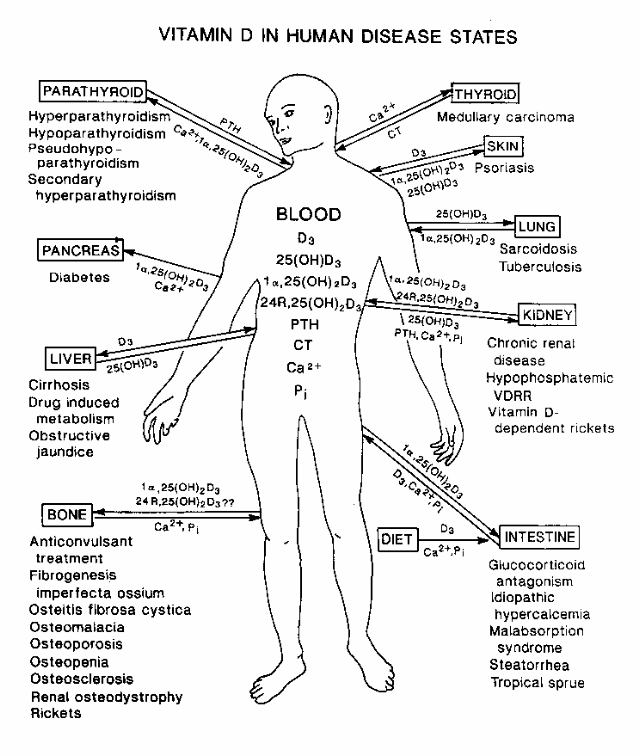
Vitamin D as a Seasonal Stress Hormone

Vitamin D as A Kind of “Seasonal Stress Hormone,” Chronobiological Stress Hormones.

Vitamin DThe benefits that a person can draw from vitamin D are too much to be listed. We know that one of the reasons that make people bask in the sun is to help in the synthesis of this crucial vitamin. Without this vitamin there are several ailments that a person is bound to suffer from. Basic knowledge of vitamin D is that it helps in strengthening bones of teeth but it has far more benefits that many people have never known of, one of its many benefits is that it is a chronobiological Stress Hormone

Vitamin D as a Chronobiological Stress Hormone

If you haven’t taken to basking in the sun seriously, it is time you need to begin doing so for as Alexander Wunsch has it, vitamin D is a kind of “seasonal stress hormone,” explaining that chronobiological stress hormones such as adrenocorticotropic hormone (ACTH), and adrenaline-cortisol hormone blends are what enable you to get up in the morning, and help regulate the blood sugar concentration in your body, just to name a couple of their functions. According to Wunsch, Vitamin D has greater importance that if the sun would stop shining then very many creatures will lose life.

the sun should shine but we have summer and winter among other crucial seasons, in these seasons the body ought to balance the thermal energy so as to ensure optimal health, during the summer the main focus of the body is to concentrate on cooling down the system while during the winter the focus of the body is to concentrate on heating the system. Therefore it is prudent for a person to bask in the sun during the summer, laying naked in the sun as that’s the best way to get more of the light, digest enough of the energy that is eventually is transformed into thermal energy.

As it has been taught, learnt and rehearsed, vitamin D has very vital functions for our health. There is need for this crucial hormone to ensure that our systems perform optimally. Our bodies are dependent on this crucial vitamin that is sourced from nature’s shine. The need for this crucial vitamin can’t be erased by the fact that some of us are not fortunate enough to live in areas where there is perpetual sunshine but are rather barred by cold weather from getting adequate sun exposure. it is therefore required of people in this areas to eat foods that are rich in Vitamin D to help in its supplementation but whenever there is a slight chance to bask in the sun, the chance should be utilized as the sun is the best source of vitamin D. in other scenarios when the lack of this vitamin may cause to even bigger health risks, it is advisable for the victim to seek Sun therapy.

Heliotherapy

Heliotherapy is a better idea to help equip the body impoverished of vitamin D. heliotherapy involves exposing oneself to sunlight or UV light from sources which are safe. exposure to sunlight may expose you to risk of skin cancer as have been taught but the intensity that cause cancer is rarely actualized, therefore it is prudent to say that the benefits that you can draw from basking in the sun far outweighs the risks. In the past before the risk of cancer began scaring us, the sun therapy was already being used to treat such diseases as rickets, tuberculosis and other diseases caused by vitamin D deficiency. Risk or no risk we need to accept the reality that we need sun at certain dosages and levels to ensure that our systems are working efficiently without flaws.

Vitamin DThere is something that many people have never known; your capillaries are modified under the sun and that the skin is linked to the autonomic nervous system, vitamin D is also a seasonal stress hormone popularly known as a chronobiological stress hormone. This is a phenomenon that needs no rocket science to be proven; if you are keen you will realize that after basking in the sun your stress levels go down and this is not the only benefit, there is more you will gain when you look far beyond the UVB portion of the spectrum. The UVB helps in synthesis of vitamin D.

According to Wunsch the sun is a life giver; “We all should be aware of the fact that when the sun was to stop shining, nothing would be alive in two or three days on this planet,” Wunsch says.

“When we are eating, we are eating transformed light. We can prove this scientifically, as you know. I think even if we are not able to estimate the influence light has on our biological system as a whole, it starts on the single cell level and it ends in our consciousness, in our mental functions. Light is a symbol in our culture, which will always be our companion.” he concludes

conference

From what we have gathered in research findings and the massive research work by Alexander wunsch we can conclude that vitamin D is a crucial part of our health and is also a therapy for seasonal stress. Basking in the sun helps relieve stress and therefore there is lots of reason in concluding that vitamin D, the sunshine hormone is seasonal stress hormone that everybody should consider supplementing.

Vitamin D as A Kind of “Seasonal Stress Hormone,” Chronobiological Stress Hormones.


Facebooktwitterpinterestlinkedin