Category Archives: Alcohol recovery

dopamine-5

Dopamine And Sex Addiction

The Contribution Of Dopamine In Sex Addiction

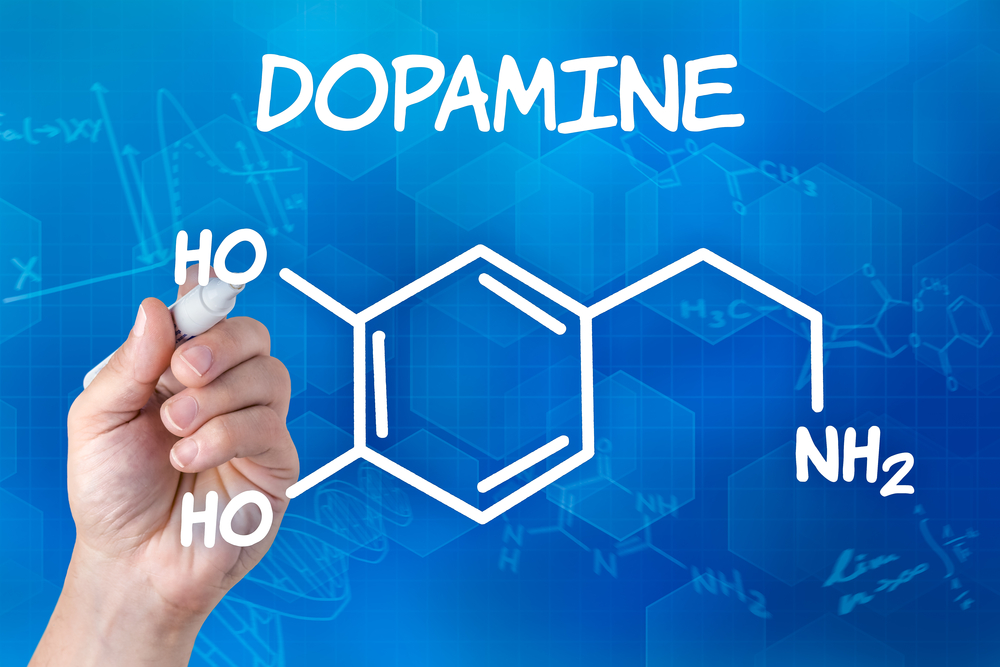
Dopamine is a neurotransmitter that coordinates information transfer within the brain of human beings. It is mostly associated with information that is mostly related to pleasure of rewards to the body.  Dopamine can therefore be said to be the brain neurotransmitter that passes information from one neuron on the brain to another. The effects of dopamine in the brain mainly depends on where or which part of the brain it is released from, there the intended receiving neurons are located within the brain and the types of the receiving neurons and the receptors to which the dopamine is bonded to within the brain.

It, dopamine, is a neurotransmitter that is mostly associated with the brain or body motivation, attention, lust, addiction and even desire. When a body in in dire need for something or a substance, normally viewed as reward by the brain, it has been found that it is usually the neurotransmitter at work. Naturally, the human brain regards pleasure of any kind the same way, that is, it the same response to different forms of desires provided they bring pleasure. Its basic distinguished signature response to pleasure is the release of dopamine in the nucleus accumbems part of the brain. Some of the rewards the brain considers to bring it pleasure include; monetary reward, drugs, sexual activity, and satisfaction of eating.
Dopamine And Sex Addiction

Whether, the above named pleasurable activities remain a normal daily routine or they become addiction do depend on some factors too. You see a normal life routine would has a normal response to these rewards. However, some of life’s activities such as substance abuse, sex, or even gambling would have a different effects to the brain all together. This can be referred to as short circuiting the brain. The speed with which any of these activities leads to dopamine released to the brain, the intensity of its release and the reliability of its released has been said to be responsible for whether one becomes an addict or not. Let us examine how dopamine do function on the brain of a sex addict. Addiction to something can be said to be the state at which a person has a craving for one thing, in which they have no control over, and continue to have themselves involved in irrespective of the consequences however dire.

Experiencing a sexual activity, desire or pleasure causes a powerful surge of dopamine release on the brain. This is a normal occurrence within the brain in response to and pleasurable encounter. However repeated encounter with far much greater intensity can and do lead to sexual addiction. Dopamine released in the brain interact with others neurotransmitters such as the glutamate and other in order to cause some influences to the brain and the body. Together, these neurotransmitters, dopamine and glutamate, interact and take over the reward sensing brain system. This is the part of the brain system that is hugely associated with motivation and memory and is also the part that associated sex with reward and pleasure for the brain.

Repeated sexual activities causes the nerves cells of the parts of the brain that is responsible for the for the planning and execution of tasks to communicate in a way that is starts by liking the sex, then wanting the sex, then finally craving sex in such a way that the brain is fixed on wanting it so badly that it loses control of the body’s will. This too much sexual craving drives the brain to have a strong desire for sexual pleasure. However, with time, the brain cells adapt to this sexual craving which results into the desire for the sex becoming less pleasurable that was first imagined.

Dopamine and Sex Addiction

Too much sexual activities leads to the brain being flooded by the neurotransmitter, dopamine to an extend that the brain finds it quite difficult to with stand the surge. When the brain achieves this state, the sex addict has a problem at their hands. This will want to solve this new feeling of displeasure by having more and more sex. Instead of getting the desired pleasure, this increased in sexual activity will lead to more production of dopamine to the brain up to the limit where its release is greatly reduced. This reduction on the dopamine release or elimination of dopamine receptors leads to less impact on the brain reward center. This is the stage where the sex no longer provides the pleasure it is associated with hence the brain requires more sexual activity to achieve the same high pleasure state.

At this stage, the person is compelled to have more sexual activities. The pleasure of sex wind down, though, the memory of the desired pleasure remains, hence the persistence of the need for sex. This ultimately, results into sex addiction.

The Contribution Of Dopamine In Sex Addiction


Facebooktwitterpinterestlinkedin
sex

Brain Activity In Sexual Addiction

Understanding Brain Activity In Sexual Addiction

Brain activity was studied while the subjects were looking at pornographic pictures.  The researchers responsible for this study used fMRI which uses a BOLD signal to monitor brain activity.  They studied the responses of 19 male subjects who were self-admitted sexual addicts who were unable to control their sexual behavior and whose sexual behavior was causing significant problems for them. They then compared these findings with 19 other young men who were classified as being healthy and who had no problems with controlling their sexual habits.

Compared to the 19 healthy volunteers, the men afflicted with compulsive sexual behavior had started looking at pornographic pictures at a younger age and spent significantly more time looking at pornographic literature than did the healthy volunteers.  In many ways, the patients resembled people who are addicted to drugs, in that they continued behaviors that were having negative impacts on their relationships and jobs.  The objective of the study was to find out if their brains mirrored the same type of activity as did the brains of drug addicts.

Brain Activity In Sexual Addiction

To this end, both the healthy volunteers and the patients were shown a series of short videos.  The videos were either sexually explicit in nature, or they were oriented towards sports.  While these videos were being shown, their brain activity was monitored using an fMRI which uses a BOLD (blood oxygen level dependent) signal.  The result was that the patients brains had significant increases in activity in three separate areas of the brain, the ventral striatum, the dorsal anterior cingulate and the amygdala, are regions that are also particularly activated in addicts when shown drug stimuli.

The ventral striatum is involved in processing rewards and motivation while the anterior cingulate is involved in anticipating rewards and therefore in drug craving.  The amygdala is involved in the processing of the significance of events and emotions.  The participants in the study were asked to fill out a questionnaire which asked them to rate the videos they saw as to the level of sexual desire experienced while they watched the videos and how much they liked each video.

The reason for the questionnaire was to measure the amount of desire experienced and compared that to the amount of liking.  This is because drug addicts are driven to seek their drug because they perceive a need for it, but have little or no enjoyment of it. In fact, many addicts will state that they don’t use drugs because they enjoy the high any more but because they become really ill if they don’t.


The result of the questionnaire was as expected—the sex addicts rated the amount of desire experienced while watching the sexually explicit videos as being high or very high, but rated the liking of the same video as being poor or very low.  This means that the experience perceived by the patients was while stimulating, not very enjoyable.  The patients also experienced higher interactions within the regions of the network identified—with a greater amount of cross-talk between the three regions specified—while watching the sexually explicit rather than the sports videos.

The researchers also found a higher correlation between the age of the patients and the amount of brain activity—the younger patients had higher levels of activity in the ventral striatum in response to pornography. This association was strongest in patients with abnormal sexual activity. The frontal control regions of our brains—the brakes that control our compulsiveness—continue to develop into the mid-twenties.  This imbalance may account for the greater impulsivity and risk-taking associated with young people. The age-related findings in these patients suggest that the ventral striatum may be involved in the development of compulsive sexual behavior much as it is in the development of drug addiction.

Also, a second study seems to show that people with compulsive sexual behavior are more susceptible to cues that trigger their compulsion than are healthy men.  This study showed the men, who were divided between “healthy” men and sex addicts.  They were given identical tasks.  The first task involved looking at a series of images in pairs. These images were of naked women, furniture, and clothed women. They were then shown another series of images, some of which were familiar, and others which were not and told to choose a pair of pictures to win a specified amount of money. The researchers found that the sex addicts were more prone to choose the novel over the familiar choice for sexual images relative to neutral object images but that healthy men were more likely to choose the novel choice for neutral female images over neutral object images.


A second task involved learning to associate certain images overlaid with patterns with reward—similar to Pavlov’s dogs.  The men were then given a choice between those images and novel images. This time, the addicts were more likely to pick cues associated with monetary and sexual rewards. This supports the theory that seemingly innocuous cues can trigger a sex addict to seek out sexual images.

Understanding Brain Activity In Sexual Addiction

Facebooktwitterpinterestlinkedin
Zoloft_bottles

MEDICATION TREATMENT FOR SEX ADDICTION

  1. SSRI
  • An SSRI (Seroetoninergic) A seroetoninergic medication is any medication that modifies the effects of serotonin in the body. Serotonin is a chemical produced by certain brain cells which acts as a neurotransmitter. Neurotransmitters facilitate communication between the axons of brain cells. As such, serotonin is one of the regulators of mood, appetite, and sleep. Another primary effect of serotonin is to regulate the intestinal tract movements. Serotonin uptake in this area of the body increases gastrointestinal motility among other things. Serotonin’s cognitive functions include memory and learning.  Modulation of serotonin at brain synapses is thought to be the function of a class of antidepressants which are called SSRIs, The list of SSRIs is:
    • Prozac-one of the first antidepressants on the market, the activity of prozac was first observed in 1975 by scientists at the Eli Whitney Co. The USA granted the Eli Whitney Co a patent on Prozac in 1985, which expired in 2001. Generic versions are now availble. Prozac is used for the treatment of :
      • major depressive disorder
      • obsessive compulsive disorder
      • bulemia nervosa
      • panic disorder
      • menstrual dysphoric disorder
      • trichotillomania after cognitive therapy has failed

Zoloft_bottles

  • Paxil
    • Paxil has been on the market since 1992. It is marketed by the company SmithKleine Beecham, which changed its name in 2001 to GlaxoSmithKleine.  Generic versions of Paxil have been available since 2003 when it’s USA patent expired. Paxil is used for the following conditions:
      • Depression
      • Panic Disorder
      • Social Anxiety Disorder
      • Obsessive-Compulsive disorder
      • Menopausal Hot Flashes
      • Childhood Obsessive-Compulsive disorder
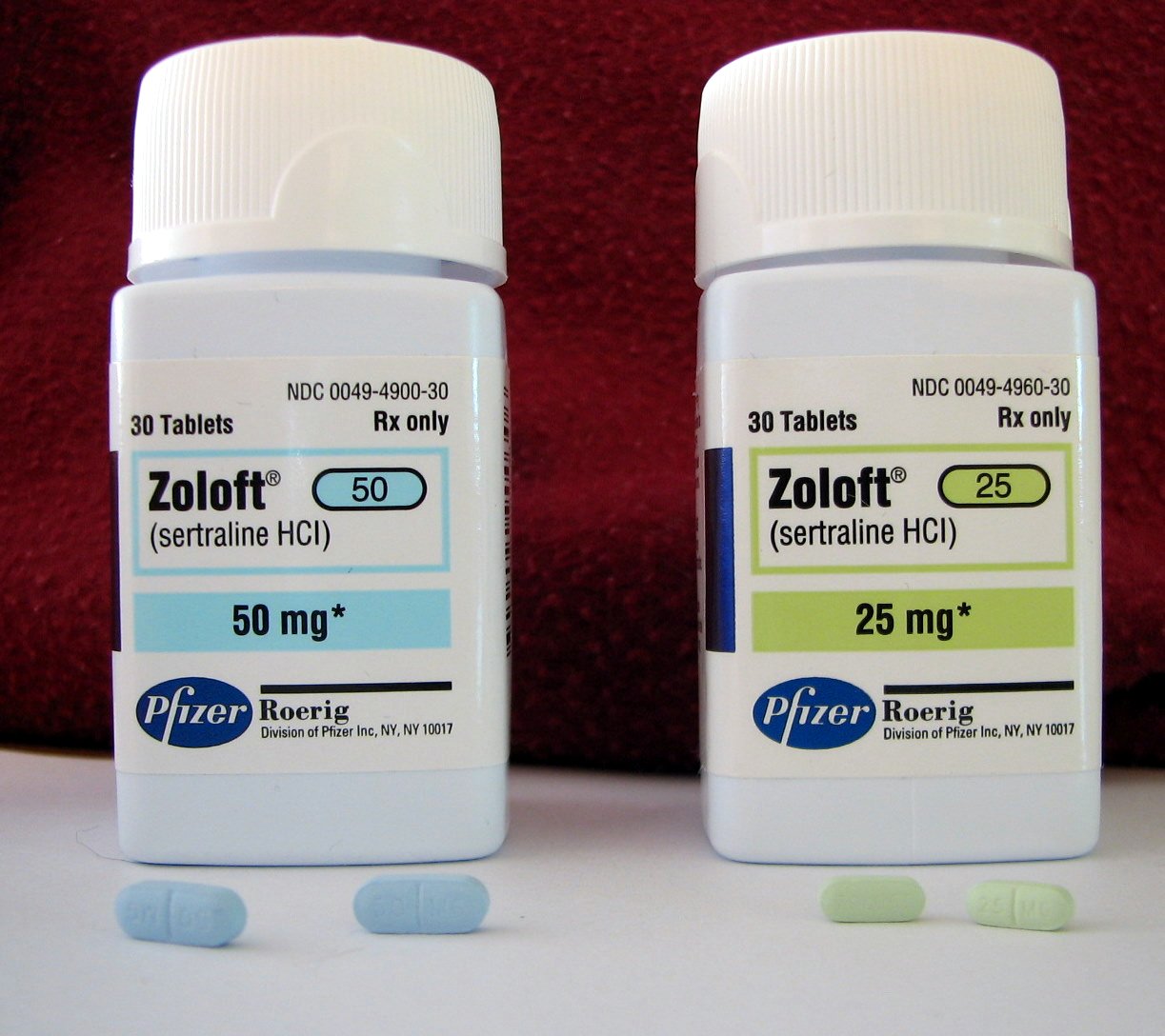
    • Zoloft
      • Zoloft has been available since 1991, when Pfizer introduced it. It is a very popular drug, having been prescribed over 41 million times in 2013.  This makes it the most popular antidepressant in the US and the second most prescribed psychiatric medication on the US retail market.  It is used for:
        • Major depressive disorder in adult outpatients
        • obsessive-compulsive disorder
        • panic disorder
        • social anxiety disorder
        • These last 3 disorders are considered appropriate for both children and adults to receive Zoloft..
          • Celexa
          • Celexa has been available since 1998. There are no generic equivalents to Celexa at this time. Celexa was first synthesized i1972 by the scientists at Lundbeck Pharmaceutical company and was first marketed in Denmark in 1989.  It was first marketed in the US in 1998. The patent expired in 2003, but no generic versions were found.  Celexa is approved for the following uses:
            • Major depression
            • Panic disorder

It also has the following off-label uses:

  • anxiety
  • panic disorder
  • dysthemia
  • premenstrual dysphoric disorder
  • body dysmorphic disorder
  • obsessive-compulsive disorder
    • It has been found to reduce the symptoms of diabetic neuropathy
  • Luvox
  • This drug was first synthesized in 1983, and introduced to the market in Switzerland and West Germany that year. It was approved by the FDA in 1994, and is available in India. One of the oldest SSRI, it was the first to be approved for obsessive-compulsive disease in children.
    • In the US, its only FDA approved use is as a treatment for OCD in both children and adults. However, in other countries it is also used for:
      • Major Medical Depression
      • panic disorders
      • social anxiety disorder
      • PTSD
      • obsessive-compulsive spectrum disorders
      • some evidence suggests it may be a useful adjunct to schizophrenia, helping to improve the negative depressive and cognitive symptoms of the disorder.
    • Lexapro
    • Lexapro was developed in a close cooperative effort by Lundbeck and Forrest Laboratories. This development took place in 1997, and the application to the FDA was submitted in 2001. It was approved by the FDA for use in major medical depression in 2002 and for generalized anxiety disorder in 2003.  In 2006 Forrest Laboratories was granted an 828 day extension on its patent.  That extension expired in 2011.  So far, no generics have been formulated.
      • This drug is used for the following diagnosis:
        • Major medical depression—US
        • Generalized Anxiety Disorder—US
        • Other countries
          • Major Depressive Disorder
          • Generalized anxiety disorder
          • Social Anxiety Disorder
          • Obsessive-Compulsive Disorder
          • panic disorder with or without agoraphobia
        • Naltrexone
        • Naltrexone is a drug used either as a daily oral medication or as an injectible “depot drug” on a monthly basis, or as a newly developed implant which must be renewed every several months. The advantage of the depot drug and the implant are that the patient is not required to see the doctor as often as they would if they were on the naltrexone pill. There is also an increased compliance rate as the patient only sees the doctor once per month or once every several months. Since this drug (as all psychopharmacuticals) has better results when the drug levels in the blood are steady, the implant gives the best results followed by the drug depot and then the pill.
        • Naltrexone is used for the prevention of alcohol consumption and the prevention of opiate relapse after detox.
Facebooktwitterpinterestlinkedin
Alcohol kills

Points of action when faced with alcoholism

Points of action when faced with alcoholism: How can I avoid drinking?

Alcoholism

Points of action when faced with alcoholism will help you make the right decision towards your ultimate addiction recovery from your alcoholism problem.

Our children often find it very difficult to say no when offered a drink by their friends and this is not doing them any good in the fight against addiction. That is why it has become necessary for us at AWAREmed Health and Wellness Resource Center to share with us some few points of action when faced with alcoholism and even other substances. Before we get to that, it will interest you to note that AWAREmed Health and Wellness Resource Center is the brain child of doctor Dalal Akoury who is also the MD, President and founder of the same. Doctor Dalal Akoury is a veteran addiction expert who has offered quality and relentless addiction treatment to millions of people across the globe and is still delivering real time solutions to people to date. If you, your child or any one you know is struggling with any kind of addiction, then you can consult with her today by scheduling for an appointment right away. Otherwise for the young people we appreciate that if you are keeping friends who drinking or using drugs are, you may be willing and desiring to let go the drink but their influence won’t let you. That is why we are tailoring this article to suit your individual situation as follows.

Doctor Akoury agrees that even though you inner-self may be saying No, it can be very hard to say “no, thanks” boldly and openly. This happens because we always want to safeguard our relationships and to avoid the risk of feeling rejected or being left out. Even with those challenges, it is still important to stand firm and say no and stick to your No, this can be done in several different strategies. Like for instance you may want to turn down alcohol work for different people without letting them see you as being difficult or distancing yourself from them. For this reason, some people will find it helpful to say no without giving an explanation while others may think that detailing their reasons works better e.g. (“sorry I’m not into drinking,” “sorry I ‘am sitting an exam tomorrow,” sorry I am taking part in a very important game tomorrow,” or “my parents died from drinking and I am not following their footsteps” these are some of the example you can give and still remain relevant to your friends.

Besides the above points, If you still find it difficult to say no to your friends when they offer you alcohol, you can as well shift the blame to your parents or another adult for your refusal by saying that “I am sorry my parents are coming to pick me up soon,” “I ‘am sorry I have already gotten in serious trouble for drinking once with the authorities and I can’t do it again,” or “better still you may say that “my coach would kill me if I drink before the game,” these are some of the better ways of communicating your refusal to your friend and because they too (teen) experience the same challenges, they will surely excuse you without any form of victimization.

Points of action when faced with alcoholism: Marry making and outings

Marry making and outings are serious threats to sinking into alcoholism and therefore it is important that as an individual, each time you’re going to a party where alcoholic drinks will be served, it is important that you up your game plan by coming up with a working strategy towards escape in advance. You and a friend can develop a signal for when it’s time to leave. Besides that you can also make sure that you have plans to do something besides just hanging out in someone’s basement drinking beer all night. Plan a trip to the movies, the mall, a concert, or a sports event. You might also organize your friends into a volleyball, bowling, or softball team any activity that gets you moving. Self-esteem is a factor to consider it therefore means that girls or guys who have strong self-esteem are less likely to become problem drinkers than people with low self-esteem.

Points of action when faced with alcoholism: Where you can get help from?

If you think you have a drinking problem, getting help as soon as possible is very necessary. The best approach is to talk to an adult you trust. If you can’t approach your parents, talk to your doctor, school counselor, clergy member, aunt, or uncle. It can be hard for some people to talk to adults about these issues, but a supportive person in a position to help can refer students to a drug and alcohol counselor for evaluation and treatment. In some states, this treatment is completely confidential. After assessing a teen’s problem, a counselor may recommend a brief stay in rehab or outpatient treatment. These treatment centers help a person gradually overcome the physical and psychological dependence on alcohol.

Points of action when faced with alcoholism: What if I’m concerned about someone else’s drinking?

Because we owe one another the duty of care we must show concern to our friends who are strongly into alcohol and drugs. It is normal to be living in a home with one or both parents who are abusing alcohol and not just parents even other relatives. This can be annoying and in the process may make you angry, scared, and depressed. Even though this is a possibility it is important to appreciate that many people can’t control their drinking without help and that is why we all must show concern because alcoholism is an illness that needs to be treated just like other illnesses. One important point about alcoholism is that people with drinking problems many at times can’t stop drinking until they are ready to admit that they have a problem that needs to be sorted out professionally. During this period of denial, many family members and loved ones have a feeling of depressed and helpless. However the good news is that we have experts at AWAREmed Health and Wellness Resource Center under the able leadership of doctor Dalal Akoury who can help you get well in the most human way with a lot of dignity and high standard of confidentiality. All you need to do is to schedule for an appointment with doctor Akoury and you will have your life back and live it to the fullest.

Points of action when faced with alcoholism: How can I avoid drinking?


Facebooktwitterpinterestlinkedin
Alcoholism

Accessibility to alcohol a hindrance to recovery

Accessibility to alcohol a hindrance to recovery: Why shouldn’t i drink?

accessibility to alcohol

Accessibility to alcohol is one of the most significant motivation to being addicted to alcohol

The prevalence of alcohol addiction has been necessitated by easy accessibility to alcohol which is posing a serious threat to treatment and recovery process. You will not be surprised to note that certain streets in a given capital city of a state are literally littered with alcohol joints e.g. pubs and entertainment spots. Our authorities have continually license more business directly engaging in the sales and production of alcohol in order to increase revenues for development. They do so because they have noted that the addictiveness of this product and so even if taxes were to be increased as a means of putting in some control, people will still buy to quench their thirst. It is because of this background that we at the home of addiction experts (AWAREmed Health and Wellness Resource Center) under the able leadership of doctor Dalal Akoury have resolved to make a difference by posting very informative articles on this link to the public’s consumption so that this problem can be brought to manageable levels. Therefore we want to scrutinize how accessibility to alcohol a hindrance to recovery in this article. We therefore want to request you to stay with us on the link and together let us educate one another on the best possible ways of eradicating this scourge from our societies.

According to the experts from AWAREmed Health and Wellness Resource Center, it is worrying that even though it’s illegal to buy alcohol in most states globally including in the United States until the age of 21, most teens and young children can still get access to this product (alcohol). We must therefore be very careful about the decisions we make concerning our usage (drinking) of alcohol. What we do affects our children greatly in the future like for instance if you stock alcohol in your refrigerator, the message you are passing to the teens is that this is a good substance and can be consumed at will after all food and drinks for family use or consumption are always kept in our refrigerators. When your children become the messengers each time you want supply of your substance whether it is alcohol, cigarette or any other substance, the children are registering real tangible points about the use and abuse of these stuff. Dear friend this is very dangerous not just for your family but to the whole society and beyond. Have you ever hard the phrase “charity begins at home?” when good things begins from home the society benefits in the same way when bad things bins from our homes the society suffers. This we can stop, prevent and avoid by choosing to do the right things with our children. Now back to our point of discussion having listen to the over view it is important to appreciate that besides the mentioned, there are several other consequences for drinking some may include:

Accessibility to alcohol a hindrance to recovery: Heavy penalty and severe punishment

The authorities in every institutions and states are putting stringent measures to curb this unbecoming habit in our young generation and therefore teens that drink will always rub shoulders with the law enforcer agencies and be arrested. Besides that they (teens) are likely to involve themselves into some unwanted behaviors and conducts like fighting, committing various kinds of crime, and even end up into suicide. There are very prevalent occurrences in teens that drink when compared to those who do not drink or do drugs. Alongside all these individuals who drink will in many cases also have problems in their social and academic lives, and remember that drinking can once ability to concentrate in his or her studies and the consequences of this is dismal performance in their grades, career, sports or any other activity they participate in. this nor normally happens because of poor coordination by the brain when it is under the influence of alcohol and substances.

Accessibility to alcohol a hindrance to recovery: Displaying actions of stupidity

The good impression according to the users of alcohol is that drinking is cool and life’s fulfilling, this is a serious misinformation because the moment the alcohol takes effect on the nervous system, the whole situation changes and what was perceived to be cool and fulfilling (drinking alcohol) all over sudden create shame and embarrassment. I strongly believe that you have meet people decently dressed on their way to drinking joints and a few hours later you meet them in very disturbing and pathetic situations. That is why we say that drinking can make people do very stupid or embarrassing things including throwing up or peeing on themselves in total disregard of their surroundings. Besides the stupid actions, drinking also gives people bad breath, and no one enjoys a hangover even to those who feel that they can’t do without the touch of the bottle. Displaying actions of stupidity can be avoided if only we can chose to seek for help in good time. Before things get out of hand to the point of regrets, you can schedule for an appointment with doctor Dalal Akoury today and together with her team of experts all your concerns about alcohol addiction and the general aspect of substance abuse will be addressed professionally.

Accessibility to alcohol a hindrance to recovery: The health risks of Alcohol consumption

When we talk about the health risk involving misuse of alcohol, you can be rest assured that it is not going to the first time you are hearing this. The consequences of misuse of alcohol have been preached since time immemorial yet our young people are still into this harmful habit. There is no doubt that individuals who drink alcohol age, gender and race not withstanding are more likely to be sexually active and eventually engages into having unsafe or unprotected sex. We are all privy to the consequences of such action which may include but not limited to unwanted pregnancies and sexually transmitted diseases which can be very fatal to the point of death. Besides that doctor Akoury is registering that the risk of injuring one’s yourself, maybe even fatally, is higher especially when you’re under the influence of alcohol. Shocking as it may sound, it has been established that about one half of all drowning death cases among people are actually related to alcohol use. There is therefore no doubt that the use of alcohol is in itself going to greatly increase the chance of people or users of alcohol to be involved in a car crash, homicide, or suicide. All this fatalities can be brought to manageable levels by taking immediate actions of getting help from the right professionals like doctor Dalal Akoury MD, President and founder of AWAREmed Health and Wellness Resource Center.

Finally as we bring this discussion to an end, there are also nutritional effects that come with alcohol consumptions. Like for instance, our young people are most likely to get fat or have health problems if they are consistently abusing alcohol. According to one of the studies conducted by the University of Washington it was established that people who regularly had five or more drinks in a row starting at age 13 were much more likely to be overweight or have high blood pressure by age 24 than their non-drinking peers. People who continue drinking heavily well into adulthood risk damaging their organs, such as the liver, heart, and brain. These findings can be very scary but you can chose to correct that by scheduling for an appointment with doctor Dalal Akoury a veteran addiction expert of several decades today so that all your concerns can be addressed professionally and adequately.

Accessibility to alcohol a hindrance to recovery: Why shouldn’t i drink?


Facebooktwitterpinterestlinkedin