Category Archives: Alcohol recovery

Reward Deficieny syndrome

Reward deficiency syndrome and brain disease

Reward deficiency syndrome

Reward deficiency syndrome and brain disease. In fact, it is the reward deficiency syndrome that causes the compulsive use of alcohol and drugs that help to feel good, at least temporarily

Reward deficiency syndrome and brain disease: Rebuilding Neurotransmitter

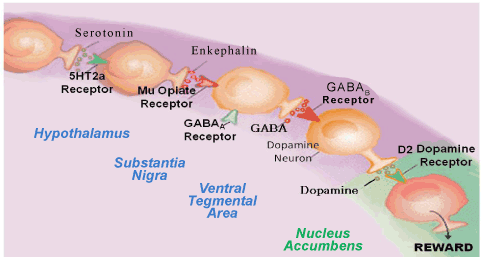
A host of medical and lifestyle issues can disturb the healthy flow of neurotransmitters, including chronic stress, alcohol, drug abuse, genetics, poor diet, digestive disturbances and mal-absorption, micronutrient deficiency and more. The result can be Reward Deficiency Syndrome (RDS), a term primarily used for hereditary chemical imbalances wherein the pleasure centers, which regulate feelings of well-being in the brain, fail to receive appropriate neural signals. As a result, the brain sends out urgent messages of craving. Doctor Dalal Akoury MD, President, and founder of the AWAREmed health and wellness resource center reiterates that, in the brains of addicts, various neurotransmissions are affected, depending upon the drug or drugs that have been used. As a result addicts experience difficulty concentrating and have mood swings, as well as having other physical symptoms.

Collectively, these symptoms are called cravings and withdrawals. Craving and withdrawal symptoms are a result of a neurochemical imbalance in the brain. If these imbalances are not addressed, life can be miserable to drug users and that is why doctor Akoury created this health facility with a primary objective of transforming each individual’s life through increasing awareness about health and wellness and by empowering individuals to find their own inner healing power. Besides that it will also interest you to note that, doctor Akoury’s practice focus on personalized medicine through healthy lifestyle choices that deal with primary prevention and underlying causes instead of patching up symptoms. This should motivate you to schedule an appointment with her now by calling her on telephone number 843 213 1480 for the commencement of your recovery process. And as you consider that, let’s look at some of the reward deficiency syndromes;

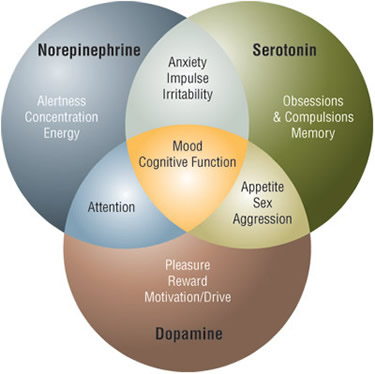
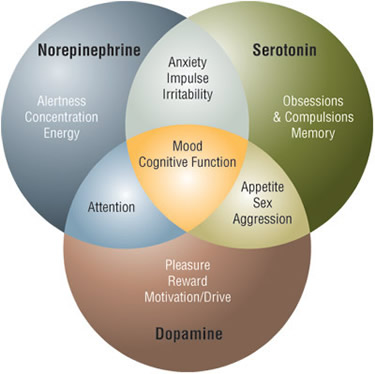
  • Neurotransmitters are chemicals in the brain that help to control states of consciousness, including moods.
  • Serotonin and GABA down-regulate electrical activity in the brain, thereby contributing to calm, peacefulness, or less anxiety.
  • Adrenaline and noradrenaline up-regulate electrical activity thereby promoting excitement, motivation, or, reducing depression and apathy.
  • Dopamine is the “feel good” brain chemical. It is the dance of these electro-chemicals that produce emotional balance and feelings of well-being.

Reward deficiency syndrome and brain disease: When the neurochemicals are impaired

When the proper flow, or cascade, of these neurochemicals is impaired, or, the brain’s receptors are blocked, then a variety of problems can develop, including:

  • Mood instability
  • Irritability
  • Agitation
  • Hypersensitivity
  • Anxiety
  • Depression
  • Apathy
  • Impaired concentration
  • Trouble focusing
  • Despair

Finally, it is the Reward Deficiency Syndrome that causes the compulsive use of alcohol and drugs that help to feel good, at least temporarily. In addition to alcohol, people use nicotine, other stimulants, illicit drugs, junk foods, sugars, or thrill-seeking behaviors such as gambling, sex, and Internet porn. Unfortunately, this only provides temporary relief while bringing with it the possibility of more long-term problems. For lasting solution to addiction, only experts on the same line will liberate you from this problem. Doctor Dalal Akoury is an expert you can rely on for whatever addiction you are going through.

Reward deficiency syndrome and brain disease: Rebuilding Neurotransmitter

http://www.integrativeaddictionconference.com/wp-admin


Facebooktwitterpinterestlinkedin
Cocaine addiction

Rebuilding Neurotransmitter for addiction solution

Rebuilding Neurotransmitter

Rebuilding Neurotransmitter for addiction solution very essential in keeping immunity system free from drug abuse

Rebuilding Neurotransmitter for addiction solution: Recovery using Intravenous NAD & amino acids

Addiction is a disease and not a moral weakness as it was used to be seen in the past. Like any other disease, treatment is very essential and it should begin with the rebuilding neurotransmitters. This way, we will be addressing the core problem in all areas including body and mind. The successful therapy will depend on address both problems simultaneously because the health of both depends on the unity of both that facilitates the health and balance in the mind and body thereby providing highly effective therapy for addiction. Meaning that if you detoxify, or withdraw, from alcohol or a drug, without addressing the conditions in the body that create fatigue, depression, and anxiety, then relapse is more likely moments after the therapy has been incomplete. Similarly, if you withdraw from a substance and do not understand the psychological and spiritual issues that promoted the need for it, then relapse is likely and the hard lessons of disease (addiction) shall not have been learned says doctor Dalal Akoury MD, President and founder of AWAREmed health and wellness resource center.

Rebuilding Neurotransmitter for addiction solution: The body

Integrative, or, functional medicine provides the tools to assess and treat the conditions in the body that contribute to fatigue, depression, and anxiety, thereby increasing the likelihood of chemical dependency.  This include:

  • Nicotinamide adenine dinucleotide (NAD) deficiency
  • Neurotransmitter deficiency (serotonin, GABA, adrenaline, noradrenaline, dopamine, etc)
  • Metabolic cofactor deficiency
  • Pyroluria
  • Hypothyroidism
  • Adrenal fatigue
  • Intestinal yeast overgrowth
  • Delayed-onset food sensitivities
  • Gluten intolerance

These “terrain issues” in the body need to be properly treated in order to make detoxification easier and to prevent relapse.

Rebuilding Neurotransmitter for addiction solution: The mind and the spirit

Away from the body, addiction is also a disease in the mind. The fact that the mind rules the body is, in spite of its neglect by biology and medicine, the most fundamental fact which we know about the process of life. The origins of most physical disease are within consciousness. The body is the messenger of the conflicts, sustained fears, suppressed emotional traumas, disturbed patterns of thinking, and other imbalances that lie within the conscious and unconscious mind. Many people have painful childhood experiences, including patterns of neglect, smothering control, abandonment, and emotional, physical and sexual abuse.

Later on, there can be failed relationships, years of marital conflict, and the pain of loneliness. Many experience decades of unfulfilling employment, foiled personal creativity and the quiet desperation of a slowly dying spirit. These life experiences contribute to relentless anxiety, depression, denied emotions, destructive beliefs, hopelessness, helplessness, “giving up”, and an endless variety of recurrent stresses. And remember that the emergence of disease of any kind is the body’s way of getting your attention and inviting this self-exploration, thereby offering true healing which becomes possible by rebuilding neurotransmitters. Finally, having been with us all this time, we would not have done you any justice by leaving your concerns unaddressed, and for us to do that, you need to schedule an appointment with doctor Akoury today and all your concerns will be addressed professionally.

Rebuilding Neurotransmitter for addiction solution: Recovery using Intravenous NAD & amino acids

http://www.integrativeaddictionconference.com/wp-admin

Facebooktwitterpinterestlinkedin
Drunk young man resting head on bar counter

Neurotransmitter Restoration (NTR)

Neurotransmitter Restoration

Neurotransmitter Restoration (NTR) and effective role in drug addiction includes the treatment of cancer-related pains

Neurotransmitter Restoration (NTR): Addiction Recovery using Intravenous NAD & amino acids

The first step in addiction recovery is a functional medical investigation targeting the conditions in the body that facilitate fatigue, anxiety, depression, reduced pain tolerance, poor focus and the likes further demanding the neurotransmitter restoration. These common underlying conditions include food sensitivities, gluten intolerance, adrenal and thyroid imbalances, mal-absorption, neurotransmitter deficiency and NAD deficiency. Since these issues are treatable, normally with nutritional supplements and diet, the patient receives intravenous NAD and amino acids based on individually designed protocols for a 10 day period of time. The IV NAD and amino acids improve brain function based on higher levels of cellular energy production along with increased neurotransmitters, such as serotonin. There could be some withdrawal symptoms for a period of two or three days which is easily manageable and so should not worry you much. After three to five days as withdrawal symptoms disappear, craving subsides and clarity of thinking is restored.

Having been in this discipline for over two decades, doctor Dalal Akoury, MD, President, and founder of AWAREmed health and wellness resource center reiterates that, it should be noted that this treatment is not a substitute for recovery, but it is the beginning of the process of healing. The moment the brain and body are functioning better, the patient has the energy, clarity and focuses on engaging in the recovery process. The patient will be able to understand the reasons for compulsive behavior and with better health and motivation they can stop compulsive behaviors and make informed choices that are self-supportive rather than self-destructive.

Neurotransmitter Restoration (NTR): Detoxifying patients professionally

Some studies done in the past five decades reveals the efficacy and safety of IV NAD in detoxifying patients from alcohol, opiates, tranquilizers and stimulants. Like the early studies, our experience with the protocol over the past five years substantiates its benefits in greatly reducing withdrawal symptoms, as well as reducing, and often eliminating the cravings. And at AWAREmed Health and Wellness Resource Center under Doctor Akoury’s upon scheduling an appointment with doctor Akoury, you will be handled professionally with the state of the art equipment’s and tailor-made programs designed to individual, family and group therapy. Patients are provided with continued integrative care for their underlying medical problems, which helps them to timely feel better physically and mentally. This way they are more likely to continue healing psychologically, emotionally, socially and spiritually. Depending on a case by case at least two-year commitment to aftercare treatment is critical because the underlying psychological issues which often lead to substance abuse must be resolved for long lasting recovery.

Neurotransmitter Restoration (NTR): Addiction Recovery using Intravenous NAD & amino acids

http://regenerativepotential.com/wp-admin

Facebooktwitterpinterestlinkedin
Dopamine Rush

Neurochemical foundation of addiction

Neurochemical foundation

Neurochemical foundation of addiction treatment solutions begins with diagnosis and tests for accuracy in treatment delivery

Neurochemical foundation of addiction: The exhausted GABA

In order to understand the neurochemical foundation of addiction, it is important that we first understand how GABA operates. And to do so, we are going to speaking to doctor Dalal Akoury MD, President, and founder of the AWAREmed health and wellness resource center. And her submission she brakes the understanding as follows.

  • The neurons
  • The central nervous system (CNS)
  • Inhibitory neurotransmitters
  • Excitatory neurotransmitters

Having discussed the first two previously, we are going to progress with the remaining as follows:

Neurochemical foundation of addiction: Inhibitory Neurotransmitters

  • Some neurotransmitters act like a brake on a car.
  • They inhibit or slow down the actions of the neurons.
  • These are called inhibitory neurotransmitters.
  • Other neurotransmitters act like an accelerator.
  • They increase the speed of the actions of the neurons. These are called excitatory neurotransmitters.
  • GABA is the major inhibitory neurotransmitter in the brain.

Neurochemical foundation of addiction: Excitatory Neurotransmitters

  • Excitatory neurotransmitters are vital to:
    • Help us stay alert
    • Maintain our normal memory functions
    • Maintain our co-ordination
    • Maintain normal emotional responses
    • Maintain our heart rate
    • Maintain our blood pressure
  • Glutamate (a common amino acid) is the major excitatory neurotransmitter in the brain.

Which neurotransmitters are released?

  • If there is something that creates:
    • Anxiety
    • A feeling of panic
    • Other stress
  • Excitatory neurotransmitters are released and a person can feel:
    • Restlessness
    • Higher than normal irritability
    • Rapid heartbeats
    • High blood pressure
    • Insomnia
    • Even seizures.

The role of GABA in the brain

  • Glutamate speeds things up and when they are going too fast, GABA slows them back down.
  • If there is a problem with the GABA in our brains, the neurons fire more and more, increasing the speed of the processes in the brain?

Neurochemical foundation of addiction: How GABA works

When GABA binds to a nerve cell receptor, it opens the nerve cell so that chloride ions present in the brain are allowed to move into the nerve cell to slow the activity of the cell, and the person normally experiences a calming feeling. For example, if our brain produces more excitatory neurotransmitters like norepinephrine or epinephrine (adrenaline) than normal, we can become anxious or have more stress than normal. And when the brain is working normally, it will produce more GABA thereby slowing down the actions in the brain and thus have a calming and relaxing effect on us.

Finally, this article will go a long way in helping you do the right thing with your life. In doing so certain professional decisions will have to be made and to do this, seeking for the expert opinion will be necessary. And that is where doctor Dalal Akoury and her team of experts come in. the lever of professionalism at this facility (AWAREmed health center) speaks for itself since doctor Akoury’s practice focuses on personalized medicine through healthy lifestyle choices that deal with primary prevention and underlying causes instead of patching up symptoms. This is what you need and calling her on telephone number 843 213 1480 should be your starting point for the total life transformation.

Neurochemical foundation of addiction: The exhausted GABA

http://www.awaremednetwork.com/


Facebooktwitterpinterestlinkedin
neurotransmitters-and-mood-symptoms

Neurochemical basis of addiction

Neurochemical basis

Neurochemical basis of addiction and addiction treatment systems

Neurochemical basis of addiction: The depleted GABA

For a long time, various forms of addictions have been taken to be just as a result of social problems and sometimes even decisions or choices we make in life. Yes, this may be true but we need to take a moment and look into this problem more critically to find facts about the neurochemical basis of addiction. Doctor Dalal Akoury MD, President, and founder of the AWAREmed health and wellness resource center says that it’s good that modern addiction medicine now recognizes that substance dependency of any kind is a disease process of the brain that features lowered dopamine and glutamate neurotransmitter levels. Importantly, as more legitimate research is done in this field of addiction medicine whose experimental basis is beginning to gain ground, models of neurochemical bases of addiction in the future may also feature lowered levels of GABA as the disease progresses. To understand this neurotransmitter (GABA) it will be necessary that we try to define some of the terms associated with it and appreciate the roles and functions of GABA in totality.

The use of GABA

Because of our unique DNA and the way that each of us metabolizes drugs, each of us may have different amounts of GABA in the brain but we are still considered to be operating “normally.” Unfortunately, there are no accepted medical tests to determine if we have too much or too little GABA activity. It appears that people who are nutritionally deficit and dehydrated often have problems with the operation of GABA in their brains. Since almost all of our patients are nutritionally deficient and dehydrated when they arrive at our facility, we have always implemented the addition of GABA to the IV therapy given to patients. The purpose is to provide a more natural boost to the GABA in the brain and to allow the calming effect of GABA to make the detoxification process more comfortable. Let us now understand how GABA operates by defining these terms.

Neurochemical basis of addiction: The neuron

  • A neuron is another name for a nerve cell.
  • Nerve cells float in the fluid.
  • Each neuron has an axon a thread-like part of the cell that sends signals from the cell body and a dendrite a part of the cell that receives signals from other neurons.
  • The neurons are not touching and the space between the cells is called the synapse.
  • Electrical signals are sent through the synapse to a receptor, a place on a cell that can produce a certain effect like the production of adrenaline if someone is frightened.

Neurochemical basis of addiction: The central nervous system (CNS)

  • The CNS is composed of the brain and the spinal cord.
  • The CNS transmits signals to the rest of the body using chemical messengers called neurotransmitters.
  • Neurotransmitters are stored in vesicles—hollow sac-like structures inside the cells.
  • These neurotransmitters carry a message from a neuron to receptors on another neuron.
  • The action of the neurotransmitters on the receptors has been likened to a key being inserted in a lock.
  • When the key is turned the lock opens and the neurotransmitters activate the receptors which in turn create an effect in the body.
  • Then many of the neurotransmitters return to the releasing vesicles to be used again.

Finally, you can always talk to us by calling doctor Akoury on telephone number 843 213 1480 to help you with any concerns you may have.

Neurochemical basis of addiction: The depleted GABA

http://regenerativepotential.com/wp-admin


Facebooktwitterpinterestlinkedin