Category Archives: Detoxification

Allogeneic Stem Cells For Neurodegenerative Diseases

Allogeneic Stem Cells Role in Neurodegenerative Diseases

stem cellThe stem cells are the precursors of all cells in the body. They are very essential for formation of new tissues and healing of damaged tissues as a result of diseases or even accidents. The stem cells are available in adequate quantities in the bone marrow and in the adipose tissues as well. They have the ability to turn into the red blood cells, platelets or even the white blood cells. They can also form the muscles cells, the bones and even cartilage and hence help in keeping your body healthy. naturally you should be having the healthy amounts of these stem cells, unfortunately due to diseases and accidents that may result in bone marrow destruction and damage you may have too little of these essential stem cells and so you will need a stem cell transplant. In most cases the stem cell transplant is done through an IV, supplementing the little stem cells you have left and hence enabling the body to work right.

When the stem cells are harvested from the same person, the transplant is termed as autologous stem cell transplant. the autologous stem cell transplant is the most popular as the cells are harvested from the patient’s own body and this rules out any chance of the transplant being rejected or causing any pathological reactions that may warranty serious medical attention. however there are cases when the stem cells can’t be sourced from the patient’s own body and this will dictate that the stem cells be sourced from a different person who is not genetically identical to the patient; this is termed as allogeneic stem cell transplant. For safety of any recipient in allogeneic stem cell transplant, it is important to match closely the immune system markers to reduce chances of any reaction that may inhibit the healing process.

Stem cells and neurodegenerative diseases

Neurodegenerative diseases are numerous and each has distinctive effects on the patient but all are caused as a result of neurodegeneration. Neurodegeneration refers to the damage of the nerves in that are essential for transmission of messages within the nervous system. When the nerve cells are destroyed and deformed, they lose their original structure they will begin to malfunction. In most cases this damage is done gradually but at the end of it all the patient will suffer from cognitive disabilities such as memory loss and poor decision making. There are numerous neurodegenerative diseases, however basing on their debilitating effects, just a few have been known and are being currently focused on. Some of the famous neurogenerative diseases includes; Huntington disease, Parkinson’s disease and Alzheimer’s disease. Apart from these diseases listed above there are others that have not been in the medical literature and are less publicized, this doesn’t mean that they are not worth the mention. They are.

The greatest danger of all neurodegenerative diseases is that they lead to progressive brain damage and neurodegeneration. The major three diseases may show different features and effects but they progress in similar manner at the cell level. take Parkinson’s disease for example, it affects the basal ganglia of the brain, depleting it of dopamine hence causing stiffness, rigidity and tremors in the major muscles of the body which are distinctive features of the disease.

In Alzheimer’s disease, it is characterized by deposits of minute protein plaques that damages different brain parts thereby leading to gradual memory loss while Huntington’s disease is known to corrupt the genetic make-up affecting muscles of the body thereby resulting in motor restriction and eventual death.

Allogeneic stem cells transplant

Allogeneic stem cellsThe cell is harvested from the bone marrow of a suitable donor by use of a needle. This maybe done repeatedly to draw the sufficient amounts needed for the transplant. After harvesting the cells from the marrow the blood is passed through a machine that separates the stem cells from the blood leaving the rest of the blood flowing back into the donor through the needle into the donors arm. The harvested stem cells can then be transplanted into the patient through a central venous catheter that is inserted into the patient’s chest. The stem cells flow through the catheter into the patient’s blood and into the bone marrow where they will give rise to other stem cells between one to three weeks.

After transplant the stem cells will begin to work in repairing and replacing the worn out tissues caused by various degenerative diseases. All this is made possible since they can form any cell in the body and help restore the normal body functions.

The neurodegenerative diseases have very debilitating effects; the inception of stem cell therapy seems to be a light at the end of the tunnel for those suffering from these diseases. Anyway you need to be updated on how well you can regain your health and vitality back even after suffering from these diseases.

conference

Get in contact with Dr. Dalal Akoury an experienced doctor in integrative medicine at www.awaremednetwork.com as well as http://www.integrativeaddiction2015.com and learn more about the upcoming Integrative Addiction Conference 2015. The conference will focus on the unique approaches to identifying symptoms of addiction and how to help addicts.

Allogeneic Stem Cells Role in Neurodegenerative Diseases


Facebooktwitterpinterestlinkedin

Mesenchymal Stem Cells for Treatment of Cardiovascular Diseases

Mesenchymal Stem Cells Role in Cardiovascular Diseases

Cardiovascular diseaseThe use of stem cells in treatment of various diseases has been given lots of consideration in the recent past. scientists have been busy doing researches trying to find out if the stem cell therapy which is termed by many as the medical miracle of the 21century can be a break in treatment of the diseases that have proved stubborn to conventional treatment methods. Stem cells have various properties that other cells do not have and this is the major reason why they have been in the lips of every regenerative doctor. There are different types of stem cells but the mesenchymal stem cells have been the major focus of integrative medicine practitioners.

Degenerative diseases are known to wreak havoc in the body’s ability to self-renew and rejuvenate. They affect the way the nervous system works causing a breakdown in the communication between the nerves which eventually causes various ailments. Degenerative diseases have not been very easy to treat in the past but with stem cell therapy, there is hope for not only degenerative diseases but also the much dreaded cardiovascular diseases as well.

Why mesenchymal stem cells?

The mesenchymal stem cells are not sought after for nothing. They have a lot to offer especially in this age when degenerative diseases are enslaving many people and the conventional medicine is not offering the much needed break. Mesenchymal stem cells are sourced from either the adipose tissues or from the bone marrows and are described as a rare type of cells which are multi-potent and rich in medicinal properties. The unique properties of the mesenchymal stem cells have made them a target as therapy for various diseases and currently they have been used for treatment of arthritis among other conditions. They have been found to be also very effective in moderating the functions of dendritic cells, immune cells, B cells, natural killer cells, monocyte or macrophages, T cells, and neutrophils.

Just like the rest of the Stem cells, the mesenchymal stem cells are precursors of all cells and have the ability of forming cells of other types such as the hematopoietic, bone, endocrine organs, nervous and cardiovascular system, and cartilage and muscle tissue. It is the unique ability of the mesenchymal to shift shape and form other cells that they have been targeted for treatment of cardiovascular diseases.

Research on Mesenchymal stem cells for cardiac diseases treatment

Cardiac diseases have caused many deaths and are still among the leading causes of death worldwide. however the conventional medicine such as myocardial infarction haven’t helped much in treatment of these diseases and this led to the research on the possibility of the stem cells being used for this course. The Hematopoietic stem cells were the first to be researched on and used for clinical trial. In some trials the therapy worked while in others they didn’t give the much expected results and this led to consideration of other stem cell types.

The mesenchymal stem cells were the most promising of all the types owing to their strong paracrine function, which gives them potential immunomodulatory effects via anti-inflammatory and antiapoptotic actions. It is this property that may give them the ability to counteract the pathological mechanisms that are involved in various cardiac diseases. They can also be trans-differentiated into cardiomyocytes.

In 1999, Makino S and his colleagues first demonstrated the differentiation of MSCs into cardiomyocytes in vitro. Their research concluded that Cardiomyocytes can be generated from marrow stromal cells in vitro. Makino and his colleagues aren’t the only scientists to have worked on viability of MSCs ability to treat cardiac diseases, Wang JA and his colleagues did a trial that involved transplanting Allograftic bone marrow-derived mesenchymal stem cells into heart infarcted model of rabbit to renovate infarcted heart, they found out that the rabbits who had mesenchymal stem cells transplant had a lower mortality rate of 16.7% as opposed to the controls whose mortality rate was at 35%.

cardiovascular diseaseAnother study was done in 2005 by Hatton N and his counterparts, it involved transplanting purified cardiomyocytes differentiated from bone marrow MSCs in vitro into adult mouse hearts, after three months the transplanted cells had survived and were sloping in parallel to the cardiomyocytes of the recipient heart. These and other animal trials have all showed the ability of mesenchymal stem cells in treatment of cardiovascular diseases.

Through research, there has been a growing body of evidence that the mesenchymal stem cells have the multiple paracrine effects that even without cell replacement can affect cardiac remodeling, angiogenesis and cytoprotection hence are clinically beneficial.

The hopes were held even higher after another researcher; Ohnishi S showed that the mesenchymal stem cells have a role in inhibiting cardiac fibrosis by regulation of collagen synthesis by cardiac fibroblasts, as well as their effects on fibroblast proliferation.

conference

The mesenchymal stem cell therapy are the medical miracle of the 21century, you need to be updated their applicability in treatment of various diseases, visit www.awaremednetwork.com for more information about bone marrow transplant and stem cell transplantation. Dr. Dalal Akoury is an experienced doctor in integrative medicine; she will be able to assist. From the same website you can also visit http://www.integrativeaddiction2015.com and be updated on upcoming Integrative Addiction Conference 2015. The conference will deliver unique approaches to telling symptoms of addiction and how to assist patients of addiction.

Mesenchymal Stem Cells Role in Cardiovascular Diseases

Facebooktwitterpinterestlinkedin

Benefits of A Healthy Microenvironment

The Importance Of A Healthy Microenvironment

MicroenvironmentThe environment is one of the most important factors of influence in the disease triad. The environment can be defined as the biological and physical factors and the chemical interactions that influence the life of a living organism. In the case of human beings like you and I, our environment refers to all the living and non living things we interact with and the chemical interactions that influence our lives. The living component of the environment includes all our neighbors, our domesticated plants and animals and the wild animals and how we interact with them. The physical component of the environment includes all non living things that influence our life like rainfall, sun, rocks and many more.

It is therefore clear that the environment which is our surrounding has a direct bearing on our lives. Just how does our environment influence diseases that attack us? In order to effectively answer this question, we need to remember the components of the environment and consider them as possible risk factors for a disease. We are exposed to several risk factors of diseases that are physical, chemical or biological components of the environment. For better understanding, consider an environment with poisonous gas, constant flooding and mosquito infestation. In this risky environment, the chemical component that is a risk factor for disease is the poisonous gas. The physical component that poses risk is the flood and the biological component that is a risk factor to disease is the mosquitoes. The environment also influences alterations in the way we behave in response to the risk factors to which we are exposed.

What is a healthy microenvironment?

An organism exists in a larger environment whose definition is given above. This larger environment is sometimes referred to as macro environment. However at times interest may be only on the immediate surrounding which is relatively small, effectively isolated and characteristically differs from the larger environment. For example if we are to consider a family living in a city environment, the conditions of their house could be different from that of the surrounding. Individual members of the family might wear clothing of different levels of cleanliness. All this makes the micro environment.

At the lowest level microenvironment would refer to the environment in and around the calls that make up our bodies. At the cellular level, our bodies carry out billions and billions of chemical reactions that are aimed at maintaining life. These reactions alter the composition of the environment within and around the cells of the body. Even in spite of all these reactions, the body has to maintain internal conditions that are relatively constant and stable. The body therefore undergoes a process of self regulation that helps it to restore the balance after it is shifted by normal biochemical reactions and daily stresses. A healthy microenvironment is thus one in which the body’s self regulating capabilities function well and thus the environment in and around the cells is well balanced thereby discouraging disease from taking hold.

Maintaining a healthy microenvironment

It is of very great importance for every individual to maintain a healthy microenvironment in order to prevent and control diseases. So as to make this importance stand out, we need to answer the question of how disease takes hold in our bodies.

Disease occurs in our body due to the failure of the body’s self regulating mechanisms due to physical, chemical and emotional strains and stresses pushing this system out of balance.

Some of these stresses include toxicity and poor nutrient intake. A naturally balanced and healthy microenvironment is very hostile to disease factors.

Maintaining a healthy microenvironment not only helps in preventing diseases but also helps in controlling diseases that have already taken hold.

An example of a micro environment in our body is that of bacteria in our gastro intestinal tract. These bacteria benefit us in several ways. They metabolize nutrients that we cannot digest and convert them to important end products. They also control the assembly of gut associated lymphoid tissue, they modulate proliferation and differentiation of the gastrointestinal tract lineages, they train the immune system, and they regulate angiogenesis and modify the activity of the enteric nervous system. Owing to the vast important physiological and immunological roles of these microorganisms, it becomes clear that maintaining a healthy microenvironment within the gastrointestinal tract could go a long way in improving their function and thus boosting the body’s ability to fight disease.

MicroenvironmentAnother example of microenvironment is that of antimicrobials in the mucosal surfaces of the female reproductive system. This microenvironment is effective in protecting the body against bacteria, viruses and fungi. Maintaining a healthy microenvironment in the female reproductive system would thus go a long way in solving the problem of sexually transmitted diseases that have been world’s worst nightmare.

It is therefore evidently possible to control and prevent majority of diseases of mankind through maintaining a healthy microenvironment that boosts the body’s immunological functions. To achieve this, we need to feed on unadultered nutrient rich foods, breath oxygen rich air and drink purified water which will help in providing the needed elements and clearing toxins and thus maintain the body’s microenvironment in a state that prevents disease from taking hold.

For more information about bone marrow transplant and stem cell transplantation, visit www.awaremednetwork.com. Dr. Dalal Okoury has years of experience in integrative medicine and will be of assistance.

Integrative Addiction Conference 2015

While at it, visit http://www.integrativeaddiction2015.com to learn about the upcoming integrative addiction conference 2015. The conference will deliver unique approaches to telling symptoms of addiction and how to assist patients of addiction.

The Importance Of A Healthy Microenvironment


Facebooktwitterpinterestlinkedin

The Neurochemistry of Female Sex Addiction

The Neurochemistry of Female Sex Addiction

Female sex addictionSex addiction is a problem that many people are battling with in the US and the world over. However in the past it was thought that men were the main victims of sex addiction but research has since proved that this is a lie as women are more prone to this vice as opposed to women. Another factor that makes women more of victims is the fact that generally society has always associated women who are addicted to sex as sluts while men who are addicted to sex are often thought as studs. The reality of the matter however is, both genders are at a loss when addicted but what makes it easier for men to find help is the fact that they are free and can express their problems when addressed by their therapists and this openness helps them find help. On the other hand, women afraid of all the negative tittles they will be associated are often afraid to open up and let the problem be known and this will manifest in various behavioral changes.

Orgasm and dopamine

Most people who engage in sex for recreational purposes are often in pursuit for the highest sexual climax otherwise known as orgasm. According Wilhelm Reich orgasm naturally helps in discharge of excess bio-energy with the additional liberation of feeling energy, and he also recognized the negative consequences of blocked sexual energies. However it’s quite unfortunate that in addition to exciting peaks, orgasms tend to produce powerful negative side-effects that are only now becoming better understood. This is due to predictable trends in hormonal activity which seem to be similar in all mammals to ensure certain evolutionary objectives, especially the wide mixing of gene pools and the safe raising of offspring. This is achieved with the following neurochemical changes.

As expected there are hormones that come to play; dopamine, the reward hormone; prolactin, the hormone of satiation; oxytocin, the cuddle hormone, and levels of androgen receptors, which all powerfully affect our mood, our desire for intimacy, our perception of our mate, as well as our susceptibility to addictive activities and substances. These hormones can also have different but generally related functions.

The levels of dopamine will abruptly fall and this will induce the usual withdrawal symptoms. The fall of dopamine is rather immediate in men while it takes time in women to occur. As the level of dopamine falls the level of prolactin will heighten and the androgen receptors fall after orgasm. Low testosterone in women is associated with irritability and anger. In sexually-satiated rats it has been shown that serotonin and endorphin levels also rise, and this also decreases dopamine and raises prolactin levels. Oxytocin levels fall after conventional orgasm but remaining in close contact may help to counter this drop and sustain oxytocin levels. It is the fall of dopamine to the lows that is associated with all the withdrawal effects and women, deprived of affection will engage in sex repeatedly to enjoy the magical bliss of dopamine heights during sex especially at orgasm. This is a ‘high’ that is often compared to the feeling those using drugs of pleasure often crave.

Apart from behavioral changes a female addict will suffer from disturbed hormone equilibrium that may last for a week or two, a period in which she will be battling these side effects; being more irritable, dissatisfied, and anxious or depressed. This is exactly the same process and length of time prolactin levels need to recover during withdrawal from cocaine.

Another stimulant that is involved in sex is the phenylethylamine (PEA). PEA is also present in cocoa and chocolate and elevates energy, mood and attention. PEA is produced in greater amounts when one is in love and when this stimulant is in low levels, a person will feel unhappy and deprived.

as mentioned in earlier article, most women get addicted to sex while in pursuit of love and affection, When a woman first fall in love she becomes bonded by rising PEA, oxytocin and dopamine levels .When she is are sexually aroused by close contact her dopamine level rises further and at the time of orgasm she will have a dopamine brainstorm which one researchers have compared to the effects of heroin on the brain. Dopamine is active in all addictions, even in people who have forgotten what sex is. Most of this activity is in the limbic system, the oldest part of the brain.

What causes addiction in women?

Female sex addictionThe honest truth is that what causes sex addiction women is until now poorly understood but researchers have pointed fingers at childhood neglect or abuse, such as physical or emotional abandonment or other forms of trauma. Most of females who are sex addicts are reported to have experienced sex abuse as children. Early child abuse of nearly any kind can impair a child’s ability to bond in healthy ways as an adult, leading to chronic relationship intimacy issues that can eventually morph into sexual addiction.

Research suggests that there’s also a strong neurochemical component to both eating disorders and sexual addiction. One can become addicted to the potent neurochemical rush that occurs during an exciting sexual or romantic encounter. This neurobiological blend includes highly satisfying dopamine as well as adrenaline, oxytocin, serotonin and endorphins. Women suffering from emotional or psychological issues such as depression or anxiety and from childhood trauma or profound trauma as an adult can unconsciously use this neurochemical response to cope with stress and painful emotions. Compulsively reliving or re-enacting the pleasurable fantasies and experiences sets up an addictive cycle of using sex and sexual fantasies to control intensely painful emotions.

Integrative Addiction Conference 2015

Finally, sex addiction is not a light matter. It’s a problem that is still holding many women captives .This problem needs to be treated effectively through integrative medicine. Dr. Dalal Akoury (MD) is an expert at this. Call her on (843) 213-1480 for help.

The Neurochemistry of Female Sex Addiction


Facebooktwitterpinterestlinkedin

Vitamin D as a Seasonal Stress Hormone

Vitamin D as A Kind of “Seasonal Stress Hormone,” Chronobiological Stress Hormones.

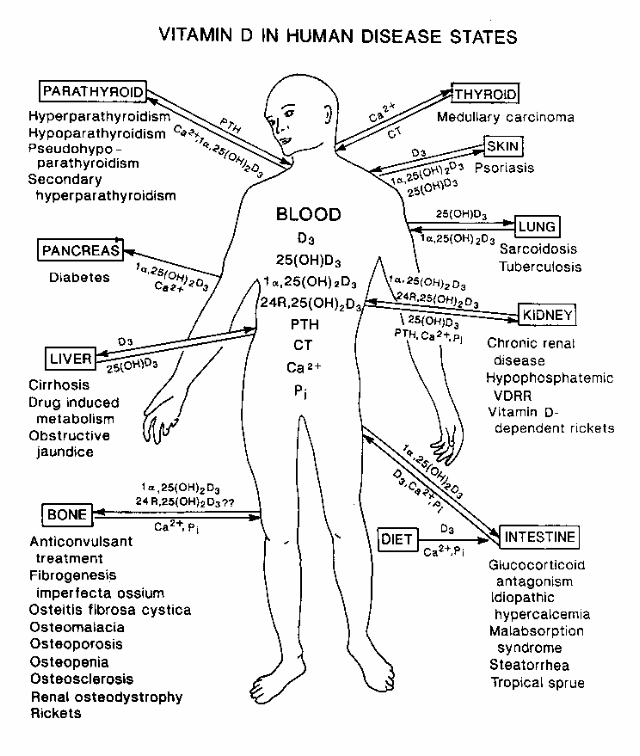
Vitamin DThe benefits that a person can draw from vitamin D are too much to be listed. We know that one of the reasons that make people bask in the sun is to help in the synthesis of this crucial vitamin. Without this vitamin there are several ailments that a person is bound to suffer from. Basic knowledge of vitamin D is that it helps in strengthening bones of teeth but it has far more benefits that many people have never known of, one of its many benefits is that it is a chronobiological Stress Hormone

Vitamin D as a Chronobiological Stress Hormone

If you haven’t taken to basking in the sun seriously, it is time you need to begin doing so for as Alexander Wunsch has it, vitamin D is a kind of “seasonal stress hormone,” explaining that chronobiological stress hormones such as adrenocorticotropic hormone (ACTH), and adrenaline-cortisol hormone blends are what enable you to get up in the morning, and help regulate the blood sugar concentration in your body, just to name a couple of their functions. According to Wunsch, Vitamin D has greater importance that if the sun would stop shining then very many creatures will lose life.

the sun should shine but we have summer and winter among other crucial seasons, in these seasons the body ought to balance the thermal energy so as to ensure optimal health, during the summer the main focus of the body is to concentrate on cooling down the system while during the winter the focus of the body is to concentrate on heating the system. Therefore it is prudent for a person to bask in the sun during the summer, laying naked in the sun as that’s the best way to get more of the light, digest enough of the energy that is eventually is transformed into thermal energy.

As it has been taught, learnt and rehearsed, vitamin D has very vital functions for our health. There is need for this crucial hormone to ensure that our systems perform optimally. Our bodies are dependent on this crucial vitamin that is sourced from nature’s shine. The need for this crucial vitamin can’t be erased by the fact that some of us are not fortunate enough to live in areas where there is perpetual sunshine but are rather barred by cold weather from getting adequate sun exposure. it is therefore required of people in this areas to eat foods that are rich in Vitamin D to help in its supplementation but whenever there is a slight chance to bask in the sun, the chance should be utilized as the sun is the best source of vitamin D. in other scenarios when the lack of this vitamin may cause to even bigger health risks, it is advisable for the victim to seek Sun therapy.

Heliotherapy

Heliotherapy is a better idea to help equip the body impoverished of vitamin D. heliotherapy involves exposing oneself to sunlight or UV light from sources which are safe. exposure to sunlight may expose you to risk of skin cancer as have been taught but the intensity that cause cancer is rarely actualized, therefore it is prudent to say that the benefits that you can draw from basking in the sun far outweighs the risks. In the past before the risk of cancer began scaring us, the sun therapy was already being used to treat such diseases as rickets, tuberculosis and other diseases caused by vitamin D deficiency. Risk or no risk we need to accept the reality that we need sun at certain dosages and levels to ensure that our systems are working efficiently without flaws.

Vitamin DThere is something that many people have never known; your capillaries are modified under the sun and that the skin is linked to the autonomic nervous system, vitamin D is also a seasonal stress hormone popularly known as a chronobiological stress hormone. This is a phenomenon that needs no rocket science to be proven; if you are keen you will realize that after basking in the sun your stress levels go down and this is not the only benefit, there is more you will gain when you look far beyond the UVB portion of the spectrum. The UVB helps in synthesis of vitamin D.

According to Wunsch the sun is a life giver; “We all should be aware of the fact that when the sun was to stop shining, nothing would be alive in two or three days on this planet,” Wunsch says.

“When we are eating, we are eating transformed light. We can prove this scientifically, as you know. I think even if we are not able to estimate the influence light has on our biological system as a whole, it starts on the single cell level and it ends in our consciousness, in our mental functions. Light is a symbol in our culture, which will always be our companion.” he concludes

conference

From what we have gathered in research findings and the massive research work by Alexander wunsch we can conclude that vitamin D is a crucial part of our health and is also a therapy for seasonal stress. Basking in the sun helps relieve stress and therefore there is lots of reason in concluding that vitamin D, the sunshine hormone is seasonal stress hormone that everybody should consider supplementing.

Vitamin D as A Kind of “Seasonal Stress Hormone,” Chronobiological Stress Hormones.


Facebooktwitterpinterestlinkedin