Category Archives: Detoxification

Obesity an addiction

Childhood obesity roots and detection
Childhood obesity roots

Childhood obesity roots and detection is essential is keeping the good health they all deserve

Childhood obesity roots and detection: Being obese and overweight

The health complication of being overweight in children are no different from adults. It therefore means that childhood obesity roots and detections are equally the same. Therefore, it is important for anyone (including children), to note that their weight is dependent on how much energy they take in (the calories in food and drink) and how much energy the body uses (burns) up:

  • If the amount of calories that you eat equals the amount of energy that your body uses up, then your weight remains stable.
  • If you eat fewer calories than you burn up, you lose weight. Your body has to tap into its fat stores to get the extra energy it needs.
  • If you eat more calories than you burn up, you put on weight. The excess energy is converted into fat and stored in your body.

The reasons why energy taken in may not balance energy used up and may lead to weight gain in children, include the following:

The portions a child eat or drink – Overweight in children is mainly because they eat and drink more than their body needs. Having too sugary foods or drinks or fatty is a common problem.

Lack of physical activities – It is important to note that a child may be eating the right type and quantity of food but, if they are not physically active, they may put on weight. Luck or inadequate exercise also contribute weight gain in children.

Childhood obesity roots and detection: Geneticshttp://www.I-AM-I.com/wp-admin

Various studies has established that children born of one or both parents who are obese stand higher risk of becoming obese themselves. This may be due to learning bad eating habits from parents. Nonetheless, some people inherit this in their genes that makes them prone to overeating. It is however not fully understood how this genetic factor works. It has something to do with the control of appetite. When you eat, certain hormones and brain chemicals send messages to parts of your brain to say that you have had enough and to stop eating. In some people, this control of appetite and the feeling of fullness (satiety) may be faulty, or not as good as it is in others.

Lack of enough sleep – Not getting enough sleep has been suggested as another possible risk factor for obesity in children. There seems to be a trend of children going to bed later but, also, too little physical exercise can lead to poor sleep. The two hormones known as leptin and ghrelin may be important here.

  • Leptin is released by fat cells to tell your brain that fat stores are sufficient.
  • Ghrelin is released by your stomach as a signal of hunger.

In someone who does not have enough sleep, leptin levels are low and ghrelin levels are high. These changes in hormone levels may encourage a child to eat more.

Finally, having known the causes of this unhealthy condition, together we can kick obesity out of our families. Our children must not grow into obese adults. Doctor Akoury and her team of experts are there for you and your family to help you bring up healthy children free from obesity. All you need to do is to schedule an appointment with her today.

Childhood obesity roots and detection: Being obese and overweight

http://regenerativepotential.com/wp-admin

Facebooktwitterpinterestlinkedin
Weight loss

Body inflammation and obesity

Body inflammation

Body inflammation and obesity and remember that all cellular body inflammation causes obesity and can all be addressed by change of life style

Body inflammation and obesity: How it brings about weight gain

A common theme that links many diseases and chronic illness is uncontrolled cellular inflammation. It is a factor in diseases including cardiovascular disease, diabetes, cancer, arthritis and many autoimmune-related conditions. Obesity has recently been added to this group of diseases as it is now known to present a low grade inflammatory response within many of the body’s tissues, which cause deleterious effects, leading to the development of cardiovascular and metabolic disease. It is well known that being overweight is detrimental to one’s health, but until recently the known mechanisms were limited. Scientists over the last decade have started to unravel the mystery of why body inflammation and obesity leads to premature death. Although there is still much to learn, it is valuable to comprehend the known effects of chronic inflammation, as the prevalence of obesity continues to be a rising problem among the American population, particularly in children.

Body inflammation and obesity: Inflammation and obesity

Inflammation is, by design, a protective response leading to the repair of tissue. Speaking to the experts at AWAREmed health and wellness resource center under the leadership of doctor Dalal Akoury MD it is evident that when inflammation becomes chronic, as is the case with obesity, chemical mediators, derived from different cellular activities, change in dynamics causing a progressive state of decline. Fat cells are now considered an immune organ that secretes numerous immune modulating chemicals. Visceral fat, in particular, is associated with the low grade inflammation that seems to be a contributing pathologic feature for metabolic disease through insulin resistance and the promotion of atherosclerotic build-up in circulatory vessels.

When high levels of visceral fat are combined with physical inactivity, over nutrition, and advancement in age, the effect becomes more pronounced. Visceral fat is highly metabolic and contributes to cytokine hyperactivity. Adipokines secreted from fat tissue influence the metabolic process and contribute to proper function. The consequent low grade inflammation associated with obesity causes disturbance in the secretion and function of adipokines. Research has identified changes in adiponectin, leptin, and resistin that exhibit harmful effects upon the body in obese individuals.

Leptin regulates energy metabolism and balance in conjunction with the brain’s hypothalamus. Leptin is currently being touted as having cardio-protective benefits among its others roles in metabolism Leptin concentrations adjust in response to obesity and contribute to insulin resistance.

The changes in leptin concentration have also been recognized as a risk factor for coronary heart disease. Likewise increased resistin concentrations correlate with obesity related inflammation and may be associated with the initiation and progression of atherosclerotic lesions. Resistin also promotes insulin resistance, although the actual mechanism is not known.

Insulin resistance due to adipokine dysfunction is further influenced by free fatty acids liberated directly into the liver from visceral fat tissue. Visceral fat releases chemicals and fatty acids into the portal system where they act on the connecting organs. The portal circulation system is a specialized network of blood vessels that connect the visceral organs to the liver.

The excess fat in portal circulation has detrimental effects on insulin action, which is worsened by sympathetic hyperactivity in response to obesity. Sympathetic hyperactivity causes heightened lypolytic action resulting in excess free fatty acids in the blood. These actions combined with beta cell hypersecretion and reduced insulin clearance resulting in hyperinsulemia, lead to early stage diabetes. This explains why body inflammation and obesity must not be given room to thrive in one’s life. You can seek for more professional information by scheduling an appointment with doctor Akoury today and your life will be transformed positively.

Body inflammation and obesity: How it brings about weight gain

http://www.I-AM-I.com/wp-admin

Facebooktwitterpinterestlinkedin
HORMONES AND WEIGHT GAIN

Leaky gut disorder and inflammation

Leaky gut disorder

Leaky gut disorder and inflammation can ruin ones health if not addressed promptly

Leaky gut disorder and inflammation: How will they make weight loss impossible?

Leaky gut can be a difficult diagnosis to establish for a number of reasons: It’s associated with a wide range of seemingly unconnected symptoms; it has a lot of different causes; there’s no specific test to confirm it; and evidence tying it to other conditions can be murky. As a result, there’s a fair amount of skepticism in the mainstream medical community about the legitimacy of leaky gut as a diagnosis. But as the evidence that this is indeed a real and recognizable condition grows, opinions are slowly changing. Nonetheless, according to the experts at AWAREmed health and wellness resource center under the leadership of doctor Dalal Akoury MD that’s a good thing, because leaky gut disorder is likely to emerge as one of the most significant medical concepts of our time.

Leaky gut disorder and inflammation: How leaky gut affects you

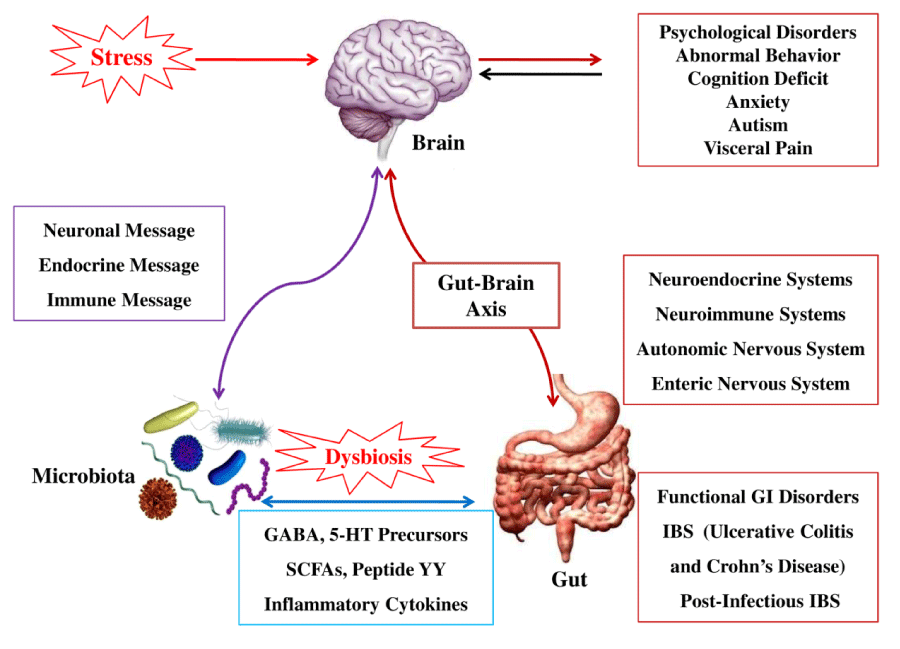
The digestive lining serves is an important barrier function. It’s like a sieve with very tiny holes allowing only small substances to go through, while keeping out larger undesirable particles. With leaky gut, also known as increased intestinal permeability, the net becomes damaged, resulting in bigger holes that allow more things to pass through that ordinarily couldn’t. doctor Akoury reiterates that when the barrier function becomes compromised, bacteria, viruses, undigested food particles and toxic waste products can leak from the inside of your intestines through the damaged digestive lining into your bloodstream, where they’re transported throughout your body and can trigger your immune system to react. The end result is inflammation in various parts of your body, leading to a wide variety of symptoms like bloating, cramps, fatigue, food sensitivities, flushing, achy joints, headache and rashes.

Remember that with leaky gut, not only is the digestive lining more porous and less selective about what can get in, but normal absorption can also be affected. Nutritional deficiencies may develop as a result of damage to the villi – the finger-like projections in the small intestine that are responsible for absorbing nutrients. Multiple food sensitivities are another hallmark of leaky gut, because partially digested particles of protein and fat may leak through the intestinal wall into the bloodstream and cause an allergic response. Increased intestinal permeability may potentially cause or worsen a number of other conditions, including Celiac disease, inflammatory bowel disease (IBD, which includes Crohn’s disease and ulcerative colitis), irritable bowel syndrome (IBS), arthritis, psoriasis, eczema and asthma.

Finally, even as we get to the end of this discussion, you good health is our priority as experts from AWAREmed health center. To that effect, we will be discussing the causes shortly in our next article and this is going to be very informative. You definitely don’t want to miss this, stay tuned and be well informed about leaky gut disorder and inflammation and their effect on weight management. But in the meantime, if you have any concern about leaky gut disorder or syndrome and inflammation, you can schedule an appointment with doctor Akoury now for more professional insight.

Leaky gut disorder and inflammation: How will they make weight loss impossible?

http://regenerativepotential.com/wp-admin

Facebooktwitterpinterestlinkedin
Adrenal Exhaustion Female sex addiction

Understanding Adrenal and weight loss:

Understanding Adrenal

Understanding Adrenal and weight loss essentially to make proper decisions about your health

Understanding Adrenal and weight loss: Physiological changes when stressed up

The demands of life have continually consumed out time and at times with a lot of stress. Real life situations that can be stressful may include illness, relationship difficulties, work struggles, caring for an aging parent or ailing child and many others. When they happen, they leave a strong physical impact. Because of this, many often turn to food for comfort, and sometimes, we may not nourish ourselves adequately along the way. And according to the experts at AWAREmed health and wellness resource center under the leadership of doctor Dalal Akoury MD when people are stressed, certain physical changes takes place including weight gain. Ideally, this may not happen overnight, but if we do not pay attention to our body’s needs, over time we may notice some additional pounds. And that is why our focus in this discussion is going to be on the understanding adrenal and weight loss. Did you know that our adrenal glands govern our stress response, by secreting hormones relative to our stress levels? They control many hormonal cycles and functions in the body. When the adrenal glands are overworked, the body prepares for disaster by storing fat and calories. We then crave for foods, lose precious energy, and we gain weight.

Understanding Adrenal and weight loss: How stress becomes physical

From the earliest days of dinosaurs and cavemen, nature has proven its ability to put fear in human beings. Life and death circumstances have evolved around the ability to understand the danger and seek protection and survival. If you were being chased by a predator, your adrenal glands initiated a “fight or flight” response, releasing adrenaline and cortisol into the body. These hormones provided extra physical energy and strength from stored carbohydrates and fats. While most of our stressors are not the same, our earliest ancestors, the body’s natural course of evolution has maintained this original fight-or-flight stress response. But whether we are being physically threatened or not, with any increased stress our body looks to its stored fuel and then replenishes it when used. Also, with increased levels of cortisol, our body also does not respond as well to leptin, the hormone that makes us feel full, so we eat more.

Modern-day stress may be more psychological than physiological, but it is also more constant. Many of us face chronic stress as a way of life, which means we have consistently elevated levels of cortisol. Now the body thinks it continually needs extra fuel, and typically stores that as fat around the abdomen, or as it’s commonly referred to, the old “spare tire.”

Understanding Adrenal and weight loss: Belly fat a common sign of adrenal fatigue

Adrenal imbalance causes a number of issues, including an expanded waistline. The science behind it is quite interesting. Normally when we begin to feel hungry, our blood sugar drops and the brain sends a message to the adrenal glands to release cortisol which activates glucose, fats, and amino acids to keep our body fueled with energy until we eat. Cortisol maintains blood sugar levels, and insulin helps our cells absorb glucose. When we have long term stress, both insulin and cortisol remain elevated in the blood, and the extra glucose is stored as fat mostly in the abdomen which is why understanding adrenal is important.

Finally, doctor Akoury reiterates that fat cells have special receptors for the stress hormone cortisol and more receptors in our abdominal fat cells than anywhere else in our bodies. That is why belly fat is an active tissue, acting as an endocrine organ that responds to the stress response by welcoming more fat to be deposited. This is an ongoing cycle until we take steps to correct this adrenal imbalance. We will be looking into that progressively but in the meantime, you can schedule an appointment with doctor Akoury for further professional direction.

Understanding Adrenal and weight loss: Physiological changes when stressed up

http://www.I-AM-I.com/wp-admin

Facebooktwitterpinterestlinkedin
HORMONES AND WEIGHT GAIN

Healthy adrenal glands and healthy feeding

Healthy adrenal glands

Healthy adrenal glands and healthy feeding a perfect avenue for losing weight objectively

Healthy adrenal glands and healthy feeding: Taking stress off adrenal gland

In all my decades of practicing, I have never seen any sane person who does not want to be healthy. Good health is the most valuable yet priceless asset one can ever have. And that explains why it is only through healthy feeding culture that we can also have healthy adrenal glands explains doctor Dalal Akoury MD President and founder of AWAREmed health and wellness resource center. As we continue with our discussion of healthy adrenal glands, we are going to consider certain facts that support this which includes:

  • What you eat
  • When you eat
  • Having healthy foods on hand and
  • Supplementing your daily diet

What you eat mattersThis may sound quite ironical, but if you want your body to acknowledge its safety and that it is not in danger of starving to death, you need to eat healthy food at regular intervals. Since cortisol helps regulate blood sugar, keeping glucose levels balanced will take some of the stress off the adrenal glands. Three nutritious meals and two healthy snacks spread out across the day will keep our adrenal glands steady.

When you eat matters Our natural circadian rhythms can help us know when our bodies need nourishment and fuel. Cortisol’s cycle complements our body’s own rhythms, although this is highest in the morning and declines gradually throughout the day. When we eat we elevate our cortisol, and that explains why it’s ideal to consume larger meals earlier in the day, which also helps our body prepare itself for restful sleep at night.

Have healthy foods on hand It may be easy to reach for sweets and caffeine for quick energy, but these actually backfire on us, dropping our blood sugar levels rapidly. Reaching for micronutrient-rich foods, such as lean protein, avocado, fresh fruits and vegetable, garlic, and ginger will more adequately support adrenal functioning.

Healthy adrenal glands and healthy feeding: Supplement your daily diet

Finally, as many adrenal experts puts it, when it comes to dietary supplementation for stress adaptation and cortisol control, the first line of defense appears in the form of a comprehensive multivitamin and mineral supplement. The benefits of a daily multivitamin enhance many of the functions in our body. For more information on healthy eating and adrenal glands, it will be prudent for you to seek professional advice from the experts at AWAREmed health and wellness resource center led by doctor Dalal Akoury.

And as you consider that, it will interest you to note that doctor Akoury made a decision to create a medical center whose main objective is to transform each individual’s life through increasing awareness about health and wellness and by empowering individuals to find their own inner healing power. And besides that her practice focuses on personalized medicine through healthy lifestyle choices that deal with primary prevention and underlying causes instead of patching up symptoms. You can reach her on telephone number 843 213 1480 for a one on one professional undertakings about all your concerns on healthy adrenal glands and healthy feeding habits.

Healthy adrenal glands and healthy feeding: Taking stress off adrenal gland

http://www.integrativeaddictionconference.com/wp-admin

Facebooktwitterpinterestlinkedin