Category Archives: addiction

Addiction effects on intimacy and sexual health

Addiction effects on intimacy and sexual relationships: The danger of substance abuse

Addiction effects on sex

You need sexual satisfaction? stop using drugs because addiction affects sexual health negatively

As the problems of drug addiction get rooted into the society, its effect begins to manifest in many areas of life including relationships. When we talk of relationships and addiction, a lot can be derived from this and so for the purpose of this article, we want to focus our discussion on how addiction effects on intimacy and sexual relationships. To this effect doctor Akoury who is an addiction expert of several decades says that for those who constantly abuse alcohol and drugs, this becomes their main source of problem in their sexual life something that can have serious complications in their relationship.

With alcohol and drug abuse in the picture under this circumstance, one of the most immediate casualties from substance abuse will be intimacy. Because the substance of abuse is effective in mind alteration, it may not be possible for users of such drugs to maintain healthy relationships while under the influence of the same. And as the addiction takes tall in them, it will completely take over their life leaving no room for any other meaningful activity. Before any corrective measure is taken, the victim falls into illusion and self-absorption causing them to remain that way until they are treated and delivered from the scourge of addiction. According to the experts at AWAREmed Health and Wellness Resource Center, total recovery from addiction will automatically cause recovered patients to regain their ability to be intimate and enjoy healthy sexual relationships.

Addiction effects on intimacy and sexual relationships: Intimacy defined

As we progress into this discussion, lets us understand what intimacy really is. Broadly the word intimacy is derived from a Latin word meaning inner. We can therefore say that it is the closeness or interpersonal relationships involving both physical and emotional intimacy.

Emotional intimacy can vary in degree and it refers to the closeness that people feel for one another while physical intimacy mostly refers to sexual and romantic contact. Progressively an intimate relationship is understood to include a number of elements like:

  • Trust
  • Where partners in a relationship will have widespread knowledge about each other.
  • Partners in an intimate relationship will feel warmth, affection and care for each other.
  • The expectation of the relationship will be long term.
  • Persons in an intimate relationship may mean that those involved think in terms of us rather than me.
  • Those involved in such a relationship will be committed to each other.
  • There is an expectation that the other partner will treat them fairly.
  • They share and agree mutually on many beliefs, experiences, and opinions.

Addiction effects on intimacy and sexual relationships: Importance of intimacy

Intimacy is an important aspect of being human because of several reasons. Drug addiction and misuse of alcohol has been proven to be the biggest enemies of intimacy and that has necessitated our discussion on this topic “addiction effects on intimacy and sexual relationships.” Therefore for you to make certain informed decisions, the following are some of the importance of intimacy in any relationship:

  • It is through intimacy that partners in a relationship get to appreciate and fully understand who they are. This closeness can easily be altered if either of the partners is struggling with addiction thereby creating rift between them and eventually killing any form of intimacy.
  • Luck of intimacy is very fundamental when it comes to the breakages of marriages and other romantic relationships. The damage that this omission (intimacy) can cause can be very painful thereby causing the feeling of un-fulfillment and more so to the sober partner who will in most cases be the one noticing that the relationship is lacking in intimacy.
  • On matters spirituality, Intimacy can be very vital and it may not be possible to progress as a unit in spiritual terms if people feel locked out from others.
  • Intimate relationships provide strength and support needed for the individual partners giving them the comfort that they do not have to face life on their own.
  • Egocentricity and self-centeredness can lead to a great suffering. However by being intimate with one another partners will be able to break down their own barriers and turn their focus away from themselves.
  • The sense of incompleteness is bound to happen because partners may feel that something is missing in their life if they do not have an intimate sexual relationship. Promiscuous sex without this feeling of closeness can be a hollow substitute.
  • If people lack intimacy in their life it can leave them feeling lonely. Loneliness can be very catastrophic in peoples’ life because it makes them vulnerable to other health complications including depression. The danger of this is that individuals may turn to maladaptive behaviors for solace.
  • Intimacy and sexual relationships are one of the most rewarding parts of the human experience. It is a real shame if people miss out on these aspects of being alive.

Addiction effects on intimacy and sexual relationships: Substance abuse and intimacy

Finally experts are registering that when people are so much into misuse of alcohol and drugs, then maintaining any meaningful intimate relationship becomes very close to impossible. This is expressly true because knowing what drugs are users will become obsessed with these substances and the implication is that they will become so much frustrated with their habit leaving no room for anyone else. And as the individual falls further into addiction they may even lose all interest in sex completely. Remember that addiction effects drive the individual into a world of delusion and selfish action. It will not be possible for another human to trust them fully, and this will prove to be a barrier to intimacy. Nonetheless with all these happening, the individual addict may still have people who love them, but the damage shall have been done meaning that, every time there will be a sense of wariness mixed in with the affection. That is to say, the person who is abusing alcohol or drugs may feel almost incapable of feeling true affection.

Addiction effects on intimacy and sexual relationships: The danger of substance abuse


Facebooktwitterpinterestlinkedin
internet_addiction

The Integrative Approach to Behavioral Addiction

Introducing the Integrative Approach to Behavioral Addiction

Behavioral Addictions:Addictions can come in many forms. For many, it is harder to not eat that cheeseburger than it is to not smoke that cigarette or drink that beer. For others it may be harder to not consistently use sex as a therapy. Yet and still, others may have the hardest time not placing a bet on their favorite prizefighter. Regardless of the category, the person may or may not fall under these three areas constitute behavioral addictions. The upcoming Integrative Addiction Conference being held in Austin, Texas covers these topics and many others.

behavioral AddictionThere are a number of ways to potentially treat behavioral addictions. Some approaches may look to study extensively the genetics of the person and then decide the best approach to treatment that way. Others may focus on sociological and/or psychological factors. In essence, the distinction being made here is that of nature versus nurture. However, much like the great philosopher Aristotle said, the best approach to a person’s behavior would be one that understands thoroughly not one or the other, but rather, both of the areas. It is not nature or nurture – it is nature and nurture. The true cultivation of a human being and their habits is derived from both the people we were born as, as well as from the things we learn and the habits we acquire from our teachers and peers. These are simplifications alluding to the age old anthropological debate, but this should be understood as a mere analogy. An integrative approach to behavioral addiction then, is one that takes in to consideration both genetic or neurological data while also considering an individual’s unique social and psychological environment.

 Check out the Integrative Addiction Conference Being Held In Austin, Texas

 Modern medicine, then, coupled with psychological treatment should both play a role in a successful integrative approach to behavioral addiction. In fact, this traditional dichotomy, even when combined, is still outdated. It really should not stop there. An integrative approach to behavioral addiction can be taken in the most literal of terms. Thus a successful integrative approach to behavioral addiction should be multifaceted, incorporating a number or potential treatment styles. According to the integrated approach philosophy this is essential to maintain function and successfully treat addiction and recovery. The ideal therapy should incorporate a number of approaches such as neurological, social, communal, psychological, or familial factors. This is the basic idea behind the integrative approach to behavioral addiction.

The multifaceted and nuanced approach may bother some used to more cut and dry or traditional methods and approaches to behavioral therapy, but these integrated methods to not exist without justification. Quantitative and qualitative data informs such approaches. As human beings, we most often want to simplify things or put them in categories for our own convenience. In many instances, the underlying reality operating before us that is life is actually more complex than our natural capacities or inclinations want it to be.

For this reason, there is a general trend across various disciplines, academic and professional, that look to incorporate the most multifaceted approaches possible. Rather than relying only on medical data to provide research on depression pills, psychological information is understood to create a more informed outlook. Rather than looking only to the field of Archaeology to understand a given artifact, the field of History is referenced to better understand the social significance of the artifact. As opposed to only referencing empirical physical sciences and quantifier logic to write a contemporary analytic philosophy paper, the poetry of Goethe is referenced and adds perspective to a given metaphysics or epistemology by separating from the leaves and branches and showing us the trees and forest. The general professional and academic trend then is one of being multidiscipline, or multifaceted in approach. The former dichotomies of treatment then should no longer bind us and in fact, most evidence tends to point against them, at least in the most absolute and confining sense of the dichotomy.

Behavioral addiction

What we do know, however, is that the decisions that we make on a daily basis indubitably change the person who we become. This is why a more multifaceted and integrated approach is most likely the most logically sound and effective one. It allows us to take into consideration all of the individual’s unique factors when formulating a treatment plan. If someone is struggling greatly with food, it is important not only what his or her genetic predisposition is, but also what available food is around their everyday environment. Even further, why is it the case that this food is what is available? What are the current socio/economic conditions of the area the person is in? What other hurdles might be getting in the way or discouraging recovery? If there are any, what are the negative influences? Are they people? Are they activities? These are all potential things to consider if we want to have an integrated approach to behavioral addiction.

Similar questions (yet specific to each addiction) should be asked for both gambling and sex addictions as well. The complex physical, psychological, and social factors tend to determine an individual’s behavior. Because of this, an integrated approach to treating these addictive behaviors is a potentially successful and complete one.

The best way to learn all about the integrated approach to behavioral addiction is to attend the upcoming Integrative Addiction Conference being held in Austin, Texas.

Facebooktwitterpinterestlinkedin
gut-brain-axis (1)

Brain-Gut Addiction

How gut addiction affects mental health

There is currently a lot of research being carried out on the relationship between the gut and the brain, and how the gut can affect mental health and inform behavior. Studies have shown that microbes in the gut secrete dopamine and serotonin, and are, in fact, responsible for a large proportion of the production of these neurotransmitters. When the intestinal flora is out of balance, the production of neurotransmitters is affected, resulting in a wide gamut of psychological and mental disorders.

Brain-Gut AxisThe microbiome of our bodies comprises more than 90% of the genetic material present. A study of these organisms and the effect that they have on our body chemistry and processes is a relatively new branch of research, and much of the interactions that govern their behavior and the impact that they have on our physiology are still unknown.

There are also about 100 million neurons embedded in the gut, which forms the enteric nervous system. The enteric nervous system is largely autonomous and controls the digestive processes without input from the brain. This nervous system is also responsible for protecting the body from harmful elements that may enter the digestive tract along with the food ingested. This “second brain” employs much the same mechanics as the cranial brain, including the same neurotransmitters.

The sensory input received by the enteric nervous system is carried to the cranial brain using the vagus nerve, and most of the information flow in only one direction, from the gut to the brain. For instance, the enteric nervous system will inform the brain of contaminated food by inducing cramps or nausea, and passing the message to the brain via the vagus nerve. The vagus nerve also controls the chemical levels in the gut, keeping track of the nutrients absorbed from the food being digested. The behavior in test rats and mice clearly indicated that dopamine and serotonin levels in the brain were affected by damage to the vagus nerve, showing clearly that the brain is affected by what happens in the gut.

Because of the presence of the neurotransmitters in the gut, medications, and treatments for chemical imbalances in the brain, will also affect the gut. This is why the list of side effects for many mood-altering prescription drugs include diarrhea or constipation or other gut-related complications. Similarly, medication that affects the digestive tract will also impact the neurotransmitters in the brain.

Medications such as antibiotics have a marked impact on the intestinal flora that is responsible for the secretion of the neurotransmitters in the gut. Other by-products of the modern lifestyle such as heavy metals and surgical procedures, not to mention diets high in processed foods and simple sugars also greatly impact the chemical balance in the enteric nervous system.

When the chemical balance in the body becomes unstable, there are some reactions. As the beneficial gut flora becomes weakened, serotonin and dopamine levels are affected, which results in changes in our brain chemistry.

In the realm of food cravings and food addiction, it was thought in the past that cravings were the body’s way of asking for nutrients that it was lacking. New research tends to indicate that food cravings and addictions are in fact formed by the bacteria in our gut. For instance, individuals who crave chocolate have different gut microbiota to those who are indifferent to chocolate, even if their diet otherwise does not differ.


Check out our Integrative Addiction Conference 2016 being held in Austin, Texas


Brain-Gut AddictionCravings and addictions can be the body’s way to express deficiencies in certain essential chemicals, such as dopamine or serotonin. A common side effect of dopamine imbalance is an addictive behavior. The person suffering from a shortage of these chemicals will try to find the reactions they create from external sources such as food, alcohol, or drugs. As the addictive substance further impedes the production of the necessary neurotransmitters, more and more is required to maintain the same level of reaction and response. The microbes in the gut also affect anxiety levels, which means that a person with a compromised gut will have a greater level of anxiety and depression, leading to a higher chance of dependence on and addiction to drugs and other mood-altering substances. Unless the root problem of the compromised digestive microbiota is addressed, there is also a greater likelihood that addicts will relapse after rehab, as a result of these elevated anxiety levels.

At the Integrative Addition Conference later this year, the link between the gut, the brain, and addiction will be discussed in more detail. Register at http://regenerativepotential.com/integrativeaddictionconference/ to learn more about the brain-gut link and addiction, and to attend the conference where expert speakers will address this and other topics.


Facebooktwitterpinterestlinkedin
BEHAVIORAL THERAPY

Behavioral Treatment Of Sex Addiction

Behavioral Treatment Of Sex Addiction: Individual therapy

The common problem many people have today is not knowing how to deal with all these addictive problems. take for instance behavioral treatment of sex addiction is one such conditions that experts have been following for sometime now. We want to inform you of some of the insights you need to know in this journey so that you can take appropriate remedial actions when faced with such challenges

  • Sex therapy
    • Available from licensed therapists dealing with sex addiction and covered by the International Institute for Trauma and Addiction Professionals.
    • Also available from licensed therapists certified by the American Association of Sexuality Educators, Counselors, and Therapists.
    • Intensive outpatient programs are available for those patients who may be in crisis but do not require hospitalization for their illness.
      • These programs usually last for several weeks or several months.
      • Work toward stabilizing the lives of patients recommended for treatment of sexual addictions.
      • Lead to individual therapy, group counseling, couples counseling
      • The goal is to help patients address, understand and overcome triggers in everyday lives leading to compulsive sexual behavior and acting out.

Behavioral Treatment Of Sex Addiction: Cognitive behavioral therapy

  • This is a form of psychotherapy which stresses solving current problems and eliminating unhelpful thinking.
  • Problem-focused and action oriented
    • is effective for the following conditions:
      • eating disorders
      • sexual disorders (including sexual addictions)
      • anxiety disorders
      • mood disorders
      • dependency disorders
      • tics
      • psychotic disorders
    • This form of therapy is based on the belief that changing maladaptive thinking changes the actions and emotions of those who can do this. Another form of cognitive behavioral therapy believes that changing one’s relationship to the maladaptive thoughts can be equal as effective (and easier).
      • Encourages people to identify and challenge erroneous beliefs to decrease personal stress and end self-defeating behavior.
      • Encourages patients to replace maladaptive coping skills with more effective strategies by challenging the way patient thinks and the way they react to certain habits and behaviors
        • This therapy has six phases
          • Assessment or psychological assessment
          • Reconceptualization
          • Skills acquisition
          • Skills consolidation and application training
          • Generalization and maintenance
          • Post-treatment assessment follow-up
        • In adults, CBT has been shown to be effective for
          • anxiety disorders
          • depression
          • eating disorders
          • personality disorders
          • psychosis
          • schizophrenia
          • substance abuse disorders

BEHAVIORAL THERAPY

Behavioral Treatment Of Sex Addiction: Psychodynamic therapy

Similar to psychoanalysis, but less intensive

  • Relies upon the relationship between the therapist and client more than other in-depth psychology.
  • Has been used in individual psychotherapy and family therapy
  • Core Principles
    • An emphasis on intrapsychic and unconscious conflicts and how they relate to development
    • seeing defenses as developing in internal psychic structures to minimize unpleasant consequences of conflict
    • A belief that psychopathology develops as a result of early childhood experiences
    • A view that internal representations of experiences are organized around interpersonal relationships
    • A conviction that life issues and dynamics will re-emerge as part of the client-therapist relationship called transference and counter-transference
    • use of free association to explore major conflicts and problems
    • focusing on interpretations of transference, defense mechanisms, and current problems and working through these areas
    • trust in insight as critically important for the success of therapy

Behavioral Treatment Of Sex Addiction: Group therapy

Therapeutic Principles

    • Universality of experience
    • Altruism
    • Installation of hope
    • Imparting information
    • corrective recapitulation of the primary family experience
    • Development of socializing techniques
    • Imitative behavior
    • cohesiveness
    • existential factors
    • Catharsis
    • Interpersonal learning
    • Self-understanding
    • Therapeutic goals
      • To use the group process and group context as an agent of change


Behavioral Treatment Of Sex Addiction: Twelve steps

  • This is a program which uses guiding principles to outline a course of action to solve specific problems such as alcoholism, drug addictions, and compulsive diseases
  • These programs usually have 12 “steps” or guiding principles and usually use spiritual language to help the person solve their current problems.
    • They have a large number of members and have been applied to some problems of a compulsive nature, including alcoholism, drug abuse, gambling, overeating, sexual addictions and others.
    • They also have auxiliary groups which usually run concurrently with the other groups for family members and friends of the person directly involved
    • They encourage their members to take responsibility for the problem behaviors which brought them to the group, and point the members in the direction which will enable them to control and resolve their problems
    • They claim a greater rate than other programs and encourage their members to keep coming back after a relapse
    • Use “sponsorship” to help group members control their compulsive behavioral
      • A sponsor is an individual who has more time in the program and is experienced at developing coping skills aimed at cutting down the compulsion and repairing the consequences of the initial problem that brought the client into the group
Behavioral Treatment

Behavioral Treatment Of Sex Addiction is one that can be done by way of individual therapy or even group theraphy

DIALECTICAL-BEHAVIORAL THERAPY

  • This is a modified form of cognitive behavioral therapy to treat people with Borderline Personality Disorder and chronically suicidal individuals and which has since been applied to people suffering from
  • This type of behavioral therapy combines
    • standard cognitive therapy techniques for
      • emotional regulation
      • reality testing
      • with distress tolerance
      • acceptance
      • mindful awareness
    • The first type of behavioral therapy experimentally demonstrated to be effective in treating BPD
      • a randomized study showed reduced rates of suicidal gestures
        • psychiatric hospitalizations
        • and treatment drop-outs
      • Teaches the patient to see therapist as ally rather than as antagonist
      • Involves four components
        • Individual
          • one-on-one sessions with a therapist
            • subjects discussed are
              • weekly issues—issues that have come up during the week. In order of importance, these are
              • Self-injurious, suicidal behaviors, and life-threatening behaviors
              • Therapy-interfering behaviors
              • behaviors that threatened to “derail” or interfere with the course of treatment
              • Quality of life issues
              • improving skills usage
            • Group meetings
              • meets once per week for two and one-half hours and focuses on four modules
                • core mindfulness
                  • being aware, from moment to moment of the stream of awareness from a first-person perspective
                • interpersonal effectiveness
                • emotional regulation

COGNITIVE BEHAVIORAL THERAPY

http://regenerativepotential.com/integrativeaddictionconference/

Facebooktwitterpinterestlinkedin
Behavioral Addiction and Brain Function

Behavioral Addiction and Brain Function

Understanding Behavioral Addiction and Brain Function

Addictive behavior is a compulsion to repeat a rewarding non-drug related behavior repeatedly despite any consequences to the person’s physical, social, financial or mental well-being.  There are genetic factors involved here. The gene transcription factor known as ΔFosB has been identified as being one of the critical factors in the development of addictive states in both behavioral and drug related addictive behaviors.  Overexpression of this gene in the nucleus accumbens is both necessary and sufficient for the neural adaptations seen in addictive behaviors and drug addicts. A recent study suggested a cross-sensitization effect between drug-related behaviors and a natural reward which was mediated by ΔfosB. Besides this increased expression of  ΔfosB, there are many other similarities in the neurobiology of behavioral/drug addictions. 

One of the most important discoveries in the diagnosis and treatment of addictions is the recognition of the drug-based reinforcement and, more importantly, the reward based learning process. There are several structures within the brain that are important in the conditioning process of behavioral addiction. These are called sub-cortical structures.  These sub-cortical structures taken together are called the reward system.  This reward system is something that we all have—it is a necessary survival process, much like digestion. 

Behavioral Addiction and Brain Function

One system being subjected to major study is the amygdala.  The amygdala is a sub-cortical structure that is involved in emotional significance and associated learning.  Research shows that dopamine-sensitive projections from the ventral tegmental area make possible a motivational or learned association with a specific behavior. This means that dopamine neurons play a significant role in the learning and sustaining of many acquired behaviors. 

Three stages 

There are three stages to the dopamine reward system:

  • the initial burst of dopamine
  • triggering of behavior
  • further, impact on the behavior

This means that the most common result of dopamine-based learning is to create addictive properties associated with certain behaviors. The way it works is that once the brain is electrically stimulated (possibly through the addictive behavior), there is a burst of dopamine.  This burst of dopamine further triggers the behavior involved, which encourages these already-stimulated neurons to increase the stimuli.  Once the behavior is triggered, it is very difficult to work away from the dopamine reward system. 

The other side of this equation is the newly found idea that the human brain can anticipate rewards, and can be triggered by the brain’s early detectors of the reward, and can start triggering the behavior that starts the dopamine reward system.  In some cases, it may lead to issues due to error.  These errors can be used as teaching signals to create complex behavior tasks over time. 

Diagnosis 

At the time this article was written, the diagnostic models used do not have the necessary standards to identify behaviors as addictions in a clinical setting. Behavioral addictions have been proposed as a new class of diagnosis in the DM-5, but the only category included in this class is gambling addiction. Internet gaming addiction has been proposed in the appendix as a condition for further study, but this does not help in the diagnosis and treatment of other behavioral addictions such as sex addiction, or the various types of eating addictions. 

Behavioral addictions are sometimes called impulse-control disorders.  These disorders, which include gambling, consumption of alcohol, sex addiction (not limited to but including the use of pornography and sexual intercourse) eating disorders, use of computers and video games, use of the internet, shopping, exercise and stealing (shoplifting) are increasingly recognized as being treatable addictions.

Brain Function

 In August of 2011, the American Society of Addictive Medicine issued the statement that defined all addictions regarding brain changes.  Their statement read in part, “Addiction is a primary, chronic disease of brain reward, memory, motivation, and related circuitry.”  This means that all addictions are potentially susceptible to treatment with pharmaceuticals.

 This is the first time that the American Society of Addictive Medicine has taken the position that substance abuse is not just about substance dependence.  It is about how the brain function of addicts differs from the brain function of non-addicts.  The emphasis here is not on the external factors that act on the reward system but on the system itself.  Food, sexual behaviors, shoplifting, and even chronic hair-pulling can all be linked to this “pathological pursuit of rewards” talked about in this new definition of addiction.

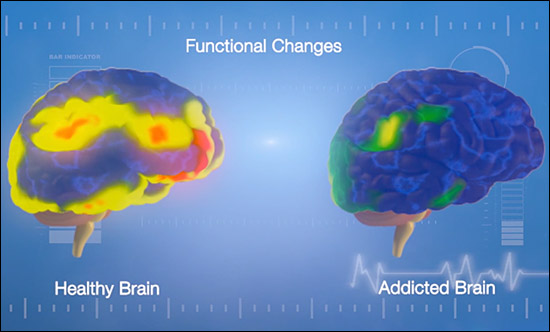
 The thing is, we all have this reward system.  It is a survival mechanism, creating the desire for things that offer satisfaction, like food and sex.  However, in a healthy person, there is a feedback system that limits our consumption.  In an addict, these feedback systems seem to either be absent or, in fact, dysfunctional to the point that instead of “enough” the addict wants “more”.  This is what leads to the unhealthy pursuit of these items. So anyone who has one addiction is vulnerable to others, but this also points to the possible development of effective treatment for addictions that have historically been hard to manage.

Understanding Behavioral Addiction and Brain Function

Facebooktwitterpinterestlinkedin