Tag Archives: Substance dependence

All About Menopause Symptoms, Diagnosis & Treatment

Menopause Symptoms, Diagnosis & Treatment

Menopause is a stage in life. That said when it occurs at the right time it is normal and hence not a disease. Menopause refers to the time when a woman’s menstrual periods stop and her ovaries stop releasing ova. A woman is considered to have hit menopause once she has gone a year without having a menstrual period.  The normal menopause should be happening between 40-60 years of age. However most women hit menopause at 50 years of age. As menopause approaches the menstrual periods become irregular and the flow may either become thicker or lighter however it is not mandatory that these changes must accompany menopause.

Menopause is a normal process that should not cause any reason to worry, however there is also premature menopause. Premature menopause occurs before the age of 40 and can be caused by a variety of things, such as removal of the ovaries, autoimmune disorders, endocrinological reasons, or cancer therapy. Medical interventions, such as a hysterectomy –removal of the uterus may also prevent menstruation. If the ovaries are removed as well, production of the hormones estrogen and progesterone are stopped, causing the symptoms of menopause. Premature menopause should be treated as soon as possible as it may affect negatively the health of a woman.
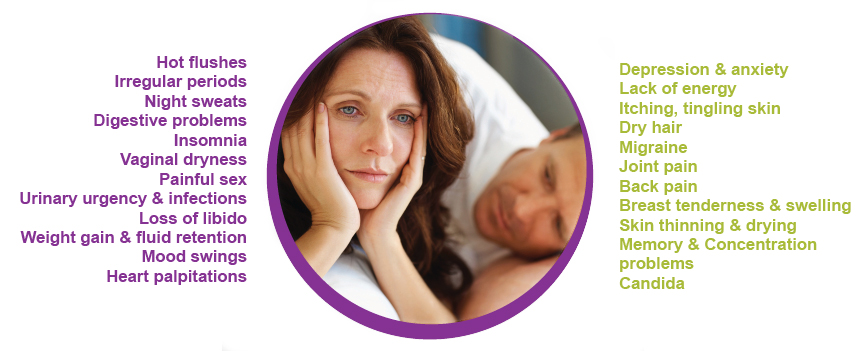
menopause symptoms

Signs and symptoms of menopause

In most cases when a woman is approaching menopause her bleeding patterns will change. The flow may become lighter or heavier, longer or shorter, the time between periods may increase and there may be occasional missed periods. These changes may occur gradually in some women, but in other women they occur more abruptly. Apart from this change in bleeding patterns, there are also other physical and psychological signs and symptoms associated with menopause. In some women they are very mild while in others they are more severe. The symptoms may last for only a few months, or may continue for several years. The average length of time for menopausal symptoms to be experienced is three to five years.

Physical signs and symptoms may include:

  • Headaches
  • Joint and bone pain
  • Palpitations
  • Unusual skin sensations
  • Hot flushes
  • Sweating at night
  • Tiredness
  • Vaginal dryness. Note that during menopause there might be occurrence infections of the urinary tract and vagina due to the thinning of the vagina and bladder walls.

 Psychological signs and symptoms may include:

  • Loss of confidence
  • Forgetfulness
  • Difficulty sleeping
  • Anxiety
  • Reduced interest in sex
  • Irritability and mood swings
  • Difficulty concentrating

Causes of Menopause

Menopause is a very normal process that marks an end of a given lifestyle of a woman. When born a woman has ovaries that are to produce ovum when the right time comes. The release of these ova however has to be controlled by some hormones such as the Follicle stimulating hormone (FSH) and luteinizing hormone (LH) which are secreted by the pituitary gland as part of the normal menstrual cycle. The main work of these hormones is to stimulate the ovary to produce estrogen and progesterone and to release an ovum. As a woman ages, her ovaries don’t respond to FSH or LH as strongly as they used to. Over time, less and less estrogen and progesterone are produced and the woman stops releasing ovum hence the menstrual cycle ceases.

Premature menopause however is a cause for concern. If a woman cannot go through her periods before 40 then she needs to be helped. Premature menopause can be genetic or it can be caused by autoimmune diseases. These diseases produce antibodies that can damage the ovaries. Surgical removal of the ovaries causes artificial menopause, as can chemotherapy or radiation therapy to the pelvis to treat cancer. Different diseases may cause menopause in relation to the way they are treated for example in a case where an ovary is to be surgically removed the woman may become menopausal at an age below 40 which is considered premature menopause.

menopause  symptoms

Menopause Treatment

Menopause is a natural process that should not be treated, however it comes with certain symptoms that must be addressed medically to calm. One of the popular ways of fighting symptoms associated with menopause is the menopause hormonal therapy (MHT). MHT was initially known as hormone replacement therapy (HRT). It involves taking the hormones estrogen and progesterone. MHT can be very good at relieving moderate to severe menopausal symptoms and preventing bone loss. But MHT also has some risks, especially if used for a long time. MHT has been found to be very effective in reducing hot flashes and night sweats, poor sleep, irritability, treating vaginal symptoms, such as dryness and discomfort and pain during sex. Menopause hormonal therapy also helps in slowing bone loss and easing mood swings and depression that are common to women who have hit menopause.

As said earlier MHT has some risks too. It may cause the following;

  • Blood clots
  • Heart attack
  • Stroke
  • Breast cancer
  • Gall bladder disease

A woman’s health is controlled by the hormones, any decline in the levels of estrogen hormones may cause undesired effects on the health of a woman. To be safe from severe symptoms of menopause you need to Request Menopause Treatment Information Today. Contact Dr. Dalal Akoury by calling her on (843) 213-1480. She will surely be able to give a helping hand.

All about Menopause Symptoms, Diagnosis & Treatment


Facebooktwitterpinterestlinkedin

Poor Sleep Insomnia Treatment

Poor Sleep Insomnia Treatment

Just like meals, sleep play a pivotal role in good health and wellbeing of a person. It is the only avenue through which the body rests. Everyone’s individual sleep needs vary. In general, most healthy adults are built for 16 hours of wakefulness and need an average of eight hours of sleep a night. However, some individuals are able to function without sleepiness or drowsiness after as little as six hours of sleep. Others can’t perform at their peak unless they’ve slept ten hours. And, contrary to common myth, the need for sleep doesn’t decline with age but the ability to sleep for six to eight hours at one time may be reduced. In spite of these differences the need for sleep can never be underestimated, everyone needs a good sleep to be able to perform normally.

According to the National Sleep Foundation (NSF), sleep is essential for a person’s health and wellbeing. But still there are millions of people who do not get enough sleep and many suffer from lack of sleep. NSF conducted survey between 1999-2004 that revealed that at least 40 million Americans suffer from over 70 different sleep disorders and 60 percent of adults report having sleep problems a few nights a week or more. Most of those with these problems go undiagnosed and untreated. In addition, more than 40 percent of adults experience daytime sleepiness severe enough to interfere with their daily activities at least a few days each month – with 20 percent reporting problem sleepiness a few days a week or more. Furthermore, 69 percent of children experience one or more sleep problems a few nights or more during a week.

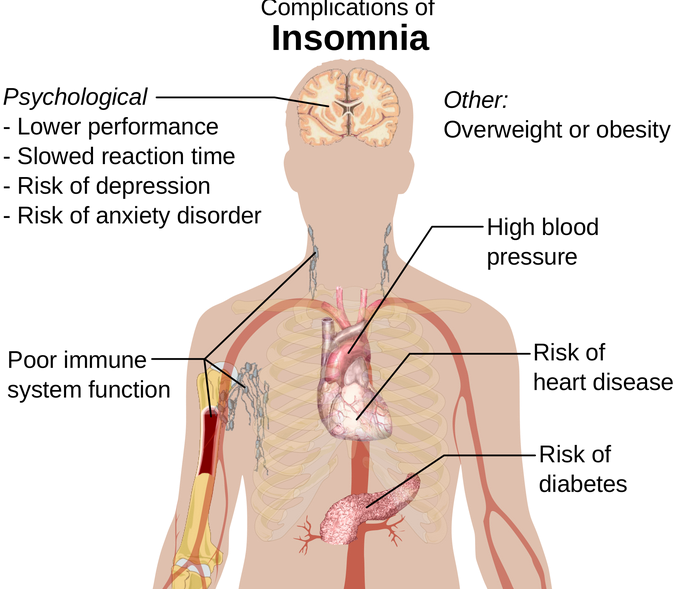
Complications_of_insomnia

What is insomnia?

According to National Sleep Foundation, insomnia is difficulty falling asleep or staying asleep, even when a person has the chance to do so. People with insomnia can feel dissatisfied with their sleep and usually experience the symptoms of poor sleep that may deter them from enjoying healthy lifestyles. This disease can affect people of all ages but adults are the major victims.

Symptoms of Insomnia

  • Irritability, depression or anxiety
  • Difficulty paying attention, focusing on tasks or remembering
  • Increased errors or accidents
  • Tension headaches
  • Distress in the stomach and intestines (gastrointestinal tract)
  • Ongoing worries about sleep
  • Difficulty falling asleep at night
  • Awakening during the night
  • Awakening too early
  • Not feeling well rested after a night’s sleep
  • Daytime tiredness or sleepiness

Types of Insomnia 

Acute insomnia

InsomniaThis refers to a brief period of lack of sleep. This type of insomnia is mostly caused by life events and circumstances for example when you go to bed after receiving a stressful news or an unexcpected news that is too overwhelming. Acute insomnia will affect you for the least time and resolves without any medical intervention.

Chronic insomnia

Chronic insomnia is a situation when a person suffers difficulty in sleep for a longer period of time.

Insomnia is usually considered chronic if a person has trouble falling asleep or staying asleep at least three nights per week for three months or longer. Unlike acute insomnia chronic insomnia needs medical intervention to be resolved.

Comorbid insomnia

Comorbid Insomnia occurs with another condition such as anxiety and depression. Some conditions are known to induce insomnia for example depression. There are also other diseases and medications that may affect sleeping pattern and cause insomnia. This kind of insomnia that is induced by other conditions is what is called comorbid insomnia.

Onset insomnia

This refers to difficulty falling asleep when a person begin sleeping especially at the beginning of the night.

Maintenance insomnia

Maintenance Insomnia refers the inability to stay asleep. People with maintenance insomnia wake up during the night and have difficulty returning to sleep.

 Causes of Insomnia

There are very many causes of insomnia. Here are some of the causes of insomnia.

Stress– when a person is stressed maybe about work or family issues his mind will be pondering on the subject of concern. An active mind makes it difficult for one to sleep. Some common stressors that may lead to insomnia include illness, job issues or even death of a loved one.

Anxiety– Anxiety is a common everyday problem. However there are more serious anxiety disorders like PTSD which will never give your brain a rest. Anxiety beckons insomnia and so should be avoided to help you sleep soundly and reap huge health benefits from it.

Depression- You might either sleep too much or have trouble sleeping if you’re depressed. Insomnia often occurs with other mental health disorders as well.

Medical conditions-there are conditions that will never let you sleep. These conditions may include; chronic pain, chest problems and even frequent urination. These conditions may cause difficulty in sleep. Diseases like cancer, arthritis, heart disease, stroke, Alzheimer’s disease and even Parkinson’s disease have been linked to insomnia.

Insomnia Treatment 

There are adjustments that one can make personally to reduce instances of insomnia. These may include avoiding stress, eating early and avoiding thoughts that may invoke emotions just before going to bed. However there are also medical approaches to treating insomnia. These may include; cognitive behavioral therapy.  We at AWAREmed health and wellness center are dedicated to finding the best natural solutions to health problems. You can visit us at Myrtle Beach South Carolina where you will be attended to by Dr. Dalal Akoury (MD) who has vast experience in integrative medicine for lifestyle diseases.

Poor Sleep Insomnia Treatment


Facebooktwitterpinterestlinkedin

Entertainment Industry and Relationship to Alcohol Addiction

People Employed In the Arts, In the Leisure and Hospitality Prone To Drinking

Many people indulge in drinking of alcohol as leisure. Most people have only evenings and weekends to grab their bottles of alcohol and feel the fun. However there are other people who have all the time they want and can engage in alcohol drinking at any time of the day without this affecting their work relationships or at least they will not face such stiff penalties for drinking alcohol during working hours such as suspension and loss of job. This group that enjoys the freedom to drink alcohol whenever they want and as much as they want are those employed in the arts, in the leisure and hospitality.

George Washington University Medical Center researchers compared the alcoholism rates of various professions. It was found that people who are employed in Arts, leisure and hospitality tops the chart at 15 percent. This group is followed closely by construction and mining at 14.7, retail at 9.7, finance and real estate tied at 9.2, and transportation at 8.2. At only 7.2 percent, professional hunters and fishermen are less than half as likely as artists to be alcoholics. For education, health, social services, it’s 5.4 percent. Public administrators trail the pack at 5.3 percent.

Alcohol addiction

This research however did not give reasons why people employed as artists, in leisure and hospitality engaged more in drinking alcohol than all the other work groups. It is therefore safe to give personal opinion to why these people drink more than any other work group. Here are some of the reasons why those who are employed in art, leisure and hospitality drink alcohol more than those who are employed as teachers, health workers and even those who offer social services.

Most of them own their Jobs

The reason why teachers, health workers and other public servants do not engage more in drinking is because they do not own their jobs and have to abide with certain stipulated codes of conduct failure to which they will lose their jobs. Public servants have nothing special  that can make them not drink as much as artists but the fact that they are employed and must please their employers at all times leaves them with only weekends and evenings to drink and revel.

Public servants are also expected to be the eyes of their profession. In that they ought to paint their profession in a manner that it will be respected by the society. School teachers bear this pressure that they have to be seen as role models by the students they teach and no student will have a drunkard scholar as a role model.

Artists are generally rich

Artists are known to earn much out of their little effort. Take for example an athlete like Usain Bolt who will run few seconds yet earn millions from it. He therefore has too much to spend as compared to a teacher who will work an entire month and still will be left with very little to spare. I am not trying to say that the rich generally drinks more than the poor but the nature of an athlete’s profession leaves him with all the reasons to celebrate as compared to other professional who have nothing to celebrate about their jobs but are merely glued to their jobs just because they need to earn a living from it.

Nature of their work

Where do musicians perform? In offices where only water can be drawn from a dispenser? No most artistes work in places where alcohol is the most available beverage. They perform in bars and clubs where alcohol is just meters away. He lives with the alcohol as he is working but the social workers and other civil servants do not have that immediate access to alcohol as much as the artistes and those working in hospitality. There are people who began working in the hospitality industry when they were not taking alcohol but due to the exposure they got they began indulging in alcohol. You may think it is a choice you make irrespective of where you are but the exposure to alcohol may have a great influence on you.

Addiction

Merrymaking Culture

The salient characteristic of hospitality industry is the merrymaking culture. Drinking alcohol and merrymaking are identical twins therefore it only suits the situation that people working in these areas embrace the culture. You will always be attracted to work where you feel you will enjoy the benefits of such work and that is why most people working in hospitality industry are heavy drinkers. Another reason for their drinking is that they have flexible working time that allows them to create time for their bottle.

Peer influence

In the entertainment industry is where you will find varied trends ranging from hairstyle to dressing code. This influence does not only end in dressing code and appearance of an artist but also in their behaviors. You will find that most upcoming musicians will ape the way of life their roles models live and since most of the artists are drinkers these upcoming artistes grow up knowing that as the norm and embracing it.

Alcoholism is a vice that should be fought by all means that is why we at AWAREmed Health and Wellness Resource Center are committed to availing help to addicts and offering them a place to call home. It does not matter what kind of addiction you are wrestling with right now, just call on Dr. Dalal Akoury (MD) today and begin your journey to victory against addiction.

People Employed In the Arts, In the Leisure and Hospitality Prone To Drinking


Facebooktwitterpinterestlinkedin

Alcoholism Increases the Risk to Diabetes

 Alcoholism Increases the Risk to Diabetes

Alcoholism is a vice that ought to be fought at all costs. This is because apart from the health risks and diseases associated with it, it also affects the economy of a nation. Today there are very many people who have been rendered liabilities to their families as a result of their addiction to alcohol. Most people who have become dependent on alcohol have no places to work. Even if they were employed they will lose their jobs as no organization is interested in employing a person who can’t control his craving for alcohol. Being drunk and disorderly is a common recipe for arrests and so it is not strange to hear men who have been jailed for assaulting their wives when under the influence of alcohol. These are the heavy penalties that our societies suffer as a result of alcoholism. However there are some problems that will affect the individual health wise and this includes diabetes.

Alcohol and Diabetes

What is diabetes?

Diabetes is a lifelong condition that is associated with high blood sugar levels.  The term  describes a group of metabolic diseases in which the person has high blood sugar level which is either caused by deficiency in  insulin production is  or failure of  the body’s cells do not respond appropriately to insulin, or both. Common symptoms associated with high blood sugar level are that the patients will typically experience frequent urination, they will become increasingly thirsty and hungry at the same time.

Diabetes is a serious disease that has disabled many people around the globe and so anything that may heighten the risk of getting this disease should be avoided. In 2013 alone it was estimated that over 382 people in the world had diabetes. That just shows how serious problem diabetes really is. The most common diabetes symptoms include frequent urination, intense thirst and hunger, weight gain, unusual weight loss, fatigue, cuts and bruises that do not heal male sexual dysfunction, numbness and tingling in hands and feet.

What is the relationship between diabetes and alcoholism?

Through numerous research studies scientists have been able to establish the fact that alcoholism can increase a person’s chances of getting diabetes. As known to many, diabetes type 2 is caused when there is insulin resistance. In an experiment done on rats it was found that binge drinking directly caused insulin resistance. In the past it was the link between binge drinking and diabetes had not been established but now scientist have proved that binge drinking alone aside from other factors as overeating can directly cause insulin resistance thereby leading to type 2 diabetes. People with a history of binge drinking have a higher risk of developing metabolic syndrome and type 2 diabetes.

A group of Researchers at the Diabetes Obesity and Metabolism Institute at the Icahn School of Medicine at Mount Sinai, in New York, published their findings in the 30 January issue of the journal Science Translational Medicine.  The scientists report that alcohol appears to disrupt insulin-receptor signaling by causing inflammation in the hypothalamus, an area of the brain that among other things is important for metabolic processes.

Alcoholism induces Insulin Resistance

Typically, the main role of the insulin receptor is to control the uptake of glucose. When there is a decrease in signaling of this receptor the cells will not be able to take up glucose, and this will result in too high sugar level in the blood a condition known as hyperglycemia among other consequences of type 2 diabetes.

Insulin resistance refers to a condition in which insulin does not bind properly to the receptor, thus hindering its ability to send the right signals to cells so they can use glucose for energy. This can happen even when the pancreas is producing enough insulin to keep glucose levels under control. One major symptom of insulin resistance is high levels of insulin in the bloodstream. This is a major component of metabolic syndrome, a group of risk factors that together increase the risk for type 2 diabetes, coronary artery disease, and stroke.

Senior author Christoph Buettner, an Associate Professor of Medicine, Endocrinology, Diabetes and Bone Disease, at the Icahn School of Medicine, is quoted in a research report saying; “Insulin resistance has emerged as a key metabolic defect leading to type 2 diabetes and coronary artery disease (CAD).” This statement shows the link between insulin resistance and type 2 diabetes.

“Someone who regularly binge drinks even once a week, over many years, may remain in an insulin resistant state for an extended period of time, potentially years,” he adds.

In their study, the researchers replicated human binge drinking by giving rats alcohol for three days while keeping another group of rats as controls. Both the groups had the same calorie intake but the control group was not fed alcohol. After the three days the researchers then ran a series of tests to check glucose metabolism. They found that even when there was no trace of alcohol left in their bloodstream, the binge drinking rats had higher levels of circulating insulin than the control rats this was a proof of insulin resistance in the drinking rats. This increase in circulating insulin hormone in the blood of drinking rats was induced by the alcohol.

Alcohol and Diabetes

Another author Claudia Lindtner, an Associate Researcher of Medicine, Endocrinology, Diabetes and Bone Disease at the Icahn School of Medicine, is quoted in the report saying; “Previously it was unclear whether binge drinking was associated with an increased risk for diabetes, since a person who binge drinks may also tend to binge eat, or at least eat too much.”

“Our data show for the first time that binge drinking induces insulin resistance directly and can occur independent of differences in caloric intake,” she concludes.

Drug Addiction is a vice that should be fought by all means that is why we at AWAREmed Health and Wellness Resource Center are committed to availing help to addicts and offering them a place to call home. It does not matter what kind of addiction you are wrestling with right now, just call on Dr. Dalal Akoury (MD) today and begin your journey to victory against addiction.

Alcoholism Increases the Risk to Diabetes


Facebooktwitterpinterestlinkedin

The Need For Private Residential Rehab Clinics

The Need For Private Residential Rehab Clinics Provide To Personalized Treatment

The way people respond to treatments differ. The fact that a person went successfully through an alcohol or other drugs treatment doesn’t mean that you can also go through the same treatment successfully. The standard treatment methods may not work well at certain times but this doesn’t mean that they no longer work. This therefore calls for more personalized, structured, planned program of psychotherapy and other treatments to effectively fight addiction in rehab centers.

Alcohol addiction among executives and professionals is a growing problem in Ireland. Alcohol addiction has a hugely negative impact on individuals, their families and on their workplace environment. There are many people who have lost jobs because of alcohol addiction. Very many families have also been broken because of failed alcohol addiction treatments. This is why private alcohol residential rehab treatment is necessary as it can transform the life of someone with alcohol addiction, rebuild their family relationships and change them from an unproductive employee and a liability in the workplace into a positive and fulfilled employee. This will not only help him health wise but will also improve his social relationships as the stigma that is associated with addicts will be no more.

private-rehab-clinics

There are people who have been through alcohol addiction recovery centers but still did not stop drinking; this doesn’t mean that you can never be free from alcohol. There are alcohol rehabs centers that are offering more personalized treatment that are structured and tailored to suit your condition and correct every nerve dysfunction that you might have suffered as a result of the addiction. If you are related to such a person it is important that you help him seek professional help that may first help him change that perception that he can’t be saved from alcohol use and have him put in a personalized program that will yield desired results. Private alcohol rehab treatment is a better option as compared to the haphazard treatment that may not put in consideration different conditions that the addicts may be battling with as a result of the alcohol use.

Alcohol addiction is one of the most common addictions in the world today. Thanks to ready availability of distilled and fermented beverages that addicts can access whenever they need. There are also different brands that cater for the different tastes of the alcohol drinkers. Unfortunately many alcohol drinkers do not seek help until the problem is severe and they are faced with problems at work, broken family relationships and financial ruin. This may be too late to be solved by standard alcohol recovery procedures.

The benefits of residential rehab treatment

A person who has gone for private residential rehab treatment will enjoy some of the following benefits; Personalized treatment- Private residential rehab clinics offer patients a personalized, structured program of psychotherapy and other activities that are geared towards achieving efficiency and effectiveness in alcohol addiction treatment.  The person will also be available on a 24/7 basis to the staff who will have to will have to do medical assessments on the progress of the program. The program usually includes medical assessments, detoxification, psychotherapy, medical care, psycho-educational lectures, exercise, relapse prevention skills and aftercare planning. Importantly residential rehab clinics provide accommodation for drug and alcohol addicts in a drug-free environment, away from the temptations and distractions of the outside world. The patient is thus able to fully focus on their recovery. When triggers are evaded in a recovery program the patient is likely to succeed in quitting alcohol drinking.

Consistency- in private residential rehab clinics a patient will be consistently getting treatments as the medical staff is there to offer support and guide the patients throughout the whole process unlike in other rehab centers where the patient will be prescribed medicine go home with them to take them alone. In case there is unexpected reaction to the medicine the patient will stop using the drugs or may not use them as prescribed breaching consistency. There are also aftercare programs in private residential clinics and this ensures the patient of ongoing support to desist from alcohol use.

How costly are private residential rehab treatment?

Different private residential rehab clinics charge different prices for their services but there are some factors that are looked into before deciding on what price to charge a client. These factors may include; the length of stay. When your treatment takes longer it is more likely that you will pay more. Expertise of staff also has a influence on pricing as more experienced experts charge more for their services.

private-rehab-clinics

The other crucial factor that affects pricing is the medical therapies offered. The facilities that are available in the clinic for use by the patient will also affect pricing these facilities may include gym among other extra facilities.

Alcoholism is a vice that should be fought by all means that is why we at AWAREmed Health and Wellness Resource Center are committed to availing help to addicts and offering them a place to call home. We offer NER Treatment and Amino acid therapy that are the most effective approaches to addiction treatment and recovery. You call on Dr. Dalal Akoury (MD) today and begin your journey to victory against addiction.

The Need For Private Residential Rehab Clinics Provide To Personalized Treatment


Facebooktwitterpinterestlinkedin