Tag Archives: Substance dependence

Estrogen Imbalances Impacting on Addiction

The Effect of Estrogen Imbalances in the Disease of Addiction

Hormonal fluctuations affect women more adversely than men. The hormone estrogen plays crucial functions in the life of a woman and its supply should not be interrupted. However as a woman is aging the ovaries stop producing this hormone leading to a fall in the level of this hormone. When the level of the estrogen hormone has floored the duties of this hormone will be unattended to leading to myriads of health problems affecting women. Among other problems a woman will experience the following problems when the level of estrogen falls; vaginal dryness, irritability, low sex drive, mood swings, hot flashes and urgency of urination. Pellet implants have been used to treat migraine and menstrual headaches and have been found effective in dealing with menopause symptoms.

According to an article published in the Holy Hormones journal, Female hormones are potent modulators of brain chemicals, neurotransmitters like serotonin and dopamine.  the article reports that when a woman receives the bio-identical hormonal replacement therapy it does not only help with its anti-aging effects but also improves the general quality of life in women as it helps in preventing depression, anxiety and insomnia disorders all of which cause subsequent addiction.

Estrogen Imbalance

Hormonal imbalances cause drug craving

An investigation done at  Florida Detox & Wellness Institute on all hormonal and brain chemical imbalance that can cause drug and alcohol craving it was proved that  many female patients develop addiction issues because of midlife changes in estrogen and progesterone production.  The Institute opines that the reason why these findings have gone undetected is because most addiction treatment centers do not routinely examine the hormones involved in the pituitary-adrenal-ovarian axis.

The involvement of estrogen hormone imbalances in addiction calls for a more integrated treatment to addiction. As opposed to treating only the visible symptoms of addiction, there is need for doctors to integrate spiritual counseling and modern brain science so that the imbalances in the brain chemicals can be corrected making the treatment whole. By evaluating the possible imbalance in the brain and correcting the imbalances by bio-identical hormone therapy, the electrical activity in the brain is balanced and this nullifies the chances of a patient attempting self-medication with drugs of pleasure and alcohol. Clinical studies done at Florida Detox & Wellness Institute have indicated that addicted patients will use drugs and alcohol either to stimulate under-active brain regions or to relax over-active brain systems. The unusual electrical activity in the addicted patient’s brain is typically caused by inherited or acquired biochemical and hormonal deficiencies.

The changes on estrogen levels in midlife causes hormonal imbalance in women and therefore for there to be a successful treatment of an addict there has to be an accurate diagnosis which is based on evaluation of neurotransmitter and hormonal and brain scan research.  By normalizing the underlying biochemical and electrical imbalance drug and alcohol craving can be stopped. There is also need to identify the specific brain chemical and hormonal deficiencies as this will allow for more effective diagnosis of the root cause of the patient’s craving, thus eliminating alcohol and drug addictions.

Addictions that are common in the middle age population can be eliminated by correcting hormonal imbalances.  As women approach menopause the decline in estrogen takes charge however the decline in progesterone hormone normally begins eight years earlier before estrogen begins to decline. It is important to note that the decline in hormones is a gradual process. The drop in levels of progesterone hormone in women will result in such experiences as anxiety and insomnia. Other clinical studies that were done at the Florida Detox & Wellness Institute have shown that the progesterone decline phenomenon is a common etiology of alcohol and drug abuse, which causes over 40 percent of our addicted middle age females.

The biochemical explanation for the increased anxiety experienced by midlife females is that suboptimal progesterone levels occurring in the presence of normal estradiol levels cause an increase in brain electrical activity. Progesterone essentially is a brain relaxing hormone because it converts to another hormone, allopregnanolone. This metabolite of progesterone, allopregnanolone, activates the same relaxing nerve receptor, the GABA-A receptor, as does Valium, Xanax and alcohol.

Estrogen ImbalanceThere is need for balance between the GABA activity and the estradiol production in the body. When there is a loss in GABA activity as a result of dropping progesterone levels a person will develop excess electrical activity in both, their central and peripheral nervous system. This phenomenon occurs because estradiol enhances the excitatory brain chemicals, dopamine and histamine. Their excitatory effect on brain electricity should be counter balanced with the GABA effect of progesterone. The new onset progesterone deficient middle aged female experiences newfound anxiety and insomnia that frequently precipitates the need for relaxing medication which ultimately causes subsequent addiction issues.

Women who have low levels of progesterone hormone will begin using alcohol and other drugs to relax their brain. When this happens, alcohol, just like Valium will activates the GABA-A receptor. This will make them drink more of alcohol increasing the units they take as time goes by as the wine will cease to be just a drink to her but a medication.

The effect of estrogen progesterone imbalance as well as other brain chemicals in causing addiction has been proved beyond any reasonable doubt and it is therefore very important for every addiction patient to ask for hormonal evaluation and restoration when receiving any addiction treatment.

Finally, if you are battling with addiction and is interested in the long lasting, effective addiction treatment therapy please call 843-213-1480 or contact Dr. Dalal Akoury is an experienced doctor who will be able to help you.

The Effect of Estrogen Imbalances in the Disease of Addiction


Facebooktwitterpinterestlinkedin

GABA Restoration In Addiction Therapy

Role of GABA restoration in addiction therapy

There are several drugs of pleasure that people use today. The problem is not exactly in the use of the drugs but rather in the effects they create in the brain. Addiction contrary to what many people think is not a problem with how frequent you take a drug but what even a single puff of or drop of a drug will cause to your brain and the entire nervous system. Composed of the individual nerve cells also known as neurons the nervous system serves as the network in the body. Without this network all communications between the nerve cells will be broken and a person will be incapacitated to even do a simple task as blinking. Typically, nerve signals are transmitted through the length of a neuron as an electrical impulse. When a nerve impulse reaches the end of the neuron it can jump over to the next cell using chemical messengers called neurotransmitters. Therefore without the neurotransmitters the nerves will not be able to send impulses over to other nerve cells in order to initiate specific actions. The neurotransmitters have vital functions in the central nervous system. In the central nervous system these neurotransmitters send impulses between neurons. The functions of the neurotransmitters is not limited to the central nervous system alone but are also crucial in the peripheral nervous system where they send impulses between neurons and gland cells. The peripheral nervous system is composed of nerves that link the central nervous system to the rest of the body.

There are two types of neurotransmitters, the inhibitory transmitters which are known to restore calm in the brain especially after the use of leisure drugs that are known to induce euphoric effects by raising the levels of dopamine and the excitatory neurotransmitters that fires the brain. GABA is one of the inhibitory neurotransmitters that counter the effects of leisure drugs and restores calm in the brain.

GABA restoration

GABA is one of the most abundant neurotransmitters in the central nervous system, and especially in the cerebral cortex. The brain cortex is where thinking occurs and sensations are interpreted. As mentioned above GABA is the primary inhibitory neurotransmitter brain and it helps in tranquillizing stressful, anxious and worrying thoughts. What happens with most drugs of leisure is that they cause instability in the brain leading to anxiety, stress and even depression. These are symptoms of low GABA. Addiction is a cause of low GABA as most drugs deplete GABA. There are several ways through which this can be medically corrected but those with addiction issues usually turn to their drugs as a means of self-medication but this only worsens the situation leading to anxiety and depression. Tranquilizers and downers are no better solutions to low GABA symptoms but finding a safe GABA regulation therapy may help in addiction treatment. The other cause for use of downers and tranquilizers is the rise in the level of norepinephrine. A rise in this neurotransmitter often induces the use of cannabis sativa.

The roles of GABA in the Brain

Made from glutamate in the brain cells, GABA works as an inhibitory neurotransmitter blocking nerve impulses. It is this neurotransmitter that inhibits the actions of dopamine when elevated in level by drug use. Glutamate acts as an excitatory neurotransmitter and when bound to adjacent cells encourages them to fire and send a nerve impulse. However, GABA does the opposite and tells the adjoining cells not to calm, not to send an impulse.

To those with inadequate level of GABA the activities of the excitatory neurotransmitters will not be inhibited and therefore the impulses they send will not be regulated and this often leads to anxiety disorders such as panic attacks, seizures, addiction, Parkinson’s disease and cognitive impairment.

GABA is the most effective neurotransmitter in inhibiting the transmission of nerve impulses from one neuron to another. When this happens it restores calmness in the brain however when drugs are used they inhibit the release of GABA, when GABA release is inhibited there will be more nerve transmissions occurring. These drugs inhibit the release of GABA by causing molecules to bind on neurons near GABA reducing its effect on the neurons. Benzodiazepines and other drugs are known to work in this style, they may also mimic the activities of GABA thereby inhibiting its transmission.

GABA rESTORATION

Need For GABA restoration in addiction Treatment

After a long term use of certain drugs, the level of GABA will be depleted to a point where it will be at an all-time low. This will lead to myriad of complications as the nerve impulses will be unregulated. This will lead to such problems as anxiety, depression, cognitive impairment and seizures among other diseases. Without restoring the level of GABA to healthy limits, any attempt to treat an addict will be ineffective.

Finally, Drug addiction treatment is a complex procedure that needs the input of an experienced integrative doctor. the health of neurotransmitters matters a lot and now that it is known that some drugs depletes these neurotransmitters there is need for treatment of addiction in a manner that restores the functions of the entire nervous system. This is why here at AWAREmed we are dedicated to finding the best solutions to addiction and dependence on substances. Dr. Dalal Akoury (MD) is always in the mood of helping any patient to be addiction free. Do not hesitate to call on her for help in managing any sort of chronic pain as well as other diseases.

Role of GABA restoration in addiction therapy


Facebooktwitterpinterestlinkedin

Role of Intravenous N-acetylcysteine (NAC) for Addiction Therapy

Role of Intravenous N-acetylcysteine for Addiction Therapy

Drug addiction is a vice that many people are fighting with today. In fact the world’s economy has been seriously affected by drug addiction due to the huge amounts of money that many governments and organizations spend in rehabs to help those who are fighting addiction. Addiction recovery has never been an easy procedure. It takes time and resources and most importantly the input of the addict matters a lot. Doctors have been involved in research in the past to try and come up with better ways of help addiction patients through addiction recovery. However, in most cases addicts are treated by using medication detoxification drugs which are chemically similar to the chemical being removed from the body. The patient is given this substance to manage the severity of withdrawal symptoms.

In most cases the substitutes for the chemical used is either Librium or Valium. These drugs are used because they can calm the nervous system. When using these drugs the dose is gradually reduced as symptoms subside. The drugs however do have a half-life for several days after the course is completed. During this process the patient can still experience severe discomfort with tremors, nausea, vomiting, and occasionally even delirium tremens (DTs). These are just some of the disadvantages of using advent pharmaceuticals in fighting addiction in patients besides medical detoxification in drug addiction patients take longer than the IV N-acetylcysteine therapy because the addicted person has also to withdraw from the substitute drug. The fight against addiction from a substance may get complicated when the patient become dependent on the substitute drug.

Intravenous N-acetylcysteine

What is NAC?

NAC or N-acetylcysteine is an acetylized version of the natural amino-acid cysteine that is a precursor to Glutamate, which affects the Glutamate system and is responsible for learning, memory, motivation and cognition. Though still unknown to many patients as an effective medicine in treatment of addicts, N-acetylcysteine has been used by many doctors in treatment of various diseases. This may be because it has psychiatric effects on the glutamate, dopamine and NMDA brain systems.

Effects of NAC on glutamate system

NAC is the most sought after type of Cysteine. N-acetylcysteine works in various ways to help in treating addiction, thanks to its effects on the glutamate system. When the level of N-acetylcysteine is altered it will not only have an effect on oxidative balance but will also modulate neuro-transmitter pathways, including glutamate and dopamine. NAC assists in the regulation of neuronal intra- and extracellular exchange of glutamate through the cysteine–glutamate antiporter. Whereas this antiporter is abundant throughout all cell types, in the brain it is preferentially located on glial cells. The dimer, cysteine, is taken up by astrocytes and exchanged for glutamate, which is released into the extracellular space. This free glutamate appears to stimulate inhibitory metabotropic glutamate receptors on glutamatergic nerve terminals and thereby reduce the synaptic release of glutamate. Given that relation, the amount of N-acetylcysteine in the system as well as the feedback via glutathione (GSH) production by neurons may directly regulate the amount of glutamate present in the extracellular space. Furthermore, GSH itself has been shown to potentiate brain N-methyl-d-aspartate receptor response to glutamate in rats. Changes in the levels of neuronal GSH may not only alter available glutamate levels, but also have direct consequences on glutamatergic function.

Research study on effectiveness of NAC in treatment of addiction

Intravenous N-acetylcysteineA research study done by Steven D. LaRowe, PhD, Pascale Mardikian, MD, Robert Malcolm, MD, Hugh Myrick, MD, Peter Kalivas, PhD, Krista McFarland, PhD, Michael Saladin, PhD, Aimee McRae, PharmD, and Kathleen Brady to investigate  the Safety and Tolerability of N-Acetylcysteine in Cocaine-Dependent Individuals, It was found that N-acetylcysteine (NAC) was safe and well tolerated in thirteen non-treatment-seeking cocaine-dependent adults. The report also showed that the side effects were rather mild. Despite the mild side effects of N-acetylcysteine, it’s effective in treatment of addiction as these mild side effects shown by those patients who were put on NAC therapy did not differ significantly with the side effects that were exhibited by the patients who were on placebo.

For this study; six males and seven females aged between 23 and 45 were used. Of the 13 participants, nine were of African-American origin while four were Caucasian, who met DSM-IV criteria for cocaine dependence but were non-treatment seeking. Of those subjects, eight were primarily crack smokers; two primarily used nasal powder, while the remaining subjects used a mixture of crack, powder, and freebase cocaine. Self-report accounts of cocaine use for the ninety days prior to study participation indicated that subjects used forty out of the ninety days on average or about 44% of the time, spending a daily average of $30 on the drugs. Subjects were recruited flyers, newspaper ads, and word-of-mouth. These research findings pointed out at the effectiveness of N-acetylcysteine in addiction treatment.  This study however was done on a smaller scope but its results may lay a great foundation for further research studies that might be done on this subject.

Finally, Drug Addiction is a vice that should be fought by all means that is why we at AWAREmed Health and Wellness Resource Center are committed to availing help to addicts and offering them a place to call home. It does not matter what kind of addiction you are wrestling with right now, just call on Dr. Dalal Akoury (MD) today and begin your journey to victory against addiction.

Role of Intravenous N-acetylcysteine for Addiction Therapy


Facebooktwitterpinterestlinkedin

It’s A Doctor’s Responsibility: Addiction Treatment

Life Time Risk of Imprisonment If Not Treated

The very existence of the medicine profession is to help find solution to patients who are suffering from various diseases. However in most situations the patients will have to pay for the services offered by the doctor. This is no crime; every profession exists so that those who specialize in those professions can make a living after offering their service. With this said it is good to note that there are times when a patient may need an emergent medical attention but may not be able to pay. During these times the patient should be able to be treated even if the doctor knows that he won’t pay. It is a responsibility of every doctor to tend his services to a patient who needs emergency care even without pay failure to which he will be imprisoned for failing to save a life that would have been saved had he offered his services to the patient on the right time.  Doctors know this and so they strive to give help when these situations pop up.

In medical laws any patient who needs an emergency response has a right to be treated and even a drug addict who is at the verge of losing his life as a result of addiction, withdrawal effects or drug overdose is termed an emergency case and so should be treated just like any other person who might have required a medical emergency from any unfortunate happening like road accident. Any person has a right to treatment at the times of emergency since without treatment the person may become disabled or may die.

Addiction treatment

Both public and private hospitals have a duty to administer medical care to a person experiencing an emergency. It is therefore in every doctor’s domain to treat a patient that needs emergency response failure to which he shall be legally responsible for the death of the patient.

If a hospital hasemergency facilities, it is legally required to provide appropriate treatment to a person experiencing an emergency. If the hospital is unableto provide emergency services, it must provide a referral for approriate treatment. Hospitals cannot refuse to treat prospective patient’s onthe basis of race, religion, or national origin, or refuse to treat someone with HIV or AIDS.

Emergency Medical Treatment and Active Labor Act 

In 1986, Congress passed the Emergency Medical Treatment and Active Labor Act (EMTALA) (42 U.S.C.A. § 1395dd), which establishedcriteria for emergency services and criteria for safe transfer of patients between hospitals. This statute was designed to prevent transferring an undesirable patient to another facility.The law applies to all hospitals receiving federal funds, such asMedicare. The law requires hospitals to provide a screening exam to determine if an emergency condition exists, providestabilizing treatment to any emergency patient or to any woman in active labor before transfer, and continue treatment until a patient can bedischarged or transferred without harm. It also delineates strict guidelines for the transfer of a patient who cannot be stabilized. A hospitalthat negligently or knowingly and willfully violates any of these provisions can be terminated or suspended from Medicare.The physician,the hospital, or both can also be penalized up to $50,000 for each knowing violation of thelaw.

Addiction TreatmentAny patient who needs emergency attention should receive it since if it is delayed there might be a loss of life. Therefore if a doctor is asked to attend to a medical emergency as defined in this statement, he must respond. This is both an ethical and legal obligation and therefore every doctor should abide. However rare there will be times when attending a medical emergency is impossible or unsafe for the doctor or patient. If a doctor chooses not to attend he or she may be required to defend that decision in the event of a charge of professional misconduct or criminal prosecution. The patient who needs medical attention is therefore catered for and should not be ignored.

A doctor is at risk of being professionally or criminally responsible of the death of a patient if he or she fails to render prompt and appropriate medical care to any person whether the patient is a current patient has just came in, in a medical emergency. A doctor who chooses not to attend must have good reason and be able to defend this position at a later time otherwise he will be charged in a court of law for medical negligence.

However there are situations when a doctor, may or should not attend a medical emergency. These scenarios may include;

  • if he or she is already attending another emergency
  • if it is more appropriate for an emergency service to attend (i.e. ambulance or rescue helicopter);
  • the geographical location of the doctor is such that another doctor or medical service can attend more promptly;
  • if he or she is off duty at the time of the call and has been drinking alcohol or taken medication or other substances to a level that may adversely influence the doctor’s level of competence;
  • If attending the emergency places the personal safety of the doctor at risk.
  • The doctor may also not attend to the patient if he is not in the right state of health himself or when he knows he is not competent enough to help the patient.

However a doctor should be able to take good care of the patient even if he is not able to offer any reasonable help to the patient. He should be able to assist the patient to access another health center where he can be helped. If a doctor fails to attend to emergency because of matters of inconvenience he will be charged and prosecuted.

Addicts just like anyone else have rights to emergency attention that is why we at AWAREmed Health and Wellness Resource Center are committed to availing help to patients by availing the needed information and offering them a place to call home. Just call on Dr. Dalal Akoury (MD) today and begin your journey to victory against addiction.

Life Time Risk of Imprisonment If Not Treated


Facebooktwitterpinterestlinkedin

Stem Cell Treatment for Autism Spectrum Disorders

Stem Cell Treatment for Autism Spectrum Disorders

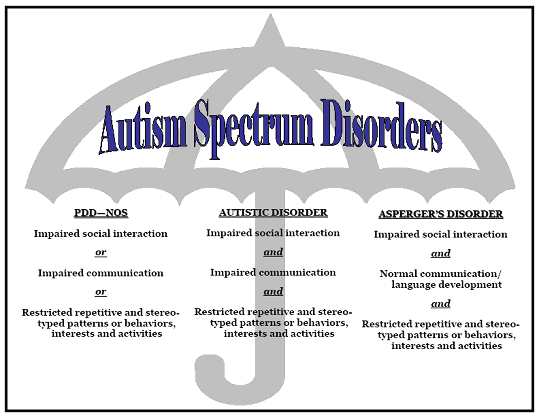
The medicinal properties of the stem cells have seen it being used for treatment of myriad ailments or as therapy for many diseases that are not even treatable. for the cases of these diseases that are not treatable the stem cell therapy helps to alleviate on the dangerous symptoms of the diseases and offer comfort as well as lengthen the lives of those who are victims of these diseases. needless the stem cell therapy has become a crucial component of regenerative medicine with many researchers still working around the subject to find out how its applicability can be useful in treating lifestyle diseases that have become a problem to this generation and many generations to come. The stem cell therapy has been proposed as an effective therapy in cases of autism. Autism spectrum disorders are complex neurodevelopmental disorders. This term refers to a heterogeneous group of varied conditions characterized by dysfunctions in social interactions, skills, and communication, restricted interests, and repetitive stereotypic verbal and non-verbal behaviors, influencing the ability to relate to others. Cognitive, emotional and neurobehavioral abnormalities characterize the core symptoms. The prevalence of these disorders has dramatically increased in the last years, with present rates of 1 in every 88 children aged 8 years in the United States, according to Centers for Disease Control.

Autism Spectrum Disorders

Autism Spectrum Disorders are presumed to be a lifelong disability with multiple impacts on child and adult health. Without a doubt, adult autistic individuals show limited independence because of their learning disability. Adult patients of autism spectrum disorders experience problems in communication. They are not able to read and write well. They’ve got poor comprehension of whatever they read. Apart from impaired communication, they also exhibit stereotyped behaviors and restricted interests. The children affected require special and intensive parental, school, and social support without which coping with the condition may become a nightmare. Autism Spectrum Disorders results in a substantial impact not only on the person’s quality of life but also that of their family. Autism Spectrum Disorders patients are not very easy to take care of, apart from their impaired social behavior, the cost of caring for them is so high. It is estimated that the cost of caring for a single person suffering from Autism Spectrum Disorders for a life time is $3.2 million, therefore this disease by all means is a global problem that should be prioritized and fought from all fronts.

Though the most salient symptoms of these diseases is seen in the cognitive, emotional and neurobehavioral abnormalities, Autism Spectrum Disorders are also characterized by a broad range of biochemical, toxicological and immune involvement, including oxidative stress, endoplasmic reticulum stress, decreased methylation capacity, limited production of glutathione, mitochondrial dysfunction, intestinal dysbiosis, increased toxic metal burden, and immune dysregulations including autoimmunity. Due to these complex problems there has never been any effective medication for autism spectrum disorders that has shown dependable level of efficacy. Today there are only few medications that are licensed by FDA for treating autism related disorders. Needless to emphasize these medications that are available in pharmacies such as anti-psychotics have failed to address the core symptoms of autism spectrum disorders. These medications are quite palliative and have potential adverse effects on the user. For this reason there are other alternative treatments of Autism Spectrum Disorders that have since surfaced. these may include; behavioral, nutritional, and biomedical approaches therefore this creates a vacuum that can be filled with effective therapies like the stem cell therapy but still there is need for more research that a better treatments for this disorder can be found. Despite medical technology advancements it is good to be blunt, Autism spectrum disorders are still untreatable pathologies. Mesenchymal stem cells possess the immunological properties which make them promising candidates as a novel therapeutic option but there is no single therapy that has been found that can treat autism spectrum disorders.

This is how stem cell therapy works for autism

Autism Spectrum DisordersAs mentioned earlier Stem cells are precursors of all cells and are capable of forming cells of other types hematopoietic, nervous and cardiovascular system, endocrine organs, bone, cartilage and muscle tissue. It is with this ability of stem cells to shift shape that it can be harnessed to help treat autism. Early animal studies have shown that stem cells isolated from umbilical cord blood can stimulate cells in the spinal cord to regrow their myelin layers, and in doing so help restore connections with surrounding cells. Autism is thought to result from impaired connectivity in the brain. Because of this, it is practical to apply this therapy on patients with autism spectrum disorders besides Mesenchymal stem cells can regulate the immune system. the mesenchymal stem cells can also help to reverse inflammatory conditions and perhaps this is why very many institutions in the US and across the globe have been doing trials on ability of the stem cells to treat even Cohn’s disease which is a condition resembling the gut inflammation in autistic children. Autism is a serious disease that should be prioritized by the public health stakeholders plus you also need information on how to leave with this disease, Visit us at AWAREmed Health and Wellness Resource Centre at Myrtle Beach, South Carolina. Dr. Dalal Akoury (MD) an expert in integrative and regenerative medicine will be able to help.

Stem Cell Treatment for Autism Spectrum Disorders


Facebooktwitterpinterestlinkedin