Tag Archives: Substance abuse

Correcting Neurotransmitter Imbalances with IV Amino Acids

Correcting Neurotransmitter Imbalances with IV Amino Acids

When taken, drugs will alter the normal the bodily functions. That is no news to even those who use drugs of abuse, in fact the basic definition of a drug is; any substance that when taken will interfere with the normal functions of the body. However some drugs do not only alter minor body functions but go a step further in inhibiting the functions of neurotransmitters to a greater extent.  Most of the drugs that can mimic or interfere with the functions of the neurotransmitters in any way are mostly drugs of pleasure that are prone to abuse and are hence illegal in many parts of the world. The brain and the entire nervous system functions in a way that the entire body needs them to work properly, you can’t imagine how fast the coordination between the central nervous system and the peripheral nervous system is but most important fact to note is that any interference within the nervous system even only to a neurotransmitter goes a long way in affecting the entire body. The brain has various mechanisms through which it accomplishes all the functions of the body. The effect of drugs on the neurotransmitters can be underestimated by those who haven’t known how the neurotransmitters work, here is how the neurotransmitters work.

Neurotransmitters

How Neurotransmitters Work

Neurotransmitters are very crucial in the nervous system. They are the chemicals that transmit messages from one nerve cell to another. Nerve cells are known as neurons. The nerve impulse travels from the first nerve cell through the axon, a single smooth body arising from the nerve cell to the axon terminal and the synaptic knobs. Each synaptic knob communicates with a dendrite or cell body of another neuron, and the synaptic knobs contain neurovesicles that store and release neurotransmitters. The synapse lies between the synaptic knob and the next cell. For the impulse to continue traveling across the synapse to reach the next cell, the synaptic knobs release the neurotransmitter into that space, and the next nerve cell is stimulated to pick up the impulse and continue it. An interference with the neurotransmitters can adversely affect the flow of message within the nervous system. This is what most drugs of abuse do. They affect the harmonious flow of information from the brain to the rest of the body maiming its normal functions. Let’s look at how drugs affect specific neurotransmitters in the nervous system.

How Drugs affect Dopamine and GABA

One of the neurotransmitters that are highly targeted by drugs of pleasure is Dopamine. To some people it is known as the ‘bliss neurotransmitter’. It is responsible for good feeling, the euphoric feelings that drug addicts seek from various drugs of abuse. Dopamine has great influence on well-being, alertness, learning, creativity, attention and concentration. Levels of dopamine should be optimal in the brain since when the level of dopamine is low it can leave us craving food, sex or stimulation. When the dopamine level is too high it can cause addictive behaviors. It has been observed that patients who are put on medications to boost dopamine level especially the Parkinson’s patient, they will form an addictive behavior like gambling when the levels of dopamine shoots beyond the optimal level. Dopamine boosts the feelings of pleasure but when the levels are too high it may result in Paranoia or a suspicious personality. Dopamine is also released when there is high stress. Therefore the level of dopamine should be regulated to ensure sound health. This is where the functions of inhibitory neurotransmitters set in, however with influence of drugs this coordination between excitatory neurotransmitters and inhibitory neurotransmitters is maimed.

Nicotine influences mood, cognition, and body function by binding to and activating nicotinic acetylcholine receptors (nAChRs) located on neurons in the brain. When activated by either nicotine or the endogenous neurotransmitter acetylcholine, the nAChR opens a channel that allows ions to pass through the neuron’s membrane from the exterior to the interior of the cell and trigger changes that activate the cell. When you take tobacco or other drug with nicotine the nicotine will have interactions with nAChRs and therefore any nicotine dependence treatment should focus on altering these interactions.

Nicotine produces rewarding effects by interacting with nAChRs on neurons in the brain’s mesolimbic reward system. This system comprises dopaminergic neurons that originate in the ventral tegmental area often shortened as VTA and release the neurotransmitter dopamine in regions involved in information processing, memory, and emotions, such as the nucleus accumbens (NAc), hippocampus, amygdala, and prefrontal cortex (PFC). Increases in dopamine levels within the mesolimbic system give rise to rewarding effects. Nicotine directly enhances dopamine levels in the mesolimbic system by interacting with nAChRs on the dopaminergic neurons and causing them to release more of the neurotransmitter. Nicotine also modulates dopamine release indirectly by binding to nAChRs located on excitatory glutamatergic and inhibitory gamma aminobutyric acid (GABAergic) neurons in the ventral tegmental area. These glutamatergic and GABAergic neurons originate from a number of brain areas, such as the NAc, hippocampus, PFC, amygdala, ventral pallidum, and pedunculopontine tegmental nucleus, and regulate the activity of dopaminergic neurons.

Neurotransmitters

Restoring nicotine addiction can’t be done with IV amino acid to restore NER balance

Nicotine is one of the most available addictive substances. You can find it in tea but it can be found in greater proportions. Unfortunately, Nicotine addiction is never easy to fight. And the bitter truth is that nicotine addiction can’t be fought successfully without IV amino acid to restore NER balance. IV amino acids are the best in restoring the balances in the neuroendocrine system. The IV amino acids are the best in detoxification and getting rid of the effects of nicotine and curbing nicotine addiction by ensuring the balance of neuroendocrine chemicals.  With IV amino acid, dopamine has been noted to be the major cause of addiction can be regulated. IV amino acids is used as an  outpatient program which focuses on biochemical detoxification of the body and brain hence perfect treatment for nicotine addiction.

Any addiction treatment must focus on restoring the general well-being of the patient that can only be achieved by restoring the neurotransmitters affected. This is why we at AWAREmed are dedicated to ensuring that we offer the best neuroendocrine restoration. Dr. Dalal Akoury (MD) is one of the few doctors that have embraced the benefits of NER in fighting addiction. Call on her and be helped in finding the best solution for nicotine and other substances addiction.

Neurochemical and Imbalances Involved In With Nicotine & Smoking

Facebooktwitterpinterestlinkedin

Medical Tourism And Treatment of Addiction

The Role of Medical Tourism in Treatment of Addiction

Basically medically tourism can be defined as the act of a person leaving his country to seek medical care in a different country or simply beyond the country’s borders. In the past medical tourism involved patients from third world countries traveling to developed countries in search of qualified medical doctors to treat their diseases. This meant that the patient had good money to spend in treatment in the country he was visiting for medical care. However today medical tourism has taken a new dimension with patients traveling from the developed countries to developing countries for affordable medical care. These patients are evading heavy financial crisis that they may plunge into if they opt to treat the diseases in their own countries where the cost of treatment is higher than in the countries they are visiting.

It is important to appreciate the fact that the patients who leave their countries to come and seek medical attention in developing countries are not destitute. In their countries they may form part of the middle class but they certainly have higher purchasing power than the citizens of the countries they visit for medical attention. They are therefore welcomed in these countries by the governments who view medical tourism as a chance to create more national income from it therefore it is greatly encouraged.

Medical Tourism

Medical tourism is a multimillion business that is known worldwide. However medical tourism if not well managed may result in some problems to the countries the medical tourist visit. Just like the common tourism you always know of, I mean that of adventure and leisure that has both positive and negative impacts on the countries the tourists visit the medical tourism is also a double edged sword. It therefore needs to be well managed for the benefits to be enjoyed. Apart from all the benefits that a country visited by a medical tourist will get, we need to look at the role of medical tourism in treatment of addiction.

Medical Tourism avails effective treatment for addiction

Medical tourism has far many benefits to an addict seeking help. To begin with we know that that the biggest hurdle to addicts in overcoming addiction is the presence of triggers that lie just outside the rehab walls. A change in the environment especially leaving a country to a different provides an addict with an opportunity to evade these triggers that may make him to fall back into drug use. These triggers may include the people they were drinking with or even some type of music that is usually played in bars and other places of leisure as people drink and use other drugs. When a person is receiving treatment in a different country, not only the location changes but also the culture which places learning and adventure at the top of the list while pulling the triggers out of the way of an addict.

The addict will also have access to some of the most unique addiction treatment practices across the world, treatments that have been used for centuries in treatment of addiction and have been proved to be very effective. Without the limits of the addicts country’s borders, a whole new world of variety of effective treatments open up for the addict to explore and choose from, of course with help from highly qualified doctors and healers. An example of a unique treatment of addiction that medical tourism avails for an addict is the Ayurvedic herbal Treatment;

Ayurvedic Herbal Treatments of addiction

Ayurvedic treatments are one of the oldest therapies in the world with its roots in India. It is based on the belief that health and wellness depend on a delicate balance between the mind, body, and spirit. The primary focus of Ayurvedic medicine is to promote good health, rather than fight disease. But treatments may be recommended for specific health problems. The best thing with ayurvedic treatment is that it is holistic. That is to say that it focuses more on the wellness of the patient other than on treating the patient of the symptoms of the disease. It focuses on uprooting the disease by maintaining the delicate balance of the mind, the body and the spiritual being of the patient.

Medical TourismOne of the greatest Ayurvedic theories is that everything in the universe be it living or not are not is connected. Good health is achieved when your mind, body, and spirit are in harmony with the universe. Even the slightest disruption of this harmony can lead to poor health and sickness. A person should therefore coexist with the universe. To begin with you need to appreciate the fact that anything that affects your physical, spiritual, or emotional well-being can cause you to be out of balance with the universe and therefore bring you lots of diseases. Ayurvedic treatment is also known as Ayurveda. Through medical tourism addicts from all over the world have been travelling to India for Ayurvedic herbal treatments. This can be credited to its effectiveness in treatment of addiction. Ayurvedic medicine works through these mediums to help an addict overcome addiction and offer complete healing.

Ayurvedic Diet– through ayurvedic diet, a patient will get lost nutrients restored; ayurvedic healers will tailor a diet aimed at recovery for every patient.

Meditation – this is a crucial part of Ayurveda. Meditation helps addicts in the path of self-discovery and also helps them deal with stress and depression better. It effectively addresses depression which is common in addicts as a withdrawal symptom.

Yoga– this involves a series of exercise and postures that will help in deep purification that is needed in getting drug debris out of the system of the patient. It only improves good health and restores the balance of energy in the body.

Achieving Balance– when a person has recovered from drug addiction, ayurvedic medicine will help him to achieve and maintain the physical, mental, and spiritual health balance.

Finally, addiction is a disease that should be approached integratively just in order to be won. Medical tourism avails an opportunity for an addict to find integrative medicine that may not be in their countries. Here at AWAREmed we are dedicated to offer the best treatment available to addicts. Contact Dr. Dalal Akoury (MD) for more help in any kind of addiction you may be wrestling with.

The Role of Medical Tourism in Treatment of Addiction


Facebooktwitterpinterestlinkedin

Estrogen Imbalances Impacting on Addiction

The Effect of Estrogen Imbalances in the Disease of Addiction

Hormonal fluctuations affect women more adversely than men. The hormone estrogen plays crucial functions in the life of a woman and its supply should not be interrupted. However as a woman is aging the ovaries stop producing this hormone leading to a fall in the level of this hormone. When the level of the estrogen hormone has floored the duties of this hormone will be unattended to leading to myriads of health problems affecting women. Among other problems a woman will experience the following problems when the level of estrogen falls; vaginal dryness, irritability, low sex drive, mood swings, hot flashes and urgency of urination. Pellet implants have been used to treat migraine and menstrual headaches and have been found effective in dealing with menopause symptoms.

According to an article published in the Holy Hormones journal, Female hormones are potent modulators of brain chemicals, neurotransmitters like serotonin and dopamine.  the article reports that when a woman receives the bio-identical hormonal replacement therapy it does not only help with its anti-aging effects but also improves the general quality of life in women as it helps in preventing depression, anxiety and insomnia disorders all of which cause subsequent addiction.

Estrogen Imbalance

Hormonal imbalances cause drug craving

An investigation done at  Florida Detox & Wellness Institute on all hormonal and brain chemical imbalance that can cause drug and alcohol craving it was proved that  many female patients develop addiction issues because of midlife changes in estrogen and progesterone production.  The Institute opines that the reason why these findings have gone undetected is because most addiction treatment centers do not routinely examine the hormones involved in the pituitary-adrenal-ovarian axis.

The involvement of estrogen hormone imbalances in addiction calls for a more integrated treatment to addiction. As opposed to treating only the visible symptoms of addiction, there is need for doctors to integrate spiritual counseling and modern brain science so that the imbalances in the brain chemicals can be corrected making the treatment whole. By evaluating the possible imbalance in the brain and correcting the imbalances by bio-identical hormone therapy, the electrical activity in the brain is balanced and this nullifies the chances of a patient attempting self-medication with drugs of pleasure and alcohol. Clinical studies done at Florida Detox & Wellness Institute have indicated that addicted patients will use drugs and alcohol either to stimulate under-active brain regions or to relax over-active brain systems. The unusual electrical activity in the addicted patient’s brain is typically caused by inherited or acquired biochemical and hormonal deficiencies.

The changes on estrogen levels in midlife causes hormonal imbalance in women and therefore for there to be a successful treatment of an addict there has to be an accurate diagnosis which is based on evaluation of neurotransmitter and hormonal and brain scan research.  By normalizing the underlying biochemical and electrical imbalance drug and alcohol craving can be stopped. There is also need to identify the specific brain chemical and hormonal deficiencies as this will allow for more effective diagnosis of the root cause of the patient’s craving, thus eliminating alcohol and drug addictions.

Addictions that are common in the middle age population can be eliminated by correcting hormonal imbalances.  As women approach menopause the decline in estrogen takes charge however the decline in progesterone hormone normally begins eight years earlier before estrogen begins to decline. It is important to note that the decline in hormones is a gradual process. The drop in levels of progesterone hormone in women will result in such experiences as anxiety and insomnia. Other clinical studies that were done at the Florida Detox & Wellness Institute have shown that the progesterone decline phenomenon is a common etiology of alcohol and drug abuse, which causes over 40 percent of our addicted middle age females.

The biochemical explanation for the increased anxiety experienced by midlife females is that suboptimal progesterone levels occurring in the presence of normal estradiol levels cause an increase in brain electrical activity. Progesterone essentially is a brain relaxing hormone because it converts to another hormone, allopregnanolone. This metabolite of progesterone, allopregnanolone, activates the same relaxing nerve receptor, the GABA-A receptor, as does Valium, Xanax and alcohol.

Estrogen ImbalanceThere is need for balance between the GABA activity and the estradiol production in the body. When there is a loss in GABA activity as a result of dropping progesterone levels a person will develop excess electrical activity in both, their central and peripheral nervous system. This phenomenon occurs because estradiol enhances the excitatory brain chemicals, dopamine and histamine. Their excitatory effect on brain electricity should be counter balanced with the GABA effect of progesterone. The new onset progesterone deficient middle aged female experiences newfound anxiety and insomnia that frequently precipitates the need for relaxing medication which ultimately causes subsequent addiction issues.

Women who have low levels of progesterone hormone will begin using alcohol and other drugs to relax their brain. When this happens, alcohol, just like Valium will activates the GABA-A receptor. This will make them drink more of alcohol increasing the units they take as time goes by as the wine will cease to be just a drink to her but a medication.

The effect of estrogen progesterone imbalance as well as other brain chemicals in causing addiction has been proved beyond any reasonable doubt and it is therefore very important for every addiction patient to ask for hormonal evaluation and restoration when receiving any addiction treatment.

Finally, if you are battling with addiction and is interested in the long lasting, effective addiction treatment therapy please call 843-213-1480 or contact Dr. Dalal Akoury is an experienced doctor who will be able to help you.

The Effect of Estrogen Imbalances in the Disease of Addiction


Facebooktwitterpinterestlinkedin

Role of Intravenous N-acetylcysteine (NAC) for Addiction Therapy

Role of Intravenous N-acetylcysteine for Addiction Therapy

Drug addiction is a vice that many people are fighting with today. In fact the world’s economy has been seriously affected by drug addiction due to the huge amounts of money that many governments and organizations spend in rehabs to help those who are fighting addiction. Addiction recovery has never been an easy procedure. It takes time and resources and most importantly the input of the addict matters a lot. Doctors have been involved in research in the past to try and come up with better ways of help addiction patients through addiction recovery. However, in most cases addicts are treated by using medication detoxification drugs which are chemically similar to the chemical being removed from the body. The patient is given this substance to manage the severity of withdrawal symptoms.

In most cases the substitutes for the chemical used is either Librium or Valium. These drugs are used because they can calm the nervous system. When using these drugs the dose is gradually reduced as symptoms subside. The drugs however do have a half-life for several days after the course is completed. During this process the patient can still experience severe discomfort with tremors, nausea, vomiting, and occasionally even delirium tremens (DTs). These are just some of the disadvantages of using advent pharmaceuticals in fighting addiction in patients besides medical detoxification in drug addiction patients take longer than the IV N-acetylcysteine therapy because the addicted person has also to withdraw from the substitute drug. The fight against addiction from a substance may get complicated when the patient become dependent on the substitute drug.

Intravenous N-acetylcysteine

What is NAC?

NAC or N-acetylcysteine is an acetylized version of the natural amino-acid cysteine that is a precursor to Glutamate, which affects the Glutamate system and is responsible for learning, memory, motivation and cognition. Though still unknown to many patients as an effective medicine in treatment of addicts, N-acetylcysteine has been used by many doctors in treatment of various diseases. This may be because it has psychiatric effects on the glutamate, dopamine and NMDA brain systems.

Effects of NAC on glutamate system

NAC is the most sought after type of Cysteine. N-acetylcysteine works in various ways to help in treating addiction, thanks to its effects on the glutamate system. When the level of N-acetylcysteine is altered it will not only have an effect on oxidative balance but will also modulate neuro-transmitter pathways, including glutamate and dopamine. NAC assists in the regulation of neuronal intra- and extracellular exchange of glutamate through the cysteine–glutamate antiporter. Whereas this antiporter is abundant throughout all cell types, in the brain it is preferentially located on glial cells. The dimer, cysteine, is taken up by astrocytes and exchanged for glutamate, which is released into the extracellular space. This free glutamate appears to stimulate inhibitory metabotropic glutamate receptors on glutamatergic nerve terminals and thereby reduce the synaptic release of glutamate. Given that relation, the amount of N-acetylcysteine in the system as well as the feedback via glutathione (GSH) production by neurons may directly regulate the amount of glutamate present in the extracellular space. Furthermore, GSH itself has been shown to potentiate brain N-methyl-d-aspartate receptor response to glutamate in rats. Changes in the levels of neuronal GSH may not only alter available glutamate levels, but also have direct consequences on glutamatergic function.

Research study on effectiveness of NAC in treatment of addiction

Intravenous N-acetylcysteineA research study done by Steven D. LaRowe, PhD, Pascale Mardikian, MD, Robert Malcolm, MD, Hugh Myrick, MD, Peter Kalivas, PhD, Krista McFarland, PhD, Michael Saladin, PhD, Aimee McRae, PharmD, and Kathleen Brady to investigate  the Safety and Tolerability of N-Acetylcysteine in Cocaine-Dependent Individuals, It was found that N-acetylcysteine (NAC) was safe and well tolerated in thirteen non-treatment-seeking cocaine-dependent adults. The report also showed that the side effects were rather mild. Despite the mild side effects of N-acetylcysteine, it’s effective in treatment of addiction as these mild side effects shown by those patients who were put on NAC therapy did not differ significantly with the side effects that were exhibited by the patients who were on placebo.

For this study; six males and seven females aged between 23 and 45 were used. Of the 13 participants, nine were of African-American origin while four were Caucasian, who met DSM-IV criteria for cocaine dependence but were non-treatment seeking. Of those subjects, eight were primarily crack smokers; two primarily used nasal powder, while the remaining subjects used a mixture of crack, powder, and freebase cocaine. Self-report accounts of cocaine use for the ninety days prior to study participation indicated that subjects used forty out of the ninety days on average or about 44% of the time, spending a daily average of $30 on the drugs. Subjects were recruited flyers, newspaper ads, and word-of-mouth. These research findings pointed out at the effectiveness of N-acetylcysteine in addiction treatment.  This study however was done on a smaller scope but its results may lay a great foundation for further research studies that might be done on this subject.

Finally, Drug Addiction is a vice that should be fought by all means that is why we at AWAREmed Health and Wellness Resource Center are committed to availing help to addicts and offering them a place to call home. It does not matter what kind of addiction you are wrestling with right now, just call on Dr. Dalal Akoury (MD) today and begin your journey to victory against addiction.

Role of Intravenous N-acetylcysteine for Addiction Therapy


Facebooktwitterpinterestlinkedin

Stem Cell Therapy May Offer an Effective Parkinson’s Disease Treatment

Stem Cell Therapy May Offer an Effective Parkinson’s Disease Treatment

The Parkinson’s disease has affected many people in the past and it still startles to know that this disease is still affecting millions of people across the globe. Doctors have been treating only the symptoms of this disease as there is no known cure of the Parkinson’s disease. Recently there has been lots of research on the field of integrative regenerative medicine to help in treatment of this disease. The stem cell therapy is one of the ways that have been investigated by researchers to establish if there is a possibility of this disease having a known cure which is effective.

Despite the fact that the Parkinson’s disease has no known cure, the cause of this disease is known. This disease is caused by the continued loss of dopamine-producing cells in the brain. Dopamine is a crucial brain chemical that helps to regulate movement and emotional responses among other functions.

When a person is suffering from this disease, he will suffer deficiency of dopamine. The Parkinson’s disease is known to target and kill dopamine-producing nerve cells, or neurons, in part of the brain called the substantia nigra. The effects of Parkinson’s disease on the nerve cells of the brain may be the reason for such problems in sleeping, motivation and thinking that Parkinson’s disease is known for but also it has been linked to the linked to the formation of clumps of a protein called alpha-synuclein in the brain. These abnormal protein clumps are called Lewy bodies and are dangerous in the body.

Continued death of the nerve cells results in Parkinson’s patients developing tremors and rigidity, as well as slowed movements. Other conditions that these patients will suffer from as a result of continued death of the nerve cells in the brain includes depression, sleeping disorders, dementia and even constipation. However dementia may be suffered at a much later stage when the damage on the nerve cells has spread widely. They may also lose their sense of smell.

Parkinson’s Disease

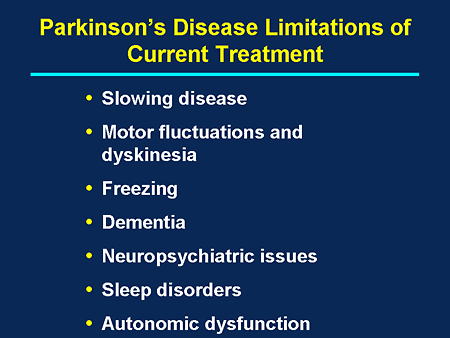
Due to the fact that depletion of dopamine causes Parkinson’s disease, doctors have been utilizing treatments that are useful in boosting the levels of dopamine din the brain. One of the most commonly used treatments is the use of a drug known as the Levodopa. This drug has been in use since 1960s when it was discovered. It works in a manner that supplements dopamine levels as it converts into dopamine while in the body. In this case the drug Levodopa stands in for the damaged neurons that ought to produce dopamine. Currently there are also other drugs that are used as dopamine to stimulate the nerve endings. Patients may also go through some therapies and put on special diets all aimed at improving the dopamine levels. In case the disease has advanced a patient may have to be treated through surgeries which may include deep brain stimulation with implanted electrodes. however, the treatments that have been mentioned above only work to mitigate on the effects of the symptoms of Parkinson’s disease but do not slow down or reverse the damage that the disease cause on the nerve cells in the brain. It has also been reported that even with the above treatments it reaches a time when the patient’s condition will deteriorate. There has also been a problem with early detection of the disease as mostly the disease is diagnosed lately after a patient has lost most of his dopamine and the nerve cells in the brain are already damaged. It is with the view of seeking a whole treatment for the disease that scientists began research on the ability of the stem cells to treat Parkinson’s disease.

The stem cell therapy may help

Parkinson’s disease is a dark medical field, its immediate cause isn’t known but scientists have today known which part of the brain is affected by this disease as well as the cells that are often affected by the disease. the stem cells which are known replicate several times giving rise to new cells are already being used to grow dopamine producing nerve cells in laboratories to aid the study of this disease. The stem cells are majorly used in the labs when the genetic cause of the disease is known. The disease destroys cells but through stem cells therapy, the damaged cells can be replaced by healthy new cells of the same type.

Research studies of 1980-90s bred hope

Parkinson's DiseaseIn 1980-90s researchers worked to find out if the cell replacement therapy could be used to quell the harmful effects of the Parkinson’s disease. The findings of these researchers have since been a foundation upon which current researchers increase the scope of their study on the effects of cell replacement therapy on the Parkinson’s disease. Particularly, Swedish, American and Canadian researchers have transplanted the developing nigral dopamine-producing neurons from human fetuses into animals and human patients with Parkinson’s disease. In these studies there were some great improvements while in other cases there were only modest changes.

A new study has since resurfaced. This study is much larger in scope and will include clinical trials. The study titled TRANSEURO aims at addressing the issues of consistency in efficacy as well as reduction in side effects associated with stem cell transplant. There is optimism that stem cell transplant to replace the damaged nerve cells could help in fighting this disease. Dr. Dalal Akoury (MD) is an expert in integrative medicine and a founder of AWAREmed Health and Wellness Center located at Myrtle Beach South Caroline. Visit her for more information on most lifestyle diseases.

Stem Cell Therapy May Offer an Effective Parkinson’s Disease Treatment


Facebooktwitterpinterestlinkedin