Tag Archives: Substance abuse

Reward Deficiency Syndrome In Addiction

Reward Deficieny syndromeReward Deficiency Syndrome and Its Role in Addiction and Treatment
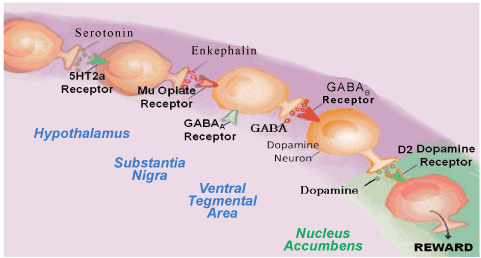
The first people to come up with the term Reward deficiency syndrome were Blum K, Sheridan PJ, Wood RC, Braverman ER, Chen TJ, Cull JG and  Comings DE in a research titled; The D2 dopamine receptor gene as a determinant of reward deficiency syndrome in 1996. This term refers to an insufficiency of usual feelings of satisfaction. Reward deficiency syndrome results from a dysfunction in the brain reward system which is a complex interaction among neurotransmitters primarily dopaminergic and opiodergic neurotransmitters. Those who have a family history of alcohol and other drugs addictions may be born with a deficiency in the ability to produce or utilize these neurotransmitters which are known to play crucial in etiology of addiction to substances. This problem can also be caused by corruption of brain reward system that may be caused by exposure to long periods of stress or use of alcohol and other substance for a long time. When the neurotransmitters are low or are blocked from reaching the intended brain receptors, individuals often feel discomfort or pain. Behaviors resulting from a failure of the system that normally confers satisfaction include drug and alcohol abuse, overeating, heavy cigarette smoking, gambling, and hyperactivity. These problems have been linked to genetic defects especially to dysfunction of the dopamine receptors.

A dysfunction in the dopamine receptors obviously leads to myriads of health complications since it is the brain neurotransmitter that controls feelings of well-being and is mostly targeted by drugs of abuse. However powerful dopamine doesn’t work alone, it interacts with other neurotransmitters like serotonin and other neurotransmitters to control moods and cravings. When these neurotransmitters bind on the neural receptors, they trigger a reaction in the reward system, therefore any interference with this coordination will result in abnormal behavior in Reward deficiency syndrome, including addictions, impulsivity, and excessive risk taking. This is the reason why people who have a defect in the DRD2 dopamine receptor gene lack a sufficient number of dopamine receptors in their brains to produce the brain reward cascade. In turn, this leads to Reward deficiency syndrome, including abnormal cravings and resultant strange conduct.


Reward deficiency syndrome and Drug Abuse

The reward circuitry consists of an in-series circuit linking the ventral tegmental area, nucleus accumbens and ventral pallidum via the medial forebrain bundle. In the past the reward circuitry was believed to encode only the set point of hedonic tone but have since been found to be functionally far more complex, also encoding attention, expectancy of reward, disconfirmation of reward expectancy, and incentive motivation. Here have been speculations that hedonic dysregulation within the reward circuits may lead to addiction. A second-stage dopaminergic component in this reward circuitry is the crucial addictive-drug-sensitive component. All drugs that are addictive are known to enhance the dopaminergic reward synaptic function in the nucleus accumbens. as for most of addictive drugs like cocaine the tolerance to the euphoric effects will develop after a long term use after which a post use dysphoria then comes to dominate reward circuit hedonic tone, and addicts no longer use drugs to get high, but simply to get back to normal. Reward deficiency syndrome as seen here may make an addict chained to the drug of use since the addict will need to feel normal but that will not possible since the dopamine receptors and parts of the reward circuit will have been affected adversely and so the drug use will be continued as a result of Reward deficiency syndrome and not for euphoric purposes.

It is also important to note that the brain circuits that mediates pleasurable effects of addictive drugs are anatomically, neurophysiologically, and neurochemically different from those mediating physical dependence, and from those mediating craving and relapse. Apart from Reward deficiency syndrome other factors that also come to play in addiction include gene variations that may increase vulnerability to drug addiction. Environmental factors also have an input for example prolonged stress and social defeat may also increase a person’s vulnerability to drug addiction as they alter the brain reward system. However dopaminergic dysfunction within the reward circuitry is the biggest contribution to addiction-prone personality effects.

Treating Reward deficiency syndrome

Reward Deficieny syndromeReward deficiency syndrome has influence in drug addiction and therefore any drug addiction treatment must incorporate strategies to treat Reward deficiency syndrome in order to avoid reoccurrence of the addiction after a hard won fight. In fact when the problem in the reward circuitry isn’t addressed then treatment of addiction will have very narrow chances of success. To help in this pursuit, treatment of cocaine addiction should have in part a dopamine agonist agonistic therapy to heal the dopaminergic system.

When an agonist therapy is to be used, it’s crucial to note that the baseline amount of dopamine receptors has predictability as to differential clinical outcomes in reward deficiency syndrome. In a study of 10 subjects with an allele on the Taq1A DRD2 gene, which is associated with reduced dopamine receptor concentration and decreased neural responses to rewards (A1+ subjects). The 10 subjects were scanned twice, once on placebo and once on cabergoline which is D2 receptor agonist. Consistent with an inverted-U relationship between the DRD2 polymorphism and drug effects, cabergoline increased neural reward responses in the medial orbitofrontal cortex, cingulate cortex, and striatum for A1+ subjects, but decreased reward responses in these regions for A1− subjects.  Drug addiction treatment should therefore put in place measures to ensure that reward deficiency syndrome is treated. Dr. Dalal Akoury of AWAREmed Health and Wellness Center has dedicated her life to helping patients restore their lives by use of integrative medicine. She also holds many conferences in which she offers training on how integrative medicine can be used to fight addiction among other conditions.  Call her on (843) 213-1480 for help.

Reward Deficiency Syndrome and Its Role in Addiction and Addiction Treatment


Facebooktwitterpinterestlinkedin

The Need For Addiction Healing Centers

Addiction Healing Centers-Restoration of the Mind, Body and Spirit to Treat Addiction

Addiction isn’t a new term that needs to be defined, however it is great to appreciate the fact addiction is a really broad subject. Though many people only relate addiction to drugs of pleasure, addiction to behaviors like sex, food and gambling are a part of us. Regrettably, most of the addicts we have today are addicted to harmful substances that therefore dictate that they be offered a whole person treatment. As known addiction to a drug isn’t only a problem in the sense of financial and behavioral aspects but rather on the damage that these substances do to our bodies. The most affected system in the body is the nervous system which is very crucial in coordination of messages that are sent from various parts of the system to initiate specific action that our daily lives revolve around. The brain and the rest of the nervous system especially the neurotransmitters are highly damaged after a long term use of certain drugs of pleasure. Due to this it is necessary that any attempt to treat addiction and restore the normal functions of the body should include therapies that aim at restoring the normal functioning of the neurotransmitters and the rest of the nervous system that might have been damaged by long term use of these drugs of abuse.

addiction healing centers

The severity of addiction will however determine the type of treatment that an addict is accorded, there are situations where a patient may suffer from a combination of drugs and behavioral addiction. There are also other co-occurring conditions that may work together to make the life of an individual addict miserable. Think of sex addiction, gambling addiction and alcohol addiction all in one brain! Can you imagine the magnitude of damage that such a person will suffer in the whole of his nervous system? Correcting such defects in the entire system of an addict will require multi-facet approach to ensure that the addict is completely healed and his health is restored. Treating the symptoms of addiction as most doctors do or other used to do may only serve as a momentary relief but will not help the patient to quit the use of drugs.

It is because of the gap that existed in the past, when all treatment options available for addicts only focused on treating the symptoms of addiction like depression that has been for a long time been addressed by giving ant-depressants. The antidepressants will work for a short time but the problem that lies deep in the malfunctioning neurotransmitter like dopamine and serotonin will remain unresolved.  To address these issues, several addiction healing centers have since been established to give the patients what they need most; whole-person healing. whole person healing is achieved through the practice of integrative medicine that may include both orthodox and traditional herbal medicine as well as dietary approaches to help not only quell the severity of the symptoms suffered by these addicts but also to help correct the damage that addiction to substance and other behaviors does to the brain and the entire nervous system. when the functions of the nervous system is restored, it can now be easy to help an addict to escape the bars of addiction as the body will be naturally fit to quell the craving for the substance of abuse.

Most addiction healing centers deal with addiction of forms as serious, chronic and potentially life-threatening disease that requires a full range of comprehensive, evidence-based addiction treatment services to completely manage and overcome once and for all but this requires full commitment and cooperation of the patient.

Restoration of the mind, body and spirit to treat addiction

Addiction Healing CentersThrough advances in the medical industry, there are several addiction healing centers that are now offering holistic approach to treatment of addiction victims. These approaches are geared towards Restoration of the mind, body and spirit because it is by this that addicts can achieve healing once and for all. The harmony of the human being is critical in healing of addiction this is because addiction interferes with the chemical composition of the brain which is the engine that drives the entire body. This leads to organs, cells and tissues being maimed hence can’t perform effectively. To achieve wellness of the mind, body and spirit, most addiction healing centers utilize several strategies such as proper nutrition, body cleansing or detoxification, exercise, yoga, tai chi, herbal medication, orthodox meditation, hobby exploration such as like dancing, hiking and even singing. All these are explored to achieve a balance in the body.

The advantage of seeking help from addiction healing centers is that they offer varied addiction healing approaches that may include; cognitive behavioral therapy (CBT), dialectical behavior therapy (DBT), Eye Movement Desensitization and Reprocessing (EMDR), 12-step philosophy, somatic therapies, nutritional counseling, psychiatric support, massage, yoga, Tai Chi, herbal therapies and adventure-based therapies that cater to all manner of addictions, both behavioral and substance related. These centers also have staffs who are vastly experienced in handling addiction cases. They can also customize treatment to suit every patient’s condition belief and preferences all in a bid to restore the mind the body and the spirit.

Finally, Behavioral addiction and drug addiction destroys wellness, therefore restoring health of mind, body, and spirit is essential in recovery. Dr. Dalal Akoury has done extensive work in addiction treatment and recovery. You may contact her to fix an appointment. Better still, you may visit us at AWAREmed Health and Wellness Resource Centre in Myrtle Beach, South Carolina and experience the best practices in holistic addiction healing and recovery.

Addiction Healing Centers-Restoration of the Mind, Body and Spirit to Treat Addiction


Facebooktwitterpinterestlinkedin

Fighting substance abuse at the Rehab centers

Fighting substance abuse at the Rehab centers: How Addiction Works

Fighting substance abuse at the Rehab centers

Fighting substance abuse at the Rehab centers is good but the consequences of drug abuse could be fatal and costly

It is amazing how people make effort to defeat addiction. It is also amazing how many people who have done the right thing for a long time to eliminate addiction often find themselves relapsing into their old habits. The many success stories we hear today has very huge challenges met and dealt with on the way towards fighting substance abuse at the rehab centers addiction recovery can be attained. How many times have you seen or heard who is who in the society being admitted into the rehab centers? It’s actually the same old story celebrities check in and after sometimes maybe a month they check out with stories of a miraculous turnaround. And then, sometimes, they check right back in again. One would wonder what may have happen to the successful story that was told when they first checked out. In that state of confusion you would ask is it poor self-control, or poor treatment? We spoke to doctor Dalal Akoury an expert in substance abuse treatment and also the founder of Founder of AWAREmed Health and Wellness Resource Center to help us understand the misery behind drug addiction.

As a professional doctor Akoury reiterates that treatment can be very effective. But to understand how to gauge effectiveness, it is important that you are well informed of about how addiction works. Experts across the globe are currently agreeing that addiction is a brain disease with a genetic component, Doctor Akoury says. But it’s also affected by behavior. The behavioral component makes addiction closely associated with other chronic illnesses such as diabetes and high cholesterol. Medicine has not found a way to “cure” these diseases with a pill or an operation. Instead, they require a lifetime of treatment, coupled with lifetime behavioral changes.

While most addiction treatment programs set abstinence as a goal, a relapse isn’t a reason to give up on a patient as hopeless just as you wouldn’t give up on a diabetes patient who goes on a sugar binge. Addicts have their ups and downs, but you can take that information and work with it to see how to do better.

About 50% of patients on treatment programs remain clean and sober for a year after treatment, doctor Akoury says. But many of those who relapse don’t go into a black hole, she adds. Instead they return to treatment to build on the behavioral skills they learned during the first time. Studies show a connection between treatment success and the length and intensity of treatment. That usually means at least three weeks of treatment lasting several hours a day (whether as an inpatient or outpatient), followed by frequent attendance at AA or other group therapy for about a year.

Fighting substance abuse at the Rehab centers: Who Benefits from Inpatient Care?

A 30-day stay in a clinic used to be the standard treatment for addicts. But with the rise of managed care in the 1980s, insurers balked at the costs. Many clinics shut down, and for years it was very difficult to get an insurer to cover any inpatient treatment. Now some insurance plans will cover inpatient stays at relatively inexpensive facilities.

Experts say inpatient treatment is most needed by addicts coming from a chaotic environment or who suffer from a severe psychiatric illness. For example, if family members are substance abusers, an inpatient program will get them out of that environment so some intensive work can be done, Doctor Akoury says. By contrast, outpatient treatment may be fine for a patient who is married and has a steady job.

A homeless single mom in a drug-infested neighborhood might well qualify for inpatient treatment, experts say; so would a hard-partying celebrity who is constantly traveling between movie sets or concert stages. The difference, of course, is that celebrities can spend a thousand dollars a day or more on treatment, while the homeless mom is at the mercy of the public health system.

Fighting substance abuse at the Rehab centers: High Cost of Treatment

Treatment at most of the rehab centers is really costly. In some centers a patient could spend up to $1,200 daily in treatment. Such centers are completely furnished with all that you will need besides equipment that are directly beneficial to the recovery process. Some of the amenities may include a lavish pool, spa, gym, climbing wall and even equestrian tables. The accommodation facility will be of the standard of super five star hotels. In such facilities patients will be spending most of their working hours in emotionally draining activities even as they receive intensive treatment that delivers real time results. However the cost will vary from different rehab centers for both inpatient and outpatient. The relatively pocket friendly clinics would charge up to $8,500 for one month inpatient stay. This may still be out of rich for many people since many insurers are not very keen in insuring this as a product.

How to find a good clinic is and must be the starting point. If you get the best from the start then you can be safe and sound that the end result will be satisfactory. However you must have made a decision to go ahead with the exercise because your acknowledgement that you have a problem that needs to be fixed is the key to your success otherwise if you are in denial, then you may not make progress. A good clinic would be that which is staffed with addiction-certified counselors and medical staff. And therefore look for a clinic with medical staff that can treat the psychiatric problems that so often accompany substance abuse. That usually means access to psychiatrists as well as counselors. That is why doctor Dalal Akoury founded AWAREmed Health and Wellness Resource Center a facility which is equipped with all that you need to get over your addiction problems. You may want to schedule for an appointment with the experts at this facility to experience wellness. You may choose to go for the inpatient or outpatient and we will be of help to you.

Fighting substance abuse at the Rehab centers: How Addiction Works


Facebooktwitterpinterestlinkedin

Foods That Help Boost Serotonin Level

Foods That Raise Serotonin Level

Serotonin is one of the most important neurotransmitters in the brain. Serotonin helps in regulation of mood and sleep. According to recent research findings, when the level of serotonin is below optimum it can cause increased incidences  of aggressive behavior. Low serotonin levels have also been linked to anxiety and depression. If the recent research findings have to be believed which of course they are, then low serotonin levels are dangerous as it may lead to suicidal acts. In terms of dieting, making sure you’re not serotonin deficient is vital because serotonin triggers satiety after eating. Depressed serotonin levels is the likely reason why the vast majority of people cannot stay on a very low carbohydrate diet for the long term without feeling an unavoidable need to binge which may lead to more complex disorders. In the brain the production of neurotransmitter happens naturally without intervention of any other drug, however when you have used the drugs of abuse for some time they will lead to depletion in the levels of the brain chemicals such as serotonin and dopamine. This therefore means that for healthy levels of serotonin to be achieved after use of drugs, there is need for replenishing and supplementing serotonin through diet. There are foods that are very helpful in raising the levels of serotonin . Here are some of them.

Serotonin

Fresh Vegetables

Fresh vegetables work in myriad ways to ensure good health. the greens are rich in various minerals and vitamins that go along way in boosting the levels of serotonin. some of the fresh vegetables that are actually beneficial in increasing the level of serotonin include Spinach which contains a substantial dose of folic acid. it  is also a wonderful source of the mineral magnesium, a natural anxiety combatant. Without enough magnesium in your diet, you may find it hard to concentrate in addition to being fatigued and irritable. other foods that are rich in magnesium and hence helpful in boosting levels of serotonin include; cacao, seaweed, bananas, orange, tree nuts, peanuts, whole grains, corn, cheese, eggs, milk, and white fish.

Fresh Fruit

Fresh fruits are rich in nutritional content. The fresh fruits are rich in vitamins that serve the purpose of rejuvenating the body and giving it a healing approach as well as protecting the body and restoring crucial neurotransmitters like the serotonin which therefore helps in ensuring good moods. fruits are rich in B3 vitamins. these fruits may include watermelon, peaches, bananas, cantaloupe, and avocado. Generally, the B vitamins are very essential in restoration of neurotransmitters especially after a period of long term use of drugs of pleasure that are known to disrupt the functions of the neurotransmitters.

 Apples

An apple a day keeps the devil away is a common adage. The health benefits of apples are many and this explains why it is always recommended for patients. A compound found in apples called “quercetin’ is an antioxidant that studies have shown may not only help in the prevention of cancer but may also play an important role in the prevention of neurodegenerative disorders. the medicinal abilities of this compound is confounding. It also helps in boosting serotonin as well as dopamine levels.

 Herbs that Boost Serotonin Levels:

SerotoninSt. John’s wort -St. John’s wort is effective against mild to moderate depression, alleviates anxiety, insomnia, and irritability and eases pain. It increases the level of serotonin in the brain as well.

Dandelion– This herb is widely used in Europe as an excellent liver detoxifier and mild diuretic. It increases the flow of bile and encourages both the transformation and transportation of nutrients. It has been used historically to treat liver disorders, arthritis and gout. In the addict it will ease the transportation of nutrients in the body and restore energy in the cells as well as boost the level of serotonin.

Cannabis- though known for all the wrong reasons, cannabis has very high medicinal content, however it is highly addictive and that dictates that it be used in moderation as unregulated use can cause addiction. It works in a way that it increases the levels of excitatory neurotransmitters like dopamine and serotonin.

Burdock– burdock has been used to treat other conditions ranging from arthritis to diabetes to hair loss, and it’s an active ingredient in some cancer treatments this herb is also good in resoring the levels of serotonin.

Ginseng–  contrary to what many people believe , ginseng does not only increase the level of serotonin in the body but also works in rejuvenating, restorative, boosts energy and vitality and is tonic to the brain. Ginseng is often prescribed for patients fighting depression which is a common symptom of withdrawal from drug use. This herb is a better therapy for those who are under physical, emotional, mental or spiritual stress as it is a very strong antidepressant and adaptogenic. Ginseng promotes strong nerves, sound sleep, improves memory, clear thinking and enhances concentration.

Use of drugs for along time causes damage to the neurotransmitters. apart from the foods and the herbs, you can also increase the level of serotonin by sunlight. Bright light increases the production of Serotonin in the body.  Basking in the sunlight can absolutely improve your mood and also soothe muscle aches. It is good to note that by increasing the level of serotonin in your body, you are setting good grounds for addiction treatment and recovery. However, these problems need to be treated effectively through integrative medicine. Dr. Dalal Akoury (MD) is an expert at this.  Call her on (843) 213-1480 for help.

Foods That Raise Serotonin Level

Facebooktwitterpinterestlinkedin

Motivational Interview So Important In Addiction Treatment

Crucial Stages of Motivational Interview as Part of Addiction Treatment

Addiction is a multifaceted issue that also needs to be given a multifaceted approach in treatment without which treating addiction will be a fallacy. There is required input and cooperation of the patient 100 percent. He has to have the will to quit using the drugs he is using; you can never force an addict to quit using a drug he has become addicted to. It also needs patience of both the doctor and the patient so that the addict will be able to completely recover from all the adverse effects of addiction especially during withdrawal. One of the ways through which an urge to quit using drugs can be imparted into an addict is through motivational interview. Motivational interview is often referred to as motivational therapy and us done by a motivational therapist. The main aim of the motivational therapist is to help the patient see the side effects that he is suffering as a result of the use of the abusive drug and help create a desire to quit using the drug in the addict. He will not try to victimize the addict or to oppose his views but uses the power of empathy to instill the desire to quit the use of the abusive drug into the addict.

Motivational Interview

For any motivational interview to be effective there is need of full cooperation from the addict. There is also need of input of an experienced motivational therapist to place the will to change from the use of drug abuse into the mind of the addict. The addict is the center of focus in motivational interview, he is the one who has to make the decision of whether to quit using the drugs or not. The motivational therapist is just there to help him make this decision by giving him a better option in quitting but he can’t decide for the addict, the addict has to own the decision to quit and that is when he is bound to succeed. In a journalistic point of view it appears that both the addict and the therapists are very crucial parties to this type of treatment because as much as the therapist may be good at his work. He may bear initial fruits in planting the desire to quit using the drugs in the mind of the addict but the addict must make the step of quitting the use of the drug.

Here are some crucial stages that the addict will be taken through by the help of the motivational therapist

  • Pre-contemplation
  • Contemplation
  • Preparation
  • Action
  • Maintenance and relapse

For effectiveness these stages should be followed in sequence, however if an addict may fall beck he should be encouraged to continue from where appropriate.

Pre-contemplation

This is the first stage in which the thought of changing has not even got into the mind of the addict. In most instances the drug users are in denial and they do not consider themselves as the right audience to the advice being offered. Here the will to change is not close even to the addict and it requires an input of an expert motivational therapist to let the drug addict see the need to overcome the addiction. During this stage, addicts do not consider change. They may not believe that their behavior is a problem or that it will negatively affect them or they may be resigned to their unhealthy behavior because of previous failed efforts and no longer believe that they have control over addiction. At this stage the therapist must be careful not be seen as opposing the lifestyle of the addict but as an empathizer who has placed his foot right in the moccasins of the addict. Here the therapist’s main goal is harmer the desire to quit using the drugs of abuse in the patient’s mind.

Contemplation Stage

At contemplation stage, patients are unsure about changing. They are weighing the benefits they get from the use of the drug against the benefits they will receive after quitting its use. At this stage the patients tries to look into the reasons why they can’t stop the use of the drug. Giving up an enjoyed behavior causes them to feel a sense of loss despite the perceived gain.  This is the stage where the patient needs the help of the motivational speaker most as he gets in conflict with himself. He is torn between stopping the use of the drug and continuing using it. He must know the advantages and disadvantages of quitting the drug use. The therapist will be of help in letting the addict choose wisely.

Preparation Stage

Motivational InterviewDuring the preparation stage, patients prepare to make a specific change. To test the waters of the new world, the addict may try using the drugs in lower doses and tests his body reaction to the deprivation. The therapist helps the patient to stay true to its course since the outcome of these experiments may make the addict to give up on the goal of quitting the drug use.

Action Stage

The action stage is the stage that needs more of the patient’s contribution to be successful. Many patients may fail once but with the help of the therapist they may get up and continue fighting addiction.  Every effort that the patient puts forward must be appreciated by the therapist as this gives the addict the morale to continue.

Maintenance and Relapse Prevention

Every motivational therapist would want his patient to reach this stage. However the addict may go through the initial stages many times before fully landing on this stage. Change is not always easy to deal with and any discouragement from the therapists over the addicts’ occasional slip may thwart his hopes of ever overcoming addiction and hence he may give up.

Finally, the need to quit using drugs of abuse is crucial in motivational interview; the therapist has to instill this in the addict failure to which the interview will bear no success. All the same addiction is a jail that many are chained but the need for liberation is the very reason for our existence. Here at AWAREmed we are dedicated to finding the best solutions to addiction and dependence on substances. Dr. Dalal Akoury (MD) is always in the mood of helping any patient to be addiction free. Do not hesitate to call on her for help in managing any sort of chronic pain or any type of addiction as well as other diseases.

Crucial Stages of Motivational Interview as Part of Addiction Treatment

Facebooktwitterpinterestlinkedin