Tag Archives: Substance abuse

The pain of addiction

Parental duties in controlling drug addiction

Parental duties

Parental duties in controlling drug addiction inspires and motivates users to agree to medication

Parental duties in controlling drug addiction: Taming substance abuse

While looking at drug addiction experiences by parents caring for addicts in our previous article, we highlighted certain lesion points from what other parents have experience while exercising their parental duties in controlling drug addiction. It became clear that most of us have let our children plunge in to the intoxication of addiction, for very simple reasons like denial. Of the seven lessons we were able to address the first one and now with the help of doctor Dalal Akoury MD a veteran addiction expert and founder of AWAREmed Health and Wellness Resource Center, we want to progress with the remaining lesions as we progress into this discussion as follows:

  1. I cannot fix this
  2. My addict is a liar
  3. My addict is a criminal
  4. Others don’t want them around
  5. Life will not be the same
  6. Homelessness may be the path he chooses

Parental duties in controlling drug addiction: I cannot fix this

Doctor Akoury has maintained that the first step in the addiction treatment is making self-acknowledgement that you have a problem which needs to be fixed. It is true that as loving parents we would always want to fix all the problems of our children irrespective of the challenges involved. However no one has access of our addict’s children’s minds besides themselves. This you can’t fix for them as a parent. All you can do is to be supportive and loving to them. Remember that no meaningful recovery program will succeed where the patient is in denial. Therefore any loving parent trying to force this decision on the children is likely to fail and get frustrated as they watch their children sink into addiction. Therefor parental duties in controlling drug abuse demands that we seek for help from the experts and doctor Akoury will be very helpful if only you can schedule for an appointment with her today.

Parental duties in controlling drug addiction: My addict is a liar

Traditionally addicts will often find something to hide their habits with and ensure that their real business is not exposed. It is possible that when they are making all these efforts of concealment, they may not be in their proper senses to tell exactly what they are doing. Normally their motive is sincere of trying to seek your approval of their deeds and not really for pride. It is also true that most addicts are not happy with themselves for their actions are only that they have no way out at least while still in that state of mind. At this point their only survival ways would be to seek for some approval by telling lies no matter the consequences.

As parents we will be laid to whether it is an innocent lie or not, it will still remain to be a lie. Like in my case when my addicted son tells me that he is not abusing drugs, I don’t buy that and instead I tell him repeatedly that “my eyes can hear even better than my ears” because ideally what they say is not what is really happening.  It is therefore very important that we make efforts of finding facts for ourselves and not relying on what the children tell us.

Parental duties in controlling drug addiction: Taming substance abuse


Facebooktwitterpinterestlinkedin
drug-rehab

Relapse management for drug addiction healing

Relapse management

Relapse management for drug addiction healing.

Relapse management for drug addiction healing: Fighting substance abuse

The dangers of being addicted to drugs is not only the concern of the individual patient, but goes beyond that. Each time a member of the family is struggling with an addiction to any substance, the whole family is affected. If this is not addressed in good time, it may also escalate to the society and progress beyond that to the nation. That is how serious addiction can be. And because of that, it is only fair that we all pull together in finding lasting solution to save our societies from the scourge of addiction. In the process of finding solution, it is donning on patients that their effort could be ruin because of improper relapse management. This is the reality in the drug addiction treatment process that we want to deliberate on progressively in this article. With the help of experts from AWAREmed Health and Wellness Resource Center we are going to highlight certain points about relapse management for drug addiction healing a discussion you don’t want to miss.

Relapse management for drug addiction healing: Relapse is not a failure

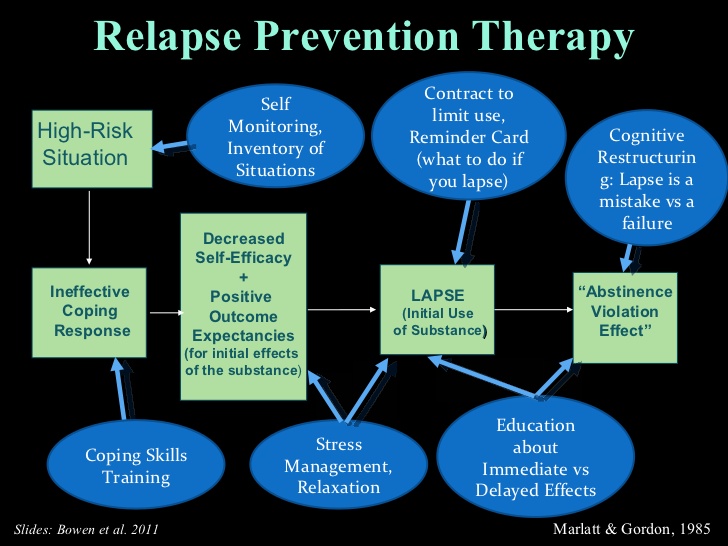
During the rehabilitation process patient undergoing drug addiction treatment process often give it their best to be free from this problem. Immediately they are done with the detox they are taken through the rigorous treatment and when they are finally sober, they are released to go back home where they come in contact with the many triggers of their old habits. This is when the problem of relapse sets in and recovering addicts often find themselves being motivated into drugs again. This is a common occurrence and should not cause any panic to you. The progress made so far will not go to waste simply because of a small moment of weakness. When this happens, it is important that you get down to the basic and pick up the pieces and refocus on the bigger objective of attaining your freedom from the scourge of addiction. Remember that staying focus is one of the most powerful tool of relapse management and losing it can be very disastrous to all the time and gains made.

Relapse management for drug addiction healing: Refocusing on treatment’s benefits

Finally doctor Akoury is confirming that up to 50% of patients on treatment programs remain clean and sober for a year and even for a life time after treatment. But many of those who relapse don’t go into a black hole, they don’t just sink and wallow in their old habits forever, instead they return to treatment to build on the behavioral skills they learned during their treatment time at the rehab centers. Studies show a connection between treatment success and the length and intensity of treatment. That usually means at least three weeks of treatment lasting several hours a day (whether as an inpatient or outpatient), followed by frequent attendance at AA or other group therapy for about a year. All these put together will help in the relapse management for sustainability of the healing process. And for any further inquiries, you can call doctor Akoury today and all your concerns will be addressed professionally.

Relapse management for drug addiction healing: Fighting substance abuse

http://www.awaremednetwork.com/


Facebooktwitterpinterestlinkedin
over the counter drug abuse

Cue anticipation role in addiction development

Cue anticipation role

Cue anticipation role in addiction development knows no boundary

Cue anticipation role in addiction development: Emotional memory

As we were discussing previously about defeating addictive habits and formation, it became clear that memory is a key factor in addiction. We want to further that discussion by focusing on another important factor in the development of addiction. Essentially we are making reference to the cue anticipation and the role it plays in the development of addiction. Cue anticipation refers to environmental cues that can initiate or elevate craving that often leads to relapse. Because of these functions, they (cues) are often called relapse triggers meaning that, a successful recovery plan will include a strategy for coping with cues (relapse triggers).

Cue anticipation role in addiction development: Environmental cues

These environmental cues (relapse triggers) can be anything that is associated with the addiction. It could be a certain time of day, a place, a person, or an activity. For instance, suppose a man is addicted to pornography use and because of that he usually gets online after his wife goes to bed to satisfy his addiction. The mere act of his wife getting ready to go to bed serves as a cue that prompts powerful cravings. Later, even his own anticipation of his wife going to bed will serve as a powerful cue. The amygdala’s role in emotional memory is responsible for these cues taking root. The brain forms an association between pleasant memories of drug use or addictive activities, and the cues. The more a person repeats this cycle, the more it strengthens the emotional memory circuits associated with these cues (cue anticipation). Eventually, this leads to a complete pre-occupation with the addiction.

Finally, so far our discussion has been focusing on the role of amygdala and positive emotional memories. Nonetheless the brain may also form an association between unpleasant emotions and a memory thereby forming a “bad” memory. For your information, these negative emotional memories play an important role in withdrawal. The negative emotional memory of anxiety becomes associated with the physical signs of withdrawal. And as withdrawal begins, the symptoms trigger an unpleasant emotional memory. This increases the negative experience of withdrawal.

Withdrawal avoidance (via returning to the addiction) often becomes the cornerstone of the addiction in the later stages. Thus, in the earlier stages of addiction the pleasurable experience of the drug motivates a repetition of that behavior. In the later stages, relief of withdrawal symptoms (physical and/or emotional discomfort) achieves pleasure. This pleasurable relief from withdrawal symptoms continues to motivate the repetition of that behavior. I strongly believe that this is a very interesting topic that needs further consultation with the experts. What we have discussed here may not be conclusive and therefore you may want to schedule for an appointment with doctor Dalal Akoury for more health insight about addiction and the brain.

Cue anticipation role in addiction development: Emotional memory

http://regenerativepotential.com/wp-admin

Facebooktwitterpinterestlinkedin
what-is-bipolar-disorder-1

Brain communication pathways and the role of addiction

Brain communication pathways

Brain communication pathways and the role of addiction. Mental health problems and substance abuse

Brain communication pathways and the role of addiction: Neuronal

The study of some of the elements that cause health problems in our life can be very interesting. Understanding the brains functions and how it can be affected by addiction and various substances is very important. The brain communication pathways are always the biggest casualties whenever there is an attack by the abuse of substances. The brain’s electro-chemical communication system is a communication system that sends information through a vast network of interconnecting neurons. Through this the brain communication pathways begins to develop a preferred or standard conduit of sending signals between neurons (neural pathways). Experts at AWAREmed Health and Wellness Resource Center under the able leadership of doctor Dalal Akoury MD and founder of the facility can now confirm that in the past it was believed that the brain’s neural pathways will be completely formed by the time we reached adulthood.

Brain communication pathways and the role of addiction: Neurons ability of adapting to changing circumstances

Progressively the scientific findings have established that this is a continuous process and in fact the human brain continues to create new neurons and form neural pathways throughout our entire lifespan. That is why neurons are seen as dynamic cells that are constantly adapting to changing circumstances. It therefore means that if an injury or damages happens to an individual’s brain (such as a stroke or injury) the neurons will make new communication route around the damaged area. Scientifically doctor Akoury says that this ability of recreation of neurons is known as neuronal plasticity.

Brain communication pathways and the role of addiction: Neuronal plasticity

Doctor Akoury says that neuroplasticity is responsible for the regulation of our learning processes and this enables us to adapt to our surroundings conveniently. To better understand neuroplasticity let us consider using this illustration. The brain forms neural pathways in a way that is similar to the formation of a demarcated hiking pathway. The more we travel a path, the faster, easier, and more familiar that path becomes. As the routine continues it becomes more visible, smoother, and easier to travel on. And with time this becomes a preferred route for many. This is also how neural pathways are formed. With time the brain forms familiar neural pathways which then become habitual routes. And in the event that the familiar route is blocked the brain responds swiftly by forming a new route around the blockage.

From the illustration, suppose you walk through the bush each day to visit a friend. You use the same trail each time and one day as you travel along your familiar path, you discover a huge tree has fallen over. It’s blocking your passage. You will need to forge a new path to go around the tree. At first, this new path will be narrow, difficult, and slow. It might even be uncomfortable. However with time, it will become a well-worn, comfortable path. It will be just as easy as the original path.

Brain communication pathways and the role of addiction: Neuronal

http://www.I-AM-I.com/wp-admin


Facebooktwitterpinterestlinkedin

Understanding stressors and their triggers

Understanding stressors

Understanding stressors and their triggers marks the beginning of lasting solution. Whether is is your weight, work, drugs or any other.

Understanding stressors and their triggers

There are very many reasons why people do get stressed up. Some of these reasons impacts negatively to people’s health. That is why it is very important that we explore this topic of discussion “understanding stressors and their triggers’ expeditiously. To put this to perspective, we spoke to doctor Dalal Akoury MD a renowned addiction expert of over two decades and also the founder of AWAREmed Health and Wellness Resource Center about this. From her professional point of view anything that triggers the stress response is referred to as a stressor. There are very many stressors today but the most common ones may include:

  • Chronic stress
  • Drug abuse as a self-medication for stress
  • Alcohol and other drugs

Understanding stressors and their triggers: Chronic stress

Stress causes damage both physical and mental harm more so if it becomes persistent in an individual. Ideally the chemicals that are associated with the stress response are only meant to be in the bloodstream for short periods. That can only means that those who are chronically stressed will have such chemicals stretching and when that happens the following are likely to happen:

  • The immune system to become less effective since stress will force the immune system to release chemicals so that they end up being overused. Instead of helping people fight off infections, these chemicals begin to damage the individual’s own organs including risk of heart disease and diabetes.
  • Chronic stress leads to fatigue and depression.
  • It can increase the risk of developing ulcers and digestive problems.
  • Many people who are dealing with chronic stress will turn to substance abuse.

Understanding stressors and their triggers: Drug abuse used for self-medication for stress

Substances that are often used for self-medications are depressant in nature. Like for instance a depressant like alcohol produces a calming effect on the body, and by so doing so, the individual will feel like they have solved their problems. And as they continue using this method they become addicted to these substances all in the name of managing their stress. This is dangerous because the cure can be far more damaging then the initial symptoms.

Understanding stressors and their triggers: Alcohol and drugs

Finally, it is important to note that, the indulgence in alcohol and drugs only offers a temporal solution which is very dangerous because of the following:

  • It can lead to addiction to the drug of choice.
  • Substance abuse only masks the problem and doesn’t solve it.
  • Substance abuse increases the amount of stress in people’s lives. It makes it difficult to be effective at work, and it damages people’s ability to form meaningful relationships.


You can however escape this tragedy by making the right and conscious decision of seeking for help from the right professionals. Doctor Dalal Akoury and her team of experts is all you need to have this problem addressed professionally. You can scheduling for an appointment with doctor Dalal Akoury today for a more professional treatment that will bring back your life to its best.

Understanding stressors and their triggers


Facebooktwitterpinterestlinkedin