Tag Archives: Obesity and health

The link between Obesity and Cancer Risk

The link between Obesity and Cancer Risk: What is obesity?

The link between Obesity and Cancer Risk

The link between Obesity and Cancer Risk. Obesity in itself does not cause cancer but the presence of obesity subjects the individual to higher risk of cancer disease

This is not going to be the first time we are telling you something about obesity.  Obesity is a condition in which a person has an abnormally high and unhealthy proportion of body fat. Take note of high and unhealthy proportion. That means that one can have high fats in the body but they are still not obese. For one to be obese the fats must be high and in unhealthy proportions. The body mass index (BMI) is the most commonly used tool for measuring whether one is obese or overweight. Some little training is necessary before you can effectively understand how to calculate your position using BMI. This is just one of the many ways of establishing whether one is obese or not. However this is not our focus in this article. We want to explore on the link between obesity and cancer risk. We are by now all aware of what being obese can do to your health. Now what would be the impact if you are cancerous and at the same time obese? Keen reading and get what the experts at AWAREmed Health and Wellness Resource Center say about this unique association.

The link between Obesity and Cancer Risk: How common is overweight or obesity?

How common being overweight or obese is today is no secret. Even though you cannot conclude whether one is obese or overweight just by looking at them, the evidence on observation from the streets in overwhelmingly pointing to the fact that overweight and obesity is on the rise. Now let us get to the available statistics, results from the 2007-2008 National Health and Nutrition Examination Survey (NHANES) indicates that 68 percent of U.S. adults age 20 years and older are overweight or obese. This is in contrast with the same findings done between 1988-1994 which revealed that only 56 percent of adults age 20 and older were overweight or obese. While the in children, the findings of those who were overweight or obese also indicated an increase. In both cases there was considerable increase an indication that obesity and over weight are very common.

The link between Obesity and Cancer Risk: Facts about the relationship between obesity and cancer

Obesity is associated closely with several chronic diseases including cancer. The questions we want to answer are what family of cancer is obesity associated with? There are very many types of different cancers and each has its own way with which they are linked to the problems of overweight or obesity. The following are some of the types of cancers we want to look at and establish their relationship with this chronic disease called cancer:

  • Esophagus
  • Pancreas
  • Colon and rectum
  • Breast (after menopause)
  • Endometrium (lining of the uterus)
  • Kidney
  • Thyroid
  • Gallbladder

I want to take you through the findings of one study conducted using NCI Surveillance, Epidemiology, and End Results (SEER) data. In this study, it was estimated that in 2007 about 34,000 new cases of cancer in men and 50,500 in women were due to obesity representing 4% and 7% for men and women respectively in America alone. The percentage of cases attributed to obesity varied widely for different cancer types but was as high as 40 percent for some cancers, particularly endometrial cancer and esophageal adenocarcinoma.

Using these findings to make a future projection of health and economic burden of obesity if this trend continues, then it is estimated that in the next 15 years (2030) about half million additional cases of cancer will be recorded in the United States by that time. However using the same finding, if every adult is to focus on losing 1% of their BIM which is equivalent to 1Kg of weight loss then together we will succeed in preventing the number of cancer cases. And as if that is not enough, just by this single act we will not only reduce increase but also prevent up to 100,000 new cases of cancer. How does that single act communicate to you the link between obesity and cancer risks? If you are struggling with your weight, and all the effort you’re making seems to be yielding less and you’re about to give up, I have good news for you. Talk to doctor Dalal Akoury today, in fact schedule for an appointment with her now and experience the great difference of your life time. This is the right professional you need not just to lose weight but also to prevent cancer from visiting your life and that of your family. In the meantime let us consider the following mechanisms which have been suggested to explain the association of obesity with increased risk of certain cancers:

  • Fat tissue produces excess amounts of estrogen, high levels of which have been associated with the risk of breast, endometrial, and some other cancers.
  • Obese people often have increased levels of insulin and insulin-like growth factor-1 (IGF-1) in their blood (a condition known as hyperinsulinemia or insulin resistance), which may promote the development of certain tumors.
  • Fat cells produce hormones, called adipokines that may stimulate or inhibit cell growth. For example, leptin, which is more abundant in obese people, seems to promote cell proliferation, whereas adiponectin, which is less abundant in obese people, may have anti-proliferative effects.
  • Fat cells may also have direct and indirect effects on other tumor growth regulators, including mammalian target of rapamycin (mTOR) and AMP-activated protein kinase.
  • Obese people often have chronic low-level, or “subacute,” inflammation, which has been associated with increased cancer risk.

Other possible mechanisms include altered immune responses, effects on the nuclear factor kappa beta system, and oxidative stress.

Finally your life and that of people coming behind you cannot be compared with any amount of money in the world. If there is something you can do to be healthy then it must be done at all cost. On her part Dr. Akoury made a decision in view of the escalating links between obesity and cancer to create a medical center (AWAREmed Health and Wellness Resource Center) whose main objective is to transform each individual’s life through increasing awareness about health and wellness and by empowering individuals to find their own inner healing power. Dr. Akoury’s practice focuses on personalized medicine through healthy lifestyle choices that deal with primary prevention and underlying causes instead of patching up symptoms. Like I had said if you have any concern relating to weight gain or cancer and even other chronic illnesses, you can schedule for an appointment with doctor Akoury today for lasting solutions to all your concerns.

The link between Obesity and Cancer Risk: What is obesity?


Facebooktwitterpinterestlinkedin

How to help your child lose weight

How to help your child lose weight: Keeping and staying on a healthy weight

How to help your child lose weight

How to help your child lose weight will require that you bring in the weight loss experts for the results to be realized

Obesity is not happening like an accident it develops gradually over a period of time and interestingly once settled it cannot be solved overnight. The solution will also take the same gradual process. If you or your child is struggling with obesity or overweight, you must be ready to take one step at a time. The process will not be easy but at the same time it is not impossible. Your first step would be to acknowledge that there is a problem. With the right people around you the process may even be much friendly and enjoyable. However, when we are talking about solutions it is important that we look towards preventions. Our children must not be allowed to go through this problem of weight gain and its associates. Therefore how to help your child lose weight should be your priority number one. I have talked about prevention for sure this is the best remedy. It is always much easier and economical to prevent weight gain by maintaining a healthy weight than it is to losing it (weight). Doctor Dalal Akoury a weight loss professional of over two decades and the founder and CEO of AWAREmed Health and Wellness Resource Center is sharing with us some of the available options for us.

How to help your child lose weight: Make it a whole family effort

  • Obesity is not just your child’s problem.  It is a problem that the whole family must be involved in solving. Your child lives within your family environment.
  • Chances are, someone else in your family has also struggled with weight or experienced obesity. They may be able to offer valuable help and support in developing realistic goals for your child.
  • As a family try to think of problems that you have solved successfully. This will help you stay positive, and look for other areas that are opportunities for change.
  • Mealtimes should be family times. Create a relaxed atmosphere around mealtime. Eat slowly and enjoy your food. Eat together as a family, and don’t watch TV during meals. Families that do not eat together tend to consume more fried foods and soda and less fruits and veggies than families that share meals.

How to help your child lose weight: Be a positive role model

  • Remember children are the best photocopiers. They are very observant and will do exactly what you do and very little on what you say.  They may be getting the best teaching in their schools but if what they observe at home is different then, that is what they will do. In other words if your whole family eats healthy foods and gets active then your child will do the same with ease.

How to help your child lose weight: Help your child set goals

  • Set short-term goals for changes in your child’s diet and exercise on a weekly basis. Update your goals each weekly and write them down. Like you could set time limits for watching TV and jogging around.
  • Ensure that the set goals are realistic.  For example, exercising an hour every day is unrealistic for a child who is de-conditioned, and not used to even minimal physical activity.
  • Appreciate them when they meet their weekly goals.
  • Have your child keep a record of their food intake and exercise. This will allow them to be more self-aware of their behavior. Give them positive feedback where necessary on their performance.
  • Praise your child for healthy food choices and physical activity. Criticism and punishment just don’t work.
  • Make sure your child understands that they can make a difference in their weight and that you will support them all the way.
  • Help your child recognize hunger and fullness signals. Stop eating when you’re full and turn down helpings when you are no longer hungry.
  • Help your child figure out what kinds of emotions and situations trigger overeating for them.
  • Make your child’s behavior changes a positive, fun experience by planning healthy foods, fun activities, and rewards for positive behavior.
How to help your child lose weight: Watch their media diet  
  • Think about all the media your child uses: television, computer, video games, and hand-held computer games. These are all activities that replace physical activity in your child’s daily routine. Placing time limits on them will free up time for a more active lifestyle. Watching TV can use less energy than simply sitting and resting! Also, we tend to snack on high calorie foods during these inactive times.
  • Teach your child to be media savvy. The media bombards us with images of thin people having fun while eating and drinking high calorie foods. Kids don’t necessarily have the cognitive abilities to process this paradox.
  • Limit inactive things like TV, video games and computer time.  Watching TV can use less energy than simply sitting and resting!  Also, we tend to snack on high calorie foods during these inactive times.
How to help your child lose weight: Eat healthy meals and snacks
  • Have structured mealtimes and snacks on a schedule. Model and insist on good meal habits remember that eating less breakfast and more dinner or skipping breakfast increase the risk for obesity.
  • Don’t mistake healthy eating for dieting. Eating large amounts of high calorie food and frequent snacking have become commonplace. Bad eating habits become accepted as normal eating habits. Eating healthful foods in a healthy manner is not the same as dieting.
  • The food emphasis should be on a variety of vegetables, with half your plate being vegetables and fruits. Grains should be whole grains.
  • Keep only healthy foods in your home. Keeping junk food around for other family members, and trying to “police” what your child eats, only promotes sneak eating.

How to help your child lose weight: Get moving

  • Encourage physical activity.  As kids move into adolescence, their levels of activity tend to drop too low. Do active things together as a family, like bike riding, hiking, walking and swimming. Here are some great ideas for helping to get your child and your family more active.
  • Build activity into your family’s daily life with household chores, walking to school, parking farther from buildings and taking the stairs. Decreasing inactivity works better for long-term weight loss than focusing on vigorous aerobic exercise. It’s also an easier lifestyle change for your family to make!
  • Make sure your kid gets outside during daylight hours.  You could make it a policy in your family that unless the weather is bad, your children play outdoors after school.  This encourages physical activity, and rules out the inactive pursuits of TV and other media.

Finally I will again make emphasis on the prevention as this is the best way to keep healthy all the days of our kids live. However knowing that this may have passed you and you are already struggling with weight gain. All is not lost for you. You can schedule for an appointment with the experts at AWAREmed Health and Wellness Resource Center and doctor Akoury will take you through the weight loss program professionally leaving you with a much healthier weight and great life a head of you.

How to help your child lose weight: Keeping and staying on a healthy weight


Facebooktwitterpinterestlinkedin

Recommendations of experts on weight loss

Recommendations of experts on weight loss: The first step is acknowledgment

Recommendations of experts on weight loss

Recommendations of experts on weight loss are very important and nutrition plays a big role

The problem of weight is not just a national problem but an international phenomenon. And because of the magnitude of problems associated with this condition, a lot is being done to bring obesity and overweight to a manageable level if not to eliminate in totality. It is because of this that a group of experts at AWAREmed Health and Wellness Resource Center are working round the clock to bring sanity to our societies by creating awareness and educating the societies of what is expected of them to be safe. Therefore in view of this we are going to be looking at the recommendations of the experts on weight loss so that together we can live healthy lives free from conditions associated with being obese or overweight. Doctor Dalal Akoury being the founder of AWAREmed Health and Wellness Resource Center is one of the most experience weight loss professional having been in practice for well over two decades now. She is going to lead her team of experts in highlighting some of the weight loss tips you and I need to adapt for a more healthy life.

Recommendations of experts on weight loss: Exercise

Exercise is one of the best in fighting stress which is a major component of weight gain. It not only helps in burning calories, but when you move your body, even with a simple activity such as walking, you begin to produce a cascade of biochemical, at least some of which counter the negative effects of stress hormones as well as control insulin and sugar levels. While it is very important and healthy to exercise, careful attention should be taken so as not to over exercise hard and for long as this can trigger cortisol levels a stress hormone. In this case is recommended that your choice of activities should be that which you can really enjoy doing. Also remember to keep workout to non-exhausting activities.

Recommendations of experts on weight loss: Eat a balanced diet and never skip a meal

Eat breakfast and try to consume six small rather than three huge meals a day, with foods from all the food groups. This helps keep blood sugar levels steady, which in turn put a damper on insulin production and eventually reduce cortisol levels all helping to control appetite and weight.

Recommendations of experts on weight loss: Don’t lose sleep

Stress and weight problems can never associate together. Therefore when you retire in bed never do so over your weight problems or your stress. It is important to note that when we don’t get enough rest, cortisol levels rise, making us feel hungry and less satisfied with the food we do eat.

Recommendations of experts on weight loss: Devote time to relax

Because it works much like exercise to produce brain chemicals that counter the effects of stress, finding the activities that make you feel relaxed and calm. You could choose yoga to exercise since it also offers you moments of relaxation. Take note of the relaxing power of cuddling up on a sofa with a good book or magazine, or even playing your favorite movie on the VCR. Anything that makes you feel calm and relaxed will help counter the biochemical effects of stress.

Recommendations of experts on weight loss: Snack on whole grain, high fiber foods.

If you just can’t ignore those stress-related hunger pangs, try filling your tummy with foods high in fiber and low in sugar, like oatmeal, whole wheat bread, or fruits such as pears or plums. Foods which are high in sugar and simple carbohydrates like white flour, cookies, cake, white rice, or pasta cause insulin levels to rise, which in turn increases stress hormones and ultimately makes you feel more hungry. But high-fiber, whole-grain foods particularly cereals like oatmeal or multi-grain flakes, as well as fruits helps in keeping insulin levels on an even keel, which can help control blood sugar levels, and ultimately, hunger.

Recommendations of experts on weight loss: Avoid caffeine, cigarettes and alcohol

Drugs like cigarettes, as well as caffeine-laden soft drinks, coffee, tea, and even chocolate, can cause cortisol levels to rise, stress to increase, blood sugar to drop and hunger to prevail. It is also important desist from drinking too much alcohol, which can affect blood sugar and insulin levels.

Recommendations of experts on weight loss: Vitamins  

A number of medical studies have shown that stress can deplete important nutrients particularly the B complex and C vitamins, and sometimes the minerals calcium and magnesium. Because these nutrients are needed to balance the effects of stress hormones like cortisol, and may even play a role in helping us burn fat, it’s important to keep levels high. While a good diet will help, taking a high potency multi-vitamin supplement can insure you give your body what it needs to not only deal with the stress, but also burn fat and lose weight. And speaking of losing weight, here’s one bit of news you may be happy to hear: Experts say you shouldn’t try to go on a strict diet when you’re under extreme or chronic stress.

We may not exhaust all the weight lose tips in this article and therefore more need to be done to keep the society well informed of all the benefits of shedding off some weight. Doctor Akoury says that if for whatever reason you find yourself chronically stressed out, you must make all the necessary effort to ensure the level of stress is reduces and where possible be eliminated completely. We appreciate that this might be such an uphill task, but you need not to worry or struggle with it alone. Scheduling for an appointment with doctor Dalal Akoury for treatment and professional advice would be the starting point. Like I had indicated before, doctor Akoury is one of the top professionals in the region whose expertise has been tested. Your condition will be very safe in her care and by the time she is done with you; you will surely have your life back and live it to the fullest.

Recommendations of experts on weight loss: The first step is acknowledgment


Facebooktwitterpinterestlinkedin

Treating Nonalcoholic Fatty Liver and Steatohepatitis Diseases

Treating Nonalcoholic Fatty Liver and Steatohepatitis Diseases: Real lasting Solutions with the Experts

Treating Nonalcoholic Fatty Liver and Steatohepatitis Diseases

Treating Nonalcoholic Fatty Liver and Steatohepatitis Diseases

In our previous article we looked at the causes and consequences of nonalcoholic fatty liver and steatohepatitis disease broadly. Guided by that we want to find treatment solutions of this uncalled for health condition. Whereas prevention is the best approach of all possible health conditions, we often find ourselves suffering from certain health conditions which could have otherwise been prevented. Therefore if you are in anyway suffering from any weight related condition, help is on the way at AWAREmed Health and Wellness Resource Center under Doctor Akoury’s care. Doctor Akoury is an expert of several decades of experience in matters relating to being overweight, obesity addiction and beauty among many other disciplines. She has been of great help to many people across the globe and your situation will be very safe in her care. You can schedule for an appointment with her even as we get into the discussion about treating nonalcoholic fatty liver and steatohepatitis diseases in this article.

Treating Nonalcoholic Fatty Liver and Steatohepatitis Diseases: Treatment Solutions

Losing excess weight is the best for treatment of nonalcoholic fatty liver and steatohepatitis diseases. In one of the studies it was established that among obese individuals with elevated transaminases, weight gain led to an increase in the level of the liver enzymes. The good news is that even with a minimal weight loss of 10% can impact significantly to the decrease in the levels of the enzymes even to the point of being normal. The decrease in enzymes happened at the rate of 8% for every 1% loss of body weight. In another study where patients undergoing stomach (gastric) reduction operations for morbid obesity were involved, substantial weight loss is accompanied by a marked reduction in transaminases and a regression (improvement) of nonalcoholic fatty liver disease.

Nevertheless medical professionals are using certain medications to treat nonalcoholic fatty liver disease. Like for instance, insulin-sensitizing agents, like:

  • The thiazolidinedione’s
  • Pioglitazone (Actos)
  • Rosiglitazone (Avandia)
  • Metformin (Glucophage)

These medications do not only help to control blood glucose in patients with diabetes, but they also improve enzyme levels in patients with Nonalcoholic fatty liver disease. Remember that medications in the statin class of drugs like atorvastatin/Lipitor decrease the bad LDL cholesterol and, improve enzyme levels among patients with atorvastatin. However a lot more needs to be done to establish the accuracy of these medications if they can also reduce the amount of fat and inflammation in the liver.

Even though a lot more is being done towards treating nonalcoholic fatty liver and steatohepatitis diseases, the most appropriate, effective and accurate treatment for obese people with Nonalcoholic steatohepatitis is to simply losing weight through good nutrition diet and meaningful engagement in physical activities. Much as one may be willing to effectively lose weight, committing to the weight loss assignment may not be as easy as people may want to believe. More so in a society dominated by inactive lifestyle and consumption of wrong food stuff rich in high-calorie, high-carbohydrate and high-fat diets. Doctor Akoury being an expert in this discipline brings forth this advice. Losing weight is very possible, but there must be the self-conviction to take the challenge. Up on consenting then you can begin the weight loss recovery journey by scheduling for an appointment with the experts at AWAREmed Health and Wellness Resource Center under the able leadership of Doctor Akoury’s care. Losing weight is possible and achievable with the expertise you will receive from these experts. Moreover in view of the possible harmful effects of fat in other liver diseases, losing weight forms part of the treatment of other liver diseases which are not necessarily as a result of fat such as hepatitis C. Eventually nonalcoholic steatohepatitis possibly can be prevented and eliminated all together by promoting healthy feeding habits and active lifestyles in children at a tender age.

Treating Nonalcoholic Fatty Liver and Steatohepatitis Diseases: Nonalcoholic fatty liver disease (NAFLD) and nonalcoholic steatohepatitis (NASH)

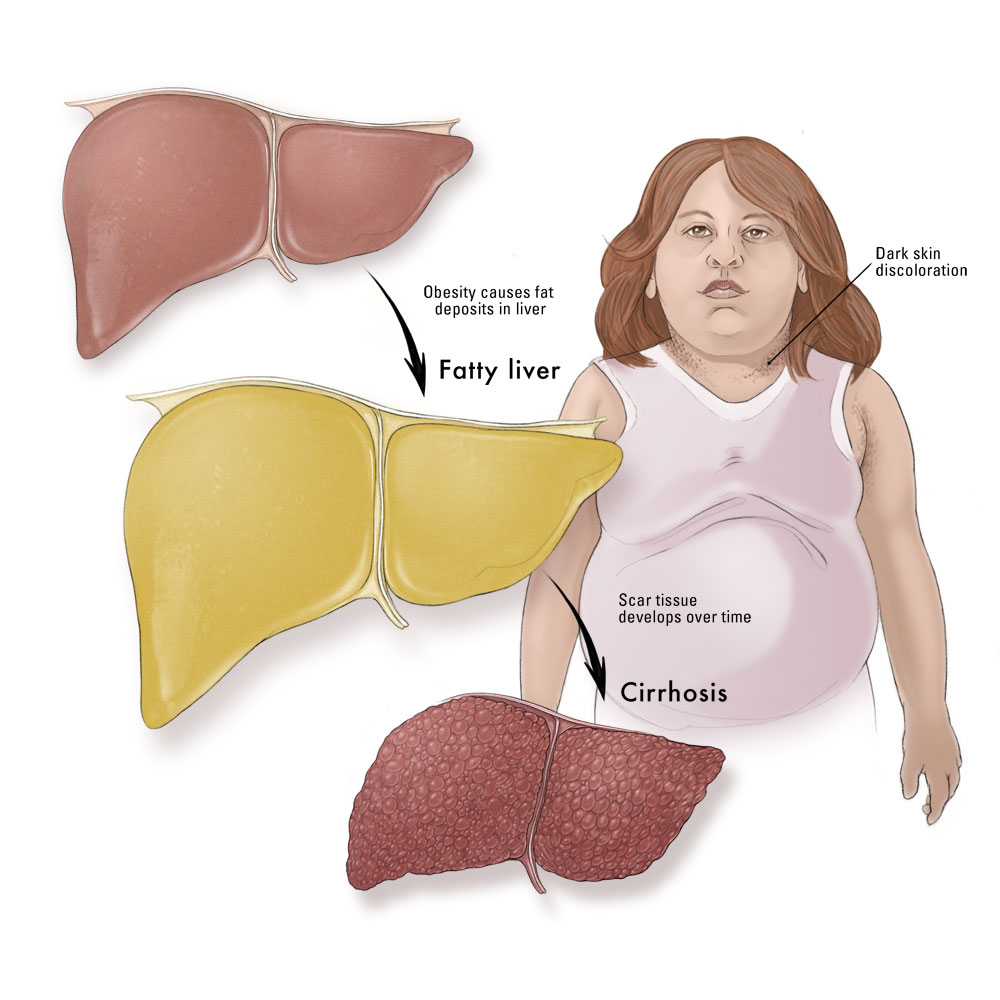
  • Accumulation of fat in the liver (fatty liver) is common in all stages of nonalcoholic fatty liver disease (NAFLD). The initial stage in the spectrum of nonalcoholic fatty liver disease is fatty liver (steatosis).
  • The basic cause of nonalcoholic fatty liver disease is insulin resistance, a condition in which the effects of insulin on cells within the body are reduced. The most frequent risk factor for insulin resistance is obesity, especially abdominal obesity.
  • Fatty liver is itself quite harmless, disappears rapidly with loss of weight, and infrequently progresses to Nonalcoholic steatohepatitis, which is the next stage of nonalcoholic fatty liver disease.
  • In Nonalcoholic steatohepatitis there is accumulation of fat in the liver, but there also is inflammation (hepatitis), destruction (necrosis) of liver cells, and scarring (fibrosis) of the liver. The scarring can progress to cirrhosis, which is the last stage of nonalcoholic fatty liver disease.
  • The risk factors, the time-line, and the processes (mechanisms) responsible for progression through the stages of Nonalcoholic fatty liver disease are still unclear.
  • The presumptive diagnosis of Nonalcoholic fatty liver disease or Nonalcoholic steatohepatitis is made in individuals who are insulin resistant, have mildly elevated liver enzymes in the blood, and have signs of fatty liver on an ultrasound. These patients must have no other cause for the abnormal enzymes or for the fatty liver, particularly no excessive use of alcohol.
  • If weight loss results in a decrease or normalization of the liver enzymes, the diagnosis of nonalcoholic fatty liver disease is practically assured. Only a liver biopsy, however, can confirm the diagnosis of Nonalcoholic fatty liver disease and Nonalcoholic steatohepatitis and determine the severity of the disease.
  • Whether or not it is vital to perform a liver biopsy in individuals with suspected nonalcoholic fatty liver disease or nonalcoholic steatohepatitis is still debated among liver specialists since no well-proven treatments are available. A liver biopsy can exclude other liver diseases as the cause of the abnormal tests or fat and provide information about the stage (and therefore the expected outcome) of Nonalcoholic fatty liver disease. It also may provide an incentive for an individual to adopt a healthy lifestyle (diet and exercise) with the aim of losing weight.
  • Weight loss, if overweight, and correcting elevated cholesterol, triglycerides, and blood sugar should be beneficial in Nonalcoholic fatty liver disease.

Treating Nonalcoholic Fatty Liver and Steatohepatitis Diseases: Real lasting Solutions with the Experts


Facebooktwitterpinterestlinkedin

Diseases which are associated with obesity

Diseases which are associated with Obesity: They are Chronic in nature

Diseases which are associated with obesity

Diseases which are associated with obesity can be very chronic and prevention should be the best medicine for them

When we mention the conditions associated with weight gain people often think of being lazy or just being less concern with the good healthy nutrition. What many are not aware of is that there are several diseases which are associated with obesity and weight gain. In a series of different articles we are going to be discussing some of these chronic health conditions which we can easily put to control if we get the right information. To help us understand the clear picture or the magnitude of the conditions, we are going to be talking to the experts at AWAREmed Health and Wellness Resource Center under Doctor Akoury’s care. Therefore doctor Akoury is going to be responding to some of the concerns that we want to bring to you with a view of changing lives for the better. The following are just but a few of the diseases which are associated with obesity:

Diseases which are associated with obesity: Diabetes mellitus

This one such health conditions that is strongly associated with overweight and being obese. The most frustrating point with this condition is that is very difficult to treat and once affected, it can only be managed. Obesity is linked to type 2 diabetes mellitus and this cut across both genders and irrespective of where you’re coming from. And in fact the relationship between obesity and diabetes is such intertwined that the connection has been nick named ‘diabesity’. The flow from obesity to diabetes is due to a progressive defect in insulin emission together with a steady rise in insulin resistance. The fact that insulin resistance and improper emission of insulin are happening very prematurely in obese individuals is worsening towards diabetes. An increase in overall fatness, preferentially of visceral as well as ectopic fat depots, is specifically associated with insulin resistance. The accumulation of intramyocellular lipids may be due to reduced lipid oxidation capacity. Therefore the ability to lose weight is related to the capacity to oxidize fat. Thus, a relative defect in fat oxidation capacity is responsible for energy economy and hampered weight loss.

Diseases which are associated with obesity: Hypertension

The relationship between obesity and hypertension has been investigated in a large number of cross-sectional population studies and a smaller number of prospective, observational studies. The results indicate that in most populations, blood pressure increases linearly with increasing relative body weight or body mass index. The relationship is present across all subgroups, although the magnitude of the association appears greater in whites than blacks and greater in younger than older persons. It is estimated that as much as one-third of all hypertension may be attributable to obesity in populations where hypertension and obesity are widely prevalent. Evidence from prospective studies and clinical trials suggests that hypertension in obese patients increases the risk of cardiovascular disease and that drug treatment of hypertension reduces the risk.

However, it is uncertain whether the risks associated with hypertension and the benefits of treatment are as great in obese hypertensives as they are in lean hypertensives. The effects of weight reduction on blood pressure have been investigated in a small number of randomized, controlled trials involving a total of about 600 participants. Overall, the results of the trials indicate that weight reduction lowers blood pressure over intervals of up to one year. The magnitude of the blood pressure response appears to be directly proportional to the amount of weight loss achieved. However, the latter is inversely related to the length of follow-up. Adequate maintenance of weight loss remains a major problem for the much-needed, long-term trials of the effects of weight reduction on blood pressure and the cardiovascular complications of hypertension.

Diseases which are associated with obesity: Heart disease

Obesity is reaching epidemic levels in most parts of the world but the greatest concern is the trail of destruction this condition is leaving on the complications of the heart. How does this happen? Doctor Akoury explains:

Diseases which are associated with obesity: Obesity Leads to Blockage in the Arteries

Let us start by explaining what insulin is, this is a hormone that helps the body metabolize blood sugar, or glucose. When one is obese the insulin resistance goes up causing the body to be less effective in digesting glucose. The result of this is high blood sugar which facilitates the formation of pre-diabetes or diabetes. As we had said above, this is a serious risk factor for heart disease. And due to the ineffectiveness of insulin operations in the liver, triglycerides (fats) increases in the blood causing the bad cholesterol, or LDL to go up and good cholesterol or HDL to come down.

Remember that cholesterol is a chemical which is very vital to a number of functions in the body. However, too much level of cholesterol in the body can be harmful. LDL transport cholesterol from the liver and intestines to various parts of the body. During this transportation process, if there we have excess cholesterol the excess will build up in the walls of arteries throughout the body, including those in the heart and brain. HDL takes cholesterol from the walls of the arteries and carries it back to the liver and intestines where it can be excreted. When there is too little HDL to carry away the excess LDL, it leads to atherosclerosis, which is hardening and narrowing of the arteries. This is a major risk factor for heart attack and stroke. Just to further on the relationship between obesity and heart diseases, obesity is also associated with increased risks of:

  • Coronary artery disease
  • Heart failure
  • Atrial fibrillation
Diseases which are associated with obesity: Coronary artery disease

Various studies have shown that an increased risk of coronary artery disease (CAD) in the overweight is real and realistic. This is because while studying some 300 000 adults for 7 years, it was established that about 9% increase in ischaemic-heart disease events for each unit change in BMI.46 moreover, obesity was associated with both fatty streaks and raised atherosclerotic lesions in the right coronary and left anterior descending coronary arteries specifically in young men. Nonetheless as for those individuals with pre-existing heart conditions the link between obesity and cardiovascular mortality is not very strong.

Diseases which are associated with obesity: Heart failure

Doctor Akoury explains that the relationship between obesity and heart failure is complex. According to the Framingham Study where some 6000 individuals with no heart failure records in the past but of age 55 were followed keenly for some14 years. Up on concluding the study, it was established that, the risk of developing heart failure was two-fold higher in obese individuals, in comparison with subjects with a normal body-mass index. On multivariate analysis adjusting for risk factors including hypertension, coronary artery disease and left ventricular hypertrophy, there was an excess risk of 5% in men and 7% in women for each 1 point increase in BMI. It was estimated that 11% of the cases of heart failure in men and 14% in women could be attributed to obesity alone. These complications can be very chronic and the sooner you tackle them the better. To help you get lasting solutions of all these, you will need to call doctor Akoury for an appointment to commence treatment.

Diseases which are associated with obesity – They are Chronic in nature


Facebooktwitterpinterestlinkedin