Tag Archives: Fighting substance abuse

drug-rehab

Relapse management for drug addiction healing
Relapse management

Relapse management for drug addiction healing.

Relapse management for drug addiction healing: Fighting substance abuse

The dangers of being addicted to drugs is not only the concern of the individual patient, but goes beyond that. Each time a member of the family is struggling with an addiction to any substance, the whole family is affected. If this is not addressed in good time, it may also escalate to the society and progress beyond that to the nation. That is how serious addiction can be. And because of that, it is only fair that we all pull together in finding lasting solution to save our societies from the scourge of addiction. In the process of finding solution, it is donning on patients that their effort could be ruin because of improper relapse management. This is the reality in the drug addiction treatment process that we want to deliberate on progressively in this article. With the help of experts from AWAREmed Health and Wellness Resource Center we are going to highlight certain points about relapse management for drug addiction healing a discussion you don’t want to miss.

Relapse management for drug addiction healing: Relapse is not a failure

During the rehabilitation process patient undergoing drug addiction treatment process often give it their best to be free from this problem. Immediately they are done with the detox they are taken through the rigorous treatment and when they are finally sober, they are released to go back home where they come in contact with the many triggers of their old habits. This is when the problem of relapse sets in and recovering addicts often find themselves being motivated into drugs again. This is a common occurrence and should not cause any panic to you. The progress made so far will not go to waste simply because of a small moment of weakness. When this happens, it is important that you get down to the basic and pick up the pieces and refocus on the bigger objective of attaining your freedom from the scourge of addiction. Remember that staying focus is one of the most powerful tool of relapse management and losing it can be very disastrous to all the time and gains made.

Relapse management for drug addiction healing: Refocusing on treatment’s benefits

Finally doctor Akoury is confirming that up to 50% of patients on treatment programs remain clean and sober for a year and even for a life time after treatment. But many of those who relapse don’t go into a black hole, they don’t just sink and wallow in their old habits forever, instead they return to treatment to build on the behavioral skills they learned during their treatment time at the rehab centers. Studies show a connection between treatment success and the length and intensity of treatment. That usually means at least three weeks of treatment lasting several hours a day (whether as an inpatient or outpatient), followed by frequent attendance at AA or other group therapy for about a year. All these put together will help in the relapse management for sustainability of the healing process. And for any further inquiries, you can call doctor Akoury today and all your concerns will be addressed professionally.

Relapse management for drug addiction healing: Fighting substance abuse

http://www.awaremednetwork.com/


Facebooktwitterpinterestlinkedin
addiction treatment

Substance abuse devastating brain disease today

Substance abuse devastating brain

Substance abuse devastating brain disease today. Helping people struggling with substance abuse is a step in the right direction to solving the bigger problem of addiction

Substance abuse devastating brain disease today: The brain health risks

Talking about drug addiction, one cannot miss to associate the problem with the functions of the brain. Experts across the globe are all in agreement that drug addiction is causing serious health threats starting from the brain down to the other organs of the body. That is why we want to focus our discussion on substance abuse devastating brain disease today” so that we can take the precautions in good time. Remember that this is a health matter and must be addressed professionally by medical doctors. To that effect we are going to be talking to doctor Dalal Akoury MD, President of AWAREmed Health and Wellness Resource Center to help us understand the drug addiction devastating brain disease as it is.

From her mare decades of practice doctor Akoury says that the brain of any human being is a symbol of his whole life in totality. From the brain we are able to reason together, think and have all our five senses engaged to positive action. Without the brain proper health all information from the environment both from the outside and the inside cannot be processed. The outside information’s are those that are associated with the sense of sight, touch and smell while those of inside can be considered to be in relation to body temperature, heart rates, digestion and many more. According to the experts from AWAREmed Health and Wellness Resource Center, any attack to any of the three parts of the brain can be very costly. Each of the three parts of the brain has specific and important roles to play. Drugs are the biggest enemies of the brain’s health and that is why it is important that we understand this topic drug addiction devastating brain disease today effectively.

Substance abuse devastating brain disease today: The three segments of the brain

Like we have mentioned drug addiction is the biggest enemy of the brain health. Any individual using drugs is at greater risk of having their brain being corrupted. And when this happens, it can interfere with the normal processing of information thereby altering altogether how well the brain works. Doctor Akoury says that for clear understanding of the devastating brain disease, it is important that we appreciate the functions and how drugs affects all the three parts of the brain as follows:

Limbic system

This coordinates all the brain structures responsible for the control of emotions. Like for instance big appetite, pleasures over delicacies. Such good feelings motivates users of drugs to keep using and eventually become addicted.

Brain stem

All the body organs that keep us healthy are coordinated from this point. Brain stem is responsible for all the body functions including breathing, blood flows, digestion besides linking the brain with the spinal cord running down the back moving muscles and limbs even as it communicates with the brain in understanding all that is happening to the body.

Cerebral cortex

This is considered to be the largest part of the brain with four segments:

The lobes – which control specific functions. Some areas process information from our senses, allowing us to see, feel, hear, and taste.

The front part of the cortex, known as the frontal cortex or forebrain, is the thinking center. It powers our ability to think, plan, solve problems, and make decisions.

From that briefing it is clear that the brain is delicate and therefore if you are struggling with substance abuse, then you need help and doctor Akoury is waiting to hear from you and she will be able to help you recover from all your addiction related complications.

Substance abuse devastating brain disease today: The brain health risks

http://regenerativepotential.com/wp-admin


Facebooktwitterpinterestlinkedin
over the counter drug abuse

Cue anticipation role in addiction development

Cue anticipation role

Cue anticipation role in addiction development knows no boundary

Cue anticipation role in addiction development: Emotional memory

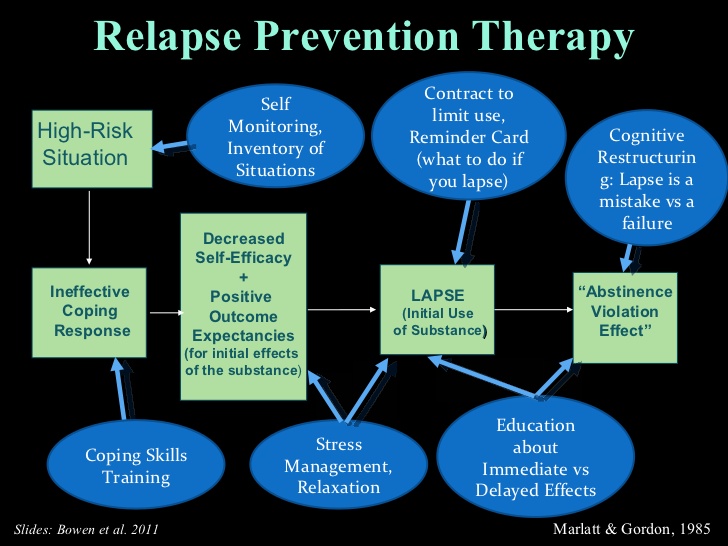
As we were discussing previously about defeating addictive habits and formation, it became clear that memory is a key factor in addiction. We want to further that discussion by focusing on another important factor in the development of addiction. Essentially we are making reference to the cue anticipation and the role it plays in the development of addiction. Cue anticipation refers to environmental cues that can initiate or elevate craving that often leads to relapse. Because of these functions, they (cues) are often called relapse triggers meaning that, a successful recovery plan will include a strategy for coping with cues (relapse triggers).

Cue anticipation role in addiction development: Environmental cues

These environmental cues (relapse triggers) can be anything that is associated with the addiction. It could be a certain time of day, a place, a person, or an activity. For instance, suppose a man is addicted to pornography use and because of that he usually gets online after his wife goes to bed to satisfy his addiction. The mere act of his wife getting ready to go to bed serves as a cue that prompts powerful cravings. Later, even his own anticipation of his wife going to bed will serve as a powerful cue. The amygdala’s role in emotional memory is responsible for these cues taking root. The brain forms an association between pleasant memories of drug use or addictive activities, and the cues. The more a person repeats this cycle, the more it strengthens the emotional memory circuits associated with these cues (cue anticipation). Eventually, this leads to a complete pre-occupation with the addiction.

Finally, so far our discussion has been focusing on the role of amygdala and positive emotional memories. Nonetheless the brain may also form an association between unpleasant emotions and a memory thereby forming a “bad” memory. For your information, these negative emotional memories play an important role in withdrawal. The negative emotional memory of anxiety becomes associated with the physical signs of withdrawal. And as withdrawal begins, the symptoms trigger an unpleasant emotional memory. This increases the negative experience of withdrawal.

Withdrawal avoidance (via returning to the addiction) often becomes the cornerstone of the addiction in the later stages. Thus, in the earlier stages of addiction the pleasurable experience of the drug motivates a repetition of that behavior. In the later stages, relief of withdrawal symptoms (physical and/or emotional discomfort) achieves pleasure. This pleasurable relief from withdrawal symptoms continues to motivate the repetition of that behavior. I strongly believe that this is a very interesting topic that needs further consultation with the experts. What we have discussed here may not be conclusive and therefore you may want to schedule for an appointment with doctor Dalal Akoury for more health insight about addiction and the brain.

Cue anticipation role in addiction development: Emotional memory

http://regenerativepotential.com/wp-admin

Facebooktwitterpinterestlinkedin
what-is-bipolar-disorder-1

Brain communication pathways and the role of addiction

Brain communication pathways

Brain communication pathways and the role of addiction. Mental health problems and substance abuse

Brain communication pathways and the role of addiction: Neuronal

The study of some of the elements that cause health problems in our life can be very interesting. Understanding the brains functions and how it can be affected by addiction and various substances is very important. The brain communication pathways are always the biggest casualties whenever there is an attack by the abuse of substances. The brain’s electro-chemical communication system is a communication system that sends information through a vast network of interconnecting neurons. Through this the brain communication pathways begins to develop a preferred or standard conduit of sending signals between neurons (neural pathways). Experts at AWAREmed Health and Wellness Resource Center under the able leadership of doctor Dalal Akoury MD and founder of the facility can now confirm that in the past it was believed that the brain’s neural pathways will be completely formed by the time we reached adulthood.

Brain communication pathways and the role of addiction: Neurons ability of adapting to changing circumstances

Progressively the scientific findings have established that this is a continuous process and in fact the human brain continues to create new neurons and form neural pathways throughout our entire lifespan. That is why neurons are seen as dynamic cells that are constantly adapting to changing circumstances. It therefore means that if an injury or damages happens to an individual’s brain (such as a stroke or injury) the neurons will make new communication route around the damaged area. Scientifically doctor Akoury says that this ability of recreation of neurons is known as neuronal plasticity.

Brain communication pathways and the role of addiction: Neuronal plasticity

Doctor Akoury says that neuroplasticity is responsible for the regulation of our learning processes and this enables us to adapt to our surroundings conveniently. To better understand neuroplasticity let us consider using this illustration. The brain forms neural pathways in a way that is similar to the formation of a demarcated hiking pathway. The more we travel a path, the faster, easier, and more familiar that path becomes. As the routine continues it becomes more visible, smoother, and easier to travel on. And with time this becomes a preferred route for many. This is also how neural pathways are formed. With time the brain forms familiar neural pathways which then become habitual routes. And in the event that the familiar route is blocked the brain responds swiftly by forming a new route around the blockage.

From the illustration, suppose you walk through the bush each day to visit a friend. You use the same trail each time and one day as you travel along your familiar path, you discover a huge tree has fallen over. It’s blocking your passage. You will need to forge a new path to go around the tree. At first, this new path will be narrow, difficult, and slow. It might even be uncomfortable. However with time, it will become a well-worn, comfortable path. It will be just as easy as the original path.

Brain communication pathways and the role of addiction: Neuronal

http://www.I-AM-I.com/wp-admin


Facebooktwitterpinterestlinkedin
drug abuse

Family therapy and substance abuse treatment

Family therapy

Family therapy and substance abuse treatment can compliment each other in defeating addiction

Family therapy and substance abuse treatment:  Introducing loved ones in the healing process

No one will be happy seeing any member of his/her family get wasted in substance abuse. In fact when any member of the family is struggling with addiction, the whole family will have their share of the burden to bear. That is why doctor Dalal Akoury MD and her team of experts from AWAREmed Health and Wellness Resource Center are not leaving anything to chance when it comes to the administrations of drug addiction treatment. According to doctor Akoury who is also the president and founder of this facility, the family has a central role to play in the treatment of any health problem, and that is why we are very particular in our treatment procedures. To be successful in totality, family therapy and substance abuse treatment will complement each other effectively.

The theme of family treatment

There is no doubt that today family work has become a strong and continuing theme of many treatment approaches, nonetheless the family therapy is not used to its greatest capacity in substance abuse treatment. A primary challenge remains the broadening of the substance abuse treatment focus from the individual to the family. The two disciplines, family therapy and substance abuse treatment, bring different perspectives to treatment implementation. In substance abuse treatment, for instance, the client is the identified patient (IP)—the person in the family with the presenting substance abuse problem. In family therapy, the goal of treatment is to meet the needs of all family members. Doctor Akoury in her decades of working experience agrees that family therapy is very essential in addressing the interdependent nature of family relationships and how these relationships serve the IP and other family members for good or ill.

Why do we need family treatment?

This is very important because the primary objective of family therapy treatment is to intervene in these complex relational patterns and to alter them in ways that bring about productive change for the entire family. Family therapy rests on the systems perspective. As such, changes in one part of the system can and do produce changes in other parts of the system, and these changes can contribute to either problems or solutions.

It is important to understand the complex role that families can play in substance abuse treatment. They can be a source of help to the treatment process, but they also must manage the consequences of the IP’s addictive behavior. Individual family members are concerned about the IP’s substance abuse, besides having their own goals and issues. That is why it is important to provide treatment services to the whole family if any meaningful result is to be realized effectively says doctor Akoury.

Finally the essence of family therapy and substance abuse treatment is to deliver completeness in healing. You will need serious committed professionals to deliver this to you and to the whole family. This professionalism is what we have invested in as AWAREmed Health and Wellness Resource Center. It is therefore very important that you let us be part of your healing process by scheduling for an appointment with doctor Dalal Akoury for the commencement of your treatment process. It is worth noting that we appreciate that an integrated substance abuse treatment model based on family therapy, both family functioning and individual functioning play important roles in the change process and so we will take you through that process effectively and professionally.

Family therapy and substance abuse treatment: Introducing loved ones in the healing process

http://www.integrativeaddictionconference.com/wp-admin


Facebooktwitterpinterestlinkedin