Tag Archives: Drug

Buprenorphine for the treatment of addiction

Buprenorphine for the treatment of addiction-Is it the best

Buprenorphine

If you are suffering from addiction seek treatment but remember Buprenorphine may not be a better option.

Buprenorphine is used to help you keep off street drugs such as heroin. It can prevent or reduce the unpleasant withdrawal symptoms when you stop using such drugs. It is a medicine that is similar to heroin and works as a replacement treatment. Many people choose to stay on buprenorphine long-term, although some people gradually reduce their dose and come off it.

The effects of buprenorphine last longer than heroin so it is usually prescribed as a once-daily dose. To begin with, you will usually be asked to take it under the supervision of the pharmacist who dispenses the buprenorphine to you. This means there can be no doubt about how much buprenorphine you take at each dose. This supervision may be relaxed after a few months of your taking a regular maintenance dose.

Buprenorphine is also available combined with another medicine called naloxone (the tablet brand name is Suboxone). Naloxone blocks the action of buprenorphine and the effect of the combination is that, if you are tempted to crush the tablet and try to inject it, you will start to get withdrawal effects.

Buprenorphine for the treatment of addiction-Can buprenorphine cause problems?

As with all medications, Buprenorphine (Suboxone) drug treatment also has some disadvantages. It is still a medication and if you prefer to break free from any kind of addiction immediately, then Buprenorphine may not be the way to go. Also, you may not be completely Buprenorphine-free by the time you leave drug treatment, even if you opt for an inpatient drug rehab program.

Some may consider these disadvantages while others consider them well worth the advantage of avoiding opiate withdrawal symptoms. Also, some initial studies on long-term use of Buprenorphine suggest that there are anti-depressant effects of the drug as well. The dosing schedule is also relatively easy to maintain as most don’t even have to take it every day. Additionally, you can’t abuse Suboxone, get high off of it or overdose on it like you can with some other opiate addiction maintenance or detox drugs, like methadone. Much as this may offer treatment for addiction, it is in itself addiction and should not be encouraged. Its demerits far much out ways the merits just have a look at the conditions lined below before and during its usage.

Buprenorphine for the treatment of addiction-Before taking buprenorphine

Some medicines are not suitable for people with certain conditions, and sometimes a medicine may only be used if extra care is taken. For these reasons, before you start taking buprenorphine it is important that your doctor knows:

  • If you have liver or kidney problems.
  • If you have prostate problems or any difficulties passing urine.
  • If you have any breathing problems, such as asthma or chronic obstructive pulmonary disease (COPD).
  • If you have been told you have low blood pressure.
  • If you have any problems with your thyroid or adrenal glands.
  • If you have epilepsy.
  • If you have a problem with your bile duct.
  • If you are pregnant or breast-feeding.
  • If you have been constipated for more than a week or have an inflammatory bowel problem.
  • If you have a condition causing muscle weakness, called myasthenia gravis.
  • If you have recently had a severe head injury.
  • If you have ever had an allergic reaction to a medicine.
  • If you are taking any other street drugs or medicines. This includes any medicines you are taking which are available to buy without a prescription, such as herbal and complementary medicines.

Buprenorphine for the treatment of addiction-Getting the most from your treatment

  • Some people feel uncomfortable during the first 2 to 3 days of taking buprenorphine. Do not be tempted to take heroin on top, and do not take more than the dose your doctor has prescribed for you.
  • It is important that you keep your regular appointments with your doctor or clinic so your progress can be reviewed. You will be asked to give a urine sample from time to time.
  • Buprenorphine cannot be supplied to you without a prescription. You will not be able to ask for any changes to be made to your supply, as your pharmacist can only dispense the prescription exactly as your doctor has directed.
  • There are several different brands and strengths of buprenorphine tablets, so each time you collect a supply, check to make sure it contains what you are expecting.
  • You are more likely to succeed in staying off heroin if you have support and counseling in addition to taking buprenorphine. Local drug community teams, self-help groups and other agencies may be of help. It is much harder to ‘do it alone’, so go for counseling and help if it is available in your area.
  • You should not take any street drugs or drink too much alcohol while you are on buprenorphine. This is because other street drugs such as benzodiazepines (benzos) and alcohol can affect buprenorphine and increase the chance of unwanted effects.
  • You should tell the DVLA that you are taking buprenorphine if you are a driver. You are likely to be banned from driving at first, although you may be allowed to drive again later, subject to an annual medical review. Your doctor will tell you when you can resume driving.
  • Do not stop taking buprenorphine without discussing this with your doctor or drug-team worker first. It is important that buprenorphine should be taken regularly to reduce the risk of withdrawal symptoms occurring. When you are ready to consider becoming drug-free, your doctor or drug-team worker will be able to help you decide on the best way to do this in order to keep withdrawal effects to a minimum.
  • If you are planning any trip abroad, you should carry a letter with you from your doctor to explain that you have been prescribed buprenorphine. This is because buprenorphine is classed as a ‘controlled drug’ and is subject to certain restrictions.
  • If you buy any medicines, check with a pharmacist that they are suitable for you to take with buprenorphine. Many other medicines have similar side-effects to buprenorphine and taking them together will increase the risk of unwanted effects.
  • If you are having an operation or dental treatment, tell the person carrying out the treatment that you are taking buprenorphine.

So many side effects and so many conditions attached making buprenorphine not to be right for addiction treatment not now and certainly not ever.

Buprenorphine for the treatment of addiction-Is it the best


Facebooktwitterpinterestlinkedin

Social and health consequences of cocaine use


Social and health consequences of cocaine use-Addiction

Social and health consequences of cocaine use-Everyone is affected

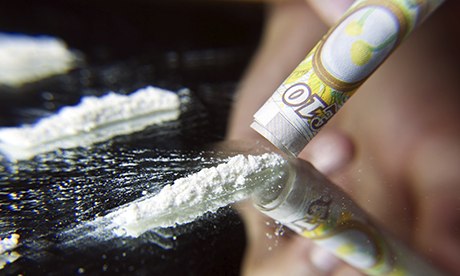
cocaine

The use of cocaine has negative effects on the society

Almost on a daily basis on my way to my work place I pass a small park on the way. In this park and along the road a group of people is sitting, standing or lying down with bottles of wine in their hands or tins with beer. They are not very good looking and not presentable at all, sometimes they show up in rags and some have hairdos that look like a Zoo. They seem engaged in quite energetic talking but at the same time some sit listening quietly and some even seem to sleep.

This group is a group of street drinkers. They all know each other and their place of congregation is the little park. Quite clearly they have no jobs, at least not at the time I meet them socializing, majority of them are men.

On the other hand at my work place I have a different experience I talk to another group of people usually very well dressed people in a nice room, during lunch, dinner or at the occasion reception. A reception will be created when for instance someone says good bye as a professor and goes to another university. Also we have receptions after a doctoral thesis has been defended. During these receptions people stand and almost all have glasses in their hands, filled with red wine, white wine or sometimes even stronger drinks like gin or whiskey. People laugh, have energetic discussions or wander quietly from person to person. All of these people have jobs. They are both men and women, in almost equal proportions well-mannered and dressed sophistically.

Looking at these two groups observations serve as lesson. Tow lessons one in the sociology of drug use. The common drug that played a role in the two described situations was of course alcohol, hence the topic of my presentation in this, Cocaine use and its social and health consequences, will be modeled along the structure that these two situations allow me to create.

Cocaine users can be found in poor ghettos of cities of the world, but also in the suburbs or rich dwellings. But in our own cocaine user studies we found crack cocaine users among well employed highly functional completely integrated cocaine users. How then are we going to approach the question what health and social consequences cocaine use can have?

Lesson number two. We have to be prepared that a simple answer to this question does not exist. Quite clearly, as is the case in the two groups of alcohol users I started to describe, we should be ready to accept that the answers to the question may be very different from one kind of cocaine user to the next. Very much depends two things (1) on the group to which the user belongs and (2) the use patterns of the user.

In groups where unemployment is the rule, criminal behavior as well, poor housing conditions prevail and where social integration into dominant labour or family culture is low, the user of cocaine, or of alcohol, or of whatever drug will behave very differently from when the user is part of another sub culture. If you do not go to work, why would you stop using cocaine at 9 o’clock at night? If you do not have to impress your boss every morning by looking brilliant, the contextual restraints on your time management are really different than when you have.

If you are not part of a culture in which you eat every day, and eat well, the health consequences of alcohol, but also of cocaine, will be different than when you eat well and regularly. If you smoke cocaine to escape constantly some sort of social misery, the effect you seek are different from when you smoke cocaine to take off on an adventure of sexuality and excess.

Apparently people seek effects that they sometimes get from drugs, and try to get those effects again. The type of drug effects people seek can be very different, even with the same drug. The two types of alcohol users I introduced to you in the beginning, are seeking different types of effects from alcohol. The choice of effects depends very much on your social home, but also on your character and the interplay between situation and moods.

Social and health consequences of cocaine use-Scores of Variables

With alcohol we all know a typical kind of user, who will consume some alcohol every day, but in low amounts and to very low or even zero levels of intoxication. They visit a bar after work or have a drink at home while chatting with kids. One could give such a use pattern a name, like frequent use zero intoxication. This is a very neutral type of name. Another possibility is that a daily wine user, who chooses the wine very carefully to match the chosen food of the day, but not as a vehicle for intoxication, could be named as a gourmet alcohol user. The same is true for cocaine, although with cocaine users taste can be important, but in a very different way as for a wine user. A cocaine user will appreciate the mellow bitter taste, or the subtle freeze in the back of the tongue.

We have found a substantial proportion of cocaine users who would use the substance every day but with very little amounts, less than 0.5 gram a week, who like to experience the freeze, or the very mild post dinner stimulation, very much like people who have coffee after dinner. For this they need very small lines of cocaine, even if their wealth or available stock of cocaine in their office drawer would allow much greater quantities of use.

Social and health consequences of cocaine use-The story of the consequences

Looking at pattern of use plus looking at social or cultural group a user belongs; one can see distinct types of cocaine use where the social and health consequences are almost zero. If cocaine use does not interfere with eating, if it does not interfere with social functioning both in the inner group as in relation to outside groups the social consequences are nil.

However, it is possible to identify daily users of cocaine, where the amount of use is higher or very high, and where the level of intoxication is desired to be high, and where the user’s group is willing to create the social background for this type of frequent high intensity use. Here the social consequences will be small in the primary group to which the user belongs, but quite dramatically negative in relation to outside groups.

But we can see with alcohol, as with cocaine that some users will use to excess, or consume so much to support a particular behavior or emotional effect that even the inner group is not going to accept this. If this happens, as will occur with some users, the social consequences are severe. Heavy consumers will find themselves with deeply disturbed social relations, sometimes resulting in complete ostracism and even death. Quite probably these rare use patterns are driven by complex problems that justify the choice of these patterns although ultimately they may prove to be very counterproductive. Most often, such extreme use patterns are left behind as soon as the user finds some possibility of more useful adaptation.

However, also quite destructive social consequences can happen to a consumer of cocaine who has no conspicuous use pattern at all. Imagine someone who lives the life of a highly valued and well known adviser to the Minister of Health. However, in her free time she invites artists and actors to her very nice flat on the river side. Cocaine is snorted and one of the elderly guests makes a mistake, snorts too much cocaine on top of his whiskey and has a heart attack. The guest is taken to the hospital and fortunately survives, but the story is out and in the papers. You can avoid this by visiting AWAREmed Health and Wellness Resource Center under Doctor Akoury for help on addiction. They focus on Neuroendocrine Restoration (NER) to reinstate normality through realization of the oneness of Spirit, Mind, and Body, Unifying the threesome into ONE.

Social and health consequences of cocaine use-Addiction


Facebooktwitterpinterestlinkedin

PRESCRIPTION DRUG ABUSE

PRESCRIPTION DRUG ABUSE-SERIOUS PROBLEM

Prescription drug abuse is becoming a major scourge to the society today

Much as recreational use of prescription drugs is a serious problem with virtually everyone, teens and young adults are most affected. Resent studies shows that teens are more likely to have abused a prescription drug than an illegal street drug. Many teens think prescription drugs are safe because they were prescribed by a doctor. But taking them for nonmedical use to get high or “self-medicate” can be just as dangerous and addictive as taking illegal street drugs. There are very serious health risks in taking prescription drugs. This is why they are taken only under the care of a doctor. And even then, they have to be closely monitored to avoid addiction or other problems. Many pills look the same. It is extremely dangerous to take any pill that you are uncertain about or was not prescribed for you. People can also have different reactions to drugs due to the differences in each person’s body chemistry. A drug that was okay for one person could be very risky, even fatal, for someone else.

PRESCRIPTION DRUGS ABUSE-WHAT YOU DON’T KNOW

Due to their potential for abuse and addiction, many prescription drugs have been categorized by the US Drug Enforcement Administration in the same category as opium or cocaine. These include Ritalin and Dexedrine (stimulants), and the painkillers OxyContin, Demerol and Roxanol. Many illegal street drugs were at one time used or prescribed by doctors or psychiatrists but were later banned when the evidence of their harmful effects could no longer be ignored. Examples are heroin, cocaine, LSD, methamphetamine and Ecstasy. Abuse of prescription drugs can be even riskier than the abuse of illegally manufactured drugs. The high potency of some of the synthetic (man-made) drugs available as prescription drugs creates a high overdose risk. This is particularly true of OxyContin and similar painkillers, where overdose deaths more than doubled over a five-year period.

Prescription drugs abuse-Types of abused prescription drugs

Prescription drugs that are taken for recreational use include the following major categories: 1. Depressants: Often referred to as central nervous system (brain and spinal cord) depressants, these drugs slow brain function. They include sedatives (used to make a person calm and drowsy) and tranquilizers (intended to reduce tension or anxiety). 2. Opioids and morphine derivatives: Generally referred to as painkillers, these drugs contain opium or opium-like substances and are used to relieve pain. 3. Stimulants: A class of drugs intended to increase energy and alertness but which also increase blood pressure, heart rate and breathing. 4. Antidepressants: Psychiatric drugs that are supposed to handle depression.

PRESCRIPTION DRUG ABUSE-DEPRESSANTS

Sometimes called “downers,” these drugs come in multicolored tablets and capsules or in liquid form. Some drugs in this category, such as Zyprexa, Seroquel and Haldol, are known as “major tranquilizers” or “antipsychotics,” as they are supposed to reduce the symptoms of mental illness. Depressants such as Xanax, Klonopin, Halcion and Librium are often referred to as “benzos” (short for benzodiazepines). Other depressants, such as Amytal, Numbutal and Seconal, are classed as barbiturates—drugs that are used as sedatives and sleeping pills. Effects of Depressants Higher doses can cause impairment of memory, judgment and coordination, irritability, paranoia, and suicidal thoughts. Some people experience the opposite of the intended effect, such as agitation or aggression. Using sedatives (drugs used to calm or soothe) and tranquilizers with other substances, particularly alcohol, can slow breathing and the heart rate and even lead to death. Tolerance of too many depressants can develop rapidly, with larger doses needed to achieve the same effect. The user, trying to reach the same high, may raise the dose to a level that results in coma or death by overdose. Long-term use of depressants can produce depression, chronic fatigue, breathing difficulties, sexual problems and sleep problems. As a dependency on the drug increases, cravings, anxiety or panic are common if the user is unable to get more. Withdrawal symptoms include insomnia, weakness and nausea. For continual and high-dose users, agitation, high body temperature, delirium, hallucinations and convulsions can occur. Unlike withdrawal from most drugs, withdrawal from depressants can be life-threatening. These drugs can also increase the risk of high blood sugar, diabetes, and weight gain (instances of up to 100 pounds have been reported). In a study conducted by USA today, based on Food and Drug Administration data over a four-year period, antipsychotics (a type of depressant) were the prime suspects in forty-five deaths caused by heart problems, choking, liver failure and suicide. ROHYPNOL Rohypnol is a tranquilizer about ten times more potent than Valium. The drug is available as a white or olive-green pill and is usually sold in the manufacturer’s bubble packaging. Users crush the pills and snort the powder, sprinkle it on marijuana and smoke it, dissolve it in a drink or inject it.

PRESCRIPTION DRUG ABUSE-ROHYPNOL EFFECTS

Rohypnol has been used to commit sexual assaults because it renders the victim incapable of resisting, giving it the reputation of a “date-rape” drug. Rohypnol users often describe its effects as “paralyzing.” The effects start twenty to thirty minutes after taking the drug, peak within two hours and may persist for eight or even twelve hours. A person can be so incapacitated (made unable to act) they collapse. They lie on the floor, eyes open, able to observe events but completely unable to move. Afterwards, memory is impaired and they cannot recall any of what happened. The person experiences loss of muscle control, confusion, drowsiness and amnesia. Looking at the seriousness of these elements we certainly need help and we need it now. The good news is that we have AWAREmed Health and Wellness Resource Center under Doctor Akoury’s. In this facility the primary objective is to care for you and your health the natural way. No chemical no side effects it’s all about what is right and good for you. Doctor Akoury focuses on Neuroendocrine Restoration (NER) to reinstate normality through realization of the oneness of Spirit, Mind, and Body, Unifying the threesome into ONE. Where-else can you get help? Certainly none, this is the place to be.

PRESCRIPTION DRUG ABUSE-SERIOUS PROBLEM

Facebooktwitterpinterestlinkedin