Tag Archives: Disease

Mitochondrial Disease And Ebola

Mitochondrial Disease And Ebola

The basis of mitochondrial disease

At the root of the mitochondrial disease is the manner in which mitochondria, tiny microscopic organelles that are found within the cells of the body, function. The mitochondria are made up of different much smaller structures that include ribosomes, granules and two membranes. The internal structures of the mitochondria are the actual sites where the primary function of the mitochondria, which is formation of energy at the cellular level, takes place.

Through complex biochemical reactions that take place inside the internal structures, mitochondria serve the all important purpose of providing the energy that is needed to maintain the process of life. This takes place in all the body cells.  It is through the process that takes place inside the mitochondria that body cells are able to get all the energy required to drive their vital processes.

At times and for various reasons, the mitochondria may fail in their primary function. This is the basis of mitochondrial disease. When this happens, the mitochondria are unable to provide energy to the body cells. This translates to complicated physiological conditions in the body of a person. It is in the same manner that the possible relationship between the disease and Ebola Virus Disease is being examined. Just as mitochondrial disease makes it easy for other disease to attack an individual, the same may be said about Ebola Virus Disease.

Signs and symptoms of mitochondrial disease

The different signs and symptoms that are manifested by this disease vary from person to person. Furthermore, they all arise from the fact that the disease results from internal damages to the structure of the mitochondria. This makes them unable to produce energy as is the norm, thus leading to direct interference in the manner in which the body cells function. This condition causes a number of signs that appear on the body of the affected person.

mitochondrion

Because of lack of energy, a person may feel fatigued and fall short of breath at all times. Further, the effect of destruction of the mitochondria is usually seen in the form of overall weakness of the muscles and poor coordination of the limbs.

In the case of children, destruction of the mitochondria has adverse effects. First of all, it leads directly to developmental problems in the affected child. A child who has been diagnosed with mitochondrial disease will fail to fully develop mentally and physically. This results to learning problems and other forms of medical conditions which, if not checked, may lead to death.

Breakdown of the mitochondria in the cells of the body may also be manifested in the form of a number of different diseases. For instance, it is common to find persons who have been affected by the disease complaining of problems with the thyroid. Furthermore, some problems such as seizure have been associated with mitochondrial disease.

  • How mitochondrial disease is detected

So far, a single test that can be used to detect this disease has not been developed. However, doctors are able to accurately diagnose its development in an individual with relative ease. This is because the symptoms of the disease are quite observable and unique to it. However, in some cases, a DNA test may be carried out to ascertain the existence of the condition in an individual who is showing symptoms.

  • Treatment options for mitochondrial disease

Getting an effective treatment of mitochondrial disease is not easy. It requires finding a means by which the process of destruction of the structure of the mitochondria is reversed. Currently, there is no particular conventional therapy that has been developed to achieve this objective. Research on how to develop a single drug to reverse the process by which the internal structure of the mitochondria gets damaged as a result of the disease is undergoing.

The fact that there still lacks a single drug that can treat mitochondrial disease does not mean that all is lost. There exist different alternative approaches that are used to counter the effects of the disease. The basic idea behind such approaches is that although it may be difficult to undo the damage to the mitochondria, it is actually possible to tackle the effects of the disease. Effects on the body of het patient such as persistent fatigue, muscle weakness and other physiological conditions can actually be tackled by use of different medical methods.

The alternative approach to treating mitochondrial disease seeks to restore the health of the individual to the best level that is possible. There are several methods that are used to achieve this. Various therapies of vitamins and other nutrients are used to counteract the impact of mitochondrial disease on the bodies of patients. Furthermore, other natural supplements whose efficacy against particular symptoms and effects that are produced by the disease are used to improve the overall health of the patients.

Further, nutritional therapies are usually used to help patients remain healthy. By using a well developed diet, physicians are able to help patients of mitochondrial disease lead healthy and fulfilling lives. Such an approach has proven useful in helping patents attain and maintain a particular level of energy in their bodies, thus reducing the effect of the disease on their lives completely.

Dr. Dalal Akoury of AWAREmed Health and Wellness Resource Centre can help in using natural methods to restore the functioning of the mitochondria. In general, maintaining the mitochondria in good shape translates to overall wellness and health. That is why here at AWAREmed Health and Wellness Resource Centre, we seek to help our patients achieve overall health through different alternative methods that have been tried and tested. Our methods of treatment work well to complement other conventional methods being used. We believe that taking such an integrative approach to medicine is the way to go.

Mitochondrial Disease And Ebola

Related articles

Facebooktwitterpinterestlinkedin

Breast Thermography & Prediction of Cancer Risk

Breast Thermography and Cancer Risk Prediction

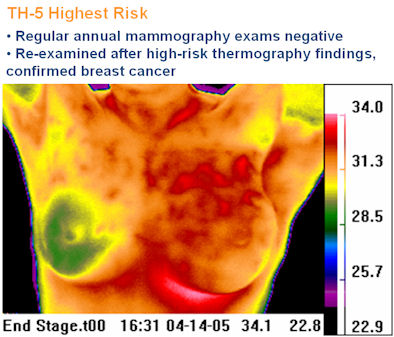
In this article, we shall look at breast thermorgraphy and cancer risk prediction. Our focus shall be on discussing what breast thermography is, how it works and its role in predicting the risk of breast cancer.

What is breast thermography?

Breast Thermography and Cancer Risk

Breast Thermography

Breast thermography is one of the methods that are used to examine the internal structure of breasts as a means of detecting the possibility of breast cancer developing. Detection of breast cancer is one of the important elements in the overall management of the disease. That is why there are many different procedures that have been developed to help doctors detect the presence of cancerous cells in the breast of a woman pretty fast.

One such method entails the use of mammograms. These are special images that are generated using x-rays to view the internal structure of the breast as a way of testing for breast cancer. Mammograms have proven to be effective in screening procedures for breast cancer so far. Another one is biopsy. This is the most complicated and effective method of detecting breast cancer. Tissues are removed from the breast and subjected to thorough examination in the laboratory for the presence of abnormal cancer cells. It is actually the last step in the detection process.

Lastly, breast thermography is based on the idea that diseased tissues do have a higher rate of biochemical activity and, therefore, emit a higher level of radiation than the other normal tissues. The method uses this logic to generate an internal view of the tissues of the breast.

What is the procedure for thermography?

Naturally, the human body emits a form of radiation known as infrared radiation. There is nothing new in this for nearly all objects emit this form of radiation, what matters is the type of radiation that is emitted in terms of its range. When properly functioning, the emission of radiation from the body is actually uniform. However, when cancer is developing at any part of the body, there is always abnormal activity taking place at the cellular level in the region.

The abnormal activity is seen in several ways. First, the cancer cells seek to get extra supply of blood through the process of angiogenesis. This increases the biochemical reactions taking place in the tissues in which cancer is developing. Second, the cells seek to induce development of their own supply systems within the body. Once again, this causes hyper cellular activity. Third, cancer cells tend to break away from the original lump and spread to other areas where they can invade healthy cells and grow afresh. Known as metastasis, this process increases the biochemical activity at the cellular level.

Using specialized equipment, doctors are able to get images of the breast tissues by stimulating specific reactions to the body. For example, using special procedures, doctors can stimulate the body to cool down suddenly and then observe what parts of the body (the breast tissue in this case) fail to cool down relative to the rest of the body. Such parts are marked for possible presence of cancer cells.

Highly advanced cameras are able to detect such anomalies in the biochemical activity of cells and translate them to highly complicated images that are interpreted by specialists. The results of breast thermography are not enough for a diagnosis of breast cancer to be made on a patient. What usually happens is that breast thermography is used as an initial procedure. The results determine whether or not other additional tests should be carried out. Besides, thermography has been successfully used to monitor the progress of treatment in patients of breast cancer. Therefore, its uses are diverse.

Role of breast thermography in cancer risk prediction

Breast Thermography and Cancer Risk Basically, this procedure has been hailed as an effective way of detecting the possible development of breast cancer in patients quite early. When properly used, breast thermography can play an important role in detecting the risk of breast cancer early thus allowing doctors to tackle the risk using the right measures.

There are several ways in which breast thermography is a useful tool in breast cancer risk prediction. For example, the procedure is usually used in conjunction with other clinical procedures to ensure that cases of breast cancer are detected early enough to allow for successful use of appropriate therapies. Usually, breast thermography is used in conjunction with mammograms and biopsy to detect and make accurate diagnosis in patients before a specific therapy is recommended.

Also, breast thermography plays a role in managing the risk of breast cancer by being used as a tool for ordinary breast checkups. Since the method is completely safe and quite fast, it is used as a means of conducting checks on the conditions of the breasts of patients on a regular basis. Studies have indicated that this approach produces positive results over the long term.

Further, when used for the first time on a patient and the results indicate an abnormal image of the breast tissue, the results of this method have been useful in accurately indicating the possibility of one developing breast cancer in the future. Therefore, when one gets a positive result from this test, it has been the norm to institute the right measures to ensure that if the inevitable occurs, it can be tackled quite easily and fast.

Breast cancer is a common health problem today. Here at AWAREmed Health and Wellness Resource Center, we have devoted our resources to helping patients of breast cancer go through treatment quite fast and effectively. We use various alternative treatment methods to reduce the side effects and boost the effectiveness of the treatment method being used. We are located in Myrtle Beach, South Carolina. Feel free to visit us or contact Dr. Dalal Akoury, a renowned cancer specialist for personalized solutions.

Breast Thermography and Cancer Risk Prediction


Facebooktwitterpinterestlinkedin

Radiation Therapy and Erectile Dysfunction

Radiation Therapy and Erectile Dysfunction – What Men Go Through

Erectile dysfunction

Radiation therapy is essential for prostate cancer treatment however it has great negative effect on sex life as it causes erectile dysfunction

There are many life threatening conditions we are often faced with in our daily lives some of these condition are hereditary while others affects us in the process of growth and development. The most painful thing is that often these conditions leave behind a long life scar that remain to be a constant reminder of the devastating painful condition the victims have been through. Let us take for instance the  cancer as a medical condition, and its treatment procedures. Actually the process of treating prostate cancer is one such condition that is able to transforms one’s life negatively and by extension the lives of those around the individual patient.

Radiation therapy is a well-known cause of erectile dysfunction (ED). The procedure (therapy) uses high levels of radiation to damage cancer cells’ DNA primarily to destroy them or reduce their growth and multiplication, in doing so the therapy helps in minimizing harm to the unaffected surrounding healthy cells. Prostate cancer is treatable by:

  • Pelvic external beam radiotherapy
  • Seed implants (brachytherapy)

Considering the pervasiveness of prostate cancer and the reduction in the mean age at diagnosis, it has become necessary to openly discuss the modalities of treating sexual dysfunctions emanating from radiation therapy as a method for treating prostate cancer. Great achievements have made by the experts over the last two decades to minimize the negative effects associated with radiation. It is also worth noting that, the advent of 3D conformal x-ray therapy and brachytherapy (seeds) have gone some way towards reducing radiation-induced erectile dysfunction, even though some men continue to suffer from this problem. Nonetheless at this point in time, it is still not very clear what the true incidence of sexual dysfunction is after brachytherapy and it remains to be seen whether newer techniques such as intensity modulated radiation therapy (IMRT) will improve upon impotence rates.

Radiation therapy can cause erectile dysfunction in three ways. That is to say:

  • Arterial blockage can occur due to the development of a condition called endarteritis obliterans plus other more subtle changes can occur including direct damage to the lining of the blood vessels.
  • Radiation-induced nerve damage may occur. It has been established that there is a reduction in the number of erection-inducing nerves in the penis following exposure to low doses of radiation.
  • Direct erection tissue damage may occur and this can lead to leakage of blood from the erectile bodies (venous leak).

In radiation therapy there are two primary determinants of erectile dysfunction and they include:

  • Dose of radiation (how much)
  • Field of radiation (how wide)

Doses greater than 20 Gy (2000 rads) are frequently associated with large vessel injury meaning that, patients being treated with radiation for prostate cancer are receiving in excess of 70Gy. The wider the field of radiation, the less likely are blood vessels to recover. Given that the erection (cavernosal) artery is the only artery giving rise to erection, radiation exposure to this system may severely limit blood flow into the penis. It is therefore necessary that when you have been taken through this treatment procedure, you will need to seek medical help from the erectile dysfunction experts. I will therefore take this moment to introduce to you doctor Dalal Akoury an experienced medical professional in this line for more than two decades now. Calling her for an appointment will be the starting point and upon evaluating your condition in private and confidence she will administer the correct treatment which will leave you well, comfortable and full of fulfilled sex life again.

You may have not known and so it is essential to understand the penile anatomy and how it relates to the prostate gland.

  • The prostate gland sits above a band of muscle (urogenital diaphragm) and it is separated from the back portion of the erectile body (crus) only by a distance of less than one centimeter.
  • The urethra (urine channel) passes between the two erectile bodies into the bladder and as it does this it is known as the bulb of the penis.
  • It is important to understand that the bulb plays little if any role in the development of or maintaining erectile firmness and it is the tissue within the true erectile bodies (corpora cavernosa), which when damaged leads to erectile dysfunction.

Various studies have established that during 3D conformal x-ray therapy a significant dose of radiation is delivered to the back portion of the erectile bodies that is about 30% of the entire dose of radiation received by the prostate. Radiation therapy in the pelvis area of men can cause ED in 3 possible ways:

  • Arterial damage may block blood flow or damage the lining of the blood vessels that carry blood to the penis
  • Nerves in the pelvic area may become permanently damaged
  • Erectile tissue may be damaged, reducing blood flow to the penis or causing leakage of blood from erectile tissue (venous leak) during an erection

Some of the sexual side effects after radiation therapy may include the following:

  • Inability to achieve or maintain an erection (erectile dysfunction)
  • Weaker, less satisfying orgasms
  • Pain during ejaculation (although this usually goes away within several weeks)
  • Dry orgasm or retrograde ejaculation (orgasm without the discharge of semen)
  • Less semen ejaculated

How soon after having Radiation Therapy are men likely to have ED?

Even with the most precise radiation therapy, men may experience some ED for the first few months after treatment. Many of the sexual side effects of radiation are slow and gradual, and may take as long as six months to several years to appear. Unfortunately, radiation-induced ED is usually permanent.

There are a number of treatments available like early post-treatment evaluation and early institution of a trial of drug treatment as soon as the patient experiences any trouble with his erectile function. Besides these various therapies can also be applied:

  • First line therapy includes management of related medical conditions and psychological support combined with oral therapy.
  • Second line includes vacuum erection device therapy, penile injection therapy, and transurethral prostaglandin suppository administration.
  • Third line therapy is penile implant surgery.

Does anti-androgen therapy make ED either better or worse?

Hormone treatment (also called androgen deprivation therapy or androgen suppression therapy) for prostate cancer attempts to stop, block or remove the production of testosterone and all androgens to slow down or stop the progression of cancer. When hormone therapy is used, it is common for sexual problems to occur within the month following the beginning of therapy. Other common sexual side effects with hormone treatment include:

  • Inability to get or keep an erection (ED)
  • Difficulty climaxing
  • Orgasm without discharge of semen (dry orgasm)
  • Weaker, less satisfying orgasms

Having understood the magnitude of the side effects of prostate cancer treatment using radiation therapy, it will be very painful to jump into another health condition after struggling with prostate cancer. For the problems that may be associated with sexual dysfunction reach out for doctor Dalal Akoury for instant and professional medical attention today. You must not battle with erectile dysfunction because help is only a phone call away.

Radiation therapy and Erectile Dysfunction – What Men go through


Facebooktwitterpinterestlinkedin

The Symptoms and Treatment of Chlamydia

Chlamydia: Symptoms, Effects and Treatment

Chlamydia is one of the most common types of sexually transmitted diseases affecting people leading active sexual lifestyles. There are several reasons that make the disease quite common. To begin with, the disease has got little or no symptoms at all. To many people, the disease may completely fail to show symptoms and only manifest itself later in the form of effects. The second factor is that Chlamydia, which is a bacterial disease, may be easily transmitted during oral or vaginal intercourse. These two factors; the fact that the disease may not show symptoms in some people and that it can be spread even by means of oral sex; make Chlamydia a very common sexually transmitted disease.

Symptoms of Chlamydia in women 

Although it has been stated that for many people, the disease does not show its symptoms, it is important to understand that the disease, like any other disease, does have specific symptoms. The only unique thing about it is that even to those that experience its symptoms, this usually happens long after they have contracted the disease. The long period between the time of actual contraction and appearance of symptoms creates ideal conditions for increased transmission of the disease.

There are several symptoms that one may experience after contracting the disease. Furthermore, it has been known that women generally experience symptoms that are completely different from those experienced by men. Here is a brief outline of some of the most common symptoms that some women who have contracted Chlamydia may show after some time.

The first common symptom of Chlamydia in women is manifested in the virginal discharge. Although it is common for women to have vaginal discharge, depending on several other factors, its color, smell and frequency of occurrence really matters. When a woman experiences a sudden and excessive bout of vaginal discharge, this is definitely a sign of a serious infection. In such a case, the woman should see the doctor immediately so that tests can be done and treatment given immediately.

For women who have contracted the disease, there is a gradual change in the discharge from the vagina. To most women, the discharge changes in color and occurs suddenly. The discharge, which is usually white or creamy in color, is a result of the disease-causing bacteria affecting the cervix. Therefore, such a discharge in women is an abnormal sign which may directly point to infection by Chlamydia.

The second symptom of Chlamydia in women is manifested in the form of a burning sensation when one is passing out urine. In general, many sexually transmitted diseases do cause this symptom in women. Therefore, when a women is having a burning sensation when urinating, other sexually transmitted diseases cannot be ruled out. The burning sensation in women is a result of the disease-causing microorganisms invading the urethra where they cause an infection. The burning sensation may be accompanied by an increasing urge to urinate all the time. All these are sure symptoms that one has been infected by Chlamydia and therefore, when one sees them, she should see a doctor immediately.

The third symptom of Chlamydia in women is seen in the form of pain during sexual intercourse. Usually, a woman who has been inflected by Chlamydia will experience pain either during or immediately after sex. For most women, the pain is accompanied with bleeding. These two symptoms, pain and bleeding during or immediately after sexual intercourse, are a result of the effect that the bacteria that cause the disease have on the cervix and even fallopian tubes of an infected woman. Therefore, when an otherwise normal woman experiences pain during intercourse, which may be accompanied by bleeding, she should seek medical attention immediately.

The fourth symptom of the disease in women is that they experience pain in the lower abdomen. Many women who have been infected by the disease experience pain either at the abdomen, the lower back or even in the rectum. Pain in the general hip area may be accompanied by usual sins of fever and a frequent feeling of being nauseated. Although lower abdominal or back pain may not be a clear symptom of the disease, its occurrence in conjunction with the other symptoms that have already been discussed should be taken as a manifestation of the Chlamydia in women.

Effects of Chlamydia in men and women

Chlamydia DiseaseChlamydia has several destructive effects on women, that is, if it is left untreated for a long period of time. One of the most serious effects of the disease on women is blocking of the fallopian tubes which automatically leads to infertility. This happens as a result of the bacteria invading and affecting the tubes over the course of time. Another serious effect of the disease on women is manifested during pregnancy. Expectant women who contract the disease can easily pass it over to their unborn babies. This leads to the babies developing different kinds of complications like blindness.

Further, if left untreated for long, Chlamydia causes considerable damage to the pelvis. It is the destructive nature of the disease causing bacteria that leads to a lot of the symptoms discussed before. And when this is left unattended to, it may lead to a number of complications in the form of difficulties in one’s sexual life. More often than not, this translates to difficulties in getting pregnant.

For men, the most common effect of the disease is seen in its effect on the two important parts of the male reproductive system: the urethra and epididymis. Prolonged periods of infection lead to complications that affect the urethra and epididymis.  Also, men who contact the disease and fail to get treatment may experience serious infection of the rectum over the course of time.

Since these are serious effects whose treatment may take much longer and cost more, it is wise for one to get treatment the moment the initial symptoms of Chlamydia are seen. Further, it is good practice for one to get tested for Chlamydia at least once a year. This practice, which can be done in any suitable healthcare center like AWARE med, is a good precautionary measure.

Chlamydia: Symptoms, Effects and Treatment

Related articles

Facebooktwitterpinterestlinkedin

Integrative Cancer Treatment and the Hallmarks of Cancer

Integrative Cancer Treatment and its Relation to Hallmarks of Cancer

In this article, we shall examine the relationship between integrative cancer treatment and the hallmarks of cancer. Our concern shall be to show how exactly an integrative cancer treatment model like Life over Cancer is used to address the molecular and metabolic realities of cancer as indicated in the Hallmarks of Cancer model.

Integrative cancer treatment

This is an approach that has gained a lot of popularity in the current days both in theory and practice. In simple terms, integrated cancer treatment is a new approach to managing the disease that, unlike conventional approaches, takes a multi – dimensional approach to helping cancer patients manage the disease. It is much easier to understand how integrative cancer treatment works by first understanding how conventional therapies operate. Essentially, conventional therapies are based purely on scientific innovation and research. Using specially prepared and regulated approaches such as chemotherapy, radiation, immunotherapy, surgery and other technologies, conventional cancer treatment targets to treat the disease with little disregard to how the body of the patient gets affected.

It is this weakness in conventional methods of treating cancer that the integrative approach seeks to correct. Essentially, integrative cancer treatment or integrative oncology, as it is commonly referred to, is based on taking all the different aspects of the cancer disease into perspective during the course of treatment. The evidence that is used in this approach is not just what has been collected from scientific research as is the case with conventional medicine; it is rather what has been collected from epidemiological studies of the disease, clinical research, basic science and ancient healing practices. The end result is that we have a system of treating cancer which uses different types of methods such as nutrition, lifestyle, spiritual support and naturopathic medicine. With the use of all these methods, the system is focused on the overall wellbeing of the individual rather than on merely ameliorating the disease.

How integrative cancer treatment works

So far, integrative cancer treatment has proven to be a successful method of treating cancer patients. This is so because the system has consistently been used to achieve various objectives with regard to cancer treatment which include reducing the severity of cancer symptoms, improving overall life quality of the patients and most importantly, treating the disease itself. This is achieved in several ways.

Integrative cancer

Integrative Cancer

Integrative Cancer Ways:

To begin with, integrative cancer treatment seeks to enhance the overall wellbeing of a patient. This is achieved using different intervention measures such as use of acupuncture and acupressure to restore the energy flow in the body to an optimum level. The wellbeing of a patient is also boosted by inclusion of natural supplements in the diet. This is important in ensuring that the body is well nourished in the first place.

Secondly, the direct effects of the disease are tackled by use of conventional therapies. Depending on the nature of the cancer, the stage that it is in, the patient and other factors, appropriate treatment procedures are used to tackle its effects on the body of the patient.

Thirdly, specific methods are used to rebuild the immune system of the patient. This is an important step since cancer itself as well as the specific therapies used to tackle it has been known to weaken the immunity system of patients. Therefore, it is of great importance that after specific therapies have been used, special steps be taken to rebuild the immune system of the patient and if possible, restore it to its initial level.

Lastly, integrative cancer treatment seeks to stop the process of angiogenesis for a considerable length of time. The importance of this cannot be overstated. At the heart of the growth, development and spread of cancer is angiogenesis. This is the ability of cancer cells to maneuver in a patient’s body and utilize the blood for their own development. It then follows that blocking them from doing this is a noble goal if a patient is to live a fulfilling life after treatment. This is exactly what integrative cancer treatment seeks to achieve.

The Hallmarks of Integrative Cancer

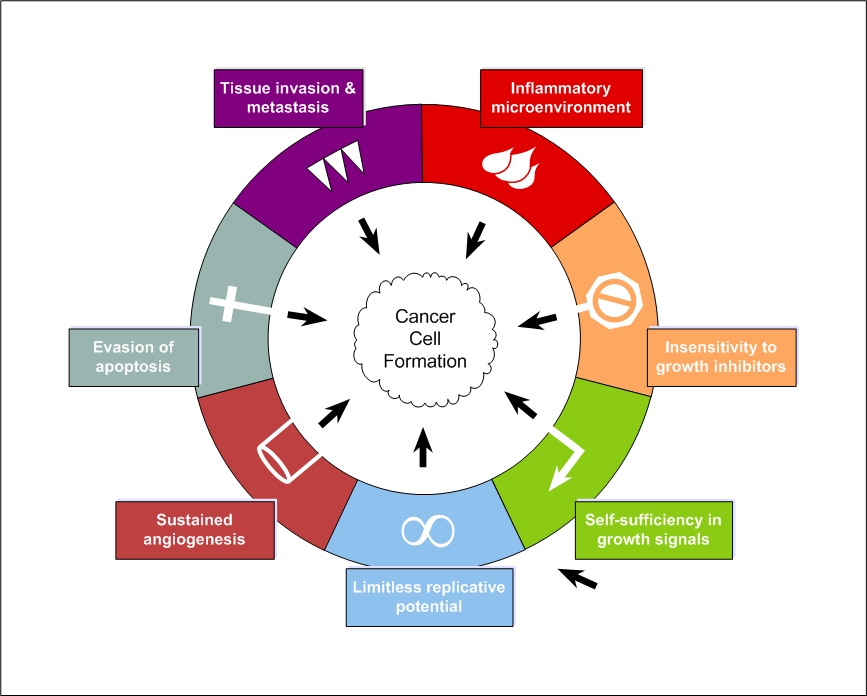
The different methods that are used in integrative cancer treatment work in such a manner that they represent the core realities of cancer as discovered by recent studies. New research in cancer has culminated in identification of six core realities about cancer cells, referred to as hallmarks of cancer. The principles are as follows.

Integrative cancer

Integrative Cancer

First, it is stated that cancer cells have the inbuilt capacity to trigger their own growth. By taking advantage of special signals in body cells which are used to regulate the process of growth, cancer cells are able to guide their growth and proliferation within the body of a patient quite easily. Second, after stimulating their own growth and proliferation, cancer cells are able to avoid natural signals that are used to inhibit growth. This further increases their capacity to proliferate the body. Third, cancer cells are able to initiate the process of metastasis. Fourth, they are able to replicate their ability to evade inhibition of growth. Fifth, cancer cells are able to initiate angiogenesis and lastly, they are able to overcome the natural process that is meant to lead to their automatic death as it is the case for normal body cells.

Relation between Integrative Cancer Treatment and Hallmarks of Cancer

Essentially, integrative cancer treatment is based on the six principles that are contained in the concept of hallmarks of cancer. It is by recognition of these principles that integrative cancer treatment seeks to use multiple approaches, evidence and technologies to tackle the disease. This is done by taking care of the special needs of the patient as well as seeking to reduce the side effects of the therapies used while suppressing the capability of recurrence of the disease.

AWAREmed health and fitness center is one of the most recognized centers where integrative cancer treatment is practiced. With a team of highly trained, experienced and passionate experts, we offer the best services in integrative cancer treatment to our patients.

Integrative Cancer Treatment and its Relation to Hallmarks of Cancer


Facebooktwitterpinterestlinkedin