Tag Archives: Decision making

Parkinson’s Disease

Parkinson’s: An Argument for Periodic Treatment

Parkinson's DiseaseParkinson’s disease is one of the most common neurodegenerative disorders that have affected many people around the world and is still doing what it does best; debilitating its victims. The treatments that many patients have been subjected to only target the symptoms of the disease, some of which are eradicated but as for others the patients have to go for the treatments periodically to suppress the pain and severity of the symptoms of PD. There are various ways of treating those suffering from Parkinson’s disease; however it is recommended that a person should begin treatment as soon as he or she is diagnosed with the disease, lest it becomes a hard nut to crack. The tremors may become too severe if treatment is begun too late.

As opposed to other diseases whose causes are still a mystery, the cause of this disease is now known. Parkinson’s disease is caused by the continued loss of dopamine-producing cells in the brain. Dopamine is an essential brain chemical that helps to regulate movement and emotional responses among other cognitive functions.

Dopamine deficiency is the salient feature of those suffering from Parkinson’s disease. The disease kills the dopamine producing nerve cells in the substantia nigra. The disease affects the substantia nigra in a way that it elicits the problems associated with reasoning, movement, sleeping and motivation. This disease is also linked to the formation of alpha-synuclein- these are clumps of proteins in the brain. These clumps of proteins only worsen the condition of the patient. It is the continuous death of the nerve cells in the substantia nigra that results in the patients developing tremors and rigidity as well as slowed movements. Other symptoms include; dementia, depression, insomnia, constipation and loss of balance. Dementia is usually suffered at later stages, a critical stage in which the damage has spread to the rest of the body.

Treatment of Parkinson’s disease with dopamine boosting drugs

As stated earlier the cause of PD is depletion of dopamine at the substantia nigra. Owing to this fact, doctors have been treating those suffering from PD with dopamine boosting drugs. These drugs help in elevating the levels of dopamine in the brain and so make up for the depleted dopamine. The most common of all the dopamine level boosting drugs is the levodopa. This drugs works in a way that it boosts level of dopamine as it turns into dopamine while in the body. It crosses the blood-brain barrier and is considered the most effective drug for PD. however this drug may not work efficiently without an enzyme inhibitor known as carbidopa as it will be broken down by blood enzymes before it reaches the brain. The enzyme inhibitor also prevents levodopa from being metabolized in the gastroinstenal tract, liver and other tissues thus more of it reaches the brain.

When used alongside carbidopa, the dosage needed to treat symptoms will be reduced and is the side effects like vomiting and nausea that are mostly suffered as a side effect of the drug. It will in turn reduce stiffness, tremors and slowness among other symptoms. It is however important to note that levodopa only addresses the symptoms but neither restores the normal release of dopamine nor slows the progression of the disease.

Levodopa never heals the damaged neurons but rather stands for the dopamine lost, it is therefore not targeted to heal the patient but rather to mitigate on the effects of the disease. therefore other therapies that may help ease the side effects of the drug as well as promote healing should be given due considerations by the patients and their doctors. Dieting may help improve dopamine levels in the brain naturally. There are scenarios when a patient will have to undergo surgery which may include deep stimulation with implanted electrodes.

Need for a lasting cure

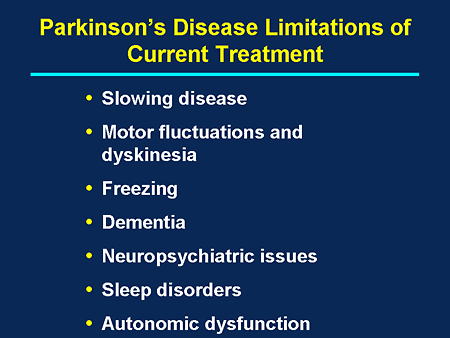
Parkinson,s DiseaseJust like other neurodegenerative diseases the need for proper treatment must involve a therapy that will focus more on healing the damaged nerves and neurons as opposed to simply mitigating on the symptoms. Drugs or treatments that mitigate on the symptoms become a part of a person’s life as they have to undergo treatment periodically. In the end the use of levodopa may even result in a condition known as Dyskinesia. Doctors have been working on the viability of stem cell therapy in treatment of this disease. The treatment will targets the special features and abilities of the stem cells to form all cells of the body, the stem cells can be used to help in repairing the damage on the neurons producing dopamine and restore the normal levels of dopamine in the brain.

There are research findings that have elicited hope for those suffering from this disease as there has never been a treatment that fully heals those suffering the disease, it is hoped that the stem cell therapy is going to be a lasting solution.

For more information on viability of stem cell therapy in treatment of neurodegenerative diseases, visit www.awaremednetwork.com Dr. Dalal Akoury, an expert in integrative medicine will be of help. You can also check: http://www.integrativeaddiction2015.com to be up to date with the upcoming Integrative Addiction Conference 2015. The conference will equip you with knowledge on the unique approaches of telling addiction symptoms as well as how to help addicts.

Parkinson’s: An Argument for Periodic Treatment


Facebooktwitterpinterestlinkedin

Gluten Free Diet for Fibromyalgia

Gluten Free Diet is good Fibromyalgia patients

Gluten free dietFibromyalgia is a disorder characterized by widespread muscle pain, joint stiffness, and fatigue. The condition is chronic but pain comes and goes and moves about the body. The cause of this disorder is unknown and therefore it is often misdiagnosed or unrecognized and is most of the times complicated by anxiety and mood disorders. this is a common disorder that according to the American College of Rheumatology diagnosis criteria affects about 3-5% of women, most of whom are between ages 20 and 50, but only 0.5- 1.6% of men. This disease is more common in adults than in children but it affects women more than men.

What is gluten

Gluten is the protein in wheat, barley, rye, spelt, Kamut and triticale. Just as any other foods there are people who are allergic or tolerant to gluten. It is suggested that for these people removing gluten from their diets can help them as it may lead to improved skin, including fewer problems with breakouts, eczema and psoriasis; fewer migraines; and a lessening of vague, general symptoms of malady. Gluten has been linked to fibromyalgia and now it is suggested that those who are suffering from fibromyalgia can benefit from a gluten free diet.

Fibromyalgia is characterized by chronic pain sleep disturbance and fatigue combined with a general increase in medical symptoms such as problems of memory and often psychological distress. The pharmacological treatment of Fibromyalgia does not result in full healing but only offers partial relief. Fibromyalgia is mostly associated with depression and irritable bowel syndrome. On the other hand, Celiac disease is a frequent disease, affecting about 1 % of the population that can be diagnosed at all ages under different clinical settings. The classic presentation of Celiac disease is chronic diarrhea, positive anti-tissue transglutaminase antibodies (anti-tTG), and villous atrophy with intraepithelial lymphocytosis observed by duodenal biopsy. Celiac disease often does not conform to the classical clinical description, and up to 50 % of patients with adult Celiac disease lack prominent gastrointestinal symptoms. Clinical manifestations of Celiac disease include muscle and osteoarticular pain, fatigue, and neurological and psychological symptoms.

Research report on gluten-free diet

In a research that was aimed to describe selected patients with fibromyalgia, non-celiac gluten sensitivity, duodenal intraepithelial lymphocytosis, and clinical response to gluten-free diet, in order to raise the hypothesis that non-celiac gluten sensitivity could be a treatable cause of fibromyalgia it was found that remarkable clinical improvement can be achieved with a gluten-free diet in patients with fibromyalgia.

This study involved a trial of a strict gluten-free diet that was conducted with the help and training of the Celiac Disease Patients Association of Madrid. In addition, iron, vitamin D, and multivitamins supplements with oligoelements were prescribed to patients on this study. A lactose-free diet was also recommended when lactose intolerance was suspected on clinical grounds or demonstrated by a breath hydrogen test after lactose administration. Clinical response was defined as the achievement of at least one of the following scenarios: remission of fibromyalgia pain criteria, return to work, return to normal life as judged by the patient, or opioid discontinuation.

For this study, the mean follow-up period for the gluten-free diet was 16.4 months .Eight patients were also on a lactose-free diet. For five of these eight patients, a lactose-free diet had been attempted before the gluten-free diet, resulting in partial relief of the gastrointestinal symptoms but no improvement in the fibromyalgia symptoms. For three patients, a lactose-free diet was started concurrently with the gluten-free diet. The level of widespread chronic pain improved dramatically for all patients; for 15 patients, chronic widespread pain was no longer present, indicating remission of fibromyalgia. Fifteen patients returned to work or normal life after good improvements with the gluten free diet. In three patients who had been previously treated in pain units with opioids, these drugs were discontinued. Fatigue, gastrointestinal symptoms, migraine, and depression also improved together with pain. The clinical improvement for some patients began just a few months after beginning the gluten free diet therapy this was striking and showed how effective the gluten free diet therapy is beneficial to those suffering from fibromyalgia. For others the improvement was rather slow and gradual and took many months of follow up. It was also seen that some patients’ conditioned worsened when they took gluten but this was save when they were put on strict-gluten free diet.

Gluten Free dietIn this research it was observed that the reduction in the level of pain was accompanied by improvements in asthenia and gastrointestinal and neurological symptoms. This shows that a common underlying cause of fibromyalgia is related to gluten.

For this research, the clinical response definition was decided upon after the initial observations of impressive improvement in some patients after starting the gluten-free diet. This was the chosen outcome measure; the remission of fibromyalgia or return to normal life, rather than changes reflected by questionnaires. This is one of the treatments that have shown the highest degree of improvement in treatment of fibromyalgia. Most of the patients that were used for this research were under severe distress and disability and were unable to cope normally with daily activities or on sick leave, despite having been treated with many different regimens for years. This fact endorses the fact that gluten-free diet can help patients suffering from chronic pain as a result of fibromyalgia.

Chronic pain is a serious symptom of many diseases. Very many people who have bee to opioid use as a result of chronic pain sometimes end up being addicted to them. There is need to come up with safer alternatives to pain management. This is why here at AWAREmed Health and Wellness Resource Center we are committed to availing the best integrative approaches to treatment of diseases. Visit as at Myrtle Beach, South Carolina where Dr. Dalal Akoury (MD) will be of help.

Gluten Free Diet for Fibromyalgia


Facebooktwitterpinterestlinkedin

Stem Cell Therapy May Offer an Effective Parkinson’s Disease Treatment

Stem Cell Therapy May Offer an Effective Parkinson’s Disease Treatment

The Parkinson’s disease has affected many people in the past and it still startles to know that this disease is still affecting millions of people across the globe. Doctors have been treating only the symptoms of this disease as there is no known cure of the Parkinson’s disease. Recently there has been lots of research on the field of integrative regenerative medicine to help in treatment of this disease. The stem cell therapy is one of the ways that have been investigated by researchers to establish if there is a possibility of this disease having a known cure which is effective.

Despite the fact that the Parkinson’s disease has no known cure, the cause of this disease is known. This disease is caused by the continued loss of dopamine-producing cells in the brain. Dopamine is a crucial brain chemical that helps to regulate movement and emotional responses among other functions.

When a person is suffering from this disease, he will suffer deficiency of dopamine. The Parkinson’s disease is known to target and kill dopamine-producing nerve cells, or neurons, in part of the brain called the substantia nigra. The effects of Parkinson’s disease on the nerve cells of the brain may be the reason for such problems in sleeping, motivation and thinking that Parkinson’s disease is known for but also it has been linked to the linked to the formation of clumps of a protein called alpha-synuclein in the brain. These abnormal protein clumps are called Lewy bodies and are dangerous in the body.

Continued death of the nerve cells results in Parkinson’s patients developing tremors and rigidity, as well as slowed movements. Other conditions that these patients will suffer from as a result of continued death of the nerve cells in the brain includes depression, sleeping disorders, dementia and even constipation. However dementia may be suffered at a much later stage when the damage on the nerve cells has spread widely. They may also lose their sense of smell.

Parkinson’s Disease

Due to the fact that depletion of dopamine causes Parkinson’s disease, doctors have been utilizing treatments that are useful in boosting the levels of dopamine din the brain. One of the most commonly used treatments is the use of a drug known as the Levodopa. This drug has been in use since 1960s when it was discovered. It works in a manner that supplements dopamine levels as it converts into dopamine while in the body. In this case the drug Levodopa stands in for the damaged neurons that ought to produce dopamine. Currently there are also other drugs that are used as dopamine to stimulate the nerve endings. Patients may also go through some therapies and put on special diets all aimed at improving the dopamine levels. In case the disease has advanced a patient may have to be treated through surgeries which may include deep brain stimulation with implanted electrodes. however, the treatments that have been mentioned above only work to mitigate on the effects of the symptoms of Parkinson’s disease but do not slow down or reverse the damage that the disease cause on the nerve cells in the brain. It has also been reported that even with the above treatments it reaches a time when the patient’s condition will deteriorate. There has also been a problem with early detection of the disease as mostly the disease is diagnosed lately after a patient has lost most of his dopamine and the nerve cells in the brain are already damaged. It is with the view of seeking a whole treatment for the disease that scientists began research on the ability of the stem cells to treat Parkinson’s disease.

The stem cell therapy may help

Parkinson’s disease is a dark medical field, its immediate cause isn’t known but scientists have today known which part of the brain is affected by this disease as well as the cells that are often affected by the disease. the stem cells which are known replicate several times giving rise to new cells are already being used to grow dopamine producing nerve cells in laboratories to aid the study of this disease. The stem cells are majorly used in the labs when the genetic cause of the disease is known. The disease destroys cells but through stem cells therapy, the damaged cells can be replaced by healthy new cells of the same type.

Research studies of 1980-90s bred hope

Parkinson's DiseaseIn 1980-90s researchers worked to find out if the cell replacement therapy could be used to quell the harmful effects of the Parkinson’s disease. The findings of these researchers have since been a foundation upon which current researchers increase the scope of their study on the effects of cell replacement therapy on the Parkinson’s disease. Particularly, Swedish, American and Canadian researchers have transplanted the developing nigral dopamine-producing neurons from human fetuses into animals and human patients with Parkinson’s disease. In these studies there were some great improvements while in other cases there were only modest changes.

A new study has since resurfaced. This study is much larger in scope and will include clinical trials. The study titled TRANSEURO aims at addressing the issues of consistency in efficacy as well as reduction in side effects associated with stem cell transplant. There is optimism that stem cell transplant to replace the damaged nerve cells could help in fighting this disease. Dr. Dalal Akoury (MD) is an expert in integrative medicine and a founder of AWAREmed Health and Wellness Center located at Myrtle Beach South Caroline. Visit her for more information on most lifestyle diseases.

Stem Cell Therapy May Offer an Effective Parkinson’s Disease Treatment


Facebooktwitterpinterestlinkedin

Alcohol Brain Connection, Your Memory and Judgement

Alcohol Brain Connection


Alcohol affects decision-making and judgment

Alcohol Brain Connection; Alcohol is a depressant that affects your coordination, judgment, vision, reaction time, decision making and multitasking ability. Alcohol affects your ability to detect danger and make good decisions that will help you overcome the impending danger. At some point you can make good decision to avoid an incoming accident but when your brain is under the influence of alcohol, your reaction time in evading danger is slowed. In addition, when there is an alcoholic substance in your body while driving, your perception on distance and speed are tampered with. This will make you confuse things that are closer to you as being very far away. You will feel that you are speeding at the recommended speed when you are actually overspending. Alcohol Brain Connection; You need acute perception, quick decision making and multitasking ability to perform tasks correctly, accurately and safely. Even one drink can tamper with the normal functioning of your brain and remember performing certain tasks while you are under the influence of alcohol is illegal and can land you in jail.

Alcohol Brain Connection; The Executive functions of the brain are compromised even if you stop the alcohol use

Executive functions of the brain are those capacities that are commonly linked to the frontal lobes or frontal cortex. You will find that they guide complex human behavior over time through accurate planning, rational decision making and quick response control. Studies that have been conducted by neurologists reveal that certain cognitive components of brain’s executive functioning are compromised during the early stages of alcohol abstinence. The doctors’ attempt to come up with new strategies of alcohol treatment has been complicated by these new findings because of the various implications they have brought.

Alcohol Brain Connection: Years of excessive alcohol drinking are known to bring impairment on cognitive flexibility, proper thinking and inhibition of competing responses. These abilities of the brain and so many others are the one that are generally referred to as executive functions of the brain. As I explained above, cognitive operation that is linked to the brains frontal cortex guide complex behavior over time through accurate planning, rational decision-making and quick response control. Researchers have shown that several domains of brains executive functions are compromised during the early stages of abstinence, and this is the time when patients are required to draw on their cognitive abilities as part of the alcohol treatment process.
The term executive functioning is normally used in business world, where you find the executive is the one that is responsible for monitoring all the departments that are under a certain organization or company. Just like the executive in a company, the executive functioning of the brain ensures that an individual is moving forward in an effective and efficient manner as possible. So, in the real world of human population, executive functioning help us to define who we are and how we can organize our life in order for us to enjoy life and live longer. They will also help us to understand how we can plan and execute any plan that we have for our life.

Alcohol Brain Connection; Executive functions are the most important aspects of our life. These aspects are defined differently by different researchers and theorists. Most of these people agree that the brains executive functions are human qualities that help people to identify themselves as independent individuals with foresight and purpose in the society-what to do and how to behave. Common executive abilities that you will find among people include problem solving, judgment, planning, decision making and social conduct, and you will find that these abilities depend on many of our cognitive abilities such as language, perception, attention, memory and language.

Researchers have found that the consumption of alcohol affects the brains executive functioning both chronically and acutely. On how it affects the brains executive functioning acutely, a single heavy dose of alcohol will make a person to have decreased brains executive memory referred to as working memoryAlcohol Brain Connection. Working memory enables a person to juggle several cognitive balls at the same without losing focus. In simple terms it helps to remember our recent past activities. In terms of chronic or excessive alcohol consumption, the effects are much broader and can bring some damage to the frontal lobes. This is the brain’s region where executive functioning takes place. You will find that among those people who have abstained from alcohol consumption, they may experience some residual effects as a result of their drinking. The impairment of  these same brain areas leads to the disease of alcohol dependence, making it impossible for the person to exert conscious will over whether they can stop drinking or not.

Outpatient Detox Programs and Treatments

Many rehab facilities and medical doctors recommend an outpatient treatment, especially when it comes to NER (Neuro Endocrine Restoration) detox procedures. It’s a great way for patients to still take part in these programs without having the need to regularly attend in-house treatments. They can enjoy normal life among family and friends, while undergoing NER detox treatments and have a normal, stable and healthy life. This also makes it easier for patients to complete, especially those who do not have severe cases to treat. Doctors also prefer this, as patients won’t be locked in a treatment facility but rather they will be able to enjoy daily life and have a normal routine, even including work in some cases. Outpatient treatments are very efficient as patients don’t feel they are forced into anything. They voluntarily attend these treatments and see what benefits it provides in their daily lives. This gives them the inspiration the need to continue their treatment.

Alcohol Brain Connection; Outpatient Detox Programs and Treatments

Many rehab facilities and medical doctors recommend an outpatient treatment, especially when it comes to NER (Neuro Endocrine Restoration) detox procedures. It’s a great way for patients to still take part in these programs without having the need to regularly attend in-house treatments. They can enjoy normal life among family and friends, while undergoing NER detox treatments and have a normal, stable and healthy life. This also makes it easier for patients to complete, especially those who do not have severe cases to treat. Doctors also prefer this, as patients won’t be locked in a treatment facility but rather they will be able to enjoy daily life and have a normal routine, even including work in some cases. Outpatient treatments are very efficient as patients don’t feel they are forced into anything. They voluntarily attend these treatments and see what benefits it provides in their daily lives. This gives them the inspiration the need to continue their treatment.

 Alcohol Brain Connection, Your Memory and Judgement

Enhanced by Zemanta
Facebooktwitterpinterestlinkedin