Tag Archives: Cocaine

Social and health consequences of cocaine use


Social and health consequences of cocaine use-Addiction

Social and health consequences of cocaine use-Everyone is affected
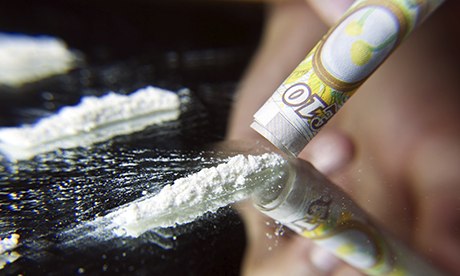
cocaine

The use of cocaine has negative effects on the society

Almost on a daily basis on my way to my work place I pass a small park on the way. In this park and along the road a group of people is sitting, standing or lying down with bottles of wine in their hands or tins with beer. They are not very good looking and not presentable at all, sometimes they show up in rags and some have hairdos that look like a Zoo. They seem engaged in quite energetic talking but at the same time some sit listening quietly and some even seem to sleep.

This group is a group of street drinkers. They all know each other and their place of congregation is the little park. Quite clearly they have no jobs, at least not at the time I meet them socializing, majority of them are men.

On the other hand at my work place I have a different experience I talk to another group of people usually very well dressed people in a nice room, during lunch, dinner or at the occasion reception. A reception will be created when for instance someone says good bye as a professor and goes to another university. Also we have receptions after a doctoral thesis has been defended. During these receptions people stand and almost all have glasses in their hands, filled with red wine, white wine or sometimes even stronger drinks like gin or whiskey. People laugh, have energetic discussions or wander quietly from person to person. All of these people have jobs. They are both men and women, in almost equal proportions well-mannered and dressed sophistically.

Looking at these two groups observations serve as lesson. Tow lessons one in the sociology of drug use. The common drug that played a role in the two described situations was of course alcohol, hence the topic of my presentation in this, Cocaine use and its social and health consequences, will be modeled along the structure that these two situations allow me to create.

Cocaine users can be found in poor ghettos of cities of the world, but also in the suburbs or rich dwellings. But in our own cocaine user studies we found crack cocaine users among well employed highly functional completely integrated cocaine users. How then are we going to approach the question what health and social consequences cocaine use can have?

Lesson number two. We have to be prepared that a simple answer to this question does not exist. Quite clearly, as is the case in the two groups of alcohol users I started to describe, we should be ready to accept that the answers to the question may be very different from one kind of cocaine user to the next. Very much depends two things (1) on the group to which the user belongs and (2) the use patterns of the user.

In groups where unemployment is the rule, criminal behavior as well, poor housing conditions prevail and where social integration into dominant labour or family culture is low, the user of cocaine, or of alcohol, or of whatever drug will behave very differently from when the user is part of another sub culture. If you do not go to work, why would you stop using cocaine at 9 o’clock at night? If you do not have to impress your boss every morning by looking brilliant, the contextual restraints on your time management are really different than when you have.

If you are not part of a culture in which you eat every day, and eat well, the health consequences of alcohol, but also of cocaine, will be different than when you eat well and regularly. If you smoke cocaine to escape constantly some sort of social misery, the effect you seek are different from when you smoke cocaine to take off on an adventure of sexuality and excess.

Apparently people seek effects that they sometimes get from drugs, and try to get those effects again. The type of drug effects people seek can be very different, even with the same drug. The two types of alcohol users I introduced to you in the beginning, are seeking different types of effects from alcohol. The choice of effects depends very much on your social home, but also on your character and the interplay between situation and moods.

Social and health consequences of cocaine use-Scores of Variables

With alcohol we all know a typical kind of user, who will consume some alcohol every day, but in low amounts and to very low or even zero levels of intoxication. They visit a bar after work or have a drink at home while chatting with kids. One could give such a use pattern a name, like frequent use zero intoxication. This is a very neutral type of name. Another possibility is that a daily wine user, who chooses the wine very carefully to match the chosen food of the day, but not as a vehicle for intoxication, could be named as a gourmet alcohol user. The same is true for cocaine, although with cocaine users taste can be important, but in a very different way as for a wine user. A cocaine user will appreciate the mellow bitter taste, or the subtle freeze in the back of the tongue.

We have found a substantial proportion of cocaine users who would use the substance every day but with very little amounts, less than 0.5 gram a week, who like to experience the freeze, or the very mild post dinner stimulation, very much like people who have coffee after dinner. For this they need very small lines of cocaine, even if their wealth or available stock of cocaine in their office drawer would allow much greater quantities of use.

Social and health consequences of cocaine use-The story of the consequences

Looking at pattern of use plus looking at social or cultural group a user belongs; one can see distinct types of cocaine use where the social and health consequences are almost zero. If cocaine use does not interfere with eating, if it does not interfere with social functioning both in the inner group as in relation to outside groups the social consequences are nil.

However, it is possible to identify daily users of cocaine, where the amount of use is higher or very high, and where the level of intoxication is desired to be high, and where the user’s group is willing to create the social background for this type of frequent high intensity use. Here the social consequences will be small in the primary group to which the user belongs, but quite dramatically negative in relation to outside groups.

But we can see with alcohol, as with cocaine that some users will use to excess, or consume so much to support a particular behavior or emotional effect that even the inner group is not going to accept this. If this happens, as will occur with some users, the social consequences are severe. Heavy consumers will find themselves with deeply disturbed social relations, sometimes resulting in complete ostracism and even death. Quite probably these rare use patterns are driven by complex problems that justify the choice of these patterns although ultimately they may prove to be very counterproductive. Most often, such extreme use patterns are left behind as soon as the user finds some possibility of more useful adaptation.

However, also quite destructive social consequences can happen to a consumer of cocaine who has no conspicuous use pattern at all. Imagine someone who lives the life of a highly valued and well known adviser to the Minister of Health. However, in her free time she invites artists and actors to her very nice flat on the river side. Cocaine is snorted and one of the elderly guests makes a mistake, snorts too much cocaine on top of his whiskey and has a heart attack. The guest is taken to the hospital and fortunately survives, but the story is out and in the papers. You can avoid this by visiting AWAREmed Health and Wellness Resource Center under Doctor Akoury for help on addiction. They focus on Neuroendocrine Restoration (NER) to reinstate normality through realization of the oneness of Spirit, Mind, and Body, Unifying the threesome into ONE.

Social and health consequences of cocaine use-Addiction


Facebooktwitterpinterestlinkedin

Why sugar is eight times more addictive than cocaine, Cocaine

Why sugar is eight times more addictive than cocaine, White Poison.

Sugar

Much as we need sugar in our bodies, its a very dangerous substance for the body sweet as it may be.

What if someone tells you that almost every day you ingest a drug that is one of the most addictive known to mankind? Or what if you are told that researchers and medical professionals the world over are now saying that if they knew the effects and destruction that this substance has on people they would have banned it and placed it on the same list as cocaine.

Sugar like cocaine is the cause of a pandemic of health issues, diabetes, obesity, disease and death. And what if you are told that you and your children are probably already addicts?

Contrary to Cocaine Sugar is a drug however that is consumable. In fact, it’s not only legal to push, pedal, distribute and sell sugar, it is also promoted and advertised openly and is one of the world’s most traded commodities. It is one of America’s top exported products of mass destruction. Together with weapons of war, alcohol, tobacco and entertainment. It is pervasive in almost every food type and major American food brand.

This addictive drug sugar not cocaine is one of the world’s most valuable agricultural commodities. In 2011 global export trade was worth $47 billion. $33 billion of it was exported from developing countries. Around 160,000,000 tons is produced every year, legally, by more than 123 countries.

The secret of its deadliness is out in most developed countries and its use however has increased in spite of this knowledge and has more than doubled in developing countries. So what is this addictive, pervasive, legal drug of choice? You have probably guessed it by now its C12H22O11 and I am almost sure you are a user on some level! Sugar!

Sugar is more addictive than cocaine

Research found that almost everything, delicious and very addictive stuff, called sugar or sucrose or fructose or many other names it now goes by to hide its presence. Ever since laws have been implemented to specifically state the amount of sugar in their products, manufacturers have been using various other names to hide the actual amount of sugar contained in them.

For instance look out for these sneaky labels – barley malt, beet sugar, brown sugar, buttered syrup, caramel, corn syrup, confectioners’ sugar, carob syrup, caster, date or demerara sugar, dextran, dextrose, high fructose corn syrup, maltose, molasses, sorghum syrup, treacle, panocha and many more.

Researched papers, documented by medical professionals, scientist and healthcare professionals. Every one of them agreed that sugar is the number one cause of obesity, diabetes, weight gain, inability to lose weight, loss of mental sharpness and the fact that overconsumption of sugar is in some way associated with many diseases in the world today. Some doctors are now saying that sugar is the next tobacco and that all of the techniques and tactics used by big tobacco to hide the addictiveness and destructiveness of tobacco are now being used and has been used by sugar manufacturers and sugar product manufacturers. One medical professor calls Pepsi and Coca-Cola trucks delivering their products to a store, “weapons of mass destruction” as dangerous as cocaine.

Sugar is more addictive than cocaine – My Own experience

Yes we do need sugar (glucose) and our bodies cannot function without it. We can however get our required amount from healthy fruits and foods and we need not add the extra 4kg of refined sugar every month, over and above what we require. May I share my addiction experience? It started a few weeks after I was born when my well-meaning, loving mother, was taught to add a few spoons of sugar into my cow’s milk (no formula back then) at every feed. It shut me up and I was a happy baby. It is crazy that we wouldn’t give a newborn child a bottle of Coke to drink but we give them sweetened milk and milk formula’s full of sugar without blinking an eye. Before I was two months old, I looked like a baby sumo wrestler and my habit was about 48 grams of pure Brazilian White a day.

I was on solids – porridge, within 3 weeks and the sugar doubled. I was tripping on Durban Snow at every feed. It didn’t stop there. In my teens, our family of four consumed up to 4 crates of Coca-Cola every week. That was almost a crate of Coca-Cola per person or 12 x 2L Cokes a week EACH. At 24 teaspoons of Angel White per bottle that was quite a habit. I want to remind you that Coca-Cola contained cocaine a century ago.

My sugar intake however wasn’t limited to Coca-Cola, I also got my fix from moms sugar filled cooking and La Rochelle bakery’s milk tarts, cakes, doughnuts, Koeksisters, Chelsea buns, desserts, custards and takeaways. My mom even put sugar in her carrot salad, which was also drenched in Oros. My favourite “salad” at a braai, was her sliced bananas covered in whipped cream with loads of sugar. Now that’s a flippen’ salad!

Funny thing was, if you offered her chocolates or cake she’d tell you she didn’t have a sweet tooth and didn’t eat chocolate or cakes. I gravitated to the brown form of the drug like Malema to a tender and chocolate became my drug of choice. Any fellow addict will tell you there is no better fix than a garage pie, a coke and a chocolate.  Sugar fix is for some a better fix than a cocaine fix.

It’s no wonder that most research papers and sites on sugar report that the average teen consumes between 34 and 38 teaspoons of sugar every day. In 2012 adults in the United States consumed over 45kg’s of sugar per year. That is more than 3.75kg a month. Looking at South Africa’s obesity and health issues and the fact that our diets have been influenced by all major US brands and “soda” companies we’re probably about the same if not worse.

Unlike Cocaine, sugar is found in most of our food but the adding of extra sugar and the creation of sugary products has grown exponentially. Researchers tell us the most efficient way to deliver a sugar fix is via the soft drink industry. Apart from the effects on your health, a sugar researcher tells us that drinking one sugary soft drink a day will increase your weight by 6kg per year. A bottle of Coke a day will increase your weight by 11kg per year. And don’t get me started on sugar substitutes and “diet” cold drinks. According to medical professionals they are nothing more than poisons. Medically most, if not all sugar substitutes are referred to as neurotoxins.

Sugar is more addictive than cocaine – Behavior Change

So I decided on 11 November 2013 to go 40 days cold turkey with my addiction. My father became a diabetic (no surprise) he stopped eating sugar and lost about 20kg in 6 months with no exercise and no change at all in his diet. After 40 of the hardest days of my life I lost 5kg and now on day 71, am down 8kg. I have to add that I have been weight training and not eating bread. So yes, I had a miserable Christmas!

I never started my sugar stoppage for weight loss. I really did it because I got to a stage when my health started to suffer and I was out of control.  I needed an intervention and the opportunity to kick my own ass. My waist had gotten so big I was asked to audition for a Michelin commercial, and I battled to tie my shoelaces in the morning without a respirator. I was on thyroid medication and Nexium for gastro oesophageal reflux, I battled to sleep, I had no energy and by 3 o’clock in the afternoon wanted to take a nap, I always got colds and flu, I got muscle cramps and injuries and I felt all round crappy.

Today I feel 100% healthier, I have stopped all of my medications, I sleep well, have more energy than ever before and I have lost 8 kg in fat. Not bad for just stopping and looking out for sugar. The most important and significant change is the fact that I have taken back control of my life from my drug of choice, beautiful, deadly, Florida icing – sugar.

Unfortunately I have found that one of the only ways to beat an addiction is to be placed in situations of temptation again and again and having to say no. Every time you are tempted and you say no, you take back the power. You take the power away from the addiction one temptation at a time. You will find, like I did, that the universe will, with love and kindness, put you into situations of mass temptation the exact day and week you decide to take back your power. It is perfectly designed because you cannot take back your power unless you are tempted. Taking yourself out of a situation does not allow you to exercise personal control. It’s the toughest most rewarding ride you will ever take. I dare you to be and acquire your superpower of self-control!

Well that is my drug, my admission and my personal challenge for the New Year. What is yours? Help is very close to you Dr. Akoury of AWAREmed Health and Wellness Resource Center will help you achieve optimal weight loss if sugar brings obesity to your life. At this facility we focus on Neuroendocrine Restoration (NER) to reinstate normality through realization of the oneness of Spirit, Mind, and Body, Unifying the threesome into ONE.

Why sugar is eight times more addictive than cocaine, White Poison.

Facebooktwitterpinterestlinkedin

Amino Acid Addiction Treatment NER


Amino Acid  AddictionTreatment

Dr. Dalal Akoury

Amino Acid  Addiction Treatment 

Amino Acid Addiction Treatment NER is gaining steam. Three recent medical studies, one about compulsive gambling and two about cocaine addiction, examine the role played by simple amino acid in the treatment of addiction. These amino acids taken regularly in diet can help in normalizing the brain chemistry of those people who are addicted to drugs and alcohol.


Alcohol and drugs addiction and other various forms of pathological gambling have widely ruined addict’s family cohesiveness, personal finances and health. Addiction led  people to lose jobs and friends.  In addicted people the relapse rates are extremely high, this is why implemented Amino Acid Addiction Treatment  is very important.  Recent research provides an answer to addiction and relapse. Amino Acid Addiction Treatment, thereby offering much hope for a non-toxic, inexpensive option for treating addicts and helping them stop abusing substances.


N-acetylcysteine, which is a substance in form of sulfur-containing amino acid cysteine, is a chemical that is transformed to the brain neurotransmitter glutamate.  There is observational evidence that proves that reduced amount of glutamate in the brain will increase addictive behaviors of drug addicts. Taking N-acetylcysteine has been shown to increase the amount of glutamate in the nucleus accumbens (some regions in the brain). N-acetylcysteine, when low in glutamate can promotes abusers addictive behavior.

The Study confirming the value of Amino Acid Addiction Treatment 

Amino Acid Addiction Treatment

Maxim Magazine (December 2008) – Jiah Khan … “Pharmageddon”: America’s New Drug Crisis — better living through better chemistry (September 4, 2011) … (Photo credit: marsmet552)

In the first study, 15 people (volunteers) who had been taking cocaine received 600 mg of N-acetylcysteine every 12 hours for 2 consecutive days.  The test volunteers taking N-acetylcysteine were less likely to research on the internet for cocaine-related news. From the research, these volunteers who had taken this amino acid substance revealed in a questionnaire an impressive reduction in cocaine craving.


A second study conducted by the same researchers, provided 23 cocaine addicts with 600g, 1200g or 1800 mg of N-acetylcysteine twice daily for almost 4 weeks. These addicts who were given this amino acid substance had been seeking treatment prompting the researchers to use them as a research subjects.   Sixteen patients who successfully used this amino acid rich substance recorded a drop in cocaine use dramatically. The sixteen patients, who stuck with the program taking NAC, decreased their cocaine use. Initially, before the commencing on the use of this amino acid substance, they were taking cocaine 8 days in a month. They reduced their usage to 1 day in Month. The amount of NAC used in this study didn’t seem to matter or produce a different result. There were no side effects noted as a result of using the substance. This study substantiate the role of Amino Acid Addiction Treatment.


Amino Acid Addiction Treatment  is very important

This sounds great, about 80% reductions in the use of cocaine by these addicts.  But keep in mind that these people sought treatment so as to live a sober life. The will to live a life free from drugs is the key to successful therapy.  Amino acid Addiction treatment may help correct addicts’ brain chemistry and cement the desire to quit drugs consequently helping one to modify his or her behavior.

Earlier researches had shown that there is a biochemical component to substance addiction.  The positive effects of lithium, B vitamins, glutamine and dietary modifications have been shown for alcohol abusers. The field of optimizing brain chemistry has continued to receive a boost with many doctors venturing into finding the natural, inexpensive, safe and effective nutrients to help treat addiction. That is why we at AWAREmed Health and Wellness Resource Center use Amino Acid Addiction Treatment as a main step in our Natural addiction recovery program.

Amino Acid AddictionTreatment 


Enhanced by Zemanta
Facebooktwitterpinterestlinkedin