Tag Archives: Addiction

Dopamine and Addiction

Dopamine and Addiction-Their roles

Brain

The brain is affected by both genes and environmental factors

Dopamine is neurotransmitter in the brain that plays vital roles in a variety of different behaviors. The major behaviors dopamine affects are movement, cognition, pleasure, and motivation. Dopamine is an essential component of the basal ganglia motor loop, as well as the neurotransmitter responsible for controlling the exchange of information from one brain area to another. However, it is the role that dopamine plays in pleasure and motivation that attracts the most neurobiologists attention.

In certain areas of the brain when dopamine is released it gives one the feeling of pleasure or satisfaction. These feelings of satisfaction become desired, and the person will grow a desire for the satisfaction. To satisfy that desire the person will repeat behaviors that cause the release of dopamine. For example food and sex release dopamine. That is why people want food even though their body does not need it and why people sometimes need sex. These two behaviors scientifically make sense since the body needs food to survive, and humans need to have sex to allow the race to survive. However, other, less natural behaviors have the same effect on one’s dopamine levels, and at times can even be more powerful. Often these behaviors can result in addiction due their effect on dopamine, and that addiction can have negative effects on a person’s well-being. Two of such behaviors are

Dopamine and Addiction-Cocaine

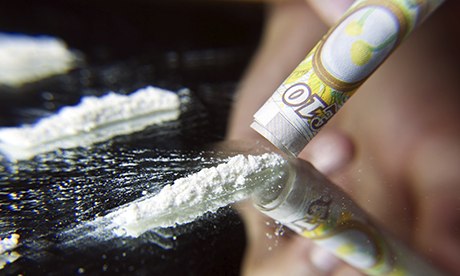
Cocaine is by far the more severe of the two in terms of addiction. Cocaine chemically inhibits the natural dopamine cycle. Normally, after dopamine is released, it is recycled back into a dopamine transmitting neuron. However, cocaine binds to the dopamine, and does not allow it to be recycled. Thus there is a buildup of dopamine, and it floods certain neural areas. The flood ends after about 30 minutes, and the person is left yearning to feel as he or she once did. That is how the addiction begins. With time adaptation builds up due to the fact that the person is consistently behaving in the same way that he or she had the first time. However, the individual cannot, because dopamine is also released when something pleasurable yet unexpected occurs. During the first time, the person expects the effect, thus less dopamine is released, and the experience is less satisfying. This cause explains why gambling releases dopamine.

Many studies have been done which targeted neural response to rewards. The findings were in agreement that when one performed an action repeatedly, and is given a reward randomly, the dopamine levels rises. If the reward is administered for example every four times the action was performed, the dopamine levels remained constant. Whereas when no reward is given dopamine levels dropped. These random rewards can be seen in gambling and since the outcome is based on chance, one does may not know prior if he or she will win. Therefore, if he or she wins, dopamine levels increases. However, unlike cocaine, gambling causes addiction in relatively low levels of participants. This is because Cocaine’s chemical input is much more influential on dopamine levels than gambling’s behavioral input meaning only people whose dopamine levels are low, become addicted to gambling.

Dopamine and Addiction-Variance in dopamine levels

This is may be due to genetics, environment related or a combination of factors. A study concluded that pathological gamblers most often experienced traumatizing experiences when they were younger. Since most people who became addicted to gambling have low dopamine levels, and also that same group usually has endured a traumatic experience, it was concluded the overall dopamine levels can change due to environmental factors. This supports the opinion that both the mind and the brain can change due to environmental factors.

However, another study has discovered that a gene related to dopamine is sported twice as often in pathological gamblers than non-gamblers. This view supports the observation that dopamine levels are genetic. We can therefore come up with two possible observations. Either both genetics and environmental factors effect ones brain anatomy and mind simultaneously, or that environmental factors can affect genes which in turn affect ones brain and mind.

Dopamine and Addiction-Why is risk and reward a trigger for the release of dopamine?
It’s scientifically logical that sex and food release dopamine, because they are essential for life the life of human beings. Risk and reward are not.  It is believed that everything happens for a reason; meaning, there must be a scientific explanation for the increase of dopamine levels as a result of risk and reward. Let us look at it this way, that the human race is different from other species on this planet not only by its ability to reason, but also its ability to create and be innovative. Therefore nature dictates that humans be creative and innovative, and for this to happen a person should have some level of satisfaction when one accomplishes an innovation.

To accomplish an innovation one has to take risks. It is risky to try to do something that no other being on earth has ever accomplished. Therefore, there must be a reward other than material that one gets when he or she accomplishes the innovation, otherwise that person would not take the risk. The reward here is the release of dopamine and the feeling of satisfaction. The problem with this process is that not only can one be satisfied after a major risk and accomplishment, but that one can also be satisfied through constant minute risks and accomplishments. Gambling is an example of this.

The feeling of satisfaction that dopamine exhibits are so strong that one can often lose his or her ability to reason in order to achieve satisfaction. It is then the unconscious that takes over and begins to make certain decisions. The brain develops neural circuits that unconsciously assess reward. Since dopamine plays an active role in these circuits, people will act in what they think is in their best interest, when in fact the only interest it satisfies is the release of dopamine. This can be exemplified in gambling where one insists on gambling even though he or she knows that the odds are against them.

This is the case in all casino games, where the games are structured for the house to win. Probability and reason no longer are the most important factors in decision making. The unconscious need for the release of dopamine becomes most important. This supports the observation that the unconscious plays a vital role in decision making.

From this article of dopamine and addiction we can make some fair general observations about the brain that:

  • Both a chemical (cocaine) and a behavior (gambling) can have the same effect on the brain.
  • The brain is affected by both genes and environmental factors, and that most likely the environmental factors affect genes which affect the brain.
  • Dopamine makes humans take risks so that they may achieve greater innovations.
  • Through gambling the unconscious is constantly making important decisions.

Dopamine and Addiction-Their roles


Facebooktwitterpinterestlinkedin

Nutrients and addiction recovery is Vital

Food Nutrients and addiction recovery-Natural way

Food

Food Nutrients offers the best natural way for addiction recovery

The life style of the society today is surrounded with different kinds of food which are either beneficial to the body or otherwise. Whereas food is need for the growth of the body some of these are addictive hence the term addiction. It encompasses almost all imbalanced and self-destructive behavior. Substance abuse can create an illusory sense of well-being, but in the end it severely damages physical, psychological, and spiritual health.

There are many degrees of addiction. Some people are mildly addicted to one or two cups of coffee or a few teaspoons of sugar. Others consume two to three quarts of caffeine drinks with more significant amounts of sugar. Then, at the other end of the spectrum, are addicts drinking pints of alcohol daily, shooting heroin, and doing large amounts of other “hard” drugs. This leads us to history.

It has been shown that individuals with substance addictions may very likely be suffering from an assortment of one or more metabolic disorders such as hypoglycemia, hypoadrenia and depression. Serious maladaptive patterns, such as heart disease, cancer, diabetes, hypoglycemia, and candida albicans, have always been common among drug addicts and alcoholics.

Because of this continual nutritional support is instrumental in gaining real and lasting recovery from addiction. It is not uncommon for those who remain drug or alcohol-free to simply substitute their chosen substance with excessive use of another addictive substance, such as sugar, caffeine, or nicotine. This behavior is often indicative of some metabolic disorder that the individual is trying to self-correct.

Food Nutrients and addiction recovery is a reality, check it out!

It is a good idea when beginning a nutritional program to include a clean diet: lean proteins, complex carbohydrates, plenty of vegetables and fruits, low fat, and little or no refined sugars. Here are some nutrients that address common problems from which many recovering addicts may suffer:

Food Nutrients and addiction recovery-Detoxifying and strengthening the liver and digestive tract

  • Vitamin C. Vitamin C is considered to be one of the primary nutrients useful in the treatment of addiction. It helps to eliminate toxins from the body as well as lessen withdrawal symptoms. In 1977 and 1982 Libby and Stone reported that large doses of ascorbic acid combined with B vitamins and protein allowed heroin addicts to quit with minimal withdrawal symptoms. A dose of 10 grams daily prevented cravings from returning. The preferred form of C is buffered with calcium and magnesium or ester C.

    Food Nutrients and addiction recovery means stock up on healthy minerals:

  • Selenium. This important antioxidant plays a role in the body’s utilization of oxygen. Studies have shown that mice live longer without oxygen if they have been previously supplemented with selenium. Alcoholics, as well as patients with candidiasis, chronic fatigue syndrome, and ARC, have all shown low levels of selenium. In addition, heart disease and cancer are higher in people with diminished selenium levels. Selenium also has a role in detoxifying poisonous phenols, formaldehyde, acetaldehyde, hydrocarbons, and chlorine. Many people with allergic reactions to these substances have found relief through the use of selenium. However, selenium can be toxic in large amounts. A safe therapeutic dose is about 100 mcg daily. Green leafy vegetables and several herbs, such as American and Siberian Ginseng, have bio-available forms of selenium.
  • Zinc. The mineral zinc plays an important role in carbohydrate metabolism. If one uses excessive amounts of sugar, caffeine, drugs, or alcohol it is more than likely that a zinc deficiency will develop. Low zinc levels can cause liver deterioration and diminished functioning of the reproductive organs, immune system, and skin. Zinc picolinate is probably the most bio-available form, with a safe therapeutic dose between 15 – 20 mg, once or twice daily.

Food Nutrients and addiction recovery-Relaxing and strengthening the nervous system

  • Calcium. Calcium is one of the most important nutrients for strengthening the nervous system. Caffeine, sugar, alcohol, and other drugs often cause the body to eliminate calcium. Caffeine, for example, has been shown to double the urinary excretion of calcium. Several studies have demonstrated low serum calcium levels in alcoholics. Depressed calcium and magnesium levels are often the root of irritability, muscular spasm, and pain experienced by alcoholics and drug addicts. A recovering addict should consider 1000 mg of elemental calcium per day in divided doses, preferably at the beginning of meals.
  • Magnesium. Magnesium and calcium are partners in keeping the nervous system strong and healthy. Most abused substances contribute to diminished magnesium levels in the blood. A recovering addict should consider taking 500-1000 mg of elemental magnesium daily in divided doses, preferably at the beginning of meals.
  • DL-Phenylalanine (DLPA). DLPA is composed of two amino acids, D-Phenylalanine and L-Phenylalanine. It is the raw material that the nervous system uses to make PEA (Phenylethylamine) which increases the body’s ability to utilize endorphins.

Food Nutrients and addiction recovery-Nutrients associated with enhancing energy

  • B Complex. The B vitamins are usually seriously deficient in people who use excessive amounts of sugar, caffeine, alcohol, or other drugs. It is not even uncommon for these people to have B complex deficiencies prior to establishing their addiction. As a result, it is believed by some that part of the physiological draw to addictive substances has to do with B vitamin deficiencies. A supplement with 25 to 50 mg of the basic B vitamins is usually sufficient, taken one to three times daily.
  • Potassium. A low level of potassium is one of the most common nutritional deficiencies found today. Excessive use of salt, caffeine, alcohol, and sugar, as well as an unbalanced diet, all tend to lower your level of potassium. Even commonly used pharmaceutical drugs such as cortisone and prednisone can create low levels of this important electrolyte. Decreased potassium levels are associated with depression, heart disease, and high blood pressure. Perhaps the best source of potassium can be found in fresh fruits such as oranges and bananas, and in vegetables such as leafy greens and potatoes. Numerous herbal extracts, including Nettle and Alfalfa, can provide bio-available forms of potassium.

Food Nutrients and addiction recovery-Herbs that detoxify the liver and digestive tract

  • Milk Thistle. Milk Thistle has displayed remarkable healing properties for the liver. European research has shown that it is effective in treating cirrhosis, chronic hepatitis, and alcohol induced fatty liver. Milk Thistle extract actually has hepato-protective properties; it protects the liver cells from damage by environmental and internal toxins. This herb can be used as a liquid extract, tablet, or capsule in most cases. However, the more serious recovery case should consider the standardized extract. Milk Thistle use is a proof that Food Nutrients and addiction recovery go hand in hand.
  • Goldenseal. The American herb Goldenseal is a superior liver and blood detoxifier. A natural antibiotic, it is known to help reverse liver damage and effectively treat a variety of infections. It is not a good idea to take this herb by itself in large amounts for an extended period of time.
  • Dandelion. It’s known throughout Europe as an excellent liver detoxifier and mild diuretic. It increases the flow of bile and encourages both the transformation and transportation of nutrients. It has been used historically to treat liver disorders, arthritis and gout.

Food Nutrients and addiction recovery-Herbs relaxing and strengthening the nervous system

  • Scullcap. It’s a broad spectrum nervine tonic. This herb has been used successfully in cases of depression, anxiety, insomnia, and headaches. Scullcap is considered one of the preferred herbs to help ease withdrawal symptoms during recovery. During the first 72 hours of withdrawal, it may be taken every couple of hours. Scullcap contains large amounts of flavonoids which act as natural anti-inflammatory agents.
  • Valerian. This is another strong nervine. Extracts of Valerian have been used for centuries in Europe to resolve cases of insomnia, nervous disorders, anxiety, and depression. It is known to be beneficial for individuals who have a history of cocaine and/or alcohol use and also suffer from nervous disorders.
  • Passion Flower. Passion Flower is another great nervine. Milder than Valerian, it is excellent for relieving tension and for insomnia. Rich in flavonoids, Passion Flower is probably most effective when combined with Valerian and other nervines.

As you can see there are many nutrients and herbs which can assist the recovering addict. It is important to consider carefully which ones are appropriate for any given individual.  At AWAREmed Health and Wellness Resource Center under Doctor Akoury’s  you will be given the most you can ever ask for while focusing on Neuroendocrine Restoration (NER) to reinstate normality through realization of the oneness of Spirit, Mind, and Body, Unifying the threesome into ONE.

Food Nutrients and addiction recovery-Natural way


Enhanced by Zemanta
Facebooktwitterpinterestlinkedin

The source of death in Cocaine and Heroin

The source of death in Cocaine and Heroin-Drug Scourge

Heroin

There is evidence of heroin and cocaine deaths in male than female according to studies conducted

The society and the world over are weeping in great anguish of endless death thanks to the renewed vigor in drug usage. You take a walk in the streets and parks of our beautiful nations and you are saddened with what you see, young and old together drinking and smoking publicly and secretly. Our governments have legalized the use of some of these drugs and are making millions and millions of money inform of taxes all in the name of revenue for development, security and wellbeing of its citizens.

When you take a keen observation on majority of illness keeping patients in hospitals for weeks, months and even years are 90 percent related to the drug consumption. It does not matter the intensity of the consumption, whether one is an addict or not the common denominator is that both are using drugs. Legal or illegal, cheap or expensive whatever the adjective you choose to describe the noun drug we have patients in hospitals, at homes and learning institutions suffering from different illnesses associated with drug use.

Researches are working round the clock trying to find remedies for drug related problems and the authorities/governments are spending a big percentage of the revenue they collect from firms associated with drugs in treatment research and creating awareness of what they themselves are promoting in some way. Anyway there are numerous types of drugs being abused today and it is all important that we talk about them openly and without any shame. I beseech all of us to face the society with the real truth about the abuse of drugs but for the purpose of this article I want to zero in to two killer drugs in our society (especially in Europe) today that is Cocaine and Heroin.

The source of death in Cocaine and Heroin-Drug induced deaths

Much as there are many unreported cases, the number of reported drug-induced deaths today can be influenced by the prevalence and patterns of drug use (injection, polydrug use), the age and the co-morbidities of drug users, and the availability of treatment and emergency services, as well as by the quality of data collection and reporting. Improvements in the reliability of European data have allowed better descriptions of trends, and most countries have now adopted a case definition endorsed by the EMCDDA. Nevertheless, caution must be exercised when comparing countries because there are still differences in reporting methodology and data sources. But the common denominator is that drug induced deaths are skyrocketing.

The source of death in Cocaine and Heroin-Opioids

Opioids, mainly heroin or its metabolites, are present in the majority of drug-induced deaths reported in Europe. In the 22 countries providing data for 2008 or 2009, opioids accounted for the large majority of all cases: over 90 % in five countries, and between 80 % and 90 % in a further 12. Substances often found in addition to heroin include alcohol, benzodiazepines, other opioids and, in some countries, cocaine.

This suggests that a substantial proportion of all drug-induced fatalities occur in a context of polydrug use, as illustrated by a review of toxicology of drug-related deaths in Scotland in 2000-07. It showed that the presence of heroin and alcohol were positively associated, particularly among older males. Among men whose deaths were related to heroin, alcohol was present in 53 % of those aged 35 and more, compared to 36 % in cases under 35.

Men account for most overdose deaths reported in Europe at 81 %. Overall, there are around four males for each female case (with the ratio ranging from 1.4:1 in Poland to 31:1 in Romania). In the Member States that joined the EU more recently, reported drug-induced deaths are more likely in males and in younger people compared to the pre-2004 Member States and Norway. Patterns differ across Europe, with higher proportions of males reported in southern countries. Denmark, the Netherlands, Sweden and Norway report higher proportions of older cases. In the majority of countries, the average age of those dying of heroin overdoses is in the mid-thirties, and in many countries it is increasing.

A number of factors are associated with fatal and non-fatal heroin overdoses. These include injection and simultaneous use of other substances, in particular alcohol, benzodiazepines and some antidepressants. Other factors linked with overdoses are binge drug use, co-morbidity, homelessness, poor mental health (e.g. depression and intentional poisoning), not being in drug treatment, previous experience of overdose, and being alone at the time of overdose. The time immediately after release from prison or discharge from drug treatment is a particularly risky period for overdoses, as illustrated by a number of longitudinal studies.

The source of death in Cocaine and Heroin-Trends in drug-induced deaths

Drug-induced deaths increased sharply in Europe during the 1980s and early 1990s, paralleling the increase in heroin use and drug injection, and thereafter remained at high levels. Between 2000 and 2003, most EU Member States reported a decrease, followed by a subsequent increase from 2003 until 2008. Preliminary data available for 2009 suggest an overall figure equal to or slightly below that for 2008. Where a comparison is possible, the numbers of deaths reported have decreased in some of the largest countries, including Germany, Italy and the United Kingdom.

The reasons for the sustained or increasing numbers of reported drug-induced deaths in some countries are difficult to explain, especially given the indications of decreases in injecting drug use and increases in the numbers of opioid users in contact with treatment and harm-reduction services. Possible explanations include: increased levels of polydrug use or high-risk behavior; increases in the numbers of relapsing opioid users leaving prison or treatment; and an ageing cohort of more vulnerable drug users.

The source of death in Cocaine and Heroin-Overall mortality related to drug use

Overall mortality related to drug use comprises drug-induced deaths and those caused indirectly through the use of drugs, such as through the transmission of infectious diseases, cardiovascular problems and accidents. Deaths indirectly related to drug use are difficult to quantify, but their impact on public health can be considerable. Such deaths are mainly concentrated among problem drug users, although some (e.g. traffic accidents) occur among occasional users.

Estimates of overall drug-related mortality can be derived in various ways, for example by combining information from mortality cohort studies with estimates of drug use prevalence. Another approach is to use existing general mortality statistics and estimate the proportion related to drug use.

The source of death in Cocaine and Heroin-Drug Scourge


Facebooktwitterpinterestlinkedin

Buprenorphine for the treatment of addiction

Buprenorphine for the treatment of addiction-Is it the best

Buprenorphine

If you are suffering from addiction seek treatment but remember Buprenorphine may not be a better option.

Buprenorphine is used to help you keep off street drugs such as heroin. It can prevent or reduce the unpleasant withdrawal symptoms when you stop using such drugs. It is a medicine that is similar to heroin and works as a replacement treatment. Many people choose to stay on buprenorphine long-term, although some people gradually reduce their dose and come off it.

The effects of buprenorphine last longer than heroin so it is usually prescribed as a once-daily dose. To begin with, you will usually be asked to take it under the supervision of the pharmacist who dispenses the buprenorphine to you. This means there can be no doubt about how much buprenorphine you take at each dose. This supervision may be relaxed after a few months of your taking a regular maintenance dose.

Buprenorphine is also available combined with another medicine called naloxone (the tablet brand name is Suboxone). Naloxone blocks the action of buprenorphine and the effect of the combination is that, if you are tempted to crush the tablet and try to inject it, you will start to get withdrawal effects.

Buprenorphine for the treatment of addiction-Can buprenorphine cause problems?

As with all medications, Buprenorphine (Suboxone) drug treatment also has some disadvantages. It is still a medication and if you prefer to break free from any kind of addiction immediately, then Buprenorphine may not be the way to go. Also, you may not be completely Buprenorphine-free by the time you leave drug treatment, even if you opt for an inpatient drug rehab program.

Some may consider these disadvantages while others consider them well worth the advantage of avoiding opiate withdrawal symptoms. Also, some initial studies on long-term use of Buprenorphine suggest that there are anti-depressant effects of the drug as well. The dosing schedule is also relatively easy to maintain as most don’t even have to take it every day. Additionally, you can’t abuse Suboxone, get high off of it or overdose on it like you can with some other opiate addiction maintenance or detox drugs, like methadone. Much as this may offer treatment for addiction, it is in itself addiction and should not be encouraged. Its demerits far much out ways the merits just have a look at the conditions lined below before and during its usage.

Buprenorphine for the treatment of addiction-Before taking buprenorphine

Some medicines are not suitable for people with certain conditions, and sometimes a medicine may only be used if extra care is taken. For these reasons, before you start taking buprenorphine it is important that your doctor knows:

  • If you have liver or kidney problems.
  • If you have prostate problems or any difficulties passing urine.
  • If you have any breathing problems, such as asthma or chronic obstructive pulmonary disease (COPD).
  • If you have been told you have low blood pressure.
  • If you have any problems with your thyroid or adrenal glands.
  • If you have epilepsy.
  • If you have a problem with your bile duct.
  • If you are pregnant or breast-feeding.
  • If you have been constipated for more than a week or have an inflammatory bowel problem.
  • If you have a condition causing muscle weakness, called myasthenia gravis.
  • If you have recently had a severe head injury.
  • If you have ever had an allergic reaction to a medicine.
  • If you are taking any other street drugs or medicines. This includes any medicines you are taking which are available to buy without a prescription, such as herbal and complementary medicines.

Buprenorphine for the treatment of addiction-Getting the most from your treatment

  • Some people feel uncomfortable during the first 2 to 3 days of taking buprenorphine. Do not be tempted to take heroin on top, and do not take more than the dose your doctor has prescribed for you.
  • It is important that you keep your regular appointments with your doctor or clinic so your progress can be reviewed. You will be asked to give a urine sample from time to time.
  • Buprenorphine cannot be supplied to you without a prescription. You will not be able to ask for any changes to be made to your supply, as your pharmacist can only dispense the prescription exactly as your doctor has directed.
  • There are several different brands and strengths of buprenorphine tablets, so each time you collect a supply, check to make sure it contains what you are expecting.
  • You are more likely to succeed in staying off heroin if you have support and counseling in addition to taking buprenorphine. Local drug community teams, self-help groups and other agencies may be of help. It is much harder to ‘do it alone’, so go for counseling and help if it is available in your area.
  • You should not take any street drugs or drink too much alcohol while you are on buprenorphine. This is because other street drugs such as benzodiazepines (benzos) and alcohol can affect buprenorphine and increase the chance of unwanted effects.
  • You should tell the DVLA that you are taking buprenorphine if you are a driver. You are likely to be banned from driving at first, although you may be allowed to drive again later, subject to an annual medical review. Your doctor will tell you when you can resume driving.
  • Do not stop taking buprenorphine without discussing this with your doctor or drug-team worker first. It is important that buprenorphine should be taken regularly to reduce the risk of withdrawal symptoms occurring. When you are ready to consider becoming drug-free, your doctor or drug-team worker will be able to help you decide on the best way to do this in order to keep withdrawal effects to a minimum.
  • If you are planning any trip abroad, you should carry a letter with you from your doctor to explain that you have been prescribed buprenorphine. This is because buprenorphine is classed as a ‘controlled drug’ and is subject to certain restrictions.
  • If you buy any medicines, check with a pharmacist that they are suitable for you to take with buprenorphine. Many other medicines have similar side-effects to buprenorphine and taking them together will increase the risk of unwanted effects.
  • If you are having an operation or dental treatment, tell the person carrying out the treatment that you are taking buprenorphine.

So many side effects and so many conditions attached making buprenorphine not to be right for addiction treatment not now and certainly not ever.

Buprenorphine for the treatment of addiction-Is it the best


Facebooktwitterpinterestlinkedin

Social and health consequences of cocaine use


Social and health consequences of cocaine use-Addiction

Social and health consequences of cocaine use-Everyone is affected

cocaine

The use of cocaine has negative effects on the society

Almost on a daily basis on my way to my work place I pass a small park on the way. In this park and along the road a group of people is sitting, standing or lying down with bottles of wine in their hands or tins with beer. They are not very good looking and not presentable at all, sometimes they show up in rags and some have hairdos that look like a Zoo. They seem engaged in quite energetic talking but at the same time some sit listening quietly and some even seem to sleep.

This group is a group of street drinkers. They all know each other and their place of congregation is the little park. Quite clearly they have no jobs, at least not at the time I meet them socializing, majority of them are men.

On the other hand at my work place I have a different experience I talk to another group of people usually very well dressed people in a nice room, during lunch, dinner or at the occasion reception. A reception will be created when for instance someone says good bye as a professor and goes to another university. Also we have receptions after a doctoral thesis has been defended. During these receptions people stand and almost all have glasses in their hands, filled with red wine, white wine or sometimes even stronger drinks like gin or whiskey. People laugh, have energetic discussions or wander quietly from person to person. All of these people have jobs. They are both men and women, in almost equal proportions well-mannered and dressed sophistically.

Looking at these two groups observations serve as lesson. Tow lessons one in the sociology of drug use. The common drug that played a role in the two described situations was of course alcohol, hence the topic of my presentation in this, Cocaine use and its social and health consequences, will be modeled along the structure that these two situations allow me to create.

Cocaine users can be found in poor ghettos of cities of the world, but also in the suburbs or rich dwellings. But in our own cocaine user studies we found crack cocaine users among well employed highly functional completely integrated cocaine users. How then are we going to approach the question what health and social consequences cocaine use can have?

Lesson number two. We have to be prepared that a simple answer to this question does not exist. Quite clearly, as is the case in the two groups of alcohol users I started to describe, we should be ready to accept that the answers to the question may be very different from one kind of cocaine user to the next. Very much depends two things (1) on the group to which the user belongs and (2) the use patterns of the user.

In groups where unemployment is the rule, criminal behavior as well, poor housing conditions prevail and where social integration into dominant labour or family culture is low, the user of cocaine, or of alcohol, or of whatever drug will behave very differently from when the user is part of another sub culture. If you do not go to work, why would you stop using cocaine at 9 o’clock at night? If you do not have to impress your boss every morning by looking brilliant, the contextual restraints on your time management are really different than when you have.

If you are not part of a culture in which you eat every day, and eat well, the health consequences of alcohol, but also of cocaine, will be different than when you eat well and regularly. If you smoke cocaine to escape constantly some sort of social misery, the effect you seek are different from when you smoke cocaine to take off on an adventure of sexuality and excess.

Apparently people seek effects that they sometimes get from drugs, and try to get those effects again. The type of drug effects people seek can be very different, even with the same drug. The two types of alcohol users I introduced to you in the beginning, are seeking different types of effects from alcohol. The choice of effects depends very much on your social home, but also on your character and the interplay between situation and moods.

Social and health consequences of cocaine use-Scores of Variables

With alcohol we all know a typical kind of user, who will consume some alcohol every day, but in low amounts and to very low or even zero levels of intoxication. They visit a bar after work or have a drink at home while chatting with kids. One could give such a use pattern a name, like frequent use zero intoxication. This is a very neutral type of name. Another possibility is that a daily wine user, who chooses the wine very carefully to match the chosen food of the day, but not as a vehicle for intoxication, could be named as a gourmet alcohol user. The same is true for cocaine, although with cocaine users taste can be important, but in a very different way as for a wine user. A cocaine user will appreciate the mellow bitter taste, or the subtle freeze in the back of the tongue.

We have found a substantial proportion of cocaine users who would use the substance every day but with very little amounts, less than 0.5 gram a week, who like to experience the freeze, or the very mild post dinner stimulation, very much like people who have coffee after dinner. For this they need very small lines of cocaine, even if their wealth or available stock of cocaine in their office drawer would allow much greater quantities of use.

Social and health consequences of cocaine use-The story of the consequences

Looking at pattern of use plus looking at social or cultural group a user belongs; one can see distinct types of cocaine use where the social and health consequences are almost zero. If cocaine use does not interfere with eating, if it does not interfere with social functioning both in the inner group as in relation to outside groups the social consequences are nil.

However, it is possible to identify daily users of cocaine, where the amount of use is higher or very high, and where the level of intoxication is desired to be high, and where the user’s group is willing to create the social background for this type of frequent high intensity use. Here the social consequences will be small in the primary group to which the user belongs, but quite dramatically negative in relation to outside groups.

But we can see with alcohol, as with cocaine that some users will use to excess, or consume so much to support a particular behavior or emotional effect that even the inner group is not going to accept this. If this happens, as will occur with some users, the social consequences are severe. Heavy consumers will find themselves with deeply disturbed social relations, sometimes resulting in complete ostracism and even death. Quite probably these rare use patterns are driven by complex problems that justify the choice of these patterns although ultimately they may prove to be very counterproductive. Most often, such extreme use patterns are left behind as soon as the user finds some possibility of more useful adaptation.

However, also quite destructive social consequences can happen to a consumer of cocaine who has no conspicuous use pattern at all. Imagine someone who lives the life of a highly valued and well known adviser to the Minister of Health. However, in her free time she invites artists and actors to her very nice flat on the river side. Cocaine is snorted and one of the elderly guests makes a mistake, snorts too much cocaine on top of his whiskey and has a heart attack. The guest is taken to the hospital and fortunately survives, but the story is out and in the papers. You can avoid this by visiting AWAREmed Health and Wellness Resource Center under Doctor Akoury for help on addiction. They focus on Neuroendocrine Restoration (NER) to reinstate normality through realization of the oneness of Spirit, Mind, and Body, Unifying the threesome into ONE.

Social and health consequences of cocaine use-Addiction


Facebooktwitterpinterestlinkedin