Tag Archives: Addiction

Hospital Outpatient Entrance Sign

Counselor training using CBT approach

Counselor training using cognitive behavioral treatment approach: Solutions for cocaine addiction

Counselor training

Counselor training using cognitive behavioral treatment approach: Solutions for cocaine addiction

The addiction vice is wreaking havoc in our societies and no one is off the hook of addiction. Families are being broken, children are becoming rebellious to everyone and instances of stealing and vandalism are on the rise and the root cause of all this is substance abuse. The low enforcement agencies are complaining of the stretched accommodation in our recreational facilities thanks to the growing number of petty offenders under the influence of drugs and misuse of alcohol. With that overview, it is evident that we are living in a morally decaying society and unless corrective measures are taken immediately we are most likely sinking into destruction in the near future. To help in containing this vice, experts from AWAREmed Health and Wellness Resource Center under the able leadership of doctor Dalal Akoury are giving their contribution by offering counselor training using cognitive behavioral treatment approach to all health workers so that we are having well equipped personnel to handle the magnitude of the problem.

Investing in substance abuse counselor training using cognitive behavioral approach among other training modes is the way to go and the good news is that if you want to make a difference then you are at the right place because all these are available at this facility (AWAREmed Health and Wellness Resource Center) to help you give your contribution in the fight of the scourge of addiction. It is also important for the qualified experts to appreciate that the integrating cognitive behavioral treatment (CBT) and medication are very essential primarily because they are highly compatible with pharmacotherapy. Doctor Akoury reiterates that when applied alongside the medication, the range of CBT interventions expands to include a focus on enhancing medication compliance. Generally, medication response and compliance are monitored during the early part of each session and that is to say that the first third of each hour of the training session. Now even as we progress into the discussion, for a better understanding of these facts, the following strategies can be very useful:

Counselor training using cognitive behavioral treatment approach: Find out about the patients’ history with medication

History in all dimensions offers an opportunity for the physicians to make very appropriate medical opinion in addressing the present situation. Therefore means that when attending to a patient, it is important to make enquiries about this patient past with medication so that commencement of treatment can take place from a very informed position. The following are some of the questions that a physician or the therapist can ask:

  • Did they take the medication as prescribed faithfully to the last dose?
  • Therapists can also ask the patients about their prior history with pharmacotherapy for any psychiatric disorder or condition.
  • Under what conditions was it terminated?
  • Was it helpful?
  • Why was it prescribed?

Depending on the responses accruing from such interrogation, the therapist will be able to professionally point out areas of noncompliance and this will be very helpful in establishing the patients’ view as to why they did not comply previously and also to attempt to address those issues proactively.

Counselor training using cognitive behavioral treatment approach: Listen and address patients’ concerns about medication

Listening is very paramount in the treatment process. It is therefore important that therapist take time to listen to their clients carefully for any concerns, including any misunderstandings, or prejudices about taking medication and find ways of addressing them timely and assertively. These may include misconceptions about expected medication effects, time needed to experience the effect, side effects, dosing, and interactions with cocaine and other substances. It is important that therapists provide clarification in clear, familiar terms and frequently check back with patients to be sure that they have understood. Without counselor training, achieving this may not be practical because of the strong sense of denial that always comes with addiction. That is why counselor training is very important as it gives them the techniques and expertise of unlocking the stalemates that are always characterized with substance abuse.

Besides that, sometimes the effects of medication may not come immediately apparent, it is important to inform patients that it may take several weeks before therapeutic effects emerge; thus, patients should be encouraged to expect gradual rather than all-or-nothing change. Explaining the gradual emergence of medication effects provides an opportunity for the therapist to emphasize that patients should not expect to benefit from an entirely passive stance regarding CBT treatment simply because they are taking medication. Mastery and implementation of coping skills remain an essential and important part of treatment; medication may be an additional, useful adjunct or tool.

Assess medication compliance since last session

Close, consistent, and careful monitoring is one of the most effective strategies for enhancing compliance with medications. Thus, a portion of each session should be devoted to evaluating medication compliance and working through any difficulties that might arise. In general, until the patients’ compliance pattern is clearly established, therapists should, in every meeting, inquire about medication compliance, day by day, since the last session. This should include asking when patients take the medication, how they take the medication, and a thorough discussion of any deviation from the prescribed dose and schedule.

In her many years of service in this discipline, doctor Akoury has noted that compliance and retention are most difficult to achieve early and late in treatment – early if the patient is not receiving obvious benefit, and later if the patient, after obtaining a partial or full therapeutic response, does not appreciate the need to continue treatment. Thus, therapists should be particularly attentive to compliance and motivation issues during early and late sessions.

Counselor training using cognitive behavioral treatment approach: Appreciate medication compliance

Therapists should also convey confidence in the medication and inform patients of the likely benefits. Therapists should be strong on the side of compliance and praise patients’ compliance enthusiastically and genuinely. Like for instance you could appreciate your patient by saying that “I have seen you take your medication diligently since our last meeting and that’s really great. I know you may have had some doubts about whether the medication would work for you, and I’m glad you were willing to give it a try. And by the way have you noticed any positive changes you think might be related to the medication?” For a better assessment, doctor Akoury suggest that the patient improvement should be related to compliance and lack of improvement and luck of it to noncompliance.

Counselor training using cognitive behavioral treatment approach: Solutions for cocaine addiction

http://regenerativepotential.com/integrativeaddictionconference/


Facebooktwitterpinterestlinkedin
Withdrawal

Brain structures impairment prompted by addiction

Brain structures impairment prompted by addiction: The cerebral cortex

Brain structures

Brain structures impairment caused by drug addiction and misuse of alcohol

It is said that life stop the moment the brain stops functioning. The brain is therefore a very sensitive organ in the body that needs to be natured well for it to operate optimally. As we progress into the discussion, it is important to note that the brain is composed of many different parts otherwise known as regions and structures. Therefore the brain structures and regions main role is that of transmitting effective communications to various parts of the body. The transmission of communication enables the various regions and brain structures to coordinate their activities effectively say’s Doctor Dalal Akoury. Each of these regions and structures are independent and serves different purposes. One of the biggest enemies to these regions and structures is the problem of misuse of alcohol and drug addiction. This condition can alter these regions and structures.

Besides that, addictions can also alter the way brain regions function. And for that reason as we progress into this discussion, we are going to discuss the regions and structures which are affected by the addictive process. It is therefore very important to appreciate that complications of addiction can change the brain structures and their functions in very many ways. And for us to get these facts accurately, we are going to be speaking to the expert from AWAREmed Health and Wellness Resource Center under the able leadership of doctor Dalal Akoury to help us in reviewing the brain’s role in some of the commonly observed problems associated with addiction which may include the following: Drug-seeking and cravings, Habit formation, craving, withdrawal effects, and relapse triggers, Impaired decision-making, impulsivity, and compulsivity and Stress control and withdrawal.

Impaired Decision-making, Impulsivity, and Compulsivity

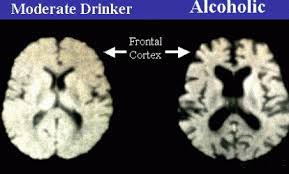
The cerebral cortex is the outer most layer of the brain. The cerebral cortex is further divided into four areas. These four areas are: the frontal lobe (or frontal cortex), parietal lobes (left and right), temporal lobes (left and right), and occipital lobes (left and right). Each area is associated with certain brain functions: One area of the frontal cortex is called the prefrontal cortex. It has a vital role in higher-order functions. These functions include language, spatial learning, conscious thought, judgment, and decision-making. The process of addiction can negatively affect this area and alter its proper functionalities.

 The prefrontal cortex

This enables us to make rational, sound decisions. It also helps us to override impulsive urges. If acted upon, these impulses urges can cause us to act without thinking. This is usually not in our best interest. For instance, suppose I’ve had a bad day at work. I may have an impulsive urge to tell my boss exactly what I think of her. To act on this impulse is not in my best interest. Fortunately, my prefrontal cortex is functioning quite well. I still have my job!

Obviously, this ability to inhibit impulses is very helpful. It enables us to function well in society. It protects us from harm by allowing us to consider the consequences of our actions. However, when the pre-frontal cortex is not functioning correctly, the opposite occurs. Addiction causes changes to the prefrontal cortex. These changes account for two characteristics of addiction: impulsivity and compulsivity.

Impulsivity is the inclination to act upon sudden urges or desires without considering potential consequences. Sometimes people describe impulsivity as living in the present moment without regard to the future. On the other hand, compulsivity is a behavior that an individual feels driven to perform to relieve anxiety. Once a person performs the compulsive behavior, the anxiety goes away and restores comfort. Thus, the presence of these behavioral characteristics in addicted persons indicates that changes to the prefrontal cortex have occurred. Unfortunately, these changes also make the discontinuation of drug use more difficult.

When we talk of addiction changes brain structure and their functions, the message being delivered is that an addiction is a process that coordinates the transition from impulsive to compulsive behavior. Impulsivity occurs during the early stages of addiction. During this phase, people impulsively act on powerful urges to experience the pleasure of their addiction. Anxiety is not associated with the urges during these early stages. Instead, addiction reflects acting on impulsive desire to receive immediate pleasure from the drug or activity. People are not considering the future consequences.

Brain structures impairment prompted by addiction: Shifting progress of addiction

As addiction progresses a shift begins to occur. At this point, the compulsive aspect of addiction takes hold. When this shift occurs, people are no longer pursuing their addiction solely for pleasure. The compulsions compel them to participate in their addiction to relieve anxious, uncomfortable feelings. These may arise at the mere thought of stopping the addiction for any reason. At this later compulsive stage, “pleasure” comes in the form of relief from these anxious, uncomfortable feelings. Thus, despite the negative consequences of addiction, the addictive behavior continues in a compulsive manner.

Another way to describe the pre-frontal cortex is to think of it as a braking system. The pre-frontal cortex acts as the brain’s brakes. It sends out signals to inhibit particular behaviors or actions. When addiction damages this brain area, it limits the brain’s ability to control other behavioral systems as well. Imagine how difficult it would be to operate a car without brakes. At this point, we might say the brain is “high-jacked” by the addiction. The prefrontal cortex also projects to other brain regions associated with addictive problems. These include the reward system; memory and emotion; and stress regulation centers of the brain. Therefore, damage to the prefrontal cortex may further interfere with the functioning of these other brain regions as well.

Although addiction damages the brain’s brakes (pre-frontal cortex) this is not to say there is a complete loss of control. We are not slaves to our biology. We have a tremendous amount of control over our actions. This is true even when impulsive and compulsive forces are operating. This recognition is vitally important if someone wishes to recover from addiction. When a person consciously decides the costs of addiction outweigh its benefits, they become motivated and are able to stop. This allows them to actively counter the effects of addiction on the frontal cortex and other brain regions. Therefore if this description suits your situation, then you are in the right path and calling doctor Akoury today will go a long way in helping you solve all the addiction problems you may be struggling with.

Brain structures impairment prompted by addiction: Cerebral Cortex

http://regenerativepotential.com/integrativeaddictionconference/



Facebooktwitterpinterestlinkedin
Drug Addiction recovery

Alternative addiction treatment the better option

Alternative addiction treatment the better option: Being consistent on the recovery path

Alternative addiction treatment

Alternative addiction treatment is offering great hope for all kinds of addiction recovery

The problems relating to drug addiction are not new to us in this twenty first century and even though a lot is being done to contain the a lot more still needs to be done. One of the treatment options that is becoming popular is the alternative addiction treatment practices which many health workers are in cooperating in the addiction treatment. And to help us understand this treatment option, we are going to be speaking to doctor Dalal Akoury MD, President and founder of AWAREmed Health and Wellness Resource Center for more clarity about alternative addiction treatment. This is a conversation you don’t want to miss and we want to encourage you to keep on the link and together let us learn from the experts on some of the reasons why alternative addiction treatment is becoming popular with many people across the globe.

Alternative addiction treatment the better option: The revelation of drug addiction

There are a number of reasons why people often choose alternative treatment. Some of those reasons may include the following options:

One of the most common reasons for why people choose alternative treatment options is because there is the feeling that the available medical treatments are not meeting their needs. In the event that the scientific medications fail to work then naturally people will be tempted to look elsewhere for solutions.

Due to the fewer number of clients that alternative therapists attend to, it is believed that they offer more personalized care. This may be because physicians are overworked or in some cases they will treat patients like puzzles instead of people.

It is believed that alternative medication has little or no side effects further crediting their use by many people to be fewer side effects associated with many alternatives.

Many times physicians have recommended alternative medicine for their patients, this communicate strongly that if they believe it will complement the current treatment or if they feel unable to find an appropriate treatment within western medicine then alternative medicine is the way to go.

People can follow a spiritual path where there is a belief in healing energies that have not yet been discovered by science. Those individuals who believe in healing energies will want to benefit from them.

People come from different cultural backgrounds where they have their own way of doing things including treatment. It therefore means that some people may be comfortable with their approaches to treatment and not be keen on the main stream medications like for example, traditional Chinese medicine or Ayurveda medicine from India.

There are some theories that claim that standard western only treats the disease but alternative medicine treats the whole person. It is suggested that a more holistic approach really gets to the root of problems it does more than just treat the symptoms.

There is a common perception in the public that alternative treatments are more natural, and that natural means they are better and safer free from chemicals.

Those individuals who have had success with alternative treatments can convince family and friends to consider these options. A common reason for why people first experiment with complimentary is due to a recommendation for a friend.

Alternative addiction treatment the better option: Samples of alternative treatment for addiction

There are many alternative addiction treatments available including:

Some individuals do seem to be able to recover from an addiction by purely relying on their own inner resources; this could be described as true natural recovery. This is not an option for everyone, and most people who seek treatment will already have tried and failed many times to quit by themselves.

There are a number of herbal remedies that may be of value to those who are trying to escape addiction. An example of this would be passion flower which is said to help with the mental aspects of addiction withdrawal.

There are many addicts who claim to have benefited from reiki, acupuncture, and other energy treatments. These techniques tend to enhance and not replace traditional treatments.

There is growing evidence that practices such as mindfulness meditation and yoga can be of great value to people in recovery. These continue to be considered alternative treatments by many in the establishment, but this is likely to change in the future under the weight of evidence that supports them.

Alternative addiction treatment the better option: Hitches related to alternative addiction treatment

In everything that people do there will always be the merits and demerits and so even with alternative addiction treatment there will be a number of problems some of which may include the following:

If these treatments had sufficient evidence to support them they would not be considered alternatives. This of course does not mean that such evidence will not appear in the future a common problem with complementary therapies is that they have not been adequately researched on.

Meditation techniques can be highly effective for people in recovery, but it is also possible to overdo it. In rare instances people have developed meditation-related psychosis as a result of their practice.

Some alternative therapists make claims for their methods that are exaggerated. This may be because they actually believe such claims or because they are out to make money and they have no scruples about this.

Some alternative treatments could prove to be dangerous. This is particularly likely to happen when untrained individuals begin offering medical advice like for instance they may tell their clients to stop taking medications prescribed by their physician which is very wrong.

There are undoubtedly people out there who are willing to scam those who looking for help for their addiction. Almost anyone can claim a new addiction wonder cure and try to sell this to other people – those who are cunning enough will be able to do this and remain within the law.

There can be unpleasant side effects associated with most of the herbal remedies. It is not recommended that people begin taking any of these natural medicines without first consulting their physician this is particularly important for those who are already taking prescribed medications because there will be the risk of negative interactions.

Finally things could be worse for some addicts particularly those who only have one more chance at recovery. Doctor Akoury says that if such people make what they call their final attempt using alternative medication and this fails to work, they are likely to give up on ever recovering from their addiction. It would be advisable that patients consult widely before taking any action. If you are worried on where to start from, then look no further and schedule for an appointment with doctor Dalal Akoury today for a more professional approach on your struggle with an addiction.

Alternative addiction treatment the better option: Helping addicts to remain focus in recovery process

http://regenerativepotential.com/integrativeaddictionconference/


Facebooktwitterpinterestlinkedin
Addiction

Treating Substance Use Disorder (SUDs)

Hormonal Intervention and restoration Evidence-based Endocrine restoration is a part of addiction treatment interventions and should be initiated for all patients referred to specialty care treatment of SUDs. 

Treating SUDsAddictions need to be tackled appropriately or the chances of recovery of the affected individual may be further thinned. There have been many researches into the best treatments for people who are suffering from Substance Use Disorders (SUDs). Many of these treatments are still in the testing and evaluation stages while some are considered okay. Since there is no one-size-fits all treatment, it is appropriate to understand the needs and peculiarities of each patient before administering any kind of SUDs treatment.


The Hormonal Intervention and Restoration Technique is one of the Evidence Based Treatments which involves endocrine restoration for the affected individual. It is believed that the hormones have a lot to do with addiction. It was discovered that individuals suffering from SUDs usually have a significant amount of Vitamin and mineral deficiencies. This has caused professionals to research deeply into this area, looking for alterations in neuro-circuitry and nutrition-based hormones such as leptin, insulin and ghrelin, in people dealing with SUDs to see if there are alterations in eating behavior while using drugs, when they are recovering and when they are trying out long-term abstinence.

Virmani et al iterated that drug abuse appears to be a major factor causing risk to the metabolic syndrome which may also cause cardiovascular diseases. Considering that gain in weight as SUD individuals begin abstinence from drugs is one major source of personal suffering, it is therefore important to get a more detailed understanding of how drug addiction affects dietary intake.

Leptin

This is one of the nutrition based hormones secreted in the body by the adipose tissue. Its major role is to increase those rates of metabolism. In humans, plasma leptin has been positively associated with fat. It is anorexigenic because it is responsible for initiating response to starvation. De Arujo et al showed that a hungry individual with moderate leptin levels will attribute a higher reward value to intake of food as against someone who is satisfied (as seen in people when high dopamine release occurs). This may explain why people who are addicted hardly feel hungry after they must been exposed to the substance they are addicted to. There is high dopamine release and there is a feeling of satisfaction which makes them feel full rather than hungry even when they have not eaten. High levels of leptin has however been found to have no significant effect on metabolism and feeding in an individual. In alcoholics, increased leptin concentrations have been found to decrease the urge for alcohol and cause withdrawal in females.

Ghrelin

Ghrelin and leptin play vital roles in neuroendocrine regulation of energy homeostasis as well as food intake. Ghrelin works differently from leptin. Its job is to stimulate appetite in people by activating orexigenic neurons within the hypothalamus. Its receptors have been majorly identified in VTA, amygdala and hippocampus. Since Ghrelin is stomach-derived, its levels usually decrease after eating, thereby creating a satisfaction feeling. The sight of food has been found to elevate ghrelin levels in the body of humans that are non-obese. In obese volunteers, at the sight of food, ghrelin levels are lowered. Alcohol dependent patients have been found with increased ghrelin levels whenever they are intoxicated and in early stages of abstinence. The levels increase during the first week of withdrawal from alcohol.

Insulin

Although insulin is much more widely studied than ghrelin and leptin, its Central Nervous System effects cannot be understood fully. It is known to have a lot to do with regulating blood glucose and just like leptin; it has an adiposity signal and is known to attenuate food reward. Insulin secretions are repressed by the leptin gene therapy. This method can be used to deal with diabetes. In subjects where leptin and insulin levels are low, craving for food intake is increased. Insulin and dopamine work hand in hand to make sure both the urge to be involved in consumptive behavior and the calibration of the appropriate reward is in place. Alcoholics that are practicing abstinence have been found to exhibit blunted responses in their blood glucose when they were exposed to 2-deoxy-D-glucose by intravenous means. The blunted responses were exhibited to both glucagon and insulin. The link between alcohol misuse and sugar misuse and the blunted responses show that there is negative impact of substance use on the endocrine system.  This underscores the need for intervention in the diet of SUDs and helping them to abstain till they recover.

A proper study of these hormones can be harnessed in treating patients with substance use disorders. At every given point during exposure to the addictive substance and while the individuals are trying to abstain, there are spikes in levels of ghrelin, insulin and leptin. These can be tweaked and used effectively in treating patients.


Facebooktwitterpinterestlinkedin
ted-cruz

Addiction In The Family Of Senator Ted Cruz

Addiction In Senator Cruz Family: Ted Cruz Shares Story Of His Sister’s Addiction

Ted CruzThe Republican presidential nominee candidate  Ted Cruz was thought to be a bright boy even during his early childhood, so it doesn’t come as strange that he grew up to become a person his family could be proud of. Cruz has great intellect and a decisive personality, which led him to one success after another – Harvard Law, the Senate of the United States and now a presidential candidate. Unfortunately, life is not always pink, which is something Ted Cruz learned the hard way in 2011 when his half-sister Miriam passed away from a drug overdose.

The senator shared this sad story at the forum on heroin epidemic an addiction held in New Hampshire this February. Miriam, the daughter from the first marriage of the senator’s father, Rafael Cruz, was nine years older than him.

‘We used to spend summers together when we were kids. Even though she was older than me, we often played together. She let me pull on her hair and I would to that nonstop. She was a very charming and beautiful woman’, said Cruz.

However, Miriam didn’t handle their fat their parents are divorced easily.

‘I remember her always being angry at everyone. She was mad at my dad for divorcing her mom and often turned her rage to everyone. She was mad at the world, at God’.

This caused Miriam to go through some rather turbulent teenage years. As Cruz stated, she partied and she partied hard. It wasn’t even uncommon to steal his allowance in order to buy alcohol and drugs. It got worse when she married a man who had violence issues and was constantly in and out of jail. Not even having a son, who was named Joseph, was motivating enough for her to battle the addiction.

‘She became a single mom a couple of years after Joey was born. Unfortunately, she got into a car accident, after which she got addicted to painkillers. Not long has passed until she moved on to even worse drugs’, the Senator continued his story.

A ‘helping hand’ on her path to hard addiction was Michael Gunning, Miriam’s boyfriend at the time. They met in a rehab center in Philadelphia. The moment they got out, they started using various drugs. In order to get the money to buy them, Miriam started shoplifting, which got her behind bars more than a couple of times.  These are just some of the troubles addiction can get people into. They will be widely covered at Awaremed Network’s Integrative Addiction Conference for which you can register HERE.

In the meantime, everything was going well for Ted Cruz. In 1997, he managed to join a respectable law firm in Washington D.C. and was on his way to success. However, he always found time to keep tabs on his sister and her son. This is why he and his father decided to drive to Philadelphia one day to try to make an intervention, leaving all their valuable stuff back at Washington in order to avoid any potential bad stuff happening at the shady motel Miriam was living in.

Unfortunately, the talk didn’t help too much, so the senator knew what he had to do. He decided to max out his credit hard to help his nephew and soon Joey was sent to a military boarding school. Cruz believed this will help Joey get some order in his life and set him on the right path.

In the senator’s book ‘A time for truth’, it was mentioned that Miriam was aware she was not in a great situation to support her son and was thankful that Ted is getting him through school. Although he left the school only after a year, Joey and his mom reconciled their differences and started living together again. Miriam showed some real signs of wanting to progress and battle with addiction prior to this happening. She even decided to go into a rehab center. Everything had seemed back on its course, it was Joey that found Miriam dead one day in January 2011.

‘We just got a call one day, telling us that Miriam is gone’, remembers Mr. Cruz.

The Republican president candidate is very aware of this problem, which is exactly why he chose to share his experience in New Hampshire, place famous for its drug problems. There’s another addiction story in Mr. Cruz’s family, this one with a different outcome than Miriam.

Rafael Cruz was an abusive drinker and this was the reason behind him leaving Miriam’s mother, as well as leaving Ted and his mom for some time. Religion is what helped Rafael turn his life around and make this a happy story.

“My father hasn’t had a drink for 40 years now. There are addiction stories with happy endings”, stated Cruz.

The senator is right. In order for people to fight the problems with any kind of addiction, they will need a strong will and motivation, as well as great help from family and friends. Awaremed Network is organizing Integrative Addiction Conference. You can find more details and sign up for the conference here.

Facebooktwitterpinterestlinkedin