Category Archives: Good weight management

Obesity an addiction

Adulthood obesity and overweight problems
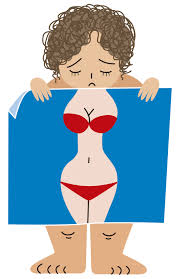
Adulthood obesity

Adulthood obesity and overweight problems has no boundaries and every person is vulnerable

Adulthood obesity and overweight problems: Possible solution with Doctor Akoury

In the recent past we have discussed this topic of adulthood obesity and overweight and because of the prevalence of this problem the world over, we are going to make certain emphasis on the same to create further awareness for the society to take better remedies and protect lives. By now it is obvious that if you are obese or overweight, you have a bigger risk of developing various health problems. It will interest you to note that any amount of weight loss is very important and we go a long way in facilitating the reduction of certain health risks associated with weight gain. The little or modest weight loss that is often ignored is very beneficial and a serious pointer to the right direction. Experts from AWAREmed health and wellness resource center under the leadership of doctor Dalal Akoury MD reiterates that weight loss is a gradual process that needs a lot of commitment and change in lifestyle. Some of the changes that may come in handy may include eating a healthy diet and engaging in regular physical activities. With that introduction, let’s consider responding to this question “are you obese or overweight?”

Adulthood obesity and overweight problems: Are you obese or overweight?

Sometimes the answers we get when questions are asked may be scary but, facts will always remain however painful they may be. The truth of the matter is, being obese or overweight can be nothing but a disaster in waiting, to say the least. Professionally, if you are obese or overweight, you are carrying excess body fat. It is important to be clear that being overweight or obese is not just about your shape or look, it means that you have a bigger risk of developing various health problems whether we are talking about adulthood obesity or childhood obesity. As an adult, you can find out whether you are overweight or obese and whether your health may be at risk, by calculating your body mass index (BMI) and measuring your waist circumference. This is very important and progressively I will be taking you through the weight circumference briefly for a better understanding of where we are heading to but in the meantime, your suspicion of being overweight must never be ignored.

We may not know what you are going through, but one common denominator about weight management is that being obese or overweight is not good for your health. Because of that great concern, doctor Akoury made a passionate decision of creating a health facility with a sole objective of transforming each individual’s life through increasing awareness about health and wellness and by empowering individuals to find their own inner healing power. What is bothering you could be an indication for you to act on in good time. Your timely action is going to be very important for your recovery process because Akoury’s practice focuses on personalized medicine through healthy lifestyle choices that deal with primary prevention and underlying causes instead of patching up symptoms making her the best for your treatment. Doctor Akoury is available on telephone number 843 213 1480. Schedule an appointment with her now for the commencement of your recovery process.

Adulthood obesity and overweight problems: Possible solution with Doctor Akoury

http://regenerativepotential.com/wp-admin

Facebooktwitterpinterestlinkedin
Obesity-medical-poster-design-37231081

Important diets eating skills for fighting obesity

Important diets

Important diets eating skills for fighting obesity delivers result

Important diets eating skills for fighting obesity: Assessing your eating habits

When it comes to weight management, people are always very first at pointing fingers at diet and physical activities. Of course, these are good elements when it comes to weight management but they are other things that need to be carried along the way. We spoke to doctor Dalal Akoury MD, President, and founder of AWAREmed health and wellness resource center and it was evident that besides having a well-balanced diet, the way you consume your meals is equally very important. Professionally doctor Akoury suggestion on how well we should conduct ourselves while eating. Like for instance:

  • Eat slowly.
  • Be careful that your food portion sizes are not too big but proportional.
  • Avoid second helpings when you are already full.
  • Switch unhealthy snacks and desserts to healthy ones.
  • Don’t skip meals.
  • Plan your meals ahead of time so that you can acquaint yourself with what you will be eating next.

Be selective on what you drink

Why are health officers insisting that we should be careful with the drinks we take? It is because many people use very unhealthy drinks full of calories to quench their thirst. While their thirst is being attended to, they are reciprocating that with adding more sugar. Many people may not know that sugary drinks like cola, tea, and coffee with milk and sugar, milk and alcoholic drinks, all contain calories and one of the best, economical and easiest ways to cut back on calories is simply by way of drinking water as your main drink say doctor Akoury.

Important diets eating skills for fighting obesity: Increase your physical activity levels

We had mentioned about being physically active and for sure, it is recommended that all adults should aim for 150 minutes of exercise a week.

  • One way to do this is to do 30 minutes of moderate-intensity exercise in bouts of 10 minutes for five days of the week.
  • Another method is to do 75 minutes of vigorous-intensity activity spread throughout the week or a combination of moderate and vigorous activity.

Remember that moderate physical activity includes:

  • Brisk walking
  • Jogging
  • Dancing
  • Swimming
  • Badminton
  • Tennis etc.
  • It is equally important that besides the list above try to do more in your daily routines. For example, use stairs instead of lifts, walk or cycle to work or school, etc.
  • Avoid sitting for too long in front of the television or a computer screen. Take regular breaks whilst working.
  • The good news is that you don’t have to do this physical activity all in one chunk.
  • You can break it up into blocks of 10-15 minutes. See separate leaflet called Physical Activity for Health, which gives more details.
  • Build your exercise levels up gradually. If you are not used to physical activity, try starting with a 30-minute brisk walk every day and then building up from there.

Finally, we are aware that being consistent with exercise is not always easy for many people owing to the kind of lifestyle they live. But facts will always remain that inactive people are politely inviting obesity in their lives and the consequences are well known. To avert that you can schedule an appointment with doctor Akoury for further professional guidance.

Important diets eating skills for fighting obesity: Assessing your eating habits

http://regenerativepotential.com/wp-admin

Facebooktwitterpinterestlinkedin
weight loss program

Essential diets for fighting obesity and weight gain

Essential diets

Essential diets for fighting obesity and weight gain is all about change in lifestyle

Essential diets for fighting obesity and weight gain: Aim at eating a healthy balanced diet

When we talk about essential diets for fighting obesity, it is different with what is commonly known as special diets which are very common in our media advertisement. Essential diets are all-inclusive and involve total change of lifestyle and not just a one-week activity but a lifetime experience. The special diets are not consistent because after losing weight, your old eating habits remain and because of that, you begin restocking the lost pounds again and again. That is why experts at AWAREmed health and wellness resources center under the leadership of doctor Dalal Akoury MD, reiterates that it is usually not a special diet needed but changing to a healthy essential balanced diet, for a lifetime.

Essential diets for fighting obesity and weight gain: What is a healthy diet?

Understanding the meaning of what a healthy diet is very important if you are to use it as a means of eradicating obesity in your life. You may want to consider the following points as the possible meaning of a healthy diet:

  • Making up a third of most meals with starch-based foods (such as cereals, bread, potatoes, rice, pasta etc.). Wholegrain starch-based foods are preferable.
  • Eating plenty of fiber in your diet. Foods rich in fiber include whole grain bread, brown rice, and pasta, oats, peas, lentils, grain, beans, fruit, vegetables and seeds.
  • Having at least five portions, or ideally 7-9 portions, of a variety of fruit and vegetables per day. These should be in place of foods higher in fat and calories. For example, fruit makes a good, healthy snack if you feel hungry.
  • Limiting fatty food such as fatty meats, cheeses, full-cream milk, fried foods, butter, etc. Use low-fat options where possible. Examples are:
    1. Skimmed or semi-skimmed instead of full-cream milk.
    2. Using low-fat, monounsaturated or polyunsaturated spreads instead of butter.
    3. When feeding on meat it is necessary that you consume lean meat or poultry like chicken.
    4. Try to grill, bake or steam rather than fry food. When using dry food, select vegetable oil like grapeseed, olive or sunflower.
  • Discourage use of sugary drinks and sugary foods like biscuits, chocolate, cakes, sweets etc.
  • Reduce use of other foods likely to be high in fat or sugar like some takeaway or fast foods.
  • Eating three meals a day and not skipping meals. Always have breakfast. Eat each meal slowly. Skipping meals will just make you feel more hungry, make you think more about food and make you more likely to overeat in the evening or snack between meals.
  • Trying not to add salt to food and avoiding foods that are salty.
  • Including 2-3 portions of fish per week, at least two of which should be ‘oily’ (such as herring, mackerel, sardines, kippers, pilchards, salmon, or fresh tuna).

Even as we conclude this discussion in this article, a lot is still at stake and we are going to be exhausting them in the coming articles. We want therefore to request you to stay with us on the link and learn more with the experts. In the meantime, all your concerns about weight management, you can call doctor Akoury for further guidelines.

Essential diets for fighting obesity and weight gain: Aim at eating a healthy balanced diet

http://www.integrativeaddictionconference.com/wp-admin

Facebooktwitterpinterestlinkedin
Cancer and weight

Heart functions and the threat of obesity

Heart functions

Heart functions and the threat of obesity demands that we must make all efforts of kicking obesity out of our lives

Heart functions and the threat of obesity: Overweight and Obesity

The heart is such a special organ in the body which needs lots of care. Anything affecting the heart leaves a scar and scare not just to the individual victim, but to the whole family. When this happens, the heart functions are hindered and the family programs equally come to a halt at times. Our focus in this article is going to be on poor weight management as a tool that can affect the heart functions badly. We are going to be seeking the professional input of doctor Dalal Akoury MD, President, and founder of AWAREmed health and wellness resource center over this so that we are precise and professional. We are all alive because we bear some weight. Weight is a component in life that we cannot ignore but like in any other good thing under the earth, when its application is done in excess it becomes dangerous. In the same way as human beings we must have the certain degree of weight from all the good reason however when weight is in excess, it becomes a problem to the human body and hence the saying “too much of something is dangerous”.

Like we have said the heart is such an important organ in the body and its functions must be perfect, regular and consistent all the times. Let’s, therefore, acquaint ourselves with the definitions of certain terms for a better understanding of our point of discussion. The terms “overweight” and “obesity” refer to body weight that’s beyond what is considered healthy for a given height. It is believed that in America alone, more than two-thirds of the adult population are overweight with about one-third of these adults being obese. Overweight and obesity are measured by the use of body mass index (BMI). For an adult, the normal weight is a BMI of 18.5 to 24.9 anything 25 to 29.9 is considered overweight while a BMI of 30 and more is obese.

Heart functions and the threat of obesity: Health risk involved

Being overweight or obese can raise your risk of CHD and heart attack. This is mainly because when it comes to the relationship between obesity and heart failure it’s always very complicated. Obesity is intimately interwoven with multiple health conditions that underlie cardiovascular disease including:

  • High blood pressure
  • Diabetes and
  • Abnormal blood cholesterol

Away from all this, being overweight is a common consequence of heart-damaging lifestyles like lack of exercise and a fat-laden diet. For some time now, scientists have suspected that excess fat tissue, especially around the waist, has a direct effect on heart structure and function, even without the association of other heart disease risks. In pursuing this philosophy, researchers evaluated some 950 older individuals of different weights for signs of left ventricular (LV) diastolic dysfunction a condition characterized by changes in the structure of the heart’s main pumping chamber (left ventricle), which prevent it from filling sufficiently between beats. Although LV diastolic dysfunction can be symptomless, it reliably predicts future heart failure. (Heart failure occurs when the heart muscle weakens or stiffens to the extent that it can no longer meet the body’s needs for blood and oxygen.)

In this study, the subjects were separated into three weight groups that are normal, overweight, and obese based on their body-mass index (BMI). Each subject underwent a noninvasive echocardiogram exam to measure the dimensions of the heart, muscle thickness and filling capacity of the left ventricle. It was then established that the overweight and obese participants were more prone to abnormal diastolic function than the normal weight individuals. Nonetheless when the researchers controlled for the effects of the other risks, the overweight, and obese subject still had up to a 60% higher chance of having LV diastolic dysfunction. It also made a difference how much extra body fat the person carried. The risk of abnormal heart function went up 4% for each point increase in BMI measurement. Looking at the dangers attached, timely professional help is highly recommended and scheduling an appointment with doctor Akoury should be your starting point.

Heart functions and the threat of obesity: Overweight and Obesity

http://regenerativepotential.com/wp-admin

Facebooktwitterpinterestlinkedin
weight loss tips

Childhood obesity causes and consequences

Childhood obesity causes

Childhood obesity causes and consequences are primarily based on the up bring. We must lead by example

Childhood obesity causes and consequences: Effects on physical and mental health

There are very many reasons that can lead to our children become overweight and obese. Some of the most common causes may include genetic factors, lack of physical activity, unhealthy eating patterns, or a combination of these factors. Even though this can be caused medically, it is important to note that only in very rare cases are being overweight caused by a medical condition such as a hormonal problem. A physical exam and some blood tests can rule out the possibility of a medical condition as the cause of obesity. Although genetically weight problems run in families, not all children with a family history of obesity will be overweight. Children whose parents or siblings are overweight may be at an increased risk of becoming overweight themselves, but this can be linked to shared family behaviors such as eating and activity habits. Therefore it is necessary that a child’s total diet and activity level play an important role in determining a child’s weight. For instance, many children spend a lot of time being inactive, the average child today spend approximately four hours each day watching television. As computers and video games become increasingly popular, the number of hours of inactivity may increase.

Childhood obesity causes and consequences: Health effects

Overweight children, as compared to children with a healthy weight, are more likely to develop many health problems such as high cholesterol and high blood pressure, which are associated with heart disease in adults. Type 2 diabetes, previously considered an adult disease, has increased dramatically in overweight children and adolescents. Children at a healthy weight are free of these weight-related diseases and less at risk of developing these diseases in adulthood.

Mental Health Effects

The most immediate consequence of being overweight as perceived by children themselves is social discrimination, stigma, and low-self-esteem. A 2003 study asked 106 children between ages 5 to 18 to rate their quality of life based on things like their ability to walk more than one block, play sports, sleep well, get along with others and keep up in school. The study found that obese children often rated their quality of life with scores as low as those of young cancer patients on chemotherapy. The results indicated that teasing at school, difficulties playing sports, fatigue, sleep apnea and other obesity-linked problems severely affected the children’s well-being. This is facts you can’t ignore and doctor Dalal Akoury MD, and founder of AWAREmed health center can be of help.

As a Parent what can you do to help your child

Children will always learn from what they see in their surroundings meaning that what you do as a parent will impact either positively or negatively on your children. Therefore adopting positive lifestyle and activities is very important. You can choose to do the following:

  • Schedule a thorough medical evaluation of your child by a pediatrician to consider the possibility of a physical cause. If no physical disorder is found, parents should work with their children to reduce the number of calories being eaten and increase the child’s or adolescent’s level of physical activity.
  • Emphasize healthy eating, keep fatty and sugary snacks to a minimum and keep fruits, vegetables and low-fat snacks available
  • Increase their child’s physical activity, perhaps by taking a few brisk walks with your child each week
  • Let your child know he or she is loved and appreciated whatever his or her weight. An overweight child probably knows better than anyone else that he or she has a weight problem. Overweight children need support, acceptance, and encouragement from their parents.
  • Be a good role model for your child. If your child sees you enjoying healthy foods and physical activity, he or she is more likely to do the same now and rest of his or her life.

Childhood obesity causes and consequences: Effects on physical and mental health

http://www.integrativeaddictionconference.com/wp-admin

Facebooktwitterpinterestlinkedin