Category Archives: Good weight management

weight loss diet

Effective weight loss that sustains health
Effective weight loss

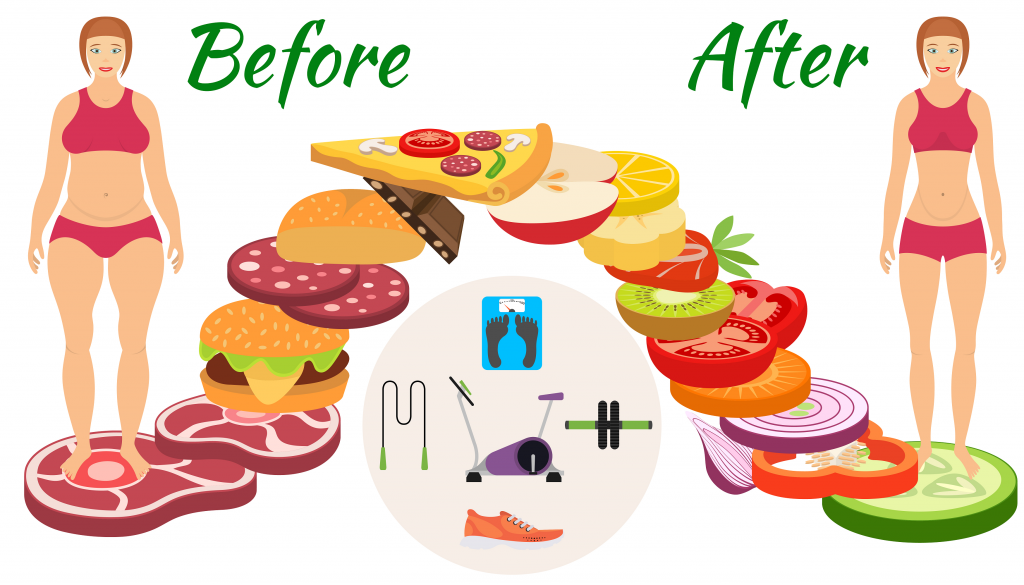
Effective weight loss that sustains health is derived from exercise and good nutrition

Effective weight loss that sustains health: Metabolic syndrome

For an effective weight loss plan that sustains health to be realized, certain factors need to be considered. Previously we mentioned that healthy weight should have a BMI not exceeding 25 and waistline not exceeding 40 and 35 inches for men and women respectively. And to further on that, doctor Dalal Akoury MD and President of AWAREmed health and wellness resource center say that a high waist circumference can be an indication of a condition called metabolic syndrome. Although most people have not heard of it, this is a common syndrome affecting one out of every four adults in the United States. Metabolic syndrome often progresses to type 2 diabetes and treating the syndrome can help prevent this form of diabetes. Which is why you need to schedule an appointment with doctor Akoury as early as now to have what can be prevented, prevented.

Engaging in regular physical activity has been shown to help prevent several health complications like heart disease, type 2 diabetes, osteoporosis and other chronic conditions. Maintaining good health in all adults and children is essential irrespective of whether your weight is a problem or not. Lifestyle changes do not have to be drastic to be effective. Simple measures applied every day can make a significant difference over time, for instance, you may consider:

  • Increasing whatever physical activity you are currently doing by adding 10 minutes a day, or increase the intensity from low to moderate.
  • Limit time spent online, watching TV and playing video games to less than two hours total per day.
  • Take the stairs instead of the elevator.
  • Park at the far end of the parking lot and walk to your destination, rather than parking as close as possible. You can also get off the bus one stop earlier and walk the rest of the way.
  • Do more household chores (such as dusting, vacuuming or weeding).
  • Walk or run with the dog or the kids.
  • Use an exercise machine (such as a treadmill or bike) while watching TV.
  • Take “active” vacations go hiking or ride bicycles.
  • Walk to do errands such as to the grocery store or post office instead of driving.
  • Buy a pedometer, which measures how many steps you take each day. Gradually increase your daily number of steps.
  • Don’t be embarrassed about exercising.

Effective weight loss that sustains health: Can diet pills and supplement help?

Although diet drugs may help you lose weight at first, they usually don’t help you keep the weight off and may have damaging side effects. Most diet pills have not been tested by the Food and Drug Administration, which means you can’t be sure if the drugs are safe. Taking drugs also does not help you learn how to change your eating and exercise habits. Making lasting changes in these habits is the way to lose weight and keep it off. You can always seek for more expertise from AWAREmed Health and Wellness Resource Center under the leadership of doctor Dalal Akoury who is a veteran addiction expert of more than two decades and together with her team they will help you get better in the most natural and convenient way that will not only address your weight related problems professionally but at a fordable cost.

Effective weight loss that sustains health: Metabolic syndrome

http://www.awaremednetwork.com/

Facebooktwitterpinterestlinkedin
lose weight faster

Overweight regulation and obese prevention

Overweight regulation

Overweight regulation and obese prevention is a condition that simple exercise can solve

Overweight regulation and obese prevention: The exercise factor in delivery

Being physically active is one of the most used ways of controlling weight gain and the prevalence of obesity globally. The consequences of obesity are so daring that when proper measures are not taken in good time by ensuring effective overweight regulation and obese prevention, things may get out of hand. Generally, obesity results from energy imbalance meaning that very little calories are being burned. Speaking to the experts’ at AWAREmed health and wellness resource center, doctor Dalal Akoury who is also the founder of this facility reiterates that, the burning of calories is influenced by a number of factors including body size, age, and gene. Nonetheless, the most noticeable one is the quantity of physical activity people need to get health on a daily basis.

Being physically active helps people to stay at a healthy weight gain or loss and significantly reduces the risk of heart disease, diabetes, stroke, high blood pressure, osteoporosis, and certain cancers, as well as reduce stress and boost mood while living an inactive (sedentary) lifestyles do just the opposite. What is surprising is that even with this knowledge people are not keen on being physically active and this cuts across the globe. On a daily basis the levels of activities at work, homes are getting down because people are comfortable with things around them. It is estimated that about one in every three gets very little that is if any of the physical activity further increasing the level of decline. And it’s evident that this decline in physical activity is a major contributor to the global obesity epidemic, and in turn, the rising rates of chronic diseases everywhere. In this article, I will be defining physical activity and explains how it is measured, reviews the trends, and discusses the role of physical activity in weight control in fighting obesity progressively.

Overweight regulation and obese prevention: Physical activities and exercise

The two terms associated with activities are often taken to have the same definition which is not true. I am talking about physical activities and exercise they are all used in reference to the same thing but have different meanings as follows:

Physical activity – refers to any body movement that burns calories, whether it’s for work or play, daily chores, or the daily commuting so long as some calories are burned during that particular body movement.

Exercise -is a sub-category of physical activity referring to planned, structured, and repetitive activities aimed at improving physical fitness and health of an individual?

Moderate-intensity physical activity – these refer to those activities which are strenuous enough to burn three to six times as much energy per minute as an individual would burn when sitting quietly or 3 to 6 METs. However, Vigorous-intensity activities will burn more than 6 METs.

Measurement

Experts measure the intensity of physical activity in metabolic equivalents (METs). One MET is defined as the calories burned while an individual sits quietly for a minute. For the average adult, this is about one calorie per every 2.2 pounds of body weight per hour; someone who weighs 160 pounds would burn approximately 70 calories an hour while sitting or sleeping. This is not all about measurement and for more on this and many others, you can call doctor Akoury now and you will have all your concerns addressed professionally.

Overweight regulation and obese prevention: The exercise factor in delivery

http://www.awaremednetwork.com/

Facebooktwitterpinterestlinkedin
Excess sugar consumption

Overcoming sugar addiction complications

Overcoming sugar addiction

Overcoming sugar addiction complications is a perfect way of kicking obesity out of our lives

Overcoming sugar addiction complications: Sweetness that destroys

Even though addiction to sugar is much stronger for some people than others, the truth is sugar is highly addictive in many ways and it really doesn’t matter how it affects you or the other person. Like for instance, when you’ve overeaten junk foods like cookies, candy, cake, or ice cream in relation to who hasn’t, at some point you’ll know its seductive pull and that is when you will mark the commencement of your struggle with overcoming sugar addiction complications. Food processors know the addictiveness of sugar and that is why they are banking on it each time they load sugar into soft drinks, breakfast cereal, soups, salad dressings, spaghetti sauce, energy bars, and even catsup. And that explains why, most of us develop a strong craving for sweets, without even realizing how much sugar we consume on a daily basis.

And without missing the point, doctor Dalal Akoury MD President, and founder of AWAREmed health and wellness resource center is reiterating that the prevalence of sugar addiction is doubtlessly more common than you may think. And to illustrate that taking the US as an example, it will interest you to note that, the average consumption of sugar is about 20 to 30 teaspoons (about ½ cup!) which have been linked to a variety of health problems, including obesity, hypertension, heart disease, diabetes, irritable bowel syndrome (IBS), attention and memory problems, hyperactivity, anxiety, and depression. Every month a new study comes out adding to the list of risks posed by consuming sugar and its cousins, high-fructose corn syrup, maltose, and dextrose. Funnily enough and this is very serious, that despite these known risks, we continue to eat sugar because besides being sweet, it is also very addictive. And if you didn’t know, sugar meets all the criteria for an addictive substance.

Overcoming sugar addiction complications: Sugar the stimulant

Finally, sugar is also seen as a stimulant that stimulates the release of neurotransmitters in the brain, such as dopamine and serotonin, in a manner similar to alcohol, cocaine, and other drugs of abuse.

  • People eat it compulsively, despite negative consequences and the intention to stop.
  • With continued use, people develop a tolerance to its effects.
  • Heavy sugar consumers have trouble functioning without it.
  • When consumption ceases, withdrawal symptoms occur.

And because of all the facts stated so far, we cannot pretend that things are fine because they are not. That is why doctor Akoury made a healthy decision and created this medical center whose main objective is to transform each individual’s life through increasing awareness about health and wellness and by empowering individuals to find their own inner healing power. Besides the awareness, it will also interest you to note that doctor Akoury’s practice focuses on personalized medicine through healthy lifestyle choices that deal with primary prevention and underlying causes instead of patching up symptoms making her the best option for all your addiction solution needs. Doctor Akoury is just a phone call away and you can reach her on telephone number 843 213 1480 anytime and all you addiction problems will be addressed professionally.

Overcoming sugar addiction complications: Sweetness that destroys

http://regenerativepotential.com/wp-admin

Facebooktwitterpinterestlinkedin
Obesity-medical-poster-design-37231081

Cyberbullying and body weight

Cyberbullying

Cyberbullying and body weight among children is not only subjecting them to several health risks, but also to social discrimination

Cyberbullying and body weight: Stigmatizing obese children

Up to now, very little research has been done about cyberbullying specifically toward obese children. Nonetheless, the high rates of youth who report witnessing and experiencing weight-based teasing could be a pointer of the magnitude of the problem many obese children are victims of cyberbullying. Devastating stories of two girls who hung themselves have recently circulated in the media. Megan a 13-year-old Missouri girl who struggled with her weight, experienced cyberbullying on MySpace and was called “fat” and “slut” by someone posing as another person. Celina, an 11-year-old Florida girl, experienced cyber-bullying via text messages from classmates who jeered at her weight and race. And like I had said, we all or our children the duty of care and so it is important to ensure that weight-based cyber-bullying is on the radar of parents.

Doctor Dalal Akoury MD, and founder of AWAREmed health and wellness resource center reiterates that parents can be powerful change-agents in bringing this issue to the attention of schools, and especially to help protect their own children from becoming victims of cyber-bullying. Parents can also communicate the following messages to their children to help prevent cyber-bullying, and to react appropriately if it occurs:

Prevention

  • Never share or post your private/personal information (name, address, phone number).
  • Do not share your passwords with anyone, not even friends.
  • When you see a picture, Email or message that may be hurtful, embarrassing or cruel, delete it do not forward it.

Reaction:

  • If you are the victim of cyberbullying, do not retaliate.
  • Record the message and details as best as you can.
  • Then, delete it, block the bully, sign-off or exit the Web site and tell an adult.

The facts
we have many opportunities for overweight youth to be cyber-bullied. Teens use the Internet and send/receive text messages significantly more than any other age group, with 93 percent using the Internet and 73 percent using social networking Web sites – most often Facebook and MySpace.

Three-fourths of teens own a cell phone, and on average, teens send/receive 2,539-4,050 texts per month. This is concerning given that the Internet and cell phones are the primary places where cyber-bullying occurs.

Cyberbullying and body weight: Strategies for parents

Monitoring Cyberbullies and victims spend more time on computers and report less monitoring than youth who are not involved in cyber-bullying. Regulate the time and access your child has to the Internet. Set boundaries on usage and the types of Web sites or services your child is allowed to visit.

Familiarizing Parents should try to understand cyber media and Internet safety. Share this information with your child to help them understand potential dangers.

Accountability Ask your child about Web sites, activities and communications they access. Set-up your own pages to understand these sites and keep your child accountable.

Communication – It is estimated nine out of 10 children do not tell their parents or an adult when something means or hurtful happens to them online. Some youth are afraid that they will lose their Internet or phone privileges, or that the bullying will get worse. To keep the dialogue open, make sure that your child knows that you are there to help.

Education – Work with schools to provide education about privacy and safety on the Web, or media literacy programs to teach youth how to be more intelligent, critical consumers of Web-based services and information. If your child has been a victim of cyber-bullying, seek for help at AWAREmed Health and Wellness Resource Center under Doctor Akoury’s care becomes necessary and you can call her now to schedule an appointment.

Cyberbullying and body weight: Stigmatizing obese children

http://regenerativepotential.com/wp-admin


Facebooktwitterpinterestlinkedin
Obesity an addiction

Stigmatizing obese children lowers morale

Stigmatizing obese children

Stigmatizing obese children lowers morale and is quite immoral to do so

Stigmatizing obese children lowers morale: Parental obligations

In making effort to bringing up our children in the best way we can, we are often meet with different challenges hindering our desire to do our part perfectly as we would wish to. Take for example the problem of stigmatizing obese children. Is there any bad thing that can happen to a child than to be discriminated over? Doctor Dalal Akoury MD, President, and founder of AWAREmed health and wellness resource center is going to help us understand more about childhood obesity stigmatization. Childhood obesity is a health problem, but to stigmatize the obese children over their condition is very immoral and demeaning as it is destroying our children causing them to feel secluded, alone and helpless.

We have a duty as parents to find out if our children are being bullied in whichever way to help them maintain their self-esteem. In today’s society body weight is among the common reasons why young people are harassed and while this is taking place and our children are being bullied, victimization of overweight youth continues to be ignored by the media, research and policy discussions. Recent studies indicated that many students are being teased in a demeaning way or during the physical activity classes, they are called names, made fun of because of their overweight problem. I want to pose and ask if overweight a health condition like any other? Why bully? The consequences of weight-based teasing and bullying are many and can be severe. Overweight youth who are teased and bullied are vulnerable to social, psychological, emotional and physical health impairments including:

  • Increased risk of depression and anxiety
  • Negative body image
  • Suicidal thoughts
  • Avoiding gym class
  • Skipping school
  • Academic impairment
  • Unhealthy weight control
  • Binge-eating behaviors
  • Reduced physical activity
  • Increased body mass index (BMI)

There is an emerging trend of weight related victimization much less known called cyber bullying causing a lot of devastating results among young people. Let’s take a moment to discuss cyber bullying.

Stigmatizing obese children lowers morale: Cyberbullying

This is the deliberate, attempt to inflict injury or discomfort of another person through electronic means. For adolescents, estimates of cyber victims range from 4-72 percent. Cyber-bullying takes a number of different forms including threats, insults, gossip, rumors, impersonation, hacking into other people’s accounts or spreading someone else’s private or personal information without consent. Peers are not the only perpetrators. In fact, youth report being bullied by adults and siblings, and 48 to 79 percent have been bullied by strangers or individuals they have never met in person.

Its anonymity sets cyber-bullying apart from more “traditional” victimization, but cyber-bullying is especially harmful because it penetrates beyond the school boundary and can possibly happen to anyone at any time. The majority (85 percent) of cyber-bullying happens at home, but these experiences may also affect children at school. What may be frustrating is that parents are largely unaware of their children’s roles as cyber-bullies or victims. Youth who are cyberbullied may be especially vulnerable to consequences that differ from more traditional forms of bullying. These include weapon carrying at school, low caregiver-adolescent connectedness, headaches, sleeping difficulties, sexual solicitation, social anxiety and suicidal thoughts and behaviors. Though it may be unclear if these problems are instigated or result from the cyber-bullying, the consequences remain the same and that is why you need to seek professional help from doctor Akoury now.

Stigmatizing obese children lowers morale: Parental obligations

http://regenerativepotential.com/wp-admin

Facebooktwitterpinterestlinkedin