Category Archives: Dr. Dalal Akoury

Understanding of Addiction and Low Self Esteem

Understanding of Addiction and Low Self Esteem: What is self-Esteem?

Understanding of Addiction and Low Self Esteem

Understanding of Addiction and Low Self Esteem. Young people who are suffering from rejection often seek for comfort and acceptance in the wrong company of alcoholics and drug addicts.

Self-esteem is a psychological term used to describe how humans evaluate themselves overall in relation to self-worth. Psychologically this can be described as the self-confidence and satisfaction that people have in their own life. On the other hand the terms self-esteem and self-worth tend to be used interchangeably even though feelings of self-esteem tend to be more fluid than self-worth. Ideally the issues surrounding self-esteem can be very complicated depending on the intensity or the nature of the effects. What is it that causes the individual to have a low self-esteem? Experts at AWAREmed Health and Wellness Resource Center have reported that the way people view themselves will have a great impact on how they experience or passive their own lives. Those who have low self-esteem will struggle to find success and happiness, mostly because they do not feel within themselves worthy of enjoying such things. Their lack of self-worth will affect every area of their life, and more so, their relationships with other people. It is regrettable that many of those who are struggling with low self-esteem often turn to substance abuse because it offers a temporary solution to their problems. While the truth is that using alcohol and drugs to escape with their feelings of low self-worth will only leads to further misery and addiction. That is why this article is going to be interrogating our understanding of addiction and low self-esteem so that we can put this to perspective.

Understanding of Addiction and Low Self Esteem: The Causes of Low Self-Esteem

Low self-esteem can be very traumatizing and if combined with substance abuse life can be very unbearable. It is therefore very important that we are not starved with the information about the causes of low self-esteem which may include the following:

  • Under normal circumstances when one in his or her childhood suffered some form of child abuse, the scar will remain with them for life even if treatment were done. This constant reminder of the yester year’s events can severely affect the way they view themselves. Children lack the knowledge and insight to understand the situation, and because of this they will keep blaming themselves for the abuse. This feeling of somehow being wrong stays with them into adulthood. And remember that physical, mental, or sexual abuse can all have lasting consequences on a child’s sense of self-worth due to the permanent scars that come with them.
  • In the event that parents fail to give all the necessary support to make their children feel valued and important, then this can later lead to poor self-esteem. It is important for parents to note that when it comes to children the value is in what the parent fails to say or do and not what they have done or said. Children are highly sensitive to their environment; therefore they need to be nurtured all the way. If young people feel that they have failed to live up to their parent’s standards, this may translate negatively on then to the point that they may find it difficult to value themselves.
  • Too much criticism when growing up is a very bad indicator and this when not corrected can leave behind mental scars. People who are always being told that they are a failure or stupid are likely to believe the negative impression implied on them.
  • The way people are treated by their peers is also important for self-esteem. One of the most compelling functions of a peer group is feedback on behavior. Consistent negative feedback can have a profound effect on a person.
  • Being the victim of racism or prejudice will usually change the way people view themselves and that is a key factor in understanding of addiction and low self-esteem.
  • Those individuals who have issues around their physical appearance can easily develop feelings of low self-worth. In the modern world, there is too much emphasis placed on physical beauty. The media is largely responsible for this obsession. Feelings of being unattractive will lead to low self-esteem.
  • When people feel that they do not really fit in anywhere it will change the way they view themselves. This lack of connectedness with other people is common among people who are dealing with esteem issues.

Understanding of Addiction and Low Self Esteem: The Effects of Low Self-Esteem

Those who are dealing with low self-esteem may experience many of the following problems:

  • Failure to value one-self leads to a failure to take care of oneself. The person may not see the point of putting much effort into their bodies and minds. This means that they will be far more likely to suffer from poor physical and mental health. Low self-esteem can lead to premature death as well.
  • Not believing in oneself will limit one’s potential. A person may not be willing to put in the necessary effort to achieve their dreams, because they not believe it will bring results. Such people may be convinced that mediocrity is all they deserve.
  • Individuals with low self-esteem are far more likely to turn to alcohol or drugs as a means of escaping their problems.
  • People with low self-esteem often end up in abusive relationships. This is because they can inwardly feel like such relationships are all they deserve.
  • When people do not value themselves highly they are more likely to bow to peer pressure. Many individuals who end up in dangerous cults suffer from low self-esteem.
  • It can be hard for such individuals to trust other people. They may believe that anyone who is trying to help them has a hidden agenda. They can also go to the other extreme where they trust unworthy individuals too much.
  • These individuals will be highly insecure in relationships. If they do not value themselves, then they will find it hard to believe that other people can value them.

Understanding of Addiction and Low Self Esteem: Addiction and Low Self-Esteem

Low self-esteem is one of the characteristics of the addictive personality. When people first begin using alcohol or drugs it will increase their self-confidence. They become less concerned with what other people think of them. The individual begins to rely on these substances in order to cope with life. Addiction means that the person’s life begins to all apart as their self-esteem hits an all-time low. In AA, they describe the situation as, alcohol gave me wings but then it took away the sky. Lack of self-worth can then keep people trapped in addiction.

Understanding of Addiction and Low Self Esteem: Underage Substance Abuse and Low Self-Esteem

Finally it has been established from various studies that children with low self-esteem are more likely to abuse alcohol or drugs as they grow up. Because of this they will not want to be left out more so when they are associating with mates who are already into drugs and alcohol. The peer pressure and sense of belonging will certainly carry them away all in the name of experimenting. And because of the temporary relief when under the influence of drugs and alcohol, the idea of escaping reality will be more appealing even if it is only for a little time. Doctor Dalal Akoury warns that unless something is done timely, those individuals who use alcohol or drugs at a younger age will have a greater risk of developing an addiction in the future. It is therefore very important that you start early by scheduling for an appointment with doctor Akoury for a more professional treatment approach.

Understanding of Addiction and Low Self Esteem: What is self-Esteem?


Facebooktwitterpinterestlinkedin

The general effects of Alcohol abuse today

The general effects of Alcohol abuse today: The body responsiveness to Alcohol abuse

The general effects of Alcohol abuse today

The general effects of Alcohol abuse today are evident on how users of alcohol live their lives. A life full of destruction

The life complications keep getting more and more frustrating because of several factors including alcohol abuse and drug addiction. These two health conditions directly affect the well-being of human life and cannot be over looked. Over the years people have been into the business of marry making while consuming alcohol and all other alcoholic beverages across the globe. It is through this marry making that today life is almost becoming unbearable for most families and especially those taking care on an alcoholic loved one. One may wonder how marry making and self-enjoyment of life while taking a few bottles of drinks could be a problem. If this is what is going on in your mind right now, then you are at the right place, because throughout this article, we are going to be discussing the general effects of alcohol abuse today in our lives. With the help of doctor Dalal Akoury MD and founder of AWAREmed Health and Wellness Resource Center, one of the leading pioneers in natural and holistic addiction treatment we will be well informed of the health effects of alcohol abuse and even drug addiction. You can therefore take this earliest opportunity to schedule for an appointment with her for more guidance and professional help.

Individual’s patients struggling with substance abuse may opt for the appointment with the experts for lasting solution, however the experience doctor Akoury has garnered over the past few decades can be very beneficial to other professional in the same discipline. And if you are wondering on how you can be part of this doctor Akoury is organizing an Educational, Functional and Integrative Addiction conference for medical experts including doctors, counselors, nurses and addiction therapists. The conference will be August 23-25 in Myrtle Beach, South Carolina. This new frontier in Addiction Medicine will be conducted by the most influential group of leading visionaries specializing in the latest advances in natural and integrative addiction medicine, under the theme “The Future of Integrative Addiction”. You can get more information about this on www.integrativeaddiction2015.com or email sharon@integrativeaddiction2015.com. Just to give you a preview of those who will be attending this very important conference, we currently have confirmations from the who is who in the world of medicine including Dr. Mitch Ghen, DO, Ph.D, Sean Devlin, DO, HMD., Sahar Swidan, Pharma D. BCPS., Kenneth Proefrock, N.M.D., William Eidelman, M.D., and Gregory G. Smith, MD. That is just a preview you can get more information from the contacts given above and you are highly welcome to this one in a life time event. Back to the general effects of alcohol abuse today, the body is very much vulnerable to the toxic elements as we will soon find out from the explanations in this discussion.

The general effects of Alcohol abuse today: Effects to the Skin, Muscle, and Bone Disorders

Several studies have associated severe alcoholism with osteoporosis which is the loss of bone density, muscular deterioration, skin sores, and itching. Whereas women are the most concern with the beauty of their skin complexion as compared to men, alcohol-dependent women seem to face a higher risk than men for damage to muscles, including muscles of the heart, from the toxic effects of alcohol.

The general effects of Alcohol abuse today: Effects on Reproduction and Fetal Development

Sexual Function and Fertility – Alcoholism increases levels of the female hormone estrogen and reduces levels of the male hormone testosterone, factors that are closely associated with erectile dysfunction and enlarged breasts in men, and infertility in women. Such changes may also be responsible for the higher risks for absent periods and abnormal uterine bleeding in women with alcoholism.

Drinking During Pregnancy and Effects on the Infant – it is important to note that when nursing pregnancy even the so called moderate amounts of alcohol can have damaging effects on the developing fetus, including low birth weight and increased risk for miscarriage. High amounts can cause fetal alcohol syndrome, a condition that can cause mental and growth retardation. Although there is no specific amount of alcohol intake, the risk of developing the syndrome is increased depending on the time of alcohol exposure during pregnancy, a pattern of drinking (four or more drinks per occasion), and how often alcohol consumption occurs.

The general effects of Alcohol abuse today: Effect on Weight and Diabetes

Moderate alcohol consumption may help protect the hearts of adults with type 2 diabetes. Heavy drinking, however, is associated with obesity, which is a risk factor for this form of diabetes. In addition, alcohol can cause hypoglycemia, a drop in blood sugar, which is especially dangerous for people with diabetes who are taking insulin. Intoxicated diabetics may not be able to recognize symptoms of hypoglycemia.

The general effects of Alcohol abuse today: Effect on Central and Peripheral Nervous System and Mental Functioning

Drinking too much alcohol can cause immediate mild neurologic problems in anyone, including insomnia and headache. Long-term alcohol use can physically affect the brain. Depending on length and severity of alcohol abuse, neurologic damage may not be permanent, and abstinence nearly always leads to eventual recovery of normal mental function.

The general effects of Alcohol abuse today: Vitamin and Mineral Deficiencies

People with alcoholism should be sure to take vitamin and mineral supplements. Even apparently well-nourished people with alcoholism may be deficient in important nutrients. Deficiencies in vitamin B pose particular health risks in people with alcoholism. Other vitamin and mineral deficiencies, however, can also cause widespread health problems.

Folate Deficiencies – Alcohol interferes with the metabolism of folate, a very important B vitamin, called folic acid when used as a supplement. Folate deficiencies can cause severe anemia. Deficiencies during pregnancy can lead to birth defects in the infant.

Peripheral Neuropathy – Vitamin B12 deficiencies can also lead to peripheral neuropathy, a condition that causes pain, tingling, and other abnormal sensations in the arms and legs.

The general effects of Alcohol abuse today: Drug Interactions

The effects of many medications are strengthened by alcohol, while others are inhibited. Of particular importance is alcohol’s reinforcing effect on anti-anxiety drugs, sedatives, antidepressants, and antipsychotic medications.

Alcohol also interacts with many drugs used by people with diabetes. It interferes with drugs that prevent seizures or blood clotting. It increases the risk for gastrointestinal bleeding in people taking aspirin or other non-steroidal inflammatory drugs (NSAIDs) including ibuprofen and naproxen. Chronic alcohol abusers have a particularly high risk for adverse side effects from consuming alcohol while taking certain antibiotics. These side effects include flushing, headache, nausea, and vomiting. In other words, taking almost any medication should preclude drinking alcohol. If you were not aware of the effects of alcohol before, now you know and it is time for you to make a difference in your society. If you know of anyone who is struggling with alcoholism, you can be the bridge of recovery to them by arranging with then to schedule for an appointment with doctor Dalal Akoury for help. But for the experts the Integrative Addiction conference for doctors, counselors, nurses and addiction therapists is a must attend for you and you can also consult with doctor Akoury for more information about Integrative Addiction Treatment on the following contact details:

Dalal Akoury M.D

AWAREmed

Tel: 843 213 1480

Email: dollyanis@hotmail.com

www.awaremednetwork.com

http://www.youtube.com/watch?v=ILBEhjYkwKQ

The general effects of Alcohol abuse today: The body responsiveness to Alcohol abuse


Facebooktwitterpinterestlinkedin

Helping Addicts Accept their Addiction Problem

Helping Addicts Accept their Addiction Problem: Eliminating the spirit of denial

Helping Addicts Accept their Addiction Problem

The problem of denial is negatively affecting the success in the treatment of drug addiction therefore helping addicts accept their addiction Problem is for a worthy course

The spirit of denial is one big problem that we must deal with expeditiously if we have to make any meaningful progress in the fight of drug addiction and alcohol abuse. Dealing with all stumbling blocks in addiction recovery begins and ends with denial. It is very difficult to effectively take a patient who is in denial through the treatment programs because acknowledgement of the problem is one big step in the healing process. In fact it is the first step to be overcome in the process of addiction recovery. Therefore by all means we all have a duty in helping addicts accept their addiction problem for commencement of a meaningful treatment. Nonetheless it is important to note that dealing with addiction problem is not to be left for the medical experts alone. Family members of the addicts has a role in the healing process, it therefore means that this is a collective responsibility for the experts, loved ones and the victims themselves. According to the experts at AWAREmed Health and Wellness Resource Center, friends and relatives of the victims can do a lot more in helping their loved ones get better. However when faced with such challenges of addiction, many are lost and do not know what to do. Doctor Akoury who is also the founder of this facility is going to help us understand some of the concerns people do have when helping their loved ones recover from drug and alcohol abuse.

Helping Addicts Accept their Addiction Problem: How Do I Help Someone Understand That He or She Has a Problem?

This question is often very common especially with the rampant denial by the victims. While we are appreciating that this is a genuine concern, it is very crucial that you step in up on noticing signs of substance abuse in your friend. Remember that charity begins at home and therefore friends and family members must brace themselves for the task and we are not promising that it is going to be easy. It is possible that friends and family members may feel that they constantly express concerns about a loved one’s substance use but never see any changes. When evaluating the efforts you have made in trying to bring some changes it may occur to you that you may have reached this point after weeks or months of giving lectures, making threats, ignoring behaviors, accepting promises of change, giving second chances or imposing consequences. But in these entire nothing seems to be working and so discouragement sets in, doctor Akoury says that it is very normal to feel that way but one thing that you must not do is giving up. Remember that this is a journey and not a destination keep the spirit and soldier on the break through is coming and you are almost getting there no matter the circumstances.

In an effort of helping loved ones keep to the task, experts have recommended developing and repeating a consistent, positive message: like for instance the message could read “we care about you and we want you to get help.” Define substance use as a problem for you and others who care about the person. And in doing all these, ensure that you avoid blaming, arguing and reproaching. And at the back of your mind create room to accommodate their denial, distortion, avoidance, rationalization and intellectualization of the problem. This is very important because unless you understand them beyond their habit you may not achieve much. Besides that when talking to the victims, it is very important that you understand the dos and don’ts as follows:

Helping Addicts Accept their Addiction Problem: DOs and DON’Ts

Doctor Akoury recommends that as you continue to talk to the person in need of help, the following important details are worth taking into consideration:

  • Don’t try to talk when either one of you is under the influence of any drug.
  • Do protect yourself and others around you from physical harm.
  • Do call police if there is violence.
  • Do set limits that will protect your home, finances and relationships, and stick to those limits.
  • And if you are at your wits’ end, you might consider a formal intervention.

Helping Addicts Accept their Addiction Problem: How do i help someone who may need treatment?

Mention the word “treatment” in relation to substance use and many people think of long-term residential facilities or detox. In fact, treatment includes both of these options and a variety of others.

Treatment addresses the individual’s physical, psychological, emotional and social conditions. Sustained reduction in alcohol or other drug use and sustained increases in personal health and social function are the primary goals.

The type of treatment is based on the severity of the problem. For risky users, treatment can be as simple as a screening and a brief intervention. For people exhibiting signs of dependence or addiction, a screening will probably lead to a referral for more intense level of care.

All treatment starts with a screening, which is a series of questions about the amount and frequency of alcohol or other drug use and the consequences it may be causing. Screening can be done by many types of professionals, including a physician in a hospital or an office, a nurse, a clinical social worker, or a licensed substance abuse counselor.

After a screening, some people may need a brief intervention, usually done by a health professional. During a brief intervention, people receive feedback on their substance use based on the screening results. Frequently, people are asked to cut back or stop their use. If they are ready to cut down, the health care professional will work with them to set a goal based on lower consumption. They may also be encouraged to reflect on why they use and how their lives will change by lowering their use. People who want to stop substance use will most likely be referred for additional evaluation or treatment.

To help someone you know who you think may have a substance use problem you first need to get them screened. Your best bet is to talk to your own physician or employee assistance professional about referring you to someone who can help, such as a licensed substance abuse counselor or family therapist.

Helping Addicts Accept their Addiction Problem: How do i help someone who needs treatment?

Formal treatment takes many forms, and no one type of treatment is best for everyone. There are many roads to recovery. Like for instance you may think that you need to choose just the right program for your family member and if you don’t, treatment will fail. But experts believe that any of a number of programs can lead to success if the person is willing to accept help from others and invest energy in working on recovery. A physician or another health care professional can also help you choose where someone should go for treatment.

Helping Addicts Accept their Addiction Problem: Eliminating the spirit of denial


Facebooktwitterpinterestlinkedin

Mesenchymal Stem Cells for Treatment of Cardiovascular Diseases

Mesenchymal Stem Cells Role in Cardiovascular Diseases

Cardiovascular diseaseThe use of stem cells in treatment of various diseases has been given lots of consideration in the recent past. scientists have been busy doing researches trying to find out if the stem cell therapy which is termed by many as the medical miracle of the 21century can be a break in treatment of the diseases that have proved stubborn to conventional treatment methods. Stem cells have various properties that other cells do not have and this is the major reason why they have been in the lips of every regenerative doctor. There are different types of stem cells but the mesenchymal stem cells have been the major focus of integrative medicine practitioners.

Degenerative diseases are known to wreak havoc in the body’s ability to self-renew and rejuvenate. They affect the way the nervous system works causing a breakdown in the communication between the nerves which eventually causes various ailments. Degenerative diseases have not been very easy to treat in the past but with stem cell therapy, there is hope for not only degenerative diseases but also the much dreaded cardiovascular diseases as well.

Why mesenchymal stem cells?

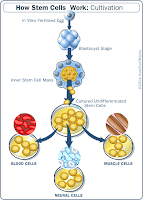
The mesenchymal stem cells are not sought after for nothing. They have a lot to offer especially in this age when degenerative diseases are enslaving many people and the conventional medicine is not offering the much needed break. Mesenchymal stem cells are sourced from either the adipose tissues or from the bone marrows and are described as a rare type of cells which are multi-potent and rich in medicinal properties. The unique properties of the mesenchymal stem cells have made them a target as therapy for various diseases and currently they have been used for treatment of arthritis among other conditions. They have been found to be also very effective in moderating the functions of dendritic cells, immune cells, B cells, natural killer cells, monocyte or macrophages, T cells, and neutrophils.

Just like the rest of the Stem cells, the mesenchymal stem cells are precursors of all cells and have the ability of forming cells of other types such as the hematopoietic, bone, endocrine organs, nervous and cardiovascular system, and cartilage and muscle tissue. It is the unique ability of the mesenchymal to shift shape and form other cells that they have been targeted for treatment of cardiovascular diseases.

Research on Mesenchymal stem cells for cardiac diseases treatment

Cardiac diseases have caused many deaths and are still among the leading causes of death worldwide. however the conventional medicine such as myocardial infarction haven’t helped much in treatment of these diseases and this led to the research on the possibility of the stem cells being used for this course. The Hematopoietic stem cells were the first to be researched on and used for clinical trial. In some trials the therapy worked while in others they didn’t give the much expected results and this led to consideration of other stem cell types.

The mesenchymal stem cells were the most promising of all the types owing to their strong paracrine function, which gives them potential immunomodulatory effects via anti-inflammatory and antiapoptotic actions. It is this property that may give them the ability to counteract the pathological mechanisms that are involved in various cardiac diseases. They can also be trans-differentiated into cardiomyocytes.

In 1999, Makino S and his colleagues first demonstrated the differentiation of MSCs into cardiomyocytes in vitro. Their research concluded that Cardiomyocytes can be generated from marrow stromal cells in vitro. Makino and his colleagues aren’t the only scientists to have worked on viability of MSCs ability to treat cardiac diseases, Wang JA and his colleagues did a trial that involved transplanting Allograftic bone marrow-derived mesenchymal stem cells into heart infarcted model of rabbit to renovate infarcted heart, they found out that the rabbits who had mesenchymal stem cells transplant had a lower mortality rate of 16.7% as opposed to the controls whose mortality rate was at 35%.

cardiovascular diseaseAnother study was done in 2005 by Hatton N and his counterparts, it involved transplanting purified cardiomyocytes differentiated from bone marrow MSCs in vitro into adult mouse hearts, after three months the transplanted cells had survived and were sloping in parallel to the cardiomyocytes of the recipient heart. These and other animal trials have all showed the ability of mesenchymal stem cells in treatment of cardiovascular diseases.

Through research, there has been a growing body of evidence that the mesenchymal stem cells have the multiple paracrine effects that even without cell replacement can affect cardiac remodeling, angiogenesis and cytoprotection hence are clinically beneficial.

The hopes were held even higher after another researcher; Ohnishi S showed that the mesenchymal stem cells have a role in inhibiting cardiac fibrosis by regulation of collagen synthesis by cardiac fibroblasts, as well as their effects on fibroblast proliferation.

conference

The mesenchymal stem cell therapy are the medical miracle of the 21century, you need to be updated their applicability in treatment of various diseases, visit www.awaremednetwork.com for more information about bone marrow transplant and stem cell transplantation. Dr. Dalal Akoury is an experienced doctor in integrative medicine; she will be able to assist. From the same website you can also visit http://www.integrativeaddiction2015.com and be updated on upcoming Integrative Addiction Conference 2015. The conference will deliver unique approaches to telling symptoms of addiction and how to assist patients of addiction.

Mesenchymal Stem Cells Role in Cardiovascular Diseases

Facebooktwitterpinterestlinkedin

Endothelial Progenitor Cells For Injured Tissue Repair

Endothelial Progenitor Cells Role on Injured Tissue

Endothelial Progenitor cellsThe endothelial progenitor cells are sourced from the bone marrow and have been found to have the ability to proliferate and differentiate in mature endothelial cells. However, these cells are not only sourced from the bone marrow alone but can also be found in large proportions in non-marrow sources like spleen which particularly has been found to be rich in EPCs. Isolated spleen-derived mononuclear cells, pre-selected with an endothelial cell medium, demonstrated endothelial cell characteristics and formed tubular-like structures. There are hopes that these cells can be used to sufficiently improve re-endothelialization and lessen neointima formation after carotid artery injury. In a trial, intravenous transfusion of spleen-derived EPCs in splenectomized mice showed special homing to the injured area. However, these results were only achieved when the host organ was removed. Thereafter, it was suggested that removal of the spleen prolonged the EPC time in circulation, which may result in a change of surface markers on the cell because of homing signals of the injury site thus favoring recruitment to the ischemic area rather than preferential homing to the organ of origin. With researchers still working to establish the mechanism with which the EPCs repair damaged tissues; there is hope that these cells can be useful in treatment of injured tissues.

Apart from the crucial role of maintaining the cardiovascular homeostasis that the vascular endothelial cells play, they also provide a physical barrier between the vessel wall and lumen. The endothelium also secretes a number of mediators that regulate platelet aggregation, coagulation, fibrinolysis, and vascular tone. However crucial functions the endothelium plays, it may lose its physiological properties and hence termed endothelial dysfunction. Incase this occurs it will not be able to promote vasodilation, fibrinolysis, and anti-aggregation as it normally does to ensure sound vascular health. Endothelial cells secrete several mediators that can alternatively mediate either vasoconstriction, such as endothelin-1 and thromboxane A2, or vasodilation, such as nitric oxide (NO), prostacyclin, and endothelium-derived hyperpolarizing factor. Nitric oxide is the chief contributor to endothelium-dependent relaxation in conduit arteries; however the contribution of endothelium-derived hyperpolarizing factor predominates in smaller resistance vessels.

Restores endothelial functions

The endothelial progenitor cells are essential as they are immature but with the ability of differentiating into mature endothelial cells and hence may help restore the endothelial functions in case of injuries that may result in endothelial dysfunction. The release of growth factors and cytokines may cause vascular injury and tissue ischemia which will in turn mobilize endothelial progenitor Cells which will specifically home in on the ischemic sites to stimulate compensatory angiogenesis once in the peripheral circulation.

Furthermore, endothelial progenitor cells forms part of a pool of cells able to form a cellular patch at sites of endothelial injury, thus working directly to achieve the homeostasis and repair of the endothelial layer. Endothelial progenitor cells have now been identified to be playing a major role in cardiovascular biology, as a matter of fact, the extent of the circulating EPC pool is now considered a mirror of cardiovascular health. Practically all risk factors for atherosclerosis have been linked to declining population of circulating endothelial progenitor cells or their dysfunction. The increase in population of the circulating endothelial progenitor cells have been linked to decreased cardiovascular mortality.

Endothelial progenitor cellsOne of the common diseases of the cardiovascular is atherosclerosis which is characterized by leucocyte infiltration, smooth muscle cell accumulation, and neointima formation. Basically atherosclerosis is a cardiovascular inflammatory disease. It has been shown that the activation and damage of the endothelial layer is what causes the development of lesions. Recent studies have disputed an earlier notion that the adjacent intact endothelium replaces the damaged endothelial cells. These studies have demonstrated the recruitment and incorporation of vascular progenitor cells into atherosclerotic lesions and thus providing evidence in support of the role of vascular cells in the development of the disease. The incorporation of endothelial progenitor cells into mice showed promising results. In a model of transplant atherosclerosis, regenerated endothelial cells from arterial grafts were found to originate from recipient circulating blood but not the remaining endothelial cells of the donor vessels. It was also found that the endothelial monolayer in a vein graft three days after surgery was completely lost and later replaced by circulating endothelial progenitors.

The endothelial progenitor cells are able to mediate vascular repair and attenuate the progression of this disease even when there is a continued vascular injury. treatment of chronic injuries have been done with endothelial progenitor cells in mice in trials , however the mechanism involved is still a mystery but it is clear that these EPCs contribute a big deal to the restoration of the injured endothelial layer. In one example, intravenous infusion of spleen-derived mononuclear cells increases endothelium-dependent vasodilatation in atherosclerotic mice, signifying that progenitor cells play an important role in repairing the vascular injury.

Finally, for more information about bone marrow transplant and stem cell transplantation, visit www.awaremednetwork.com. Dr. Dalal Akoury has been practicing integrative medicine for years; she will be able to help. You can also visit http://www.integrativeaddiction2015.com and learn more about the upcoming Integrative Addiction Conference 2015. The conference will deliver unique approaches to telling symptoms of addiction and how to assist patients of addiction.

Endothelial Progenitor Cells Role on Injured Tissue


Facebooktwitterpinterestlinkedin