Category Archives: Dr. Dalal Akoury

Young Women and Prescription Drug Overdoses

Young Women and Prescription Drug Overdoses- Analgesics (Pain killers)

Young

Young women are the major victims of prescribe painkillers

In medical terms, analgesics are drugs that alleviate pain. Analgesic drugs fall into broad classifications, such as non-steroidal anti-inflammatories (NSAIDs), COX-2 inhibitors, and opiates. Any type of painkiller is associated with specific risks, and it is the responsibility of drug manufacturers and prescribing healthcare providers to make patients aware of what those risks are so that patients can make informed choices. Prescribing physicians and dispensing pharmacists have a responsibility to ensure that patients receive maximum benefit of these drugs without suffering detrimental side effects.

Painkiller use is prescribed for either acute or chronic conditions. In cases of trauma, injury, or surgery, opiates or opiate derivatives are often the drugs of choice, as well as NSAIDs. In chronic conditions, such as arthritis, either COX-2 inhibitors or over the counter NSAIDs may be prescribed. For chronically painful conditions such as fibromyalgia, low back injury, or compound spinal fracture, opiate-derived analgesics are often the drug of choice when other medications fail to provide reliably effective relief.

Young Women and Prescription Drug Overdoses- Narcotic and non-narcotic painkiller

Both narcotic and non-narcotic painkiller use are associated with dangerous drug complications for the health of the people for whom they are prescribed of whom the majority are young women. It is estimated that prescription painkillers such as OxyContin, Hydrocodone, and Vicodin are responsible for five times as many deaths as illegal street narcotics. Prescription painkiller abuse is on the rise, and access to prescription narcotics has created a black market of addiction that was not anticipated by the drugs’ manufacturers who continue to produce these pharmaceuticals for legitimate medical use.

Physical quality of life can be damaged by painkiller use. The drugs may alleviate chronic pain due to injury, but the physical complications associated with painkiller use, such as hypertension, appetite and weight loss, associated neurological deficiencies, hypersomnia, and digestive disorders, may objectively outweigh the benefits accrued. Financial ruin due to acquiring a ready supply of the required drug on hand while tolerance limits increases after repeated use, and associated loss of self-esteem and social reputation, are other considerations that are not documented in a person’s medical record, buy still negatively impact a victim’s quality of life.

Intangible losses that cannot be tallied in monetary terms are the specialty of medical liability attorneys. Their role is to measure a client’s state of life before being subjected to a medication regimen and then compare it to their current state after they have followed a doctor’s orders. Dangerous drug lawyers are familiar with all the issues that are involved in pharmaceutical product liability law. They review the relevant records, literature and case law to ensure their clients receive due representation and compensation for damages incurred.

The physical effects of prescribed painkillers are amply documented. Selective and non-selective NSAIDs have been linked to increased incidence of liver damage, and to upper gastrointestinal bleeding that leads to metabolic disorders, anemia, and digestive dysfunction. In all this the biggest victims are the middle aged women

Young Women and Prescription Drug Overdoses- Investigations

Our young mothers, wives, sisters and daughters are dying at rates that we have never seen before according to the director of the Centers for Disease Control and Prevention. This problem is one of the few health issues CDC is working. Actually for many decades now, the overwhelming majority of U.S. overdose deaths were men killed by heroin or cocaine. But by 2010, about 40 percent of deaths reported were women most of them are middle-aged women who took prescription painkillers.

These alarming revelations of female overdose death rates are closely tied to a boom in the overall use of prescribed painkillers. The new report is the CDC’s first to spotlight how the death trend has been more dramatic among women.

Women may be more prone to overdoses because they’re more likely to have chronic pain, the prescribed painkillers, have higher doses, and use them longer than men, as reported by the director of CDC’s National Center for Injury Prevention and Control. But doctors may not recognize these facts about women, said John Eadie, director of a Brandeis University program that tracks prescription-drug monitoring in the USA.

Overdose deaths from prescription painkillers skyrocketed over the past decade despite no major increases in the need for prescription painkillers over the last 20 years, said Chris Jones, a health scientist at CDC. Doctors are prescribing medications more frequently for patients who may not need them, a trend in the medical profession that needs to be reversed immediately according to experts.

Women between 45 and 54 had the greatest increases in drug overdose deaths, likely because of dependence on prescription drugs to ease chronic pain, experts said.

Young Women and Prescription Drug Overdoses- Solutions

A jump was also seen in visits to hospital emergency rooms. Painkiller-related ER visits by women more than doubled between 2004 and 2010, the CDC found. These numbers alone, however, may not tell the whole tale. “If one looks carefully at the data it can be quickly seen that the vast majority of prescription overdose deaths occur as a consequence of individuals combining these drugs with another sedative,” according to experts who studies drugs and behavior. The solution to this prescription problem therefore lies in maximizing prescription monitoring programs.

Health care providers should responsibly prescribe prescription painkillers by monitoring patients for substance abuse and mental health problems, discussing patient treatment options that don’t involve prescription drugs, and discussing the risks and benefits of taking painkillers for chronic conditions.

Patients should use prescription drugs only as directed by doctors, discuss all medications they’re taking with their doctors, and dispose of medication after they’ve completed the prescribed treatment.

Women should also discuss pregnancy plans with their doctors to ensure infants do not develop heart malformations and become addicted to opiates.

Young Women and Prescription Drug Overdoses- Analgesics (Pain killers)


Facebooktwitterpinterestlinkedin

Natural Treatments for Lyme disease

Natural Treatments for Lyme disease-An alternative

Natural

Don’t be stressed up with Lyme disease, try the natural ways of treatment

When a patient exhibits a certain combination of these presenting symptoms, we automatically assume we’re dealing with Lyme and treat it as such: Persistent swollen glands, sore throat, fevers, chills, sore soles, especially in the morning, joint pain and/or swelling in fingers, toes, ankles, wrists, knees, elbows, hips, shoulders, numbness in the arms and/or legs, unexplained back pain, stiffness of the joints and back, muscle pain and cramps, obvious muscle weakness, twitching of the face or other muscles, confusion, difficulty thinking, difficulty with concentration, focus and reading, problem absorbing new information, searching for words and names, forgetfulness, poor short term memory, poor attention, disorientation: getting lost, going to wrong places, speech errors, such as wrong words or misspeaking, mood swings, irritability, depression, anxiety, panic attacks, psychosis (hallucinations, delusions), paranoia, bipolar, tremor, seizures, headaches, light and sound sensitivity, double, or blurry vision with floaters, ear pain, hearing problems, such as buzzing, ringing or decreased hearing, increased motion sickness, vertigo, spinning, off balance, “tippy” feeling, lightheadedness, wooziness, unavoidable need to sit or lie, fainting, flu-like feeling, tingling, numbness, burning or stabbing sensations, shooting pains, skin hypersensitivity, facial paralysis-Bell’s Palsy, dental pain, TMJ, neck creaks and cracks, stiffness, neck pain, fatigue, tiredness, poor stamina, insomnia, fractionated sleep, early awakening, excessive night time sleep, napping during the day, unexplained weight gain or loss, unexplained hair loss, pain in genital area, unexplained menstrual irregularity or milk production, breast pain, irritable bladder, erectile dysfunction, loss of libido, queasy stomach, nausea, heartburn, stomach pain, constipation, diarrhea, constipation alternating with diarrhea, low abdominal pain, cramps, heart murmur or valve prolapse, heart palpitations or skips, “Heart block” on EKG, chest wall pain or sore ribs, head congestion, breathlessness, “air hunger,” unexplained chronic cough, night sweats, exaggerated symptoms or worse hangover from alcohol, skin rashes, conjunctivitis (pinkeye), herpes, Zoster/Shingles the list is endless.

It is therefore confusing because a Lyme sufferer may not display the telltale rash (erythema migrans), a painless“ bull’s eye” shaped blotch on the skin the size of a silver dollar, or the more diverse larger rash, or any at all. When the rash is present, there is no doubt that a person has Lyme. However, the rash is only present in about 50% of the cases and may take up to 1 month to even appear. To add insult to injury, many Lyme patients don’t even remember getting bitten as the nymph is very small (about the size of a poppy seed) and can easily go unnoticed.

There are mixed opinions about treatments and simply because someone is listed as a Lyme Literate doctor, it doesn’t necessarily mean that they do anything different than the conventional Doctors when it comes to treatment usually it is antibiotics… although, Lyme Literate Doctors may recognize the importance of recommending some of the tests and symptoms involved in the process.

Naturally, there are splits in the orthodox medical community as well as the alternative community, which have led to divergent diagnoses and treatment of Lyme disease, with the real loser being the patient showing Lyme-like symptoms. These patients are often trapped between opposing medical opinions. Indeed, the severity and treatment of Lyme disease is often complicated due to late diagnoses, failure of antibiotic treatment, and immune suppression in the patient (sometimes resulting from inappropriate treatment with steroids

Taking antibiotics alone isn’t a good idea when knocking out this elusive ailment. Many expert healers say Lyme disease treatment should also include botanicals and exercise. Nevertheless Lyme disease is a complicated infection, tough to diagnose and even harder to treat if doctors miss an early diagnosis, which is all too often the case. Lyme disease treatment is tricky because the most popular blood tests used in most doctors’ offices to detect the disease miss about 55 percent of Lyme cases. If and when a patient finally is diagnosed, it’s sometimes by a clinical evaluation of the symptoms, ones that often mimic other ailments like fibromyalgia, chronic fatigue, irritable bowel syndrome, rheumatoid arthritis, and even Alzheimer’s disease.

Complicating matters even further, the hodge-podge collection of symptoms often waxes and wanes and moves from one bodily system to another, making it even harder for doctors to effectively diagnose and treat. Headaches, migrating pain, bowel problems, uncharacteristic mood swings, panic attacks, and sleep disorders are just a few of the symptoms commonly reported in Lyme patients.

Natural Treatments for Lyme disease-Antibiotics Aren’t Always the Only Answer

While antibiotics and other prescription medicines are certainly helpful in treating the disease and the all-to-common tick-borne co-infections that often hitchhike into your body through a tick bite, experts in natural medicine say there’s also a place for holistic remedies in the treatment and management of Lyme disease, particularly in Lyme patients battling a chronic infection and its side effects. Antibiotics alone may not suffice because Lyme disease is caused by an intracellular spirochete bacterium called Borrelia burgdorferi. ”

Intracellular here means that the spirochete gets into the cell and therefore is not always available to the antibiotics. “The cell membrane inadvertently protects the bacteria and shields it from the antibiotics. The bacteria can also hide dormant in the nervous system, among other places, where antibiotic drugs can’t reach them.” The bottom line is that many natural treatments can help heal the body by knocking out the infection and reducing inflammation while also getting an injured immune system back on track. Some of the natural way may include the following.

Natural Treatments for Lyme disease-Natural Ways to Deal with Lyme

Acupuncture: While researchers admit more research is warranted, acupuncture appears to be a promising way to help reduce or eliminate pain brought on by Lyme disease.

Lyme-killing plants: According to the report, herbs like samento, banderol, andrographis, Japanese knotweed/resveratrol, smilax, cat’s claw, and Stephania all target Lyme and related tick-borne infections. Be sure to talk to a doctor knowledgeable in integrative medicine for more info on taking these herbs.

Have tea time: Green tea compounds, along with curcumin, a component of the spice turmeric, are known to reduce oxidative stress and help aid in traditional antibiotic treatment.

Be tested for deficiencies: Zinc, B, and D vitamin deficiencies could slow down Lyme recovery, so be sure to ask your doctor to test for these, and improve your diet or supplement accordingly to bring your numbers up to healthy levels.

Probiotics: Foods may help replenish beneficial bacteria in the gut that are wiped out by antibiotic Lyme disease treatment. Organic yogurt, kefir, and even fermented vegetables are good sources of probiotics.

Exercise: Even small concentrations of oxygen can help destroy Lyme bacteria in the body. Although Lyme typically zaps people’s energy, intense exercise during and after treatment can help keep the disease at bay.

Inflammation annihilators: Natural compounds that ease inflammation, such as curcumin, modified citrus pectin, and Tibetan Herbal Formula. First and foremost, a low-glycemic-index diet is a must because carbohydrates, including sugar, fuel the Lyme germs. This means ditching most processed foods and avoiding any added sugar. “Understanding the person, and actively supporting the person’s general health with emphasis on their immune system, circulation, reduced inflammation, and detoxification can be very helpful

Natural Treatments for Lyme disease-An alternative


Facebooktwitterpinterestlinkedin

Signs and Symptoms of Lyme disease

Signs and Symptoms of Lyme disease-Elaborate

symptoms

the signs and symptoms of Lyme disease may take long to appear but when they come, the form patches on the skin.

The signs and symptoms of Lyme disease vary and usually affect more than one system. The skin, joints and nervous system are affected most often. In some people, the rash may spread to other parts of the body and, several weeks to months after you’ve been infected, you may experience:

  • Joint pain. You may develop bouts of severe joint pain and swelling. Your knees are especially likely to be affected, but the pain can shift from one joint to another.

Signs and Symptoms of Lyme disease-How Is Lyme disease Transmitted?

Lyme disease is transmitted through a bite from a specific type of tick. The animals that most often carry these insects are white-footed field mice, deer, raccoons, opossums, skunks, weasels, foxes, shrews, moles, chipmunks, squirrels, and horses. The majority of these ticks have been found in New York, Connecticut, Massachusetts, Maryland, New Jersey, Minnesota, and Wisconsin.

What are Signs and Symptoms of Lyme disease?

These signs and symptoms may occur within a month after you’ve been infected:

  • Rash. A small, red bump may appear at the site of the tick bite. This small bump is normal after a tick bite and doesn’t indicate Lyme disease. However, over the next few days, the redness may expand forming a rash in a bull’seye pattern, with a red outer ring surrounding a clear area. The rash, called erythema migrans, is one of the hallmarks of Lyme disease. Some people develop this rash at more than one place on their bodies.
  • Flu-like symptoms. Fever, chills, fatigue, body aches and a headache may accompany the rash.

However in the early stages of Lyme disease, you may experience flu-like symptoms that can include a stiff neck, chills, fever, swollen lymph nodes, headaches, muscle aches, and joint pain. You may also experience a large, expanding skin rash around the area of the tick bite. In more advanced disease, nerve problems and arthritis, especially in the knees, may occur.

Here are some more details:

  • Erythma migrans: is the telltale rash which occurs in about 70% to 80% of cases and starts as a small red spot that expands over a period of days or weeks, forming a circular, triangular, or oval-shaped rash. Sometimes the rash resembles a bull’s-eye because it appears as a red ring surrounding a central clear area. The rash, which can range in size from that of a dime to the entire width of a person’s back, appears between three days and a few weeks of a tick bite, usually occurring at the site of a bite. As infection spreads, several rashes can appear at different sites on the body.

Erythema migrans is often accompanied by symptoms such as fever, headache, stiff neck, body aches, and fatigue. These flu-like symptoms may resemble those of common viral infections and usually resolve within days or a few weeks.

  • Arthritis. After several weeks of being infected with Lyme disease, approximately 60% of those people not treated with antibiotics develop recurrent attacks of painful and swollen joints that last a few days to a few months. The arthritis can shift from one joint to another; the knee is most commonly affected and usually one or a few joints are affected at any given time. About 10% to 20% of untreated patients will go on to develop lasting arthritis. The knuckle joints of the hands are only very rarely affected.
  • Neurological symptoms. Lyme disease can also affect the nervous system, causing symptoms such as stiff neck and severe headache (meningitis), temporary paralysis of facial muscles (Bell’s palsy), numbness, pain or weakness in the limbs, or poor coordination. More subtle changes such as memory loss, difficulty with concentration, and a change in mood or sleeping habits have also been associated with Lyme disease. People with these latter symptoms alone usually don’t have Lyme disease as their cause.

Nervous system abnormalities usually develop several weeks, months, or even years following an untreated infection. These symptoms often last for weeks or months and may recur. These features of Lyme disease usually start to resolve even before antibiotics are started. Patients with neurologic disease usually have a total return to normal function.

  • Heart problems. Relatively small number of people of about less than one out of 10 Lyme disease patients develops heart problems, such as an irregular, slow heartbeat, which can be signaled by dizziness or shortness of breath. These symptoms rarely last more than a few days or weeks. Such heart abnormalities generally appear several weeks after infection, and usually begin to resolve even before treatment.
  • Other symptoms. Less commonly, Lyme disease can result in eye inflammation and severe fatigue, although none of these problems is likely to appear without other Lyme disease symptoms being present.

Signs and Symptoms of Lyme disease-When to see a doctor

If you’ve been bitten by a tick and experience symptoms: Only a minority of deer tick bites leads to Lyme disease. The longer the tick remains attached to your skin, the greater your risk of getting the disease. If you think you’ve been bitten and experience signs and symptoms of Lyme disease — particularly if you live in an area where Lyme disease is prevalent — contact your doctor immediately. Treatment for Lyme disease is most effective if begun early.

See your doctor even if the symptoms disappears: it’s important to consult your doctor even if signs and symptoms disappear because the absence of symptoms doesn’t mean the disease is gone. Left untreated, Lyme disease can spread to other parts of your body from several months to years after infection causing arthritis and nervous system problems. Ticks also can transmit other illnesses, such as babesiosis and Colorado tick fever.

Finally Lyme disease imitates a variety of illnesses and its severity can vary from person to person. If you have been bitten by a tick and live in an area known to have Lyme disease, see your doctor right away so that a proper diagnose can be made and treatment started.

Signs and Symptoms of Lyme disease-Elaborate


Facebooktwitterpinterestlinkedin

Prevention of Lyme Disease

Prevention of Lyme Disease-It is possible

Prevention

whatever it take avoid such places and prevent Lyme disease from attacking you and family

As it is always said that prevention is better than cure, it will be very important to take keen interest in the prevention of this problem. The best way to prevent Lyme disease would be to avoid areas where deer ticks live, especially wooded, bushy areas with long grass. You can reduce your risk of getting Lyme disease by taking some simple precautions like:

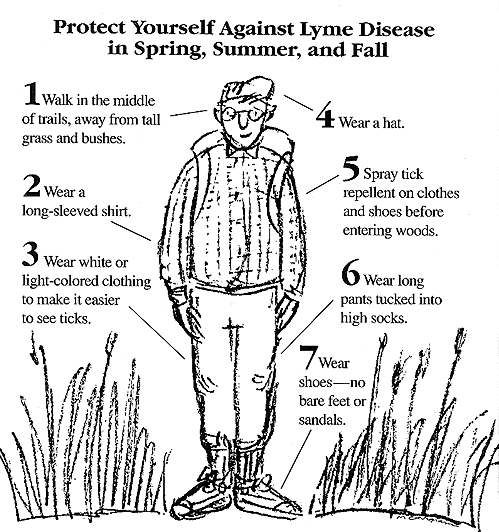
  • Wear long pants and long sleeves. When walking in wooded or grassy areas, wear shoes, long pants tucked into your socks, a long-sleeved shirt, a hat and gloves. Try to stick to trails and avoid walking through low bushes and long grass. Keep your dog on a leash.
  • Use insect repellents. Apply an insect repellent with a 20 percent or higher concentration of DEET to your skin. Parents should apply to their children, avoiding their hands, eyes and mouth. Keep in mind that chemical repellents can be toxic, so follow directions carefully. Apply products with permethrin to clothing or buy pretreated clothing.
  • Do your best to tick-proof your yard. Clear brush and leaves where ticks live. Keep woodpiles in sunny areas.
  • Check yourself, your children and your pets for ticks. Be especially vigilant after spending time in wooded or grassy areas. Deer ticks are often no bigger than the head of a pin, so you may not discover them unless you search carefully. It’s helpful to shower as soon as you come indoors. Ticks often remain on your skin for hours before attaching themselves. Showering and using a washcloth may be enough to remove any unattached ticks.
  • Don’t assume you’re immune. Even if you’ve had Lyme disease before, you can get it again.
  • Remove a tick as soon as possible with tweezers. Gently grasp the tick near its head or mouth. Don’t squeeze or crush the tick, but pull carefully and steadily. Once you’ve removed the entire tick, dispose of it and apply antiseptic to the bite area.

Prevention of Lyme disease-How to reduce Tick bites

  • Avoid tick-infested areas, such as leaf litter under trees. Avoid brushing against long grasses and brush on edges of paths. Don’t sit on stumps or fallen logs.
  • Wear light-colored long pants and long sleeves so you can easily see any ticks.
  • Tuck shirt into pants and tuck pants into socks.
  • Use DEET on skin and treat clothing with spray containing permethrin.
  • Do a thorough tick check upon returning inside and for several days following exposure.
  • Check bedding for several days following exposure for ticks that drop off.
  • Ticks, especially nymphal ticks, are tiny. Find and remove them before they bite.

Prevention of Lyme disease-What to do if you are bitten

  • Use fine-point tweezers or a special tick-removing tool. Grasp the tick as close to the skin as possible. If you don’t have tweezers, protect your fingers with a tissue.
  • Pull the tick straight out with steady, even pressure to view a Tick’s Mouth and why it is so important to pull out the tick correctly.
  • Avoid squeezing the tick, breaking it, or allowing any blood to remain on your skin.
  • Place the tick in a small plastic bag or vial with blades of grass, leaf, or moist (not wet) piece of tissue.
  • Label the bag with your name, date, site of bite and how long tick was attached.
  • Have the tick identified and tested by a lab, health department or veterinarian.
  • Wash your hands, disinfect the tweezers and bite site.
  • Educate yourself about tick-borne diseases and consult a doctor to see if treatment is warranted.

Considerations for Prophylactic (Preventive) Treatment

  • The tick infection rate in the area where you acquired the tick. An area may still labeled as “no risk” despite lack of scientific studies.
  • The relative risk of transmission, depending on whether the tick was a nymph or adult, duration of attachment and how it was removed.
  • Whether the tick tested positive for a tick-borne infection.
  • The Lyme germs may spread widely in the body, including to the brain, within hours/days.
  • The cost of prophylactic treatment vs. risk of infection.
  • The risks and benefits of prophylactic treatment vs. risks of infection.

Other protective ways

  • Reduce ticks on your property by
  • pruning trees
  • clearing brush
  • removing litter
  • Mowing grass short, and letting it dry thoroughly between watering.
  • Move shrubbery and overgrowth farther away from areas frequented by people.
  • Make your property unattractive to animals that are hosts to ticks by:
  1. Eliminating birdfeeders, birdbaths, and salt licks;
  2. Erecting fencing around the property;
  3. clearing away woodpiles, garbage, and leaf piles;
  4. Removing stonewalls that provide homes to wildlife.
  5. Have your property chemically treated.
  6. You can kill ticks on your property by applying chemicals. Seek professional advice before application. Carefully timed applications increase effectiveness.

Also Consider These Important Facts:

  • If you tuck pants into socks and shirts into pants, be aware that ticks will climb upward to hidden areas of the head and neck, so spot-check clothes frequently.
  • Clothes can be sprayed with DEET or treated with permethrin. Follow label instructions carefully.
  • Upon returning home, clothes can be put in a high temperature dryer for 20 minutes to kill any unseen ticks.
  • Any contact with vegetation, even playing in the yard, can result in exposure to ticks. Frequent tick checks should be followed by a whole-body examination and tick removal each night. This is the single most effective method for prevention of Lyme disease.

Prevention of Lyme Disease-Safely removal Tick

If you DO find a tick attached to your skin, do not panic. Not all ticks are infected, and your risk of Lyme disease is greatly reduced if the tick is removed within the first 36 hours. To remove a tick, ensure that you:

  • Use a pair of pointed tweezers to grasp the tick by the head or mouth parts right where they enter the skin. DO NOT grasp the tick by the body.
  • Pull firmly and steadily outward. DO NOT jerk or twist the tick.
  • Place the tick in a small container of rubbing alcohol to kill it.
  • Clean the bite wound with rubbing alcohol or hydrogen peroxide.
  • Monitor the site of the bite for the next 30 days for the appearance of a rash. If you develop a rash or flu-like symptoms, contact your health care provider immediately. Although not routinely recommended, taking antibiotics within three days after a tick bite may be beneficial for some persons. This would apply to deer tick bites that occurred in areas where Lyme disease is common and there is evidence that the tick fed for more than one day. In cases like this you should discuss the possibilities with your doctor or health care provider.

Prevention of Lyme Disease-It is possible


Facebooktwitterpinterestlinkedin

How common is addiction in healthcare

How common is addiction in healthcare-Addressing Specialties risks

Healthcare

As many as 10% of those in healthcare are battling addiction, professionals battling with drug addiction is seem extreme .

Physicians treated for addiction have recently become the focus of high quality, evidence based outcome research published in peer-reviewed journals. The results of this research indicate that the treatment of physicians is profoundly effective when properly executed. As a policy there are  three important areas of addiction among healthcare and other licensed professionals, including issues related to stigma, the effective response to the problem of addiction among professionals, and the interrelation and integration of medical, legal, and sociological issues regarding addiction in this particular population.

Several factors are involved in the etiological differences of addiction as it manifests in the special population of healthcare and other licensed professionals.

First, one group of professionals (healthcare providers) have greater access to addictive drugs in their workplace, which can accelerate and complicate the onset and progression of the disease.

Secondly, healthcare professional training creates a level of comfort and an associated false sense of immunity to the dangers of drug use. Having technical knowledge about the pharmacology of drugs does not protect susceptible individuals from becoming addicted to such drugs and, in fact, may actually predispose susceptibility.

Thirdly, all healthcare and other licensed professionals with addictive illness face tremendous prejudice based on stigma and fear which make them hesitant to admit a problem or seek assistance. Lastly and importantly, as with other safety-sensitive occupations, healthcare and other licensed professionals with untreated, potentially impairing conditions have the potential to place the public at risk.

Many individuals and agencies play a role in the care and coordination of the addicted healthcare and other licensed professionals. For the purposes of this article, we have focused on four critical entities:

  1. The population of healthcare and other licensed professionals with the disease of addiction.
  2. The specialty treatment programs where these persons receive clinical care.
  3. The various Physicians / Professionals Health Programs (PHPs) which provide continuing care monitoring and earned advocacy.
  4. State-specific license agencies and other comparable regulatory agencies.

These entities, as defined, have an interrelated and often symbiotic role in both the successful rehabilitation and recovery of the addicted professional, and the safety and welfare of the public.

How common is addiction in healthcare-The Addicted Professional

The disease of addiction produces characteristic behaviors. The characteristics and circumstances of the patient who is, himself or herself, a professional are unique. These issues be considered and managed during treatment and post-treatment recovery. These policies address physician patients who are part of a professional cohort; but include other licensed professionals including, but not limited to, nurses, physician assistants, pharmacists, psychologists, commercial pilots, attorneys, law enforcement officials, as well as any cohort who provides a public service that could impact the public health, safety, and welfare. Each of these groups is unique in the perception of their disease, their experience of addiction-induced shame, and the necessary coping skills to ensure successful long-term recovery.

Some of these professional groups share strong similarities; however, each specific group should be treated by providers knowledgeable, skilled and experienced in understanding the distinctive educational background, psychological characteristics, work environment, professional culture, social factors, and specific licensure and regulatory agency processes related to each particular cohort of addiction treatment recipients.

How common is addiction in healthcare-Addiction Treatment Programs for Healthcare (ATPs)

Addiction Treatment Programs for healthcare and other licensed professionals specialize in the diagnosis and treatment of addictive and/or mental illnesses in healthcare and other licensed professionals. These clinical programs possess expertise in dealing with issues specific to these populations of ill individuals; some ATPs have expertise in one or more subjects of professionals. ATPs provide a multidisciplinary spectrum of therapeutic services, addressing the biologic, psychosocial, family, and spiritual components of these disease states.

One important element in specialized Addiction Treatment Programs is the presence of a cohort of like-professionals. This peer relating during treatment decreases the isolation and enhances the interdependent learning necessary for effective treatment. ATPs for professionals have extensive experience with and knowledge of the stress and triggers in the work and home environment specific to the professional cohort being treated. This information is used to focus the treatment on cohort-specific issues, encourages reintegration into a healthy home and work environment, and ultimately promotes a sustained successful recovery. The most comprehensive programs manage multiple psychiatric diseases, complex medical conditions, psychological co-morbidity along with a broad spectrum of addictive disorders.

Many facilities that treat addicted professionals provide comprehensive evaluation services as well. Some evaluation programs are organized as separate entities from ATPs, while others are integrated with treatment facilities. Evaluation centers must exhibit a proven track record in understanding the complex multifunctional and insidious nature of addiction among healthcare and other licensed professionals. They should utilize a multidisciplinary team of individuals with specific expertise in distinct but interrelated specialties.
How common is addiction in healthcare-Professionals Health Programs (PHPs)

A Professionals Health Program has mutually symbiotic dual roles of enhancing public safety and facilitating the successful rehabilitation and practice re-entry of healthcare and other licensed professionals with potentially impairing medical conditions. Professionals Health Programs (PHPs) provide a confidential conduit for ill professionals to access a comprehensive evaluation and any necessary subsequent treatment.

When a professional with a potentially impairing illness becomes involved with a Professionals Health Program (PHP) and no harm to the public has been identified, he or she is ideally enrolled in an alternative pathway to professional discipline. PHPs provide the availability of a non-disciplinary alternative with rehabilitation and accountability being emphasized, facilitated, and carefully documented over time. The PHPs continuous, skilled and documented monitoring of the professionals recovery status and associated earned advocacy further promotes the public safety.

PHPs are exceptionally distinct in their ability to provide early identification, intervention, and referral for evaluation and/or treatment. They also conduct three types of post-treatment monitoring: behavioral, chemical, and work-site evaluations. Their success is largely attributable to this tri-partite model of recovery monitoring. The intervention, referral and post-treatment monitoring services offered by PHP’s are generally conceptualized as being distinct from the clinical services offered by ATPs.

PHPs educate the medical community about addiction among professionals, the risks of addiction in professionals and the recognition of the subtle signs and symptoms of addiction in the workplace. Such education and prevention services further enhance public safety by encouraging earlier detection and referral to treatment when appropriate.
How common is addiction in healthcare-Regulatory Agencies (RAs)

These are agencies of state government charged with credentialing and granting licenses to professionals and assuring to the public at large that the conduct of the professional meets professional and statutory standards. State statutes mandate the regulation of selected professions to ensure the delivery of quality healthcare or other services necessary to the public health, safety, and welfare. They investigate the practice of licensees and have authority to address those who violate the state’s professional practice acts or comparable legislation. Their primary mission is to protect the public.

Addiction rehabilitation requires an understanding of the inter-organizational complexities along with associated expertise in the interrelated management of addicted professionals to the benefit of the public we serve. This understanding of addiction rehabilitation among professionals facilitates the interaction by and between Addiction Treatment Programs, Regulatory Agencies, and the Professionals Health Programs.

How common is addiction in healthcare-Addressing Specialties risks


Facebooktwitterpinterestlinkedin