Category Archives: Dr. Dalal Akoury

Effects of Alcohol addition, abuse and dependency

Effects of Alcohol addition, abuse and dependency-Part Two

Alcohol

What alcohol addiction can do to your life and that of others can be very painful if not treated

Having discussed what alcohol is and some of its uses in the previous article, we want to continue with the series of alcohol addiction concentrating on the effects of alcohol and evidences or signs of alcohol addiction. Being the major cause of addiction affecting all people in indiscriminately it is important that we are well informed of the effects and signs of alcohol addiction so that we can take timely precaution and live a healthy life.

Effects of Alcohol addition, abuse and dependency-Effects of alcohol

We actually don’t have a uniform way alcohol affects people, the effects of alcohol vary immensely according to gender, age, weight, height and other similar factors. For instance a state of drunkenness would include one being too talkative and sometimes reckless in speech, staggering or difficulty walking upright, double vision and poor muscle control. However when it becomes extreme, drunkenness will cause vomiting, inability to stand, a state of coma and incapability to communicate well. It is in this case that some people appear to be less affected than others although excessive use can affect anyone. Alcohol will affect you in different ways and these will depend on the following:

  • Ones sensitivity to alcohol
  • Consuming alcohol on an empty stomach
  • The kind of food eaten and to what quantity
  • The quantity of alcohol you drink
  • The intensity and consistency of your drinking
  • How long you have been drinking
  • Your environment at that time
  • Have you been on drugs like cannabis while drinking?

The effects of alcohol may cause you just after taking a few drinks may release your inhibitions making you feel confident and self-assured while on the other hand the same quantity of alcohol may make you feel depressed, angry and possibly suicidal. These effects are very common in than in men though as both sexes grow older they are affected in the same way. Signs of alcohol intoxication include a flushed, reddened face, slower reactions and reduced inhibitions. If a person experiences extreme drunkenness then there is a great risk that they may vomit in their sleep and choke on this vomit. Overindulgence in alcohol creates an unpleasant reminder known as hangover which is the body’s reaction to intoxication and is partly caused by dehydration and the production of a toxic chemical as alcohol is broken down by your liver. Symptoms of a hangover include headaches, nausea and possibly vomiting; shakiness, tiredness and thirst. The effects will have disappeared by either the end of the day or the next. But it is when this crosses the line from an occasional event to a regular event that signals a drinking problem.

Effects of Alcohol addition, abuse and dependency-Alcohol addiction

This comes as a result of the excessive alcohol consumption to point where the drinker becomes unable to control their consumption and they are now driven by the alcohol thirst which leads to alcoholism. Therefore alcoholism is the consumption of or preoccupation with alcoholic beverages to the extent that this behavior interferes with the alcoholic’s normal personal, family, social, or work life. The chronic alcohol consumption caused by alcoholism can result in psychological and physiological disorders.

  • The primary effect of alcoholism is to encourage the alcoholic to drink at times and in amounts that are damaging.
  • The secondary damage caused by an inability to control one’s drinking manifests in many ways.
  • It is common for a person suffering from alcoholism to drink well after physical health effects start to manifest.
  • The physical health effects associated with alcohol consumption include cirrhosis of the liver, pancreatic, polyneuropathy, alcoholic dementia, and heart disease, increased chance of cancer, nutritional deficiencies, sexual dysfunction, and death from many sources.

Effects of Alcohol addition, abuse and dependency-Why do people become alcoholics

Human beings are social beings capable of making decisions and choices on their own because we are different it may not be easy to get a straight answer to this question. However when these choices are made some will be good and productive while others will be bad.

  • The choices are influenced by a variety of factors like our background, family upbringing, lifestyle, genetics, environment etc. if for example a family has history of alcoholism either of your parents or grandparents was an alcoholic then this is a risk factor.
  • If you suffer from a mental illness such as anxiety, depression or manic depression then you may use alcohol as a way of coping with your illness.
  • It can also be a form of escapism.
  • If you work in an environment which has a ‘drinking culture’ then this is another risk factor.
  • Also, stressful life events such as divorce, bereavement or moving house can all trigger alcohol abuse.

It is difficult to say when social drinking becomes a problem which eventually leads to an addiction (alcoholism). However the first step for these people is recognizing that their drinking is out of control.

Effects of Alcohol addition, abuse and dependency-How to know if you have an alcohol addiction

Each person needs to have general knowledge of how alcoholism gets into one’s life. The signs of a drinking problem or ‘alcohol abuse’ may include:

  • Being unable to stick to one drink
  • Guilt or feeling ashamed about your drinking
  • Sudden change of attitude like lying to family or friends about your drinking
  • Having a desire to drink in order to relax or feel confident
  • Finding that you drink more than is good for you
  • Experiencing ‘blackouts’ or forgetting what you did when drunk
  • Your family and friends are getting worried about your drinking
  • Need a drink to get through the day or to cope with your illness

The journey from problem drinking to full blown alcoholism happens over a period of time. However if detected at an early stage then it can be prevented. Having a problem with alcohol doesn’t mean that you will automatically become an alcoholic but it does increase the risk of that happening. What happens is that you develop a tolerance to alcohol over a period of time, which is a sign that your body is becoming used to alcohol and demands it in order for you to function normally. It can start off by a few drinks several times a week, then drinking every day or ‘binge drinking’ which can result in alcoholism.

Alcoholism doesn’t happen overnight: it is a gradual process in which the drinker passes through three stages to get to this point. The three stages of alcoholism are:

  • Stage one: no obvious signs of damage yet. The drinker is still in control but is gradually developing a tolerance to alcohol.
  • Stage two: problems have started to occur. The drinker is experiencing physical and mental effects of their habit and has developed alcohol abuse.
  • Stage three: this is the final stage in the journey. The drinker has become a full blown alcoholic and is unable to stop drinking.

There are warning signs of alcoholism which include an increased tolerance; finding that you can drink more than your friends or colleagues; drinking to ease withdrawal symptoms such as shakiness or anxiety and denying or attempting to justify that you’re drinking to family, friends and colleagues. When this happens to you then you need help which must begin with you acknowledging that you have a problem. Step two would be to seek professional help from experts and this is where doctor Dalal Akoury and her time of experts get involved. Doctor Akoury is the founder of AWAREmed Health and Wellness Resource Center. She is offering exclusive NER Recovery Treatment to other physicians and health care professionals through training, clinical apprenticeships, webinars and seminars. Your addiction problem is well under her vast experience in addiction treatment. With her you will get real time natural treatment that will ensure your life back and be well again to enjoy life to the fullest. Having looked at the effects and bit of signs of alcoholism in this article, I want to invite you to continue staying on the link and get to know the treatment segment in our next article.

Effects of Alcohol addition, abuse and dependency-Part Two


Facebooktwitterpinterestlinkedin

Drug Addiction Crime or Disease , Drug Addiction and Crime

Addiction and Crime- Drug Addiction Crime or disease


Rape is a crime very much associated with drug addiction people under the influence of drugs are mainly rapist

Rape is a crime very much associated with drug addiction people under the influence of drugs are mainly rapist

Discussing this topic can be very tricky owing to the kinds of legal systems we have in different counties. Drug addiction crime or disease the relationship between addiction and crime is very complex and is believed to be very provocative because the law says that law breakers must be brought to book and face the full force of the law in a court of law. Because addiction is a condition that is treatable it becomes difficult to marry the two. While it is true that many addicts engage in criminal activities to finance their habit but there also some many people who are just addicted to the criminal act itself, drug addiction crime or disease is a continuous debate. So we have people who wouldn’t ordinarily commit crime but have only turned to it out of an act of desperation and then there are those people who have already committed crime and then use this to fund their habit bringing us to the question should we punish or offer treatment?

The question is: do we punish people who commit crime to fund their addiction by locking them up in the prisons or do we help them by sending them into rehabilitation centers for treatment?  drug addiction crime or disease this is a subject of debate and people will debate on it differently. Some will the option of offering treatment to the drug addicts as going soft on criminals and for sure they have very good justification to think so however there is a difference between the two and if treatment helps them to kick their bad habit and prevent re-offending the society then it has to be considered as an option.

The grieving society may feel that people who have committed criminal offences be made to pay for their crime irrespective of whether they were under the influence of drugs at the time of crime or not but medically people who have committed crimes in order to pay for their addiction may surely benefit more from help and administered treatment rather than having then locked up in the prisons. The challenge or problem with prison is that while these offenders are confined in it is believed that they should not have any access to the drugs but many at times this is not the case, drugs can be accessed in prison through corrupted officers who smuggle in drugs to the prisoners whilst they are confined which means that they are able to continue with their bad addictive habit. This can only means that they are unlikely to stop their addiction and will likely re-offend once they leave prison after serving their team.

The costs of dealing with this are prohibitively expensive so a better option may be to treat addicts rather than punishing them. There is evidence to show that addicts are less likely to re-offend if they receive proper treatment from addiction experts like doctor Dalal Akoury who is also the founder AWAREmed Health and Wellness Resource Center offering addiction treatment.

Drug Addiction Crime or Disease , Addiction and Crime Legalize drugs

Drug dealing is big business not just in your country but around the world. There are organized drug cartels in many countries that use the proceeds of this to fund criminal activity which means that there is an ongoing battle between them and the authorities which is likely to continue, drug addiction crime or disease is certainly a medical and legal dilemma.

One idea put forward is that of legalizing drugs. Supporters of this argue that it would reduce crime especially drug-dealing as addicts wouldn’t have to resort to criminal behavior to fund their habit. The costs of drugs could be controlled and set a rate which addicts could afford without having to steal in order to do so. Plus these drugs could be taxed and the revenue from these used to fund drug rehabilitation treatment.

There is also the possibility that doing this will lessen the attraction. Many of us enjoy something which is considered to be ‘forbidden fruit’ and part of that attraction is the knowledge that what we are doing has an element of risk.

However, opponents of this claim that it would lead to many more addicts, which would place an extra burden on taxpayers, the authorities and the State as a whole.

What do you do with people who are addicted to committing an offence? They may or may not be addicted to drugs but they still have an addiction, which in this case is to crime. There is no easy answer to this and work is still being undertaken into how this might be solved. The questions raised are very pertinent and cannot just be ignored because it is always said that prevention is better than cure. You do not willfully create a problem because you have the mechanisms of solving it, drug addiction crime or disease will continue to be a hard debate.

Drug Addiction Crime or disease , Addiction and Crime Prevention measures

It has been suggested that unless we can change human nature itself then crime will always be with us. Crime is normally first propagated in the mind before it’s execution and so the wellness of the mind is a perfect remedy for everyone. While we appreciate that drug addiction is well connected with crime, the two can be separated and each is dealt with individually. It will be an uphill task for the authority to ensure that drug barons are arrested because many of them are always walking free while their little clients are the ones being arrested and when they are arrested, the have the resources to buy their way out into the street again. This element of corruption must stop for our society to be safe.

Finally the option of treatment is the best and it will need experts for it to be helpful to addict. Dr. Dalal Akoury is an expert offering her exclusive NER Recovery Treatment to other physicians and health care professionals through training, clinical apprenticeships, webinars and seminars. Your problem can only be safe in her care you lose nothing by calling her to start you full journey of recovery.

Drug Addiction Crime or disease , Addiction and Crime-Drug Addiction


Enhanced by Zemanta
Facebooktwitterpinterestlinkedin

The Addicted Brain

The addicted brain-How Drugs Affect the whole system

Brain

Your brain is all you need to be of sound mind protecting it from drug addiction is a step in the right direction

Generally drug addiction and all kind of addiction for that matter have been consistent problems for a long time. It is so because of its lasting effect in the brain functions which are not easy to correct. Take for example in the US where the scourge is prevalent how many brains are addicted to drugs, statistics has it that about 2 million are heroin and cocaine addicts, 15 million alcoholics and several millions are cigarette smokers. Several decades ago this was a disaster because little was known about addiction but today a lot has been established and that knowledge is beginning to influence addiction treatment and prevention. This therefore brings us to the question why opium?

The addicted brain-Why does the brain prefer opium to broccoli

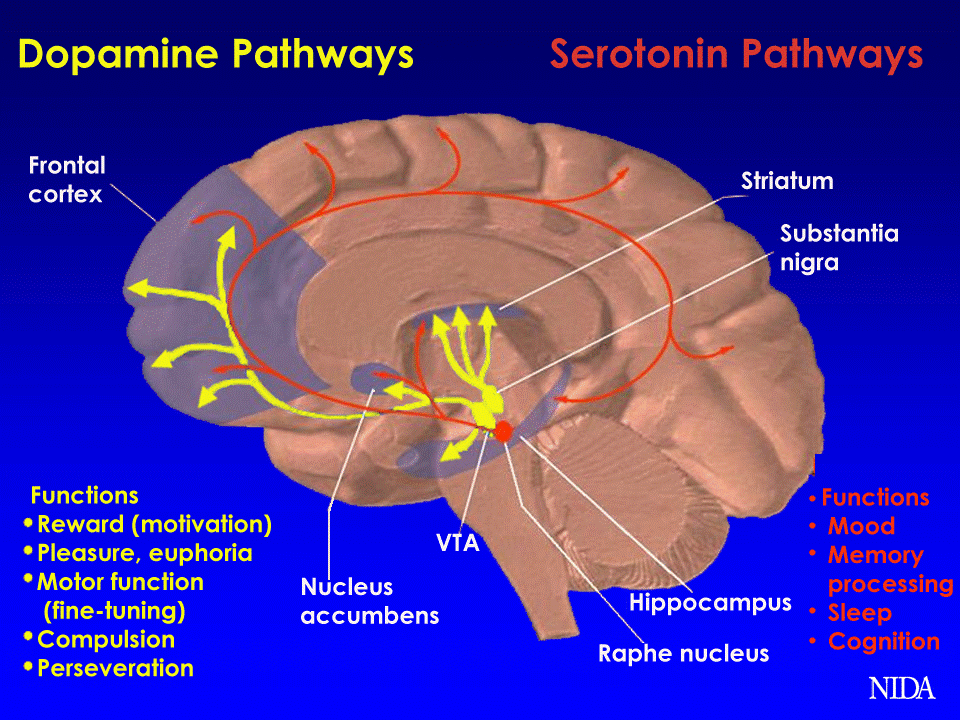
This is very interesting and the answer involves the nucleus accumbens a group of nerve cells located under the cerebral hemispheres. When one execute an action which satisfactorily fulfills ones desire the neurotransmitter dopamine is released into the nucleus accumbens and produces pleasure. This communicates that the action facilitates survival or reproduction, directly or indirectly. This system is refferd to us the reward pathway. Undertaking an activity which provides this reward enables the brain to register the experience and we are likely to repeat the same thing again. The damage to the nucleus accumbens and drugs that block dopamine release in the region make everything less rewarding. Naturally rewards usually come only with an effort and after some interruptions and addictive drugs normally provide a shortcut each in its own way sets in motion a biological process which result in flooding the nucleus accumbens with dopamine. The pleasure is not helping the existence or reproduction and evolution has not provided our brains with an easy way to withstand the onslaught. If one becomes addicted through consistent use of a given drug, then the overwhelmed receptor cells will call for a shutdown reducing the natural capacity to produce dopamine in the reward system. This will make the brain to lose its access to other less immediate powerful sources of rewards. This may require the addicts to constantly use higher doses and quicker passage into the brain. This is seen as though the machinery of motivation is not functioning anymore and so they want to use the drug even when it has ceased giving pleasure to them.

The addicted brain-Compelling memories

The change in the reward system alone does not necessarily denote the persistence of addiction as many addiction victims may admit that stopping may be easy because they have probably done it often. They (the addicts) go through long periods without taking the drug, but they risk relapse even after years of abstinence, when the dopamine reward circuit has had plenty of time to recuperate. They are victims of conditioned learning, which creates habitual responses. Drug-induced changes in the links between brain cells establish associations between the drug experience and the circumstances in which it occurred. These implied memories can be recovered when addicts are subjected to any reminder of those circumstances like moods, situations, people, places, or the substance itself. For example heroin addict may be in danger of relapse when they see a hypodermic needle, an alcoholic when they walk pass a bar where they used to drink or when they meet a former drinking companion. Most addicts may restart the habit on falling into a mood in which they used to turn to the drug. It must be noted that a single small dose of the drug itself can be one of the most powerful reminders.

The addicted brain-Stress

Internal or external stress is another cause of relapse. The nucleus accumbens will direct signals to the amygdala and hippocampus, which record and amalgamate memories that evoke strong feelings. When you asked the addicts why they relapse they are likely to make references as “my job was not going well,” or even, “The traffic was frustratingly so heavy that day.” These responses can only suggest that they are hypersensitive to stress, either congenitally or as a result of past addiction. Stages of corticotrophin releasing hormone (CRH), the brain chemical that regulates the stress hormone system, often rise in addicts just before a relapse, while the amygdala becomes more active. Findings from the resent research established that addiction involves many of the same brain pathways that govern learning and memory. Addictions can changer the strength of connections at the synapses (junctions) of nerve cells, especially those that use the excitatory neurotransmitter glutamate. Underlying these changes are drug-induced activation and suppression of genes within nerve cells, another process scientists are beginning to explore.

The addicted brain-Why we are not all addicted

The reward system may be more vulnerable, responses to stress more intense, or the formation of addictive habits quicker in some people, especially those suffering from depression, anxiety, or schizophrenia, and those with disorders like antisocial and borderline personality. It has been established that almost 50% of individual disparities in susceptibility to addiction is hereditary and according to a recent report, one gene variant diminishes the quantity of dopamine release caused by cocaine in human beings a genetic defense against at least one type of addiction. Individuals also differ in their ability to workout judgment and inhibit impulses. The brain’s prefrontal cortex aids to establish the adaptive value of pleasure recorded by the nucleus accumbens and checks the urge to take the drug when it would be unwise. If the prefrontal cortex is not working correctly, an addictive drug has more power to dominate the reward circuit. Research shows that the prefrontal cortex is not completely established in adolescence, which could elucidate why we often develop addictions at that stage of life. In other words if one does not indulge in smoking before  age 21that person is likely not to become addicted to nicotine

The addicted brain-Implications for prevention and treatment

Although findings on the addicted brain are suggesting new approaches to treatment, progress has been limited so far. Researchers have tested dopamine receptor antagonists, drugs that bind to receptors for dopamine and prevent addictive drugs from acting. But these substances usually have too many side effects because they also interfere with the motivation for natural and adaptive rewards. One way to avoid side effects is to disrupt the mechanisms by which individual drugs start the process that culminates in dopamine release; for example, the opiate antagonist naltrexone is now used to treat both heroin addicts and alcoholics. The biggest problem is preventing relapse. Neutralizing the pleasurable effect of the drug is not enough because reminders of the drug experience perpetuate the longing and cause addicts to stop taking the counteracting medication. Glutamate has been the main target of research on relapse prevention. In one experiment, formerly addicted rats returned to using cocaine when their hippocampi the brain region where memories of the drug experience are likely stored were electrically stimulated. A drug that blocked glutamate activity prevented this re-addiction. An all-out assault on glutamate is impossible. Half the neurons in the cerebral cortex use this transmitter, and a major reduction in its activity would be toxic. Instead, researchers are trying to target specific types of glutamate nerve receptors in specific parts of the brain. Acamprosate used in the treatment of alcoholism, acts at the NMDA receptor, a type of glutamate receptor. The anticonvulsant topiramate (Topamax), another proposed medication for alcoholics, may also act at that receptor. Memantine a relatively new drug that blocks NMDA receptors has proved promising in one small study of heroin addicts. Researchers are working on other approaches to medication for addictive disorders. Some are looking into the possibility of preventing stress-induced relapse by blocking the activity of CRH. Others are experimenting with immunization for cocaine and nicotine training the immune system to recognize the drug by injecting a molecule that simulates its effect, creating antibodies with the capacity to break the drug down before it reaches the brain. The addicted brain-The old and the new Finding new things is a continuous process and as scientists dig into addiction it is being revealed that chemical solutions may not be found anytime soon. Therefore in future treatments will only help to psychosocial treatment. This can only mean that we will still embrace 12-step self-help groups, behavioral therapies, and exploration of traumatic and everyday proficiencies which are likely to have distressed the balance of the reward and inhibition system. Behavior therapy offers the bases of reward and punishment that contest with the drug, such as payment for clean urine in the form of vouchers, or contingency contracts (in which addicts consent to forgo their cherished item if they go back to drug consumption). Motivation or will can be regarded as a brain function that is damaged by addiction, just as language or movement can be damaged by a stroke. In successful treatment of a stroke, other parts of the brain assume the functions of the injured region. In the same way, treatment for addiction may be able to make use of the remaining healthy parts of the motivation system to repair the damage. Twelve-step groups and motivational enhancement therapy could be seen as ways of accomplishing that. Administering treatment is often subject to the type of addiction and the addict. Novelty seekers and risk takers with inadequate reserve and conclusion may not respond to the same methods applicable to persons aggrieved by traumatic stress or hypersensitivity to daily stress. The great lesson we can get from this is that addictions are treatable chronic conditions but stretch longer to cures. When we know the nerve receptors targeted by the addictive drugs we get to learn more about their separate and common effects. However there is still a lot to be achieved about:

  • How changes in reward circuits results to addiction
  • How the brain creates the unconscious memories that make addicts susceptible to relapse
  • Why some people are especially vulnerable to addiction
  • How to translate the knowledge we have into more effective treatments.

New brain research proposes that addiction is not just a property of certain drugs but a characteristic of certain human activities and relationships. Experts have established that there are similarities between the brain scan images of compulsive gamblers and drug addicts. The impression of addiction to television, video games, overeating, or sexual behavior may be more than a comparison. Discovering the biology of addiction could lead to a profound understanding of the sources of all human motivation and habit formation and this can only be done by the involvement of experts like doctor Dalal Akoury who has been of great help to many people the world over for over two decades now.

The addicted brain-How Drugs Affect the whole system


Facebooktwitterpinterestlinkedin

Social Effects of Addiction

Social Effects of Addiction-Drug Addiction

addiction

No matter where you are and what you do addiction is still a threat, alcohol is even worse

Many people are very much conversant with the physical and psychological effects of an addiction but with little or no knowledge of the social effects of addiction. To say the truth social effects in many ways can be more harmful than the other two common ones put together. We by now must appreciate that drug addiction does not just affect the addict and abusers of substances, it’s effects are way beyond the addicts and has a far reaching effect which encompasses all family members, friends, employers, healthcare professionals and society as a whole. If you are addicted for example to alcohol, nicotine, drugs or even caffeine then the effects of this can negatively impact upon the following social categories:

  • Marriage and Relationships
  • Home and family life
  • Education
  • Employment
  • Health and wellbeing
  • Personality
  • Financial issues
  • Law and order

To have a clear understanding of this listed categories let us take a moment and discuss each of them;

Social Effects of Addiction-Marriage and relationships

If you have a situation in which one half of a couple is an addict then this can cause untold hardship for the other half. The person who is addicted may have changed from a previously easy going personality to one who is prone to mood swings, violent outbursts, secrecy and other forms of extreme behavior.

This is difficult for their partner to deal with and is even worse if there are children involved. It is both distressing and confusing for children to see one parent (or even both parents) exhibit signs of their addiction.

The person who is suffering from an addiction may be in financial difficulties which the other person is unaware of. Combine this with their irrational behavior, paranoia and in several cases, criminal behavior and you have a recipe for marital breakdown. In many cases the addict resorts to violence in desperation for their next ‘fix’. If he/she is craving a drink, cigarette or a particular drug but is unable to satisfy that craving – either due to a lack of money or prevented from doing so by their partner then violence is often the result.

Social Effects of Addiction-Home and family

On the subject of home or family life, there is also the possibility that the rest of the family may feel embarrassed or ashamed at this behavior of their loved ones. They will be bothered by the reactions of the society and specifically what others might say or think about their situation. This creates uncertainty to the family causing them to be confused and unsure as to what to do for the best.

If you are suffering from an addiction you may not know when under the influence of the substance but for the short time you will be sober you will definitely find out that your family is very concerned about your condition and are willing to help you realize that you have a problem and are prepared to face up to it. This concern may seems to you as if your family has pushed you out but it could also be the case that they see this as a form of ‘tough love’ in which they are giving you time to reflect upon yourself and your addiction. This they are doing with the hope that you will seek treatment for your addiction. Of cause they will provide support and help as well but you need to take that first step which to acknowledge that you have a problem.

Social Effects of Addiction-Education

If a child or young person is suffering from an addiction then this will impact upon their academics, relationships with other children and their home life. One such effect of this is truanting from school. This can happen if the child is addicted or if they have a parent who is an addict and neglects to care for them.

It is hard for a child or young person to resist the temptation of alcohol, cigarettes or drugs. A desire to be part of the gang or to try ‘forbidden fruit’ as a means of growing up can very quickly lead to addiction. Addiction tends to occur much more quickly in a young person than in an adult. The problem is that they can be hooked from just the first time they try a substance.

Social Effects of Addiction-Employment  

Employers are affected if any of their employees develops an addiction. The employee concerned may have changed from that well behaved and efficient worker to someone who is late and careless at work, has neglected their appearance and personal hygiene and is displaying erratic or unacceptable levels of behavior. They may have started to go absent for no good reason, not completed their duties or stolen from colleagues and/or the company.

This results in that employee losing their job which then impacts upon their home and family life. Loss of their job means a reduction in income – especially if he/she is the main breadwinner, and puts a strain on the relationship. It can then lead to marriage/relationship breakdown and/or divorce.

Social Effects of Addiction-Health and well-being

The body’s well-being is mandatory all the time and anything affecting it must be corrected instantly where possible. Addiction is one element with negative influence in the well-being of the body with the most obvious effect of drug addiction being that on the physical health. Nonetheless there are some substances such as alcohol or caffeine which may be fine on an occasional basis and in moderate amounts however when the consumption become a regular habit then they damage to your health.

For instance couple sticks of cigarettes in a day can also be harmful. You may argue that you are a very light smoker and that this won’t cause a problem but you must also know that nicotine is a powerful stimulant and damage starts early on. Remember that with cigarette smoking you don’t have to physically smoke whatever quantity for you to be affected because you can be affected as a third party smoker that is to say you stay close with smokers when they smoke and inhale the polluted air full of nicotine from the cigarette smoke.

Social Effects of Addiction-Personality

Addiction affects someone’s personality and behavior in a variety of ways although this very much depends upon the type of substance used and the amount; their psychological make-up before the addiction and physical health and their lifestyle.

Some substances have a greater effect than others upon mental health, for example, heroin is stronger than nicotine and will have a bigger impact upon the brain. Added to that is the fact that all of us are different in regard to our psychological make-up which means that at any given time will you find two people affected in the same way. So, one person may experience a greater level of ‘damage’ than another person using the same substance, mainly due to their brain chemistry. Bringing us to the question “what does an addiction do to someone’s mental health and behavior?”

  • Drug addicts will always demonstrate behavior which is completely out of character.
  • They may become secretive or deliberately offensive and harm themselves, lie, cheat or steal.
  • They may also place their addiction needs above the basic needs of their family and friends.

Social Effects of Addiction-Financial issues

The costs of an addiction not only affect the sufferer but can also encompass family, friends and society as a whole. There are the costs of policing, drug addiction help lines, support groups and rehab clinics. Indirectly there is lost revenue in the form of tax and national insurance contributions each time an addict loses their job or is unable to work. This means a drop in revenue for the Treasury and an increase in welfare benefits, e.g. unemployment benefit.

This may sound extreme but if you were to multiply all of this by the number of drug addicts in different countries, then it all adds up to a hefty drain on the country’s purse strings. However on a smaller scale there is the financial damage to family or friends as the addict will resort to theft or other criminal means in order to fund their habit.

Social Effects of Addiction-Law and order  

It is an open truth that people who are addicted to drugs very often turn to crime as a means of paying for their addiction. This is very costly for the economy since it involves stealing or fraud to obtain the funds necessary to bankroll their addiction. The sad part of it is that it normally starts in small scale like stealing from one’s partner, family or friends and the in graduates to include the employer or several organizations and eventually into serious robbery with sophisticated weapons. At AWAREmed Health and Wellness Resource Center under Doctor Akoury’s care, we focus on Neuroendocrine Restoration (NER) to reinstate normality through realization of the oneness of Spirit, Mind, and Body, Unifying the threesome into ONE, you will be safe with this team of experts and your life will never be the same again.

Social Effects of Addiction-Drug Addiction


Facebooktwitterpinterestlinkedin

Stress and Addiction, Addiction and Your Stress

Stress and addiction-Drug Addiction

Stress and Addiction

Stress that leads to addiction can be very dangerous to human life.

We are surrounded with things and situations which in many ways cause is to be stressed and disturbed mentally. Too much money adds lots of responsibilities in management which can be very stressful and on the other hand too little or no money at all can also be stressful since this brings with it luck of basic commodities and services like food, clothing, accommodation and medication. Because of these life situations many of us may suffer from or will experience stress at some point in our lives. Stress appears to be a condition of modern life and even more so for those of us who are asset rich but time poor.

Stress and addiction-Too much stress can lead to addiction

The pace and different dynamics of life has speed up and resonated up over the past few decades or so and many at times we find ourselves continually trying to keep up! Juggling with the demands of work with family and friends can be difficult and the pressure emanating from this often leads to stress. But the problem with stress is that it affects people differently. What one person finds stressful another sees it as a challenge to deal with.

Stress and addiction-Causes of stress

To understand this well we will need to ask ourselves this common question “from where do we start?” and I say, we first identify some of the common and potential stressors in individuals life, they include employment, family, money worries, moving house, bereavement, divorce etc. In fact the list is endless however there is a list of the most stressful life events in life which include the following:

  • Moving house
  • Financial difficulty/bankruptcy
  • Redundancy
  • Death of spouse/partner

These listed above are just but some of the most likely causes of stress and addiction. We know that a small amount of stress or to be more accurate we can use the adjective “pressure” can be good for us. Reasonable amount of can be a motivating factor to us, through this it may improves performance and drives us to succeed to our desired objectives even if it may appear un uphill task. None the less unrelenting or chronic pressure has the opposite effect. It’s that point where we feel as if we can no longer cope with pressure and at this point it becomes stress and addiction can happen. There are many people who are more resistant to stress than others. Stress is a powerful ingredient which can cause physical, psychological and emotional problems, stress and addiction usually go hand in hand.

Stress and addiction-Coping with stress

While appreciating the significant effects of stress, it is important to note that people will react and deal differently with stress. Some people will use physical activities like exercise or sport as a means of working off their stress whereas others may prefer something more relaxing, entertaining and comforting or pleasant to hear. Nevertheless there is yet another group of people who will turn into less beneficial forms of relaxation. For instance alcohol, cigarettes, caffeine and drugs are some of the stress relief forms used by many drug addicts this however only compounds the problem. The effects of stress combined with that of substance abuse can easily spiral out of control, This is why stress and addiction are so linked.

Cigarettes and alcohol are the most accessible forms of ‘drugs’ and usually the most affordable to many in the society. Alcohol is also a socially acceptable drug and due to this it’s use is not considered to be a problem by law even though those in authority licensing its consumption are well aware of the dangers involved. So going for a few drinks after work with your colleagues is considered to be a normal part of life in any working day.

Smoking is still seen as a way of relaxing despite it being banished out of the workplace and other social places. However, we still see small groups of people huddled outside their office having a cigarette. There are people who still continue to smoke in spite of this restriction and/or the dangers to their health.

Drugs such as cocaine or amphetamines are often used as a quick way of releasing stress and tension which has built up during the working week. A popular way of using these is at parties or socializing at the weekend and some people view these as an integral part of their social lives. We can see how stress and addiction relates?

These type of people may be ambitious high-achievers who often live for the moment and tend to view their drug use as a part of their ‘scene’. They may act quite casually about it and consider it to be a normal part of their fast-paced lives. For them it is about risk-taking and living life on the edge and drug use is just one form of this.

Stress and addiction-Work related stress

It can be the case that someone works in a highly stressful environment in which employees use alcohol or drugs as a way of winding down at the end of the day. This may start off on an occasional basis but as their tolerance to that substance grows then so does their addiction.

If you work in a highly competitive, target-driven environment then you will probably be running on adrenaline most of the time. This may help when it comes to making important decisions or reaching a deadline but a constant state of hyperactivity will be harmful in the long term.

There is also the fact that some jobs have a culture in which drinking is part of that culture. If your job requires you to entertain clients or join in on ‘bonding session’, which involves alcohol, then it is hard to refuse. In many cases a refusal to do so can be seen as not being a team player and may affect your chances of promotion or even your future with that company.

There is also the issue of money: if your job is well remunerated then this will enable you to spend money on these substances as and when you like. What happens then is that you spend more and more money in order to fuel your addiction which leads to serious financial problems, which then causes more stress, which results in an increase in your addiction and so on, this then reaches at a point at which your addiction is out of your control and affects not only you but others around you.

Finally the effects of a stressful job combined with the effects of an addictive substance add up to what can be a lethal combination. To solve this you may want to visit AWAREmed Health and Wellness Resource Center under Doctor Akoury’s care, at this facility we focus on Neuroendocrine Restoration (NER) to reinstate normality through realization of the oneness of Spirit, Mind, and Body, Unifying the threesome into ONE. So If stress is a problem for you then talk to doctor Dalal Akoury.

Stress and addiction-Drug Addiction


Enhanced by Zemanta
Facebooktwitterpinterestlinkedin