Category Archives: Dr. Dalal Akoury

Insulin Resistance

Insulin resistance increases cancer risk

Insulin ResistanceInsulin is a crucial hormone in the body. Hormones are the body’s messengers that are made by the Endocrine glands. The hormones flow through the bloodstream to the organs and tissues where they help in accomplishing some bodily processes. The hormones are very important in the entire body of humans as they affect most bodily functions. The hormones will give us good health when there functions are at optimum. In case they do not function well a person may get some diseases and the major cause of hormonal dysfunction is hormonal imbalance. In case the balance between crucial hormones is not achieved disease like cancer will be knocking on the doors of your immunity. The changes in hormone dominance may occur naturally. This is because as we are growing production of some hormones is halted leading to some hormones being dominant. This can be addressed by help of an integrative cancer doctors as dominance of certain hormones increases your risk to cancer. However these fluctuations in levels of hormones may be induced by environmental factors such as the pathogens in the environments and the heavy metals that may remain in the vegetables we eat as a result of harmful herbicides used. Hormones play a great role in cancer etiology and therefore levels of some hormones like insulin should be monitored to avoid levels that may increase cancer risk.

Insulin Hormone Resistance

The blood sugar level is controlled by insulin hormone. It is responsible for transporting food that is converted into simple sugar (glucose) and transports it to the cells where it is broken down through oxidation to release energy. At times our bodies may have more sugar than what the insulin hormone can transport. This will lead to insulin resistance and eventually will cause obesity and diabetes. The connection between insulin resistance and cancer is that, when there is plethora of carbohydrates that cannot be broken down, they are store as fats. Excess body fats increase the levels of estrogen hormones, estrogen dominance leads to higher risk of breast cancer.

Insulin resistance is a situation is a condition when the body organs become resistant to insulin’s ability to transport the glucose into the cells. This condition is common after taking a meal that is high in carbohydrates. When there is insulin resistance and the glucose is not transported into the cells, the pancreas will react by producing more insulin hormones which leads to high hormonal levels in the blood. The pancreas may compensate for insulin resistance for some time but this won’t last long, therefore when the pancreas becomes overwhelmed and stops producing more hormones the insulin level in the blood will drop therefore leading to high sugar levels in the blood this increases cancer risk. Researchers have opined that insulin hormone resistance may be caused by obesity.

Insulin hormone inhibits growth and it increases when we eat more processed foods, carbohydrates and sweets. When this hormone is in high levels it increases the Insulin growth factor (IGF) which triggers the growth of cancer cells. There is a research that was done by Vanderbilt University in 2004, the findings of this research proved that increased growth factor and insulin resistance increased the risk of breast cancer in women. Women who have high levels of insulin resistance and increased growth factor are highly at risk of getting breast cancer. Another doctor, Dr. Pamela Goodwin while working at Mt. Sinai Hospital observed that most of the women who had breast cancer had high Insulin growth factor.

Insulin can also increase the sensitivity of cells towards other growth factors. Cancer is a disease that is rather complex and multifactorial but all types of cancer is characterized by uncontrolled growth and cell division. They are also resistant to programmed death also known as mitosis. Growth factors have been shown to be critical to cancer development and growth.  Researchers have shown that people who have higher levels of insulin growth factors are at increased risk of cancers such as the colon, breast and prostate cancer than those who have lower levels of Insulin growth factors.

Insulin resistance affects the ability of the insulin to transport the glucose into the cells but it does not affect the growth promoting abilities of the insulin hormone. The glucose transporting ability is the only thing affected. This therefore means that in a case of insulin resistance the high levels of circulating insulin hormones may increase risk to cancer in a person. The pancreases ability to supply high levels of hormones during insulin resistance may help in avoiding diabetes but are worst to cancer as higher levels of circulating hormones increases cancer risk.

Insulin ResistanceDifferent organs breast differently to high insulin levels in circulation .some organs become more vulnerable to the adverse effects of insulin hormone while others are not as vulnerable. The most vulnerable organ is the colon. Researchers have shown that colon has risk factors similar to diabetes. Factors that increase colon cancer risk include obesity, extra fat along the waistline, and lack of exercise, refined foods and diets that are high in saturated fats.

Dr. Dalal Akoury (MD) is an experienced integrative cancer doctor that has helped many cancer patients in their fight against the disease. She has worked hard not only in treating the disease but also in availing informational support to cancer patients at Awaremed which has become a place called home for many cancer patients. Call on her now and get help on cancer.

Insulin resistance increases cancer risk

Related articles

Facebooktwitterpinterestlinkedin

DCA As a Glycolitic Inhibitor

DCA  As a Glycolitic Inhibitor Helps In Fighting Cancer

DCAThe oncologist will tell you that finding a treatment that is effective in killing the cancer cells while safe on the healthy body cells was the biggest problem in the field of oncology. The cancerous cells just as much as the healthy cells need nutrients to continue living.  The oncologists plus other medical researchers have noted that the best way to treat cancer without affecting the healthy body cells is to deny them the nutrients supplies so that they can be starved to death. The cancer cells and the body cells require glucose from which they can make the ATP energy that they need to survive on. This made it hard to deny the cancer cells their nutrient supplies while leaving the healthy body cells nutrient supply unaffected. But this was in the past. Cancer researchers have found some existing differences between the survival mechanisms of the cancerous cells and the healthy body cells. Otto Warburg discovered that the cancerous cells depended entirely on the glucose to survive without which it could not live while the healthy body cells could make other sources of energy and continue living even when the sugar sources of energy were withdrawn. This discovery has led to more selective killing of the cancer cells without affecting the living body cells. The cancerous cells undergo increased glycolysis and rely on this pathway for generation of ATP energy as their sole source of energy for growth and survival but the healthy body cells are flexible to switch to other sources like fats.
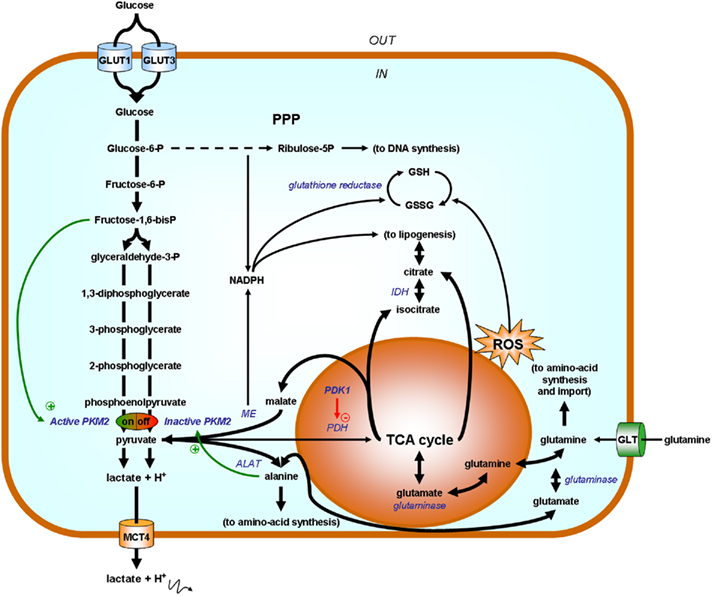
Since the discovery by Warburg, oncologists have come up with different cancer therapies to help in killing the cancer cells effectively without hurting the healthy body cells. Overdependence of the cancer cell on the glycolitic pathway for generation of ATP energy as the sole source of survival has provided a great loophole through which the cancer cells can be selectively killed without affecting any other healthy cell by inhibiting glycolysis. To do this, glycolitic inhibitors must be used in order to weaken the cancer cells by blocking their nutrient supplies which is an anticancer itself thereby killing the cancer cells more effectively.

Cancer cells are characterized by increased glycolysis therefore when glycolitic inhibitors are used the cancer cells have no other ways of survival therefore they will die out of starvation. This approach has also been applauded in killing of cancer cells with mitochondrial defects that have become resistant to chemotherapy and radiation therapy drugs.

It may not be easy to understand the molecular and biochemical mechanisms that lead to increased aerobic glycolysis in the cancer cells, the metabolic repercussions of this increased glycolysis is very clear. The malignant cells become dependent or other addicted to the glycolysis pathway as the sole source of ATP energy. Researchers opine that the increased glycolysis in cancer cells may be caused by such factors as; hypoxia, oncogenic signals as well as mitochondrial dysfunction.

It is a known fact that the cancer cells need more energy to survive than the healthy cells. In glycolysis the ATP produced per glucose are only 2 which means the cancerous cells must use lots of glucose to survive unlike in the oxidative phosphorylation which generates more ATP energy per glucose the . Here 36 ATP are produced per glucose therefore small amount of glucose is needed for survival. So without glycolitic pathways the cancer cells are doomed.

In case of is glycolytic inhibition the healthy body cells will be able to adapt to other metabolic pathways to generate the ATP energy through the TCA cycle and oxidative phosphorylation in the mitochondria. The cancer cells however cannot adapt to other sources of ATP hence will die as they will not be able to live without another source of ATP energy. The healthy body cells will be able to adapt to new sources of energy like fatty acids and amino acids to produce metabolic intermediates channeled to the TCA cycle for ATP production through respiration. Glycolysis inhibition is therefore a clever way of killing the cancer cells without harm on the healthy body cells.

DCA is an effective glycolytic inhibitor

DCA works in very interesting ways in inhibiting glycolysis. It only leaves one option left for cancer cells to survive on- depending on other pathways as opposed to glycolysis. The cancer cells cannot do that hence they are killed. The healthy body cells can adapt to metabolic changes unlike the cancerous cells. The first way through which the body cells get energy is through glucose oxidation which happens in the mitochondria of every cell in the body and requires oxygen. Glucose respiration is the mostly utilized form of metabolism in the healthy cells. However in absence of oxygen the cells turn to glycolysis which takes place in the cell cytoplasm for energy generation. Glycolysis does not avail adequate ATP energy for normal cells; however it is the best for cancer cells. Glycolysis depends on sugar. This gives the healthy cell advantage as they have a backup plan in case the oxygen supply is interrupted. However to oxidize glucose there must be pyruvate. Pyruvate entry into the mitochondria is inhibited by an enzyme known as pyruvate dehydrogenase kinase (PDK). In case the PDK is strong then it will limit the transportation of pyruvate into the mitochondria and the healthy cells will have to depend on glycolysis even in presence of oxygen but incase its weak the pyruvate will be transported with ease to mitochondria even when the oxygen is low.

DCACancer cells have the most active PDK than the healthy cells and they are adapted to glycolysis. When PDK is weak then the cancer cells are disadvantaged and this is what the DCA does. It weakens PDK forcing the cancer cells to rely on glucose oxidation which does not favor them. Hence they will starve and die.

Dr. Dalal Akoury (MD) is an experienced integrative cancer doctor that has helped many cancer patients in their fight against the disease. She has worked hard not only in treating the disease but also in availing informational support to cancer patients at Awaremed which has become a place called home for many cancer patients. Call on her now and get help on cancer.

DCA As a Glycolitic Inhibitor Helps In Fighting Cancer


Related articles

Facebooktwitterpinterestlinkedin

Polysubstance Abuse, You can fight Polysubstance Abuse

Fighting Polysubstance Abuse – Drug Addiction

Polysubstance abuse

Fighting polysubstance abuse- the war on drugs must be worn at all cost. Indulgence in polysubstance abuse is not helping fight the war.

We are living in a world where people want to explore all things even those things that are dangerous to their lives. Take for example drugs, there are substances which are not just harmful to one’s life but are life threatening and fatal. You would therefore wonder why someone would want to take this kind of adventure. I am not trying to confuse you here but I am talking about what is known as polysubstance abuse which is defined as the use of more than three groups of addictive substances over a period of one year. This normally happens when a person indulges in acts of abusing several substances within a short period of time, often in an attempt to enhance the effect of a single drug to create a more intense high. We can therefore conclude that polysubstance abuse is where no single substance is identified as the user’s drug of choice.

Some combination drug users have “patterned” use. These include:

  • Alcoholics who for example use will cocaine only after they’ve reached a certain state of intoxication meaning that they don’t overuse.
  • Addicts who speed ball that is to say that they are mixing cocaine and heroin for intravenous use and other combinations.
  • There is another polysubstance subgroup, consisting mostly of adults already addicted to alcohol. After an injury or surgery, they were placed on opiate medications and developed a pain syndrome over time. They then mixed substances or switched to opiates as their drug of choice.

Polysubstance Abuse among Different Populations

Adult polysubstance abuse, according to literature, is often associated with other mental health conditions. Homelessness, personality disorders, and psychiatric disorders such as major depression, psychosis, and bipolar disorder are common. The overlap of polysubstance dependence and psychiatric problems points to a lot of self-medication. Typically, among multiple substance users, individuals used alcohol or marijuana at an early age and then added other substances (or changed their drugs of choice) without quitting their original substances.

  • Among young people, polysubstance abuse is often the norm, and not the exception. The most commonly abused polysubstance by adolescents are marijuana, alcohol, and heroin. Other drugs used include MDMA (ecstasy), dextromethorphan, multiple forms of opiates, cocaine, hallucinogens, and inhalants.
  • A 2004 study of young people reported that one-half had used an illicit street drug by the end of their senior year. Two million young people need treatment for alcohol and drug addiction, but only 8 percent actually get it. Nearly one-third of young people addicted to psycho-stimulants also suffered from attention deficit hyperactivity disorder (ADHD), and 20 percent said they gave their medications to others.
  • One treatment facility said that 33 percent of the adolescents currently in treatment had polysubstance addiction.
  • The elderly are another population that clearly has a problem with polysubstance abuse.
  • Older people have more medical conditions that often require prescriptions. Over time with debilitating illnesses such as Alzheimer’s disease the tendency to over medicate (taking more of a drug, more often, forgetting when and if medication was already taken) increases the likelihood of polysubstance abuse. Combined with alcohol, the results can be devastating, even fatal.
  • Elderly women tend to keep their substance abuse and chemical dependency secret. Alcoholism occurs later in women’s lives, perhaps due to problems associated with divorce or separation. Women who are over 55 have less tolerance for alcohol and are therefore more prone to addiction. They are also less likely than men to seek treatment and also use prescribed psychoactive drugs.
  • Polysubstance abuse is increasingly prevalent among the street drug user population. Different substances abused include heroin, prescription opioids, benzodiazepines, cocaine, crack, alcohol, and marijuana.

Detoxification for Polysubstance Abuse and Addiction

Before treatment to address underlying causes of polysubstance addiction, detoxification must first be done. Detox is more complex and problematic with polysubstance addiction for several reasons. An accurate history of total substances abused must be obtained, and the patient may not be able or willing to provide complete details. Determination of the actual substance being used has to be made using screens for breath, urine, and/or blood.

  • Some patients can be treated on an outpatient basis, but others, particularly those with alcohol, sedative, hypnotic, opioid, and anxiolytic abuse may require hospitalization or inpatient detox. Repeated abstinence failures or severe anxiety, depression, or psychotic symptoms lasting 1 to 3 days after abstinence may also require inpatient substance abuse treatment.
  • After patients admitted for detox for opioids began to show classic alcohol withdrawal symptoms, some treatment professionals opted to routinely treat their detox patients with thiamine until a determination could be made that there was no history of alcohol use.
  • Diagnosis and treatment of patients who have been on psychotropic medications while they were already addicted is more difficult.
  • If a patient doesn’t know, or is unable to discuss, use of opioid drugs and it’s been days since their last drug use, opiate withdrawal symptoms can lag. Urine screens my not be able to detect the drug.
  • Treatment for mixed addiction that also includes alcohol use may include benzodiazepines during the acute phase of alcohol withdrawal. Benzodiazepines can help decrease tremors and prevent or reduce increases in heart rate and blood pressure.
  • Medication to treat symptoms of diarrhea or muscle aches may also be prescribed. Folic acid, thiamine, and Vitamin B-12 may counteract vitamin deficiencies.

Evaluation Factors

The length of the treatment program is determined by how long and what type of substance dependence the patient has, whether or not organ damage exists, any underlying mental illness, the patient’s desire to change and willingness to undergo treatment, adequacy of the patient’s social support system, treatment choice, and plans for ongoing care.

Treatment after Detox

After drug use patterns and substances have been identified, a thorough psychological evaluation is necessary. There needs to be enough time for detox, history evaluation, and a thorough understanding of any psychiatric conditions that exist.

Although there are many different aspects of treatment, they generally include four phases.

The acute phase – this is where the focus is on alleviating symptoms or physiological withdrawal. This typically lasts 3 to 5 days, but is dependent on the number, type, and length of substances abused.

The abstinence period – this phase concentrates on changing the patient’s behavior which is usually about one month

The early remission phase – follows and can last up to 12 months. The sustained remission phase lasts as long as the patient refrains from alcohol or substance use and no longer exhibits any of the criteria for polysubstance abuse.

Treatment during early remission may involve education on the physical, emotional, and psychological aspects of addiction and recovery. The patient learns to identify stressors and triggers that cause drug use. They learn ways to manage those stressors and also build up coping skills. They can also undergo assertiveness training and relaxation techniques.

Polysubstance Addiction – Is There Hope?

Fighting polysubstance abuse is more difficult than abuse of a single substance, but it can be successful. The likelihood of success depends on the individual’s determination and discipline to follow through on the requirements to abstain completely from substance abuse. Such determination and discipline does not come easily, especially for hard-core or long-term abusers and addicts. There may be repeated relapses before stability becomes a part of the recovering addict’s life. After treatment, recovery from polysubstance abuse and addiction just like for any addiction requires ongoing diligence and participation in a support network. While understanding the difficulty involved in treatment and recovery of this nature doctor Dalal Akoury established AWAREmed Health and Wellness Resource Center facility to help in the treatment of all kinds of addiction. Doctor Akoury cares for you and she is riding on more than two decades of experience. Calling on doctor Akoury will benefits you since she will attend to you in the most natural way by focusing on Neuroendocrine Restoration (NER) to reinstate normality through realization of the oneness of Spirit, Mind, and Body, Unifying the threesome into ONE

Fighting Polysubstance Abuse – Drug Addiction


Facebooktwitterpinterestlinkedin

Aromatase Inhibitors and Cancer

Aromatase Inhibitors Are Effective In Fighting Cancer

AromataseAromatase inhibitors may help in fighting cancer as they stop a key enzyme called aromatase from changing other hormones into estrogen. It works differently from other drugs that focus on blocking the oxygen receptors such as tamoxifen and raloxifene. This helps in lowering the levels of the estrogen hormone in the body denying the estrogen receptor-positive breast cancer fuel to grow.

Research has linked excess estrogen to various types of cancers such as the breast, prostate, lung, cervical, uterine, lung, prostate and colorectal cancers. With the aromatase inhibitors the production of estrogen hormone is stopped. The aromatase inhibitors do not stop the production of estrogen hormone at the ovary and therefore they work only at post menopausal stage. As known the ovaries stops producing estrogen hormones after menopause and this may often lead to hormonal imbalance between the estrogen and progesterone hormones which is also known to cause cancer.

The dangers of excess estrogen in the body has been emphasized by oncologists who have advised women to maintain an ideal weight and shed extra fats as Enzyme, aromatase is found in fats, it converts the testosterone into estrogen hormones. The dominance of estrogen in the breasts tissues exposes you to breast cancer. The dangers of estrogen dominance are a lot and so it should be controlled. Let’s look at the implications of excess estrogen hormones.

Dangers of Excess estrogen

Cancer has been linked to estrogen dominance in the body. In a case where estrogen is excessively higher than the progesterone hormones in the body the hormonal environment in the body becomes conducive for the growth of cancer cells. Excess Estrogen hormones in the breast tissues are a major risk to breast cancer.

An imbalance between the progesterone and estrogen hormones is a major cause of cancer. The level of progesterone is always lowered during perimenopause and menopause stages as ovarian hormone production stops completely. When production of this hormone is reduced, the body will have high estrogen hormones hence exposing women to cancer. A key approach to cancer prevention is in ensuring a balance between the estrogen and progesterone hormone is achieved.

Artificial hormone xenoestrogen adds the estrogen activities in our bodies. We get this hormone in commercial dairy products that are from animals injected with growth hormones and it acts as estrogen in our bodies. It is also available in pesticides used to spray crops and unfortunately they end up in our bodies. When introduced in the body they inhabit fatty tissues like the breast tissues and hence favor growth of cancerous cells in the breast. This hormone is more poisonous than natural ‘estrogen dominance’ and it also poisons the DNA, unfortunately xenoestrogen cannot be easily removed from the body.

Some of the drugs that are known to function as estrogen inhibitors are;

I.        Arimidex also known as anastrozole

II.        Aromasin also known as exemestane

III.        Femara also known as letrozole

Each is a pill, usually taken once a day. All three are available as generic medicines.

Benefits of aromatase inhibitors

Aromatase inhibitors have been endorsed by researchers and cancer patients for use in treatment of various types of cancers. In a research study doctors compared the use of aromatase inhibitors and Tamoxifen to see which type of medicine was effective in treating cancer especially the early stage hormone receptor positive breast cancer in post menopausal women. The findings from this study favoured aromatase inhibitors and therefore the doctors recommended the use of aromatase inhibitors after initial treatment that is mostly through conventional cancer therapies like surgery, chemotherapy and radiation therapy.

An aromatase inhibitor is the best hormonal therapy to start with. When treating Doctors have found that aromatase inhibitors are the best hormonal therapy. It was found that treating early-stage, hormone-receptor-positive breast cancer. This is because aromatase inhibitors have more benefits and has fewer side effects than tamoxifen.

Researchers have also proved that when a patient who has been on a tamoxifen for 2 to 3 years switches to aromatase inhibitors for a total of five years, he would benefit more than a patient who has been on five years of Tamoxifen.

The doctors have also recommended the use of aromatase inhibitors for another five years after a patient has been on Tamoxifen for initial five years. This will help the cancer patient to reduce the chances of cancer re-occurring. Therefore it should be taken even after treatment with Tamoxifen.

Some of the side effects of aromatase inhibitors

Researchers have shown that aromatase inhibitors tend to cause fewer side effects as compared to Tamoxifen. However aromatase inhibitors can also cause such side effects as blood clots, stroke, endometrial cancer, heart problems and osteoporosis. It may also cause more broken bones than Tamoxifen. It is therefore important to have a bone density test before you begin using the aromatase inhibitors. The doctors will advice you depending on the bone density test results whether to use bone strengthening medicine in the course of the aromatase inhibitor treatment.

AromataseAnother common side effect of using Aromatase inhibitors is joint pains. However many people are not troubled with the joint pains after a 2008 British study revealed that women who experienced joint pains while under hormonal therapy medications were less likely to experience the coming back of the disease.

Dr. Dalal Akoury (MD) is an experienced integrative cancer doctor that has helped many cancer patients in their fight against the disease. She has worked hard not only in treating the disease but also in availing informational support to cancer patients at Awaremed which has become a place called home for many cancer patients. Call on her now and get help on cancer.

Aromatase Inhibitors Are Effective In Fighting Cancer

Related articles

Facebooktwitterpinterestlinkedin

Angiogenesis Inhibitors and Cancer

Angiogenesis Inhibitors Play A Great Role In Cancer Treatment

AngiogenesisMetastatic static cancer is a fear of every cancer patient. Metastasis makes it hard for cancer to be treated. However cancer cannot metastasize without angiogenesis which is the sprouting of new blood vessels. The oncologists can best avoid metastasis by avoiding angiogenesis which is only achieved by use of angiogenesis inhibitors.

Angiogenesis defined

Angiogenesis is a process through which blood vessels are formed. Angiogenesis occurs naturally during the growth and development of children. The mother’s womb has to form new blood vessels that are important in the development of the infant. This is a crucial process in the foetus. However in adults this process happens less often and may happen during wound healing. In women it happens during the menstruation cycle. When this formation of new blood vessels is induced by tumor, it is referred to as tumor angiogenesis. This happens when the tumors release molecules that signal the surrounding tissues. It is this signaling that activates genes that make proteins to initiate growth of new blood vessels. These new blood vessels penetrate into the cancerous cells and help them grow by supplying them with the needed nutrients and removing wastes out of them hence creating an environment that favors their growth and metastasis.

Without angiogenesis tumors cannot grow and metastasize, it is therefore a necessity without which the cancerous cells will become inactive and will even die. When the new blood vessels have been formed it become hard for the cancer to be treated. The cancer patient will have to endure pain as the tumors will be growing at a faster rate since they have adequate nutrient supplies which they receive though these newly formed blood vessels therefore they can be controlled when these nutrient supplies are cut and that is what angiogenesis inhibitors does.

This discovery that cancer cells depend on angiogenesis to grow and metastasize has led to development of many cancer treatments that target angiogenesis. These therapies can be very effective in fighting this disease since it doesn’t affect the healthy body cells. Moreover if angiogenesis can be inhibited then all cancers can be controlled since it is a necessity for growth of tumors in all cancers. When angiogenesis is inhibited the cancer cells are denied of their supplies and they will automatically die of starvation.

Copper is a necessity for Angiogenesis

Copper is a trace element the needs to highly regulated as any slight homeostatic copper disruptions may result in serious health complications such as the Wilson’s disease. Copper is necessity for angiogenesis. Without copper angiogenesis cannot take place. It is therefore evident that Copper fuels cancer tumor growth and metastasis. Angiogenetic inhibitors can be used to curb this situation. Tetrathiomolybdate (TM) is effective in copper chelation.  Researchers have proved that TM forms a stable tripartite complex with copper and protein. When given with food, it chelates food copper with food protein and inhibits absorption of copper in the bloodstream. There is endogenous secretion of copper in saliva and gastric secretions associated with food intake, and this copper is also chelated by TM when it is taken with meals, thereby preventing copper re-absorption.

Medical researchers have done test on the effectiveness of the tetrathiomolybdate (TM) on mice that were injected with cancer cells and left for a week for angiogenesis to begin. After the new blood vessels had been formed the mice was injected tetrathiomolybdate (TM). The angiogenesis stopped and the tumor growth stopped. However from researches that had been done in the past it was concluded that tetrathiomolybdate (TM) has a unique action on the copper that fuels angiogenesis and retarded tumor growth with minimal side effects. When cancer patients are given TM with food they get a negative copper balance which is not good angiogenesis. The copper that is bound by TM cannot do any meaningful biological activity as it cannot be absorbed by cells and is excreted in the urine having been cleared by bile hence tamed.

Normally, the level of copper that is needed for angiogenesis is much higher as compared to the amount of copper that is needed for cellular activities that are dependent on cancer like cytochrome function and heme synthesis. Cancer therapy that are based on anti-copper may work well as the copper needed for cellular activities will be retained even when TM is used to as an anti-copper angiogenic agent.

Low molecular weight heparins inhibits metastasis

AngiogenesisIt has also been found out that Low molecular weight heparins helps in improving the cancer patient’s chances of survival as it inhibits metastasis. The low molecular weight heparins are able to inhibit metastasis by preventing cancer cell triggered destruction of the endothelial glycocalyx. In experimental animal models and clinical tests; it was found that the low molecular weight heparins protects against cancer progression and metastasis. The scientists say this is possible as the low molecular weight inhibits metastasis interfering with the cancer cell binding on the platelets. Cancer cell needs to attach themselves to the platelets to move to other parts of the body. Low molecular weight heparins also inhibit metastasis through binding of heparanase or hyaluronidase thereby protecting the vascular endothelium from invasion by the cancer cells.
Dr. Dalal Akoury (MD) is an experienced integrative cancer doctor that has helped many cancer patients in their fight against the disease. She has worked hard not only in treating the disease but also in availing informational support to cancer patients at Awaremed which has become a place called home for many cancer patients. Call on her now and get help on cancer.

Angiogenesis Inhibitors Play A Great Role In Cancer Treatment

Facebooktwitterpinterestlinkedin