Category Archives: Brain Health

TOPICAL Weight Loss 10283502042

Misfiring Sex Hormones Cause a Spiral Downward: Havoc on the Brain

The effects of misfiring sex hormones to the brain

The hormones regulating sexual response in humans are testosterone, estrogen, progesterone, oxytocin, and vasopressin.  Testosterone is most prevalent in males and estrogen and progesterone in females. Oxytocin and vasopressin are present equally in both men and women.

Each hormone plays a specific function in sexual motivation and response. Testosterone encourages males to compete for the attention of females. Estrogen increases sexual motivation in women, and is most elevated during ovulation, while at the same time progesterone, which lowers female sexual motivation, is lower. Oxytocin is associated with sexual pleasure and is the hormone responsible for forming emotional bonds. Vasopressin levels are raised during arousal in males, and may contribute towards increased sexual motivation.

brain havocWhen released at regular levels and at the correct times in response to ovulatory cycles or sexual stimulus, these hormones create the motivation for sexual reproduction and increase the pleasure response that it generates.

However, when these hormones are out of balance or secreted at the wrong time, they can have very adverse effects on one’s wellbeing.

Many women are aware of the link between hormones and mental health, having experienced it on a monthly basis in the form of PMS and mood swings in the time approaching the onset of her menstrual cycle. When the body undergoes puberty, the rising and falling hormone levels also result in mood swings, depression, irritability, and aggression. Pregnancy also releases a flood of hormones which affect mood and can in some women cause severe post-partum depression after giving birth. Menopause and menopausal symptoms of irritability, erratic behavior, changes in sex drive, brain fog, and hot flashes are also all the result of hormones being out of balance.

Although the mechanics of hormone-induced mental health issues are not fully understood, it would appear from the reactions that estrogen and progesterone, particularly, interact with the production and reception of serotonin and GABA (gamma-aminobutyric acid) neurotransmitters in the brain. The fluctuation of estrogen and progesterone around the time of menstruation causes PMS and also PMDD or premenstrual dysphoric disorder. PMDD manifests in severe depression and anxiety, as well as seasonal affective disorder (SAD). PMDD sufferers have been misdiagnosed as bi-polar or with any of some other psychological disorders, because of the havoc wreaked by their hormones on their brain chemistry.

One sufferer in Cornwall stated: “The most bizarre part is that as soon as I start bleeding it goes away. Literally 30 minutes or an hour later and I feel totally normal again. Like I’ve been in a fog for a week and then I just step out”. However, she says of the week to ten days before her period: “Smells are stronger, sounds are louder, things that don’t bother me normally become a major issue, I’m clumsy and accident prone, totally exhausted and emotional. As I get closer to my period all of that intensifies and gets coupled with an extreme self-loathing, sometimes even suicidal thoughts. I look in the mirror, and my whole face looks different, distorted and not myself. It sounds bonkers; it feels bonkers.”

This disorder affects approximately 5% of menstruating women, although the prevalence may be much higher but simply go unreported.

And women are not the only sufferers. Men who experience an excess of estrogen are prone to depression and mood swings as well. Too little testosterone will display in symptoms such as fatigue, weight gain, loss of libido, and depression.

Check out our Integrative Addiction Conference 2016 being held in Austin, Texas


Tests and studies carried out in a Canadian ice hockey team yielded some results regarding the effect of testosterone on mood and mental health, and showed a direct correlation between testosterone levels and confidence and aggression. The research into the link between testosterone and competitiveness returns very mixed results depending on the baseline personality of the subject.

Excess testosterone is metabolized into estrogen, which in some men results in metal health issues which are often diagnosed as bi-polar disorder. Studies conducted on some such patients which included hormone replacement therapy instead of the bi-polar medication which they had been taking showed positive results in their behavior and mental health.

Testosterone has also been shown to have a causal effect on egocentric and anti-social behavior. Also, low testosterone levels in men have been found to have a detrimental effect on sleep patterns. Disrupted sleep can have many psychological and physiological consequences, including heart disease, diabetes, stroke, obesity, and depression.

Diagnosing and recognizing hormone-related disorders is the challenge. Very often this cause is overlooked and remains untreated. Regulating hormone levels in cases of mental health issues could present a long-term solution. Much research and study in this area are still necessary to fully understand and determine the link between the hormones and mental health.

The effect of hormones on mental health and wellbeing will be one of the topics under discussion at the upcoming Integrated Addiction Conference. Register online at http://regenerativepotential.com/integrativeaddictionconference/ for access to the forum and discussions and to attend the event.


 

Facebooktwitterpinterestlinkedin

Resisting insulin awash in a pool of sugar

Resisting insulin awash in a pool of sugar: Too much insulin

Resisting insulin

Sugar is a serious drug that is very addictive. Insulin resistance should be a daily practice meaning that we defeat sugar addiction by resisting insulin naturally.

From our previous article we listed too much insulin, cortisol and adrenaline, imbalances of sex hormones like estrogen and testosterone and insufficient thyroid hormones as being epidemic, we now want to look at each in details for a better understanding of the best action to take should you find yourself in situations like this. To start us off into this discussion, we spoke with experts from AWAREmed Health and Wellness Resource Center, a facility that is rich in expertise and very resourceful in terms of addiction health related complications to help us put to perspective what happen when there is too much insulin in the body and how best insulin resistance can be practiced in a day to day way of life. Doctor Dalal Akoury who is the founder of this facility is going to share with us some of the practical examples to help us understand better the magnitude of the problem. This is one piece of information you don’t want to miss and therefore we invite you to stay with us and invite a friend so that together we can make a difference in our societies and defeat all complications that comes with insulin resistance or as we have baptized it resisting insulin.

A few years ago a client I will call Larry (not his real name) came to my office and his story was very interesting and I am persuaded to share with you because I believe it will help you understand the problem from the practical angle. Larry was in his early 40s an executive officer in a reputable organization. He came to me for a cardiac stress test. In his mind he knew that he was dying of heart disease and convincing him otherwise was not very easy. He explained to me how he was feeling and using his own words he said that every afternoon, he would experience sudden onset of sweating, a racing heart, anxiety and shortness of breath. With these signs Larry was convinced that he was dying of heart condition. Besides these he was also stocking some weight around the abdomen.

After listening to him narrate his story, I responded to him in a way that he felt was irrelevant by telling him that “he is not taking his breakfast meals” I also told him that “each time he is eating he feels tired and because of that he often skip meals during the day and that his reason of doing so is to remain alert and focus to his work. My provoking statements did not end there and I continued to tell him that each time he experiences such feelings he often go to the vending machine for a glass of soda to get a quick sugar fix, and that in just a few minutes he feels better and that has become his routine and way of life. In disbelief Larry looked at me shocked, wondering how a total stranger could tell his exactly how he lived his life without him disclosing.

I don’t know if this is communicating to you anything, but I explained to Larry that he was fighting with his genes and was insulin resistant or simply he was resisting insulin leading to wide swings in blood sugar that were responsible for his symptoms. Larry could not regulate his blood sugar because he was pumping out too much insulin and that is how his symptoms became easy to identify. Feeding on too much sugary food stuff like flour, and white rice, your insulin levels spike. This then causes your cells to become resistant to its effects and the consequence of that is that you will pump out more insulin, become more resistant to the ultimate effects and the vicious cycle of insulin resistance continues.

Resisting insulin awash in a pool of sugar: Energy and mood swings

From the story of Larry you realize that to a greater extent, we are the real cause of our insulin problems. While Larry suspicion may have not been accurate, but one point is very clear that insulin resistance has high potential of causing energy and mood swings. According to the experts at AWAREmed Health and Wellness Resource Center, this can come with serious health complications like high blood pressure, heart disease, obesity, cancer, brain aging, dementia, and the list is endless. Another point of concern is that Larry is not alone in this problem of blood sugar control. Available statistics indicate that between 80 and 100 million people in America alone are suffering from insulin resistance. It therefore means that as this practice continues (resisting insulin) each person needs to reevaluate him/herself to be sure and avoid surprises. You can use this formula to test if you are a potential candidate. It has been established that majority of people with insulin resistance have extra fat around the middle. Therefore check your waist-to-hip ratio and the measurement around your belly button. What you get divide by the measurement around your hips. If the solution is greater than 0.8, the chances are that you have insulin resistance. Remember that this is practical irrespective of how you look like. Like for instance, you may be tall, thin, short, fat, or any combination of these and still have insulin resistance. It therefore means that the only way to know for sure is to take an insulin response test, which measures blood sugar and insulin while you are fasting and 1 and 2 hours after you consume a 75-gram sugar drink.

Resisting insulin awash in a pool of sugar: The harmful effect of sugar on our health

Having appreciated how insulin can cause energy and moods swing, let us now interrogate further the other harmful effects of sugar in our health as we come to the end of this section of discussion. The body normally produces insulin in response to food in our stomachs and in particular sugar. When we eat too much sugar we produce insulin in excess and this can result into a variety of health problems as already mentioned above. New findings are establishing that we were not accurate initially when we bought the thought that insulin’s only helps the flow of sugar into cells for purposes of metabolizing and transforming the stored energy of the sun (in plant foods) with the oxygen we breathe into the energy we use every day to run our bodies. New findings reveal many other functions of insulin that affects the body. Ideally when there is too much insulin, the results can be catastrophic and the following are some of the new findings:

  • Now we recognize insulin as a major switching station, or control hormone, for many processes. It is a major storage hormone fat storage, that is.
  • Insulin acts on your brain to increase appetite, specifically an appetite for sugar. Try as you might, as long as your insulin levels are high you will fight a losing battle for weight loss.
  • It increases LDL cholesterol, lowers HDL cholesterol, raises triglycerides, and increases your blood pressure. Insulin resistance causes 50% of all reported cases of high blood pressure.
  • It makes your blood sticky and more likely to clot, leading to heart attacks and strokes.
  • It stimulates the growth of cancer cells.
  • It increases inflammation and oxidative stress and ages your brain.
  • It even increases homocysteine because sugar consumption decreases vitamin B6 and folic acid.
  • Insulin also causes sex hormone problems and can lead to infertility, hair growth where you don’t want to grow it, hair loss where you don’t want to lose it, acne, low testosterone in men, and more. It also leads to mood disturbances.

Finally it is important to note that insulin resistance is not a genetic defect, an error in our evolution, or a mistake by God. It is just as a result of the simple fact that we have strayed from eating in harmony with our genes. In other words, we do not fit into our genes and you can consult with doctor Akoury for more insight on any concern you may be having.

Resisting insulin awash in a pool of sugar: Too much insulin


Facebooktwitterpinterestlinkedin
gut-neurotransmitters

Gut Neurotransmitters Connection and Addiction

Gut Neurotransmitters Connection and Addiction

With current and ongoing advancements in genetic testing and scientific knowledge, mankind is discovering more about the inner workings of the human body than ever before. Among the new discoveries and paths of inquiry is the link between gut health and psychological and neurological responses. It has been found that gut flora can have a significant influence on the developing brain chemistry of children, which can have an impact on their behavior as adults.

At the Integrative Addiction Conference 2016, experts on the subjects of addiction and nutrition address the link between gut flora, neurotransmitters, and addiction.

There are over three million bacterial cells inhabiting our bodies, and these bacteria can affect our bodies and minds in ways that we are only just beginning to explore. These bacteria can alter our ability to absorb certain vitamins and other vital nutrients, such as Vitamin B6, which is supposed to promote the health of nerve and muscle cells. Bacteria also affect the body’s immune response, increasing the risk of autoimmune diseases and other illnesses.

gut neurotransmitters However, the body requires certain beneficial bacteria to function correctly. Strains of Bifidobacterium and Lactobacillus have been shown to not only control numbers of pathogenic bacteria, but also to favorably interact with the immune system and endocrinal system with long-term benefits.

Bacteria and other microbes have also been proven to affect brain chemistry and neurotransmitter production and reception. Studies in rats and mice have shown that those without the beneficial bacteria in their guts have impaired production of Brain-derived Neurotrophic Factor or BDNF. This protein is known to be involved in anxiety response in humans, and low levels have been implicated in various psychiatric diseases including depression and chronic anxiety.

The animals which had no beneficial gut flora also displayed changes in the NMDA and 5HT1A neurotransmitter receptors, which are also involved in mood regulation. In schizophrenia and bi-polar disorder, it is known that part of the cause is a faulty NMDA receptor. Production of tryptophan, the precursor to the generation of serotonin, is also adversely affected by the lack of beneficial gut flora.

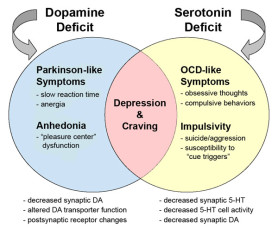
Serotonin is a neurotransmitter which regulates our moods. It is also known as the “happiness molecule” and a deficit in serotonin levels is linked to depression, obsessive-compulsive disorder, anxiety, eating disorders, and insomnia, among others. In men, low serotonin levels are expressed as ADHD, impulsive behavior, and excessive drinking. Women are more likely to experience mood imbalances and food cravings.

Dopamine production and reception are also affected by the imbalance of gut flora. Dopamine is the “motivation molecule” and this is what gives us the ability to see things through, as well as giving us a sense of accomplishment when we achieve our goals. Dopamine deficiency manifests as apathy and lack of motivation, lack of ability to experience pleasure, and low libido. Very often the response to low dopamine levels is over-indulgence in pleasure-inducing substances such as alcohol and recreational drugs, or other self-destructive behaviors.

To function properly and be content, the levels of serotonin and dopamine should remain balanced. If we have too much serotonin and not enough dopamine, we feel unable to do anything and lack energy and drive. If dopamine is dominant over serotonin, we are unable to feel happiness and can only see problems without solutions.

gut neurotransmitters connectionsIf both dopamine and serotonin levels are low, we will have no motivation and no pleasure or contentment, resulting in depression and cravings.


 

Check out our Integrative Addiction Conference 2016 being held in Austin, Texas


A large proportion of these neurochemicals is produced in the gut and affect appetite. It is only recently that research has been made into the possibility that the microbes in the gut produce the substances. As the production of these neurotransmitters and the anatomy of their receptors becomes affected or damaged by the presence of harmful microbes and the lack of beneficial bacteria in the gut, the symptoms associated with their deficiency or imbalance increase. Sufferers rely on ever-increasing quantities of mood-altering substances to balance the shortfall. But the pleasure granted by these devices and substances becomes more and more fleeting, so more and more has to be taken for the same “high”. Thus, addiction is born.

Colonizing the gut with healthy and beneficial bacteria is a process that has to start in childhood to be fully effective in regulating and maintaining brain chemistry. Once the neurotransmitters have been affected, it is much more difficult to rectify the problem and restore the balance. Understanding the problem informs the solution. Adopt a diet that limits gut damage and prevents the release of harmful bacteria into the blood stream. Nutritional supplements and probiotics can restore the beneficial gut flora to healthy levels. There are also supplements that can increase the production and supply of the neurotransmitters. A holistic and integrated approach to a solution will be more effective than treating only the neurochemical imbalance without addressing the cause, which lies in the gut and the gut flora.

The link between the gut, the brain, and addiction will be explored more fully at the Integrative Addiction Conference in August 2016. For more information and to register, visit the website at http://regenerativepotential.com/integrativeaddictionconference/.


Facebooktwitterpinterestlinkedin

Healing Leaky Gut effectively for good health

Healing Leaky Gut effectively for good health: What the body can fight at a time

Healing leaky gut

The time for Healing Leaky Gut effectively for good health is now

From our previous article we noted that Leaky Gut also known as intestinal sponginess has the ability to cause a host of health complications in the life of humans and all these have adverse effects on our wellbeing. We appreciate that the intestines is the engine where a host of activities and systems take place in people’s live including digestive system, nervous system, and immune system. These systems can only function well when they are in perfect health and that is what we want to focus on progressively in this article. We are going to borrow heavily from the expert opinions from AWAREmed Health and Wellness Resource Center under the able leadership of doctor Dalal Akoury who is the MD, President and founder of the same about their understanding of healing Leaky Gut effectively for good health. The question we now want to address is “who well can we keep these systems healthy?” stay with us on the link to get first-hand information on how to keep them healthy.

Looking at the society we live in today, it is very evident that the modern life is not all that friendly to us and more so it is very hard on the gut. This then causes the body and particularly the digestive tract to be vulnerable to varies attacks including being easily affected by stress, processed foods, alcohol, medications, and bacteria. These effects pose serious chronic irritants which can easily lead into inflammation and progressively to so many other leakages in the thin and delicate lining of your intestinal wall.

When addressing this problem (healing Leaky Gut effectively), it is important to remember that even a tiny leak can cause astonishingly big problems. Nonetheless a healthy gut will be very selective about what is passed into your body through the bloodstream. This is in total contrast of what happen with a leaky gut which can release undigested food elements, bacteria and toxins into the bloodstream. Such impurities in the system will cause potentially outsized immune response says doctor Dalal Akoury.

Healing Leaky Gut effectively for good health: The lining of the gut

According to the experts from AWAREmed Health and Wellness Resource Center there are no two ways when it comes to the health of the gut. As a matter of fact if the damage to the lining of one’s gut is that bad such that substances regularly leaks through, it can cause serious health complications to the direct victim. That is why every effort is being made to have the gut kept healthy at all times and in line with that recent discovery indicates that leaky guts can even lead to autoimmune disorders. Therefore the vicious cycle kind of shape this problem is taking must be broken professionally. We appreciate that our bodies can only fight these conditions up to certain limits that is to say “If someone is struggling with chronic conditions like stress, disease, or inflammation, the normal repair and maintenance of the gut gets postponed because of the limitations.” In other words such limitations doesn’t allow for simultaneous operations.

Healing Leaky Gut effectively for good health: What damages the gut?

Several elements can cause damage to the gut however the main culprits may include non-steroidal anti-inflammatory drugs (NSAIDs) like ibuprofen, as well as sugar, alcohol, processed foods, and any food that is likely to trigger an allergic response. Besides those other irritants include chronic stress, toxins, and microbiome imbalances. The greatest challenge currently is how common such irritants have become in our daily lives. Actually professionally nobody will be surprised that intestinal-permeability problems are prevalent. It is no wonder experts are establishing that these days virtually everybody’s gut leaks to some degree.

Healing Leaky Gut effectively for good health: Damage Control

In the past Leaky gut syndrome has been treated by the integrative and functional-medicine community for several decades. However as changes takes shape with new technologies coming in, other new mainstream medicine are being acknowledged to its treatment too. This then ushers us to the next question which is “what has really changed?” The point is that the detection that human health and behavior are deeply influenced by a huge population of microorganisms living primarily in our guts shook up a lot of experts. To that effect, the western medicine’s acceptance of the leaky gut model has been nothing short of a sea change.

Symptoms of a leaky gut vary meaning that if the leakage is negligible, the symptoms will mostly be limited to the gastrointestinal (GI) tract, explains doctor Dalal Akoury, MD, President and founder of AWAREmed Health and Wellness Resource Center. However more significant leaks are most likely to produce body wide symptoms, adds doctor Akoury, including fatigue, joint pain, rashes, respiratory issues, asthma, and autoimmune responses including psoriasis.

Finally as the condition of the gut degrades, the health impacts can be dramatic. Therefore if you think you or anyone you know may be experiencing the symptoms of a leaky gut, it’s prudent that action is taken promptly to have the problem addressed professionally. Even as you are contemplating doing that, remember that the regeneration of cells is one of the good news you have in this process. The fact that the cells of the intestinal lining replace themselves every three to six days is a serious relief meaning that, given the proper support, your gut can repair itself quickly.

Healing Leaky Gut effectively for good health: What the body can fight at a time

Facebooktwitterpinterestlinkedin
Sexting

Sexting And Its Impacts On Sexuality

Sexting: Sexually explicit messages, photos, videos, or even voicemail can be sent or received over digital platforms devices such as smartphone, email, laptop or webcam. When such a communication takes place, it is called sexting. Sexting is a term coined from two words; sex and text. Sexting does occur between two individuals who are romantically involved with each other.

Impacts Of Sexting On Sexuality

Sexting creates some feeling among those individuals who get involved in the act. On sexuality, the act of sexting does cause a different kind of effects depending on the circumstances and the environment. Sexuality is when one is infatuated with feelings, thoughts or sexual behavior that they are not in control of. So to better understand the impacts of sexting, every angle would need to be examined.

There tends to be some increase in sexual exploration among those individuals, especially teenagers, who practice sexting. When teenagers send or receive messages with sexual contents, their sexuality is aroused, and being teenagers, their curiosity is also awakened. This may lead to the teenagers getting involved in some dangerous sexual habits; like practicing sex with multiple partners, which may consequently lead to contraction of sexually transmitted infections and even unwanted pregnancies.

Sexting

Reputation is also something that would be affected by sexting. When one sends photos are videos of themselves in nudity, there is no guarantee that such message would not end up in some wrong or unintended recipient. Sexting is done in the privacy of the two involved parties, however, when such contents get the light of public, one’s reputation is normally put in line. Tarnished reputation makes one lose credibility in the public face or even at work places.

There is also the case of emotional disturbance. The relationship between the two previously intimate persons who may have been involved in sexting may change for the worse. In most cases, one of the partners may want payback and expose intimate photo or videos of their ex-partner to the public. Such exposure may cause great emotional torture to the victim to the extent that they may lose their self-esteem. Sexting may also cause emotional turmoil in the case where a partner discovers that their better have may be cheating on them. This would be the case when one finds out their partners have more than one partner.

Sexting may lead to sex addiction. Sending and receiving messages of nude photo contents or explicit videos may make one aroused. Such contents would make their urge to have sex increase. The increase in sexual activities caused by this sex wanting feeling may lead to some immoral practices among those involved. Sex addiction leads to prostitution among individuals. Because they are made to no longer be able to survive abstinence, Individuals start paying to have sex. Sex addiction also causes sexual harassment. Individuals who can no longer control their sexual urge ran the risk of getting charged with sexual harassment. Since they are out of control and are unable to practice restraint, accepting a no from a partner becomes extremely difficult.

Sexting

Sexting exposes teenager to sexual contents at a very early age. This, in turn, triggers their sexual imaginations as they tend to do more sex explorations. They, therefore, are forced to develop sexually in their minds long before their bodies. This is particularly harmful to them since they get into sexual activities and practices at a very tender age, ending up getting sexually abused. There is also the feel of social pressure that arises from sexting. Teenagers who have been involved in sexting normally find themselves getting pressurized into having sex as they feel the urge to be like other ‘cool’ people having or practicing sex.

Also, sometimes, there is the case of someone feeling unsatisfied with their body. This is more commonly to women who, when they receive some photos of nude celebrities in their phones from their partners, they tend to question their own bodies wondering why theirs are not well developed as others. This do affect their self-esteem in a great deal.

There is also the disappointment that comes with someone when their nude photo gets to the public. In most cases, one gets shun by people close to them. This is hurtful to individuals especially if they cannot find some help in dealing with such cases. This leads to depression in most cases.

Impacts Of Sexting On Sexuality

Facebooktwitterpinterestlinkedin