Category Archives: Brain Health

Fighting opioid addiction

Environmental toxin exposures

Environmental toxin exposures

Environmental toxin exposures must be eliminated through detoxification process

Environmental toxin exposures: Detoxification

We are living at a time when industrialization and modernization alongside technology are taking precedence in every sector of the economies across the globe. The environmental toxic exposures are no doubt a serious point of health concern. No wonder we can state with a lot of confidence that the daily toxin exposure within our surrounding is causing serious health concern not just to human beings but to all living things including vegetation. Eliminating the toxic elements from our body is becoming a challenge each passing day with our tap water, prescription drugs, chemicals, environmental pollutants, personal care products, processed food, food additives, electromagnetic radiation (EMR from cell phones, cordless phones, microwaves and computers) and mineral depletion of the soil in which our food is grown are all saboteurs of good health. From the expert desk of AWAREmed Health and Wellness Resource Center under the able leadership of doctor Dalal Akoury MD, daily toxin exposure is responsible for the poor state of our health today, and that explains why we need to detoxify our wholeness body mind and spirit.

Environmental toxin exposures: What is Detoxification?

This (detoxification) is actually the process of removing the elements or toxins, from the body. It is important to note that for any meaningful treatment to be done and maintain optimum health it is vital that all the toxic elements are eliminated through a natural process known as detoxification. This process will effectively cleanse the systems of the body thereby allowing the body to more effective in releasing all the toxins.

Environmental toxin exposures: Importance of Detoxification

  • It enhances the human health sin any accumulation of toxins in the body is a key factor in the cause of several diseases and body dysfunctions including early aging.
  • Detoxification enhances the immune system and the reparative, anti-aging faculties of the body.
  • The reversal of toxic accumulation through detox is critical for recovery and to restore health, especially when dealing with the chronic infection or disease such as Lyme disease, cancer, etc.
  • Detoxification can rehabilitate cells and healthy living can aid in the process.
  • As part of an overall plan, detoxification can improve digestion, skin tone, sleep, hormonal imbalances, immune function and general health.

Finally, the toxic nature of our surrounding is very dangerous for the present and even the future generation. People who are addicted to alcohol consumption and illicit drugs are even bearing the greatest pain for themselves and even their loved ones. You can choose today to start all over again if you feel that your body has been invaded by the foreign bodies known as the toxin. If this article is describing your problem, then you can start by calling doctor Akoury to schedule an appointment with her today for the commencement of your detoxification process

Environmental toxin exposures: Detoxification        


Facebooktwitterpinterestlinkedin
Adderall Abuse

Adderall Ritalin role in the brain

Adderall Ritalin role

Adderall Ritalin role in the brain has nothing positive, it’s all about destruction and pain.

Adderall Ritalin role in the brain: The Cocaine substance

If you want to understand drug effect like for instance, the substance-Cocaine and Adderall Ritalin, we must interrogate how they affect the brain. First, in appreciating both cocaine and Adderall Ritalin role into the brain, its addictiveness can’t go unnoticed. Ritalin works by increasing the dopamine output in the brain which helps in concentration improvement. Dopamine is also the neurotransmitter associated with reward and pleasure in the brain, and for this reason, when Ritalin is taken in higher doses than the recommended amounts it can result in euphoria. Anything that causes a psychotropic reaction (a high) can result in a psychological addiction, and Ritalin is no different. Patients with ADHD who require Ritalin therapy are given the medication in gradually increasing dosages to slowly and steadily build up base levels of dopamine in the brain, and when this process occurs over time and in a controlled manner, there is no intoxication, and there is no risk of addiction.

Adderall Ritalin role in the brain: Wrong usage of clinical medications

When people take medication for non-clinical reasons, they tend to take a higher dosage, do get high, and with prolonged abuse addiction becomes a reality. Adults and children taking the medication for a legitimate medical condition, and following a doctor’s recommendations for dosage amounts and frequency, have little to worry about. Adults prescribed Ritalin sometimes do experiment with higher doses, and there have been thousands of cases where parents may also take and abuse their children’s medications. Although not as potent as a strict amphetamine, the abuse of Ritalin can be quite pleasurable and is also associated positively with weight loss, and as such can be quite tempting.

Adderall Ritalin role in the brain: Ritalin withdrawal symptoms

Doctor Dalal Akoury says that once a person becomes addicted to Ritalin when they try to stop taking the drug, they will experience a syndrome of withdrawal symptoms. These symptoms of withdrawal include Tiredness, anxiety, depression, lethargy, hunger, cravings and many other symptoms.

The withdrawal and detox off of Ritalin present very similarly to other psychostimulants like crystal meth and cocaine, and the symptoms are predominantly internal and psychological in nature. Detox can best be accomplished in a facility away from access to the drug, and with the prescription of appropriate psychiatric medications that can take the edge off the depression and anxiety.

Adderall Ritalin role in the brain: Adderall

Adderall is commonly prescribed to patients who have difficulty controlling their actions, maintaining focus, or staying awake. It contains the active ingredients dextroamphetamine and levoamphetamine, both of which are psychostimulant amphetamine molecules. Adderall was first introduced to the public in 1996 as an instant-release (IR) drug by Shire Pharmaceuticals. In 2006, a new version, Adderall extended release (XR), was made available as well. While the instant-release drug requires 3 hours to reach its maximum plasma concentration after consumption, the extended release version takes up to 7 hours to do so. Some of the known side effects of Adderall include insomnia, loss of appetite, nausea, and hallucination. Adderall has been found to be addictive and dangerous to the health of some patients. Several withdrawal symptoms include panic attacks, seizure, fatigue, and depression. You can choose today to be free from all these problems by scheduling an appointment with doctor Dalal Akoury for more professional advice.

Adderall Ritalin role in the brain: The Cocaine substance


Facebooktwitterpinterestlinkedin
drug-abuse

Substance abuse movement in the brain

Substance abuse movement

Substance abuse movement in the brain can be very dangerous

Substance abuse movement in the brain: When the brain is under influence of drugs

It is because of a well-functioning brain that we can competently say that we are healthy. Any negative effect on the brain affects human health adversely. And in particular when substance abuse movement in the brain life become very unbearable. This is because the brain is the engine that drives the human body meaning that if the brain is healthy, it will process and transmit healthy information to various parts of the body. On the other hand, when the brain is contaminated all the processed information will be contaminated too. That is why we need to understand, protect and maintain the brain in perfect health if we want to get full optimum from it. The brain must be cared for it and kept safe from all the substance abuse flow which are likely to bring damage to it. Therefore, that is going to be our focus of discussion in this article and even in the subsequent posting.

Substance abuse movement in the brain: The brain’s adaptation to the environment

Remember that the brain is the most dynamic and complex organ in our bodies. I believe that you are interested in finding out how to care for this most vital organ of your body. Therefore it will do you good to keep on the link to find out more from the experts at AWAREmed Health and Wellness Resource Center under the able leadership of doctor Dalal Akoury. According to these experts, the proper functionality of the brain delivers quality assurance of our very survival. Doctor Akoury says that when our brains (the human brain) functions well, we are constantly adapting or adjusting to our environment (our surroundings) changes well. What many may not know is that this smooth adaptation is the work of our brain. And ironically, it is the brain’s ability to be so adaptive that contributes to the formation of all manner of addictions. From the various studies conducted by researchers across the globe, it has been established that addiction has a direct effect on the brain and that it causes changes in the brain in at least four fundamental ways:

  • Addiction causes changes to the brain’s natural balance (homeostasis).
  • Addiction alters brain chemistry.
  • Addiction changes the brain’s communication patterns.
  • Addiction causes changes to brain structures and their functioning.

The findings listed above will help us understand the importance of the brain and why we must protect it from the effects of drug addiction which has been sighted as one of the main course of damage to this very vital organ. Doctor Dalal Akoury and her team of experts from AWAREmed Health and Wellness Resource Center are going to be very resourceful even as we discuss each of these fundamental changes that come with the effects of addiction to the brain progressively. You certainly don’t want to miss this and so we invite you to stay with us on the link and be enriched with this worthy health information. But in the meantime, if you are struggling with any kind of addiction, you may want to consult with doctor Akoury for a more professional undertaking today.

Substance abuse movement in the brain: When the brain is under influence of drugs

http://regenerativepotential.com/wp-admin


Facebooktwitterpinterestlinkedin
over the counter drug abuse

Brain activities limitations

Brain activities limitations

Brain activities limitations comes with the drug addiction infringement

Brain activities limitations: Drug addiction complications

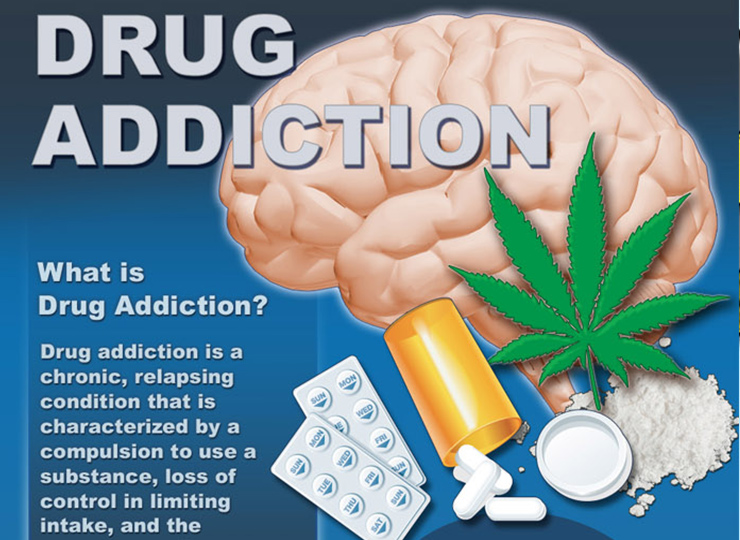
Before getting into the discussion about brain activities limitations, let’s understand first what drug addiction is. This is a health condition that can be very chronic, often relapsing brain disease that causes compulsive drug seeking and use, despite harmful consequences to the drug user and those around them. Drug addiction is also a brain disease because the abuse of drugs leads to changes in the structure and function of the brain. Although it is true that for most people the initial decision to take drugs is voluntary, over time the changes in the brain caused by repeated drug abuse can affect a person’s self-control and ability to make sound decisions, and at the same time create an intense impulse to take drugs.

Brain activities limitations: The effects of drugs on the brain

When drug pollution is registered in the brain, definitely some changes will take effect and it is because of these changes in the brain that makes it so challenging for a person who is addicted to stop abusing drugs. Even though these changes can cause serious complications in one’s life, the good news is that, from the various studies and confirmed scientific researches we now have positive treatments that help people to counteract addiction’s powerful disruptive effects and regain control. Doctor Akoury can now confirm that research findings have shown that combining addiction treatment medications, if available, with behavioral therapy is the best way to ensure success for the majority of the patients. According to the experts at AWAREmed Health and Wellness Resource Center, treatment approaches that are tailored to each patient’s drug abuse patterns and any concurrent medical, psychiatric, and social problems can lead to sustained recovery and a life without drugs which is the desire of all users and even to their loved ones.

Finally, as we come to the end of this discussion, doctor Akoury reiterates that just like with other chronic diseases like for instance diabetes, asthma, or heart disease, drug addiction can be managed effectively with the right professionals being involved. However, it must be noted that whereas drug addiction is manageable, it must also be appreciated that it is not uncommon for a person to relapse and begin abusing drugs again after a successful treatment. Nonetheless, even as this possibility is a point of concern it must be noted that relapse is a common occurrence in the recovery process and must not be construed to suggest or signal an element of failure; rather, it indicates that treatment should be reinstated or adjusted, or that alternate treatment is needed to help the person regain control and recover.

That is why when you are seeking for treatment, you must be careful to land only into the offices of experienced addiction professionals like doctor Dalal Akoury (MD) a veteran addiction expert now for over two decades. Doing this will guarantee your total recovery from the scourge of addiction. You can schedule an appointment with doctor Akoury today for the assurance of elimination of drug addiction in your life permanently.

Brain activities limitations: Drug addiction complications

http://www.integrativeaddictionconference.com/wp-admin


Facebooktwitterpinterestlinkedin
Dopamine Rush

Pleasures registration brain and addiction

Pleasures registration brain

Pleasures registration brain and addiction. When drugs get access to the brain, there is bound to be serious health problems

Pleasures registration brain and addiction: Neurotransmitter dopamine

Among the functions of the brain is that of pleasures registration as and when they happen irrespective of their origin. It doesn’t matter whether they’re associated with a psychoactive drug, a monetary reward, a sexual encounter, or a satisfying meal. The fact is in the brain pleasurable principles has a distinct role of releasing the neurotransmitter dopamine in the nucleus accumbens, a cluster of nerve cells lying underneath the cerebral cortex. Dopamine release in the nucleus accumbens is so consistently tied with pleasure that neuroscientists refer to the region as the brain’s pleasure center.

All drugs of abuse, from nicotine to heroin, cause a particularly powerful surge of dopamine in the nucleus accumbens. The likelihood that the use of a drug or participation in a rewarding activity will lead to addiction is directly linked to the speed with which it promotes dopamine release, the intensity of that release, and the reliability of that release. Therefore addictive drugs provide a shortcut to the brain’s reward system by flooding the nucleus accumbens with dopamine. The hippocampus lays down memories of this rapid sense of satisfaction, and the amygdala creates a conditioned response to certain stimuli.

Brain pleasurable principle and drug addiction: Learning the process

Previously it was believed that an experience of pleasure alone was enough to compel people into consistent seeking of addictive elements or activities. However new research findings indicate that the situation may be more complicated. This is because dopamines are not only responsible for the experience of pleasure but are also playing a role in learning and memory which are the two key elements in the transition from liking something to being addicted to it. Currently, the philosophy about addiction is that dopamine interacts with another neurotransmitter, glutamate to take over the brain’s system of reward-related learning. Remember that this system has an important role in sustaining life because it links activities needed for human survival (such as eating and sex) with pleasure and reward.

Finally, it may interest you to note that the reward circuit in the brain may include areas involved with motivation and memory as well as with pleasure. Addictive substances and behaviors stimulate the same circuit and then overload it. And therefore repeated misuse of any addictive substances or behavior will cause nerve cells in the nucleus accumbens and the prefrontal cortex (the area of the brain involved in planning and executing tasks) to communicate in a way that couples liking something with wanting it, in turn driving us to go after it. That is, this process motivates us to take action to seek out the source of pleasure. This can be very unhealthy more so if the source of pleasure is drugs. Many often run to drugs for pleasure and as such, the prevalence of drug abuse is on the rise. We can choose individually and collectively to correct this by scheduling an appointment with doctor Dalal Akoury MD, who is a veteran addiction expert and also the founder of AWAREmed Health and Wellness Resource Center for help today.

Brain pleasurable principle and drug addiction: Neurotransmitter 

http://www.integrativeaddictionconference.com/wp-admin


Facebooktwitterpinterestlinkedin