Category Archives: women’s libido supplements

Gaining Weight When Stressed Up

Gaining Weight When Stressed Up — Truth Exposed

Stress

Gaining Weight When Stressed Up. Stress is everywhere around us avoiding stress will go along way in keeping you healthy.

Have you taken a good look at what is happening around you? I mean things that trigger your emotions making you sad or tired in the mind body and spirit? I am referring to things and situations like your job are hanging by a thread probably the board is currently discussing your dismissal, your teenage boy is becoming unruly and he is threatening quitting school for no reason are we together now? These are things that cause us to be very much stressed with life. Irrespective of how you look at it dear reader, stress is actually a way of life in this 21st century. Because of the effects of stress many people are affected in different ways and the effects often go beyond feelings of anxiety and discomfort. For instance have you found yourself eating heavily junk food while trying to beat certain work deadline? Or endlessly stocking and eating cookies in your car while driving and many similar behaviors! Stress is a force which can rearrange your daily programs. It (stress) will increase your appetite causing you to be holding onto fats which interferes with your ability to live a healthy lifestyle. How then does stress leads to weight gain?

Hormones

When your brain senses the presence of any threat whether it is burning fire, irritating employer or an accumulation of debts with no expectation of income to foot the bills, it will triggers the release of adrenaline, CRH (corticotrophin releasing hormone), and cortisol. With the release of these chemicals, your body and brain position themselves to handle the threats by causing you to be more alert and ready to take action and contain any injury which may arise. For a while the adrenaline will help you feel less hungry as your blood flows away from the internal organs and to your large muscles to be ready for fight or flight. However, once the effects of adrenaline wear off, cortisol, known as the stress hormone, stays around and begins signaling the body to replenish your food supply.

Belly Fat

In the days when our ancestors were fighting off tigers and famine, their bodies adapted by learning to store fat supplies for the long haul. The unfortunate result for you and me is that when we are chronically stressed by life crises and work-life demands, we are prone to getting an extra layer of “visceral fat” deep in our bellies. Your belly has an ample supply of blood vessels and cortisol receptors to make the whole process flow more efficiently.

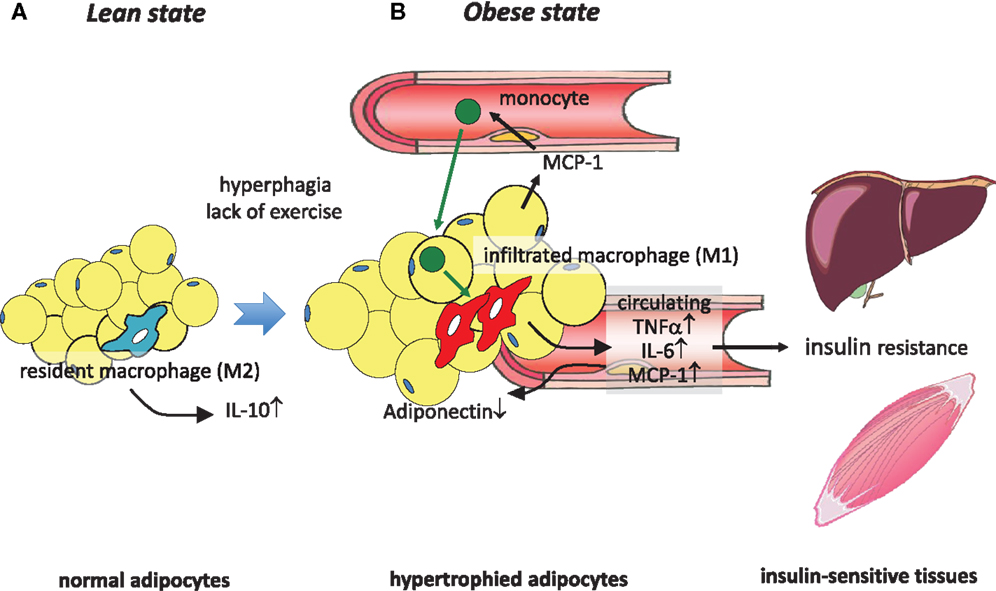
The downside is that excess belly fat is unhealthy and difficult to get rid of. The fat releases chemicals triggering inflammation, which increases the likelihood that we will develop heart disease or diabetes. And it can make it more difficult to fit into those lovely jeans you splurged on, leading to more stress about money wasted! Unfortunately, excess cortisol also slows down your metabolism, because your body wants to maintain an adequate supply of glucose for all that hard mental and physical work dealing with the threat.

Anxiety

When we have a surge of adrenaline as part of our fight/flight response, we get fidgety and activated. Adrenaline is the reason for the “wired up” feeling we get when we’re stressed. While we may burn off some extra calories fidgeting or running around cleaning because we can’t sit still, anxiety can also trigger “emotional eating.” Overeating or eating unhealthy foods in response to stress or as a way to calm down is a very common response. Anxiety can also make you eat more “mindlessly” as you churn around worrying thoughts in your head, not even focusing on the taste of the food, how much you’ve eaten, or when you are feeling full.

Cravings and Fast Food

When we are chronically stressed, we crave for junk foods which tend to be easy to eat, highly processed, and high in fat, sugar, or salt. We crave these foods for both biological and psychological reasons. Stress may mess up our brain’s reward system or cortisol may cause us to crave more fat and sugar. When we are stressed, we also may be more likely to drive through the Fast Food place, rather than taking the time and mental energy to plan and cook a meal.

Less Sleep

Take some time and have adequate sleep. It actually causes you nothing to sleep well yet the benefit is life changing, don’t occupy your mind with the worries of life, they are the reasons why you have insomnia. Even if you’re to sit an exam still read but ensures you have enough sleep because sleep is a powerful factor influencing weight gain or loss. Lack of sleep may disrupt the functioning of ghrelin and leptin—chemicals that control appetite.

Reducing Weight Gain When You’re Stressed

Excessive weight is certainly not good for your health and the best you can do for yourself is to make effort of cutting down on your weight. The following are some of the ways you can use to reduce your weight for a better health ahead of you.

Physical Activities

Aerobic exercise has a one-two punch. It can decrease cortisol and trigger release of chemicals that relieve pain and improve mood. It can also help speed your metabolism so you burn off the Learn Mindful Eating

Mindful Eating programs train you in meditation, which helps you cope with stress, and change your consciousness around eating. You learn to slow down and tune in to your sensory experience of the food, including its sight, texture or smell. You also learn to tune into your subjective feelings of hunger or fullness, rather than eating just because it’s a mealtime or because there is food in front of you. A well-designed study of binge-eaters showed that participating in a Mindful Eating program led to fewer binges and reduced depression.

Engage in Rewarding Activities

It is true that food can keep you busy but this would be a very poor option especially when you’re making effort to cutting down on your weight and managing stress. Therefore finding activities like hiking, reading, attending yoga class, getting a massage, patting your dog, or making time for friends and family can help to relieve stress without adding on the pounds.

Although you may feel that you don’t have time for leisure activities with looming deadlines, taking time to relieve stress helps you to feel refreshed, lets you think more clearly, and improves your mood, so you are less likely to overeat.

Finally writing down your healthy eating and exercise goals may make you more conscious of your desire to live a healthier lifestyle and intensify your commitment. Researchers have established that writing expressively or about life goals can improve both mood and health. Finally your good health should be your number one priority. The fact that stress is very common in our day today life is not reason enough to have you get to other life complications relating to weight gain and obesity. It will be necessary that you talk to Dr. Dalal Akoury, Founder of AWAREmed Health and Wellness Resource Center, a professional in her own right and have been of help to many in the same situation. Doctor Akoury has been in practice for the last 20years offering her exclusive NER Recovery Treatment to everyone including other physicians and health care professionals through training, clinical apprenticeships, webinars and seminars. Just like qualified professional are calling her for help in their desire to manage their stress and weight you can also do the same and get your life back on the recovery path for a long and fulfilling life a head of you.

Gaining Weight When Stressed Up — Truth Exposed


Facebooktwitterpinterestlinkedin

Obesity and Mitochondrial dysfunction

Obesity and Mitochondrial dysfunction – What you didn’t know Exposed

Mitochondrial

Obesity and Mitochondrial dysfunction diseases result from failures of the mitochondria, specialized compartments present in every cell of the body except red blood cells

Dysfunction means that something is not working or functioning in appropriately and mitochondrial dysfunction refers to a situation in which the mitochondria are not working properly.

Mitochondrial diseases result from failures of the mitochondria, specialized compartments present in every cell of the body except red blood cells. They are responsible for creating more than 90% of the energy needed by the body to sustain life and support growth.

When they fail, inadequate amount of energy is generated within the cells and this result to cell injury and occasionally the cell may die all together. In the event that this process is recurring throughout the body, whole systems begin to fail, and the life of the person in whom this is happening is severely compromised. The disease primarily affects children, but adult onset is becoming more and more common.

Depending on which cells are affected, symptoms may include loss of motor control, muscle weakness and pain, gastro-intestinal disorders and swallowing difficulties, poor growth, cardiac disease, liver disease, diabetes, respiratory complications, seizures, visual/hearing problems, lactic acidosis, developmental delays and susceptibility to infection

Methods of Reviving Aging Mitochondria

Understanding the proposed mechanisms by which mitochondrial dysfunction can contribute to aging and aging related diseases suggests several potential interventions. These include:

  • Maintenance of optimal Krebs cycle and respiratory chain efficiency.
  • Restoration of mitochondrial membrane fluidity.
  • Reduction in deleterious free radical activity.

CoQ10

Coenzyme Q10 is probably the most widely used cofactor for treating mitochondrial-related diseases. CoQ10 functions as the electron carrier in the inner mitochondrial membrane, transferring electrons from complexes I and II to complex III. In addition to increasing biosynthesis of ATP (the universal energy molecule), and acting as a potent free radical scavenger, CoQ10 also reduces lactic acid levels, improves muscle strength, and decreases muscle fatigability.1

Mitochondrial restoration will cause weight loss

The role of your metabolism is to take the oxygen we breathe and the food we eat and process it to make energy, the fuel for life. (The fuel for your car is called gas. The fuel for your body is called ATP and it is produced from the combustion of food and oxygen).When they are not working properly, you suffer all the symptoms of low energy like:

  • Fatigue
  • Memory loss
  • Pain
  • Rapid aging and more.

Along the way, many things can go wrong that may impede your metabolism, make it run less efficiently, or practically shut it down. Fatigue is the most common symptom of poorly functioning mitochondria. We need to keep them in top shape. The reason we poop out as we age is the constant insult and injury we give our mitochondria.

We have over 100,000 trillion of these powerhouses in our body, and each one contains 17,000 little assembly lines for making ATP, our major fuel. They use over ninety percent of the oxygen we breathe. They take up forty percent of the space inside the heart cells. The only problem is they are very sensitive to damage. And the injury is from uncontrolled oxidative stress, which results from:

  • Toxic insults
  • Infections
  • Allergens
  • Stress and eating too much poor quality food.

Experts from the University of California at Berkeley have spent the last decade discovering how we can give ourselves a metabolic tune up. In one the studies they (experts) gave old rats who were tired, wouldn’t get on the treadmill anymore, and couldn’t find the cheese in the maze, or swim very far, two molecules that boost metabolism, that make the mitochondria run better. They are alpha lipoic acid and acetyl-L-carnitine. Overnight these rats became young rats. They got up on the treadmill themselves, swam long distances without fatiguing and could easily find the cheese in the maze like young healthy rats. The question which begs for an answer is “How could that happen?” Well, the simply gave the cells the raw materials they need for optimal function, meaning that as we age, our metabolism burns out from a lifetime of damage and insults. So again, the way to get healthy, the way to ultra-Wellness is very simple. Ultimately the goal of Ultra Wellness is to give everyone a metabolic tune up.

  • First, find the things that damage your metabolism and mitochondria.
  • Second, give your body the things that help the mitochondria function optimally.
  • Getting rid of toxins in the body will give you more energy. So here’s another reason to exercise: Exercise accelerates the detoxification process.
  • Exercise pushes the blood to circulate more efficiently through the body, allowing nutrients to move easily to reach all the organs and muscles.
  • Exercise helps lymph fluids circulate through the body, which removes toxins and other harmful materials. When you exercise, you naturally take in more oxygen; to make room for the added oxygen, your cells kick out toxins that are taking up space. When you exercise properly, your build up a sweat and toxins are released through the pores of the skin.
  • Playing at anaerobic levels is a great way to get in peak shape. It doesn’t do anything for longevity, or probably for overall health, but it’s great for vim, vigor and pure fitness.
  • Regular exercise is one of the most important things you can do for health. Participation in physical activity improves several body functions. These include: weight control, decreased risk of cardiovascular disease, decreased risk of diabetes, reduced risk of cancer, improved strength of bones and muscle, enhanced emotional status, decreases the natural degenerative changes that come with aging, and increases your chances to live longer.
  • Having said that being consistently active can actually cause degeneration. Rest and recovery periods are essential as these periods allow the body to repair and rebuild itself.
Exercise and the mitochondria

In conclusion it is worth noting that consistent exercising can lead to overuse injury. The motivation to bring your obese condition to manageable level must not inflict on you more harm. Be sure to separate between consistently exercising and regular exercise. As you take this worthy step it is important that you consult with the experts and doctor Akoury who is also the founder of AWAREmed Health and Wellness Resource Center is one of the most experienced medical professionals who has been in this practice for over two decades now. Calling her will be the best decision you can make because while at her office she will together with her team of experts attend to you professionally while focusing on Neuroendocrine Restoration (NER) to reinstate normality through realization of the oneness of Spirit, Mind, and Body, Unifying the threesome into ONE.

Obesity and Mitochondrial dysfunction – What you didn’t know Exposed


Facebooktwitterpinterestlinkedin

Effects of Obesity before Pregnancy

Effects of Obesity before Pregnancy – What you need to know

Obesity

Effects of obesity before pregnancy is very vital for it goes along way in protecting the good health of both the mother and the baby

The issue of weight gain is developing in a very high speed and it is becoming the concern of all healthcare providers globally. It has in the recent past become the obvious metabolic disease and this has led the World Health Organization (WHO) to consider obesity as one of the most serious global health problems of the 21st century. It is not a simple thing for the WHO to list obesity in this ranking and so we all have a duty to share and make contributions toward bring this condition to some degree of control. Therefore, what is this condition called obesity? By definition obesity is a health condition in which the accumulation of excessive body fat to an extent that is highly likely to impair health and increase morbidity and mortality. The most commonly use method of measuring obesity is body mass index (BMI) where an individual will be considered to be overweight if their BMI is between 25 and 30 kg/m2 while those with more than 30 kg/m2 are considered to be obese. In this article we are going to interrogate the effects of obesity in women who are planning to get pregnant in the future, in other words the focus of this article will be obesity before pregnancy. As we get into this discussion, I want to introduce to you one of my cherished professional dealing with issues of weight gain in the most natural way, I am talking about doctor Dalal Akoury who has been in this practice for well over 20 years and we will be making reference of her practice from time to time so that you can call her to attend to your situation.

According to WHO the prevalence of obesity in pregnancy cut across 1.8 to 25.3% with effects of obesity before and during pregnancy constituting a major risk factor for both maternal and fetal complications. While appreciating that children born of obese mothers may become obese in their childhood and develops metabolic syndrome in their adulthood, it is possible to address some of the issues relating to obesity during pregnancy since at this time mothers will be more willing to accept certain changes in their lifestyle like a well-balanced diet and bit of indulgence in physical activities, practicing this will certainly improve the fetal health. It therefore goes without saying that a well-balanced body weight at this point is very important, we will continue with this in our next article but for now let us get back to the discussion of obesity before pregnancy.

Are you planning to get Pregnant?

It is very essential that women planning to get pregnant make effort to maintain normal body weight because being obese or even being underweight has negative effects on pregnancy, these two conditions can cause a woman to have a reduced fertility in all dynamics that is to say when observed in both natural conception and conception achieved by assisted reproduction techniques (ARTs). In many instances when subfertility is observed in obese women, it is always occasioned partially due to the decrease in frequency or complete absence of ovulation.

The dominant cause of anovulation is polycystic ovary syndrome (PCOS), which is characterized by central visceral obesity in 40% of the cases. Moreover, in a wider context of metabolic disorders,

  • Low concentration of serum
  • High-density lipoprotein (HDL) cholesterol
  • High concentration of triglycerides
  • Low-density lipoprotein (LDL) cholesterol
  • Increased concentrations of plasminogen activator inhibitor-1 (PAI-1) tend to co-exist.

All these metabolic derangements increase the risk of developing:

  • Arterial hypertension
  • Coronary heart disease and
  • Thrombosis

In addition, hyperinsulinemia promotes the production of testosterone and Δ4-androstendione from the theca cells in the ovary and results in a condition of hyperandrogenemic anovulation, with a phenotype characterized by hirsutism, obesity, acne, seborrhoea and hair loss.

Obesity has been observed to exert a negative impact on ARTs. Specifically, obesity may adversely affect the duration of ovarian stimulation, number and quality of oocytes and embryos, fertilization rate, embryo transfer rate as well as implantation and pregnancy rates. In obese women, a longer duration of ovarian stimulation and higher doses of gonadotropins are required. Additionally, higher cancellation rates and higher incidence of follicular asynchrony are often observed. The lower number of oocytes retrieved in overweight and obese as compared to normal weight women may be due to the lower number of follicles, technical difficulties or both.

Moreover, obesity can prevent proper trans-abdominal ultrasonography imaging during embryo transfer. All these mechanisms may be responsible for the decrease in implantation and pregnancy rates in obese women undergoing ART.

What to do before pregnancy?

There are certain important things that you need to consider when you’re planning to get pregnant, for instance emphasis needs to be out in normalizing your weight. You should neither be over or underweight because having normal weight is not only good for conception but also for the outcome of the pregnancy. While appreciating that most pregnancies are not planned it is very important that you consult a specialist on how to lose weight and calling doctor Akoury an expert in matters relating to weight and obesity will be the starting point. Remember that things are changing and the prevalence of obesity is worrying today we have established fact that weight loss before pregnancy results in a better chance for conception and increases the percentage of live births for obese women with or without PCOS.

Obesity is not an easy condition to manage and it even gets more complicated when pregnancy is involved. It is therefore very essential that obese women are fully informed about the risks of obesity and the benefits of weight loss. This valuable information will be available at AWAREmed Health and Wellness Resource Center under Doctor Akoury’s care. At this facility you will meet real expert who will attend to you professionally and help you in the management of your weight by encouraging an improved lifestyle through balanced diet and physical exercise. Besides this doctor Akoury together with her team of her experts will focus on Neuroendocrine Restoration (NER) to reinstate normality through realization of the oneness of Spirit, Mind, and Body, Unifying the threesome into ONE. The sole objective of experts at this facility under the able leadership of doctor Akoury is to restore your self-esteem and face life positively a head of your planned pregnancy. Call now and experience the real life fulfillment thereafter.

Effects of Obesity before Pregnancy – What you need to know


Facebooktwitterpinterestlinkedin

Fetal complications of Obesity

Fetal complications of Obesity – Taking positive Precautions

Obesity

Fetal complications of Obesity does not discriminate between the mother and the baby both are at risk and a lasting solution is needed immediately

Not again shall we let our mothers die of conditions we can manage and correct, obesity prevalence is a health condition you and I have the power of controlling. Our people are dying because of lack of knowledge and this article is meat to correct that. Take for instance the numerous complication reported in various health institutions globally, a very good portion of them is directly associated to excessive weight and obesity. Why am I saying this, maternal obesity is associated with an increased risk for perinatal mortality and occurrence of genetic disorders. The most common complications for the fetus include:

  • Intrauterine death
  • Genetic disorders
  • Macrosomia

In the long term, large for gestational age (LGA) neonates of obese or diabetic mothers are prone to development of childhood obesity and metabolic syndrome in their adult life.

Fetal death

How painful it is for us to be losing mother who are only trying to give bundles of joy to the society because of weight related complications? It has been established that fetal death constitutes a dramatic development of any pregnancy this even becomes more painful especially when it takes place in late pregnancy. The understanding of this is that by this we shall have lost two lives that of the mother and the baby. In some studies it has been established that an up to five-fold increase in intrauterine death as well as increased infant mortality rate has been recorded in obese women. The findings also indicate that there is a strong relationship between maternal BMI and infant mortality rate. The question I ask is why must this take place when we have professionals who can fix the situation? If you dint know then call doctor Akoury an expert of over two decades in weight related conditions and she will greatly help you get out of this precarious condition.

Congenital anomalies

Prenatal screening for congenital anomalies becomes challenging in obese women because of difficulty of interpreting blood serum indices alongside the inability to display the fetal anatomy on the ultra-sonogram. These difficulties could be the indicators explaining the increased incidence of congenital anomalies in fetuses of obese women. Nevertheless, there are data supporting an actual association between maternal obesity and genetic disorders. Specifically, the fetuses of obese mothers have a higher risk of developing abnormalities of the neural tube, as for example spinal bifida, cardiovascular abnormalities, as well as abnormalities of the abdominal wall such as omphalocele. These abnormalities are more prevalent in offspring of women with type 2 diabetes and folic acid deficiency, disorders that often coexist with obesity. Finally, maternal obesity results in an increased admission rate of the offspring to the neonatal intensive care unit.

Macrosomia

  • The relationship between maternal obesity and fetal Macrosomia has been established by many studies. Maternal weight and insulin resistance before pregnancy affect fetal growth, as is reflected in the birth weight.
  • Obesity and insulin resistance alter placental function which, during the last weeks of pregnancy, increases the availability of glucose, free fatty acids and amino acids to the fetus. Thus, maternal hyperglycemia induces fetal hyperglycemia and, as a consequence, hypertrophy/hyperplasia of the fetal pancreas and hyperinsulinemia.
  • Insulin has a direct effect on cell division that leads to macrosomia. Therefore, women with diabetes are at high risk of delivering macrosomic babies.
  • Obese women even with normal glucose tolerance have a two-fold higher risk of giving birth to macrosomic babies since both conditions are independently correlated to macrosomia.
  • Given that the incidence of obesity is approximately ten-fold that of gestational diabetes, it is evident that maternal lifestyle exerts a great influence on the incidence of fetal macrosomia.
  • Once more this brings in quantitative relationship between maternal BMI and the risk of delivering a macrosomic/LGA neonate.
  • Macrosomia, as well as maternal height and weight, gestational age and number of prior deliveries, are considered reliable predictors of the risk of obstetrical events, such as shoulder dystocia and injury of the branchial plexus.
Long-term complications

There is considerable evidence that the complications of maternal obesity extend beyond intrauterine and neonatal life into childhood and adulthood, thus leading to serious lifelong health problems. Maternal obesity constitutes a risk for childhood obesity, irrespective of birth weight and of smoking during pregnancy, as well as a risk for the appearance of the metabolic syndrome and cardiovascular disease in adulthood.

There are a large number of pathophysiologic mechanisms that could explain the fact that obese mothers give birth to obese children. Genetic factors are undoubtedly responsible to a certain degree for the tendency of both mother and child to be overweight.

Besides that the impact of the environment is to be taken into account since mother and child typically share the same eating habits. Moreover, the increase in food intake during pregnancy has a quantitative effect on the fetus, promoting the development of adipose tissue.

Childhood and adolescent obesity exerts a long-lasting physical and psychological impact and increases population morbidity and mortality.

The increasing prevalence of maternal obesity before and during pregnancy results in a vicious circle of obesity in subsequent generations. Thus, obese mothers give birth to obese daughters, who have a higher risk of suffering from obesity and diabetes during their own pregnancies.

Developmental origin of adult disease

The abnormal development of the fetus results in increased morbidity during childhood, adolescence and adulthood, a phenomenon known as “fetal programming” or “developmental origin of adult disease”.

The fetal adjustment to the uterine environment leads to permanent changes in the phenotype (i.e. physical structure, physiology and metabolism) which might not be fully functional in extra-uterine conditions.

Finally the dangers associated with maternal obesity constitute a serious health risk for the mother and fetus, the intensity increases with the degree of obesity. A non-balanced diet during pregnancy contributes not only to abnormal fetal development and subsequently increased neonatal morbidity and mortality but also to increased morbidity during childhood, adolescence and adulthood. Therefore systematic effort for weight reduction is very necessary if we have to avoid transferring obesity from generation to generation this you can do by calling doctor Dalal Akoury a dedicated expert in reinstatement of complications related to obesity. Doctor Akoury founded AWAREmed Health and Wellness Resource Center to help you out of situations like this. While at her office she will together with her team of experts focus on Neuroendocrine Restoration (NER) to reinstate normality through realization of the oneness of Spirit, Mind, and Body, Unifying the threesome into ONE. Remember that achieving this goal will result in a sharp decrease in fetal and neonatal morbidity and mortality and will improve the outcome of offspring and of future pregnancies.

Fetal complications of Obesity – Taking positive Precautions


Facebooktwitterpinterestlinkedin

Obesity during Pregnancy

Obesity during Pregnancy – The Risk associated with Weight gain

Obesity

Obesity during Pregnancy can complicate life if not properly addressed. The need for weight lose is a must done for good health of both the mother and the baby

If you have been on the link you must have gone through our previous article when we introduced this discussion of obesity and pregnancy. We stated that before you can get pregnant, it is essential that your weight is normalized. Being obese or underweight is not health for pregnancy you can refer to that article on effects of obesity before pregnancy. In this article our focal point of discussion is going to be based on the obesity during pregnancy in other words you’re already pregnant, how should you live your life in that condition of pregnancy.

Obesity during Pregnancy – Maternal complications

As we have stated that normal weight is essential during pregnancy one would wonder that what this normal weight recommended during pregnancy. The recommended gestational weight gain during the process of pregnancy is 11.5 to 16.0 kg, (0.5 to 2.0 kg for the first pregnancies and 0.35 to 0.50 kg per week for the second and third pregnancies following) therefore it is strictly advisable for overweight and obese pregnant women to put adequate measures in reducing their weight to the desired normal weight level for pregnancy and doctor Dalal Akoury who is an expert in matters relating to weigh and obesity can be of great help for you in achieving this goal. The purpose of this is to attain the appropriate balanced diet full of high nutritional values resulting in both weight control and normal embryo growth.

It is highly recommended that before you get pregnant you should work on your weight if you’re overweight or obese this is so because overweight women before pregnancy are more likely to exceed the weight gain recommendations during pregnancy. This will cause them great risk of adverse complications like:

Miscarriage – Although excess body weight has been correlated with increased risk for first-trimester miscarriage, the results of various studies are controversial and far from being conclusive as for now it remain a hypothesis.

Thrombo-embolism – Pregnancy per se constitutes a prothrombotic state characterized by an increase in the plasma concentration of coagulation factors Ι, VII, VIII and X, a decrease in protein S and inhibition of fibrinolysis.

These changes together with other risk factors like:

  • Advanced maternal age
  • High parity
  • Cesarean section
  • Pre-eclampsia
  • Obesity

All these result in an increased risk for venous thrombosis. It has been established in several studies that obesity will doubles the risk of thrombosis by accelerating the concentration of factors VIII and IX, but not of fibrinogen.

Gestational diabetes – it is estimated that about 3-10% of women will be affected by gestational diabetes. Although many factors contribute to this, such as ethnic origin, age and family history, obesity constitutes an independent risk factor as the incidence of gestational diabetes is 2 – 3 fold higher in obese and overweight as compared to normal weight women. Besides this obesity and diabetes play independent roles in determining fetal size.

Hypertensive disorders and metabolic syndrome – Obesity is associated with insulin resistance. Insulin resistance and consequent hyperinsulinemia can result in such conditions like:

  • Hypertension
  • Hyperlipidemia
  • Degenerative heart disease
  • Hyperuricemia
  • Glucose intolerance or diabetes type 2.

During pregnancy, obese women face increased risk of developing hypertension, pre-eclampsia and gestational diabetes. Specifically, women with a BMI >30 kg/m2 have a two- to three-fold higher risk for developing pre-eclampsia.

Preterm delivery – Current evidence indicates that obesity during pregnancy leads to induced preterm delivery but not spontaneous preterm birth, which is usually encountered in women with low BMI.However this is still a subject of discussion.

Cesarean section – Studies suggest a two-fold3 increase in the risk for cesarean section in obese women even without additional risk factors. Cesarean section in this group is of great concern, as women who are overweight or obese are more susceptible to post-operative complications, such as excessive blood loss, deep venous thrombosis, wound infection and postpartum uterine infection.

Long-term complicationObese women tend to retain gestational weight gain more frequently than women of normal body weight. It is also very important to note that women who developed gestational diabetes have a 50% likelihood of developing type 2 diabetes within the following ten years.
Management of obesity during pregnancy

having known the dangers of excessive weight and obesity in the life of a pregnant mother, we have a duty to keep our women safe from the scourge of obesity. This can be done either at home or in consultation with the experts who understand the dangers better. There are those things you can do on your own like following on a balance diet and indulging on meaningful physical activities however in doing all these it is important that you seek guidance from the experts so that no mistake is done. As had been indicated earlier doctor Dalal Akoury is passionate about her work and helping you recover yourself is what she does best.

Given the fact that obesity or excessive weight gain during pregnancy constitute important risk factors for the mother and the fetus you and I ore each other the duty of care to protect and defend our unborn children to meet the world in good health and without any life threatening condition. If a women who gain excessive weight during pregnancy has up to three times higher risk of becoming overweight in subsequent pregnancy it is an indication that the problem could be long term and so doing solving the problem now is very necessary. Therefore ensuring a balanced diet and physical exercise during, and where necessary before pregnancy are strongly recommended in consultation with doctor Akoury who is also the founder of AWAREmed Health and Wellness Resource Center a medical facility which focuses on Neuroendocrine Restoration (NER) to reinstate normality through realization of the oneness of Spirit, Mind, and Body, Unifying the threesome into ONE. Calling doctor Akoury will be the beginning of your journey to freedom and happy process of recovery from the prevalence of obesity. You owe it to yourself and doctor Akoury will be there for you professionally and get you back to your normal weight that is recommended for pregnancy.

Obesity during Pregnancy – The Risk associated with Weight gain


Facebooktwitterpinterestlinkedin