Category Archives: Men’s Health

Expectations from Your Doctor’s Office about Obesity

Expectations from Your Doctor’s Office about Obesity: Medical Treatment for Obesity

Expectations from Your Doctor’s Office about Obesity

Expectations from Your Doctor’s Office about Obesity can be very high however, your determination and acceptance of the condition is very important for progress to be made

When your efforts to losing weight are not working to your expectations, you may need to seek the expert’s opinions on the best way to go. Weight loss is a process and will take some time for it to be convincing to the patients. However when you visit a specialist, it is only natural that the expectations from your doctor’s office about obesity will be very high owing to the fact that your own efforts have not been pleasing. In that case certain prescription medications may be necessary for weight related health issues. While appreciating the fact that many people relay on over the counter supplement to lose weight, the best way to ensuring long term solutions will be based on behavioral weight loss measures which are readily available at AWAREmed Health and Wellness Resource Center under the able leadership of doctor Dalal Akoury. At this facility, our strategy when talking about behavioral weight loss measure is to target unhealthy dietary habits and incorporate physical activity into daily life. Remember that obesity associated eating disorders require treatment by a qualified therapist and may also require medication. When you visit this facility, we will explore all the treatment options for obesity professionally guided by the following:

  • Your age, overall health, and medical history
  • Extent of the condition
  • Your tolerance for specific medications, procedures, or therapies
  • Expectations for the course of the condition
  • Your opinion or preference

After evaluating your condition and determining the accuracy of your BMI, it will also be very necessary to measure your blood pressure and percentage of body fat and order for further blood tests to check cholesterol levels and determine how well your thyroid is functioning.

Expectations from Your Doctor’s Office about Obesity: Treatment Options

A good treatment for obesity is that which will not only target losing weight but also maintaining a healthy weight thereafter. The success of will involves a blend of diet, exercise, and other lifestyle modifications. Although some medications, herbs, and supplements may help you lose a little weight, you still must eat fewer calories and exercise more to see any real effect. And you must make those behavioral changes stick to keep weight off. For severe obesity, bariatric surgery (which physically restricts the amount of food a person can eat) may be a better option says doctor Akoury.

Lifestyle

Calories are the major culprit to losing weight. Therefore to effectively do this, you must eat fewer calories and increase your physical activity to burn more calories. The key to losing and keeping off weight is to set realistic goals, and incorporate effective lifestyle changes into your daily routine.

Exercise

Exercise can help you lose weight, especially in the first 6 months, and maintain your desired weight in the long term. Exercise not only contributes to weight loss, it also decreases abdominal fat and improves heart health, lowers blood pressure, and helps keep blood sugar levels in check. However if you are not used to exercising, you can start this gradually in small bits like 30 minutes daily consistently for at least five days in a week. Activities like swimming, walking or biking, strength training and stretching are ideal for a start. Nevertheless if you are extremely obese or have other medical problems, it will be very important that before the commencement of these activities, your doctor’s opinion would be highly recommended.

Expectations from Your Doctor’s Office about Obesity: Drug Therapies

It is important to note that while it is true that some medications may help in promoting weight loss, there are no drugs to cure obesity. Weight loss medications should be used in addition to diet, exercise, and other lifestyle modifications. Many of these drugs are available by prescription only and some have serious side effects.

Expectations from Your Doctor’s Office about Obesity: Prescription Medications

  • Sibutramine (Meridia) boosts metabolism, enhances energy level, and promotes a feeling of fullness. Meridia is moderately effective; studies show that people who take Meridia lose about 10 pounds more than those who just followed a low calorie diet. Side effects include dry mouth and insomnia. Meridia cannot be taken by people with a history of stroke, seizures, or heart, liver, or kidney diseases.
  • Orlistat (Xenical) reduces the absorption of fat from foods; side effects include oily stools, flatulence, and diarrhea. It is approved for over the counter sale in the U.S. as Alli.
  • Phentermine suppresses appetite; serious potential side effects include pulmonary hypertension and heart valve defects. Phentermine is similar to an amphetamine and should not be taken by people with high blood pressure, heart disease, glaucoma, or those taking antidepressant medications.
Expectations from Your Doctor’s Office about Obesity: Surgical Procedures

Bariatric or weight loss surgery may be considered in cases where people are severely obese and lifestyle changes have not worked. It uses bands or staples to create a small pouch at the top of the stomach. The pouch reduces the amount of food that can be taken into the stomach. Physicians carefully select individuals for surgery, and patients must undergo psychological testing and counseling. It is important that patients who have had bariatric surgery must be monitored by their doctor afterward to make sure they get enough essential nutrients. Procedures include:

  • Roux-en-Y procedure (gastric bypass) permanently reduces the size of the stomach; vomiting is the most common side effect.
  • Gastric banding an adjustable silicone band is placed around the stomach, decreasing the amount of food that can be eaten. The band can be adjusted or removed.
  • Laparoscopic vertical sleeve gastrectomy. The stomach is restricted by stapling and dividing it vertically and removing more than 85% of it. The stomach that remains is shaped like a very thin banana.
Expectations from Your Doctor’s Office about Obesity: Complementary and Alternative Therapies

In this arrangement diet plans are often very popular. They range from traditional low-fat, high-carbohydrate diets to high-protein, high-fat, and low-carbohydrate diets. The truth is, no specific diet works for everyone, and no diet works without the other essential components of weight loss exercise and stress management. The U.S. Department of Health and Human Services says a healthy diet:

  • Emphasizes fruits, vegetables, whole grains, and fat-free or low-fat dairy products
  • Includes lean meats, poultry, fish, beans, eggs, and nuts
  • Is low in saturated fats, trans fats, cholesterol, salt, and added sugar

Among many weight loss plans available, the ones that generally result in a balanced diet include the Weight Watchers plan, the South Beach Diet, and the American Heart Association No Fad Diet. In everything you do concerning diet, professionalism is very ideal. Therefore beware of diets that promise quick, substantial weight loss because they often don’t contain adequate nutrients your body needs to stay healthy, and you’re more likely to go off the diet and engage in binge eating, gaining the weight back. Weight loss of about 1 – 2 pounds per week is considered safe and sustainable. Finally before you get into any diet, it is important to consult widely with your practitioner to determine which plan is right for you. If you are within reach then you can visit doctor Akoury in her office or schedule for an appointment with her for more in depth information that will be suitable for you.

Expectations from Your Doctor’s Office about Obesity: Medical Treatment for Obesity


Facebooktwitterpinterestlinkedin

The Benefits of Stem Cell and PRP for Facial Rejuvenation

When women begin aging lots of things change about them. it is natural that these changes happen as some of the bodily processes also comes to a halt for example production of crucial hormones that make women be what they are stops. these hormones estrogen and progesterone are known to play very crucial roles in the general wellbeing of women but there production will stop during menopause, however I dint mention these hormones to highlight the effects of hormones on the appearance of the skin, no, just highlighted them to give examples of what happens before aging and what stops during aging. The body has its own mechanism of keeping itself young and rejuvenated. the stem cells has a crucial purpose in ensuring that the skin is in good health but as aging sets in the body will not have enough of these stem cells to help in keeping the skin younger and beautiful. Therefore it is necessary to supplement the amounts of the stem cells to ensure that the skin maintains its aesthetic properties even during aging. The supplementation of the stem cells in the body to help in facial rejuvenation can be done through platelet Rich Plasma therapy.

Platelet Rich Plasma for facial rejuvenation

Platelet Rich Plasma therapy is a safe and effective strategy of facial rejuvenation. It is safe since PRP is produced from your own blood; therefore there is no risk of an allergic reaction. In addition, PRP contains concentrated amount of white blood cells, your natural defenders against infections. As a result, infection is extremely rare with PRP treatment. Platelet rich plasma (PRP) is an extract of your own blood that contains three to five times more platelets, growth factors, and active proteins for tissue and injury healing. It has been used medically for years to accelerate wound healing; repair tendon, ligament and joint damage; heal diabetic ulcers; and help regrow muscle and bone. for facial rejuvenation, when PRP is injected beneath the skin it will cause a localized stem cell response, over a time the stem cell response recruits collagen-producing cells called fibroblasts. The fibroblasts replace tissue that has been damaged or lost through the aging process with healthy skin that looks refreshed, rejuvenated and aesthetic. PRP owes its effectiveness to the medicinal properties of blood platelets. Platelets are important for clotting our blood and repairing our body. They also release ‘growth factor’ which stimulates stem cells to repair and produce new healthy tissue. Platelet rich plasma is obtained by separating it from your blood with a centrifuge. Because your own blood is used there is no danger of disease transmission or allergies.

PRP

Benefits of Platelet Rich Plasma therapy

Platelet Rich Plasma has several medicinal qualities and has been used for quite a long time in healing certain diseases and it is these healing properties of PRP that has made it a target for healing degenerative diseases. Its properties as anti-aging agent have made it a target by cosmeticians. PRP has can be used in treating the following;

  • Reducing fine lines and wrinkles
  • Tightening and toning skin
  • Mild collagen and volume loss
  • Crow’s feet and dark under eye circles
  • Acne scarring
  • Dull dry skin
  • Creepy neck
  • Back of hands

Advantages of Using Platelet Rich Plasma in facial Rejuvenation

  • Low risk of disease transmission and allergic reactions because your own blood is used
  • Non-surgical with minimal side effects (bruising is really the only side effect)
  • Natural: uses your own platelet cells with high concentration of growth factor
  • Platelet Rich Plasma (PRP) injections are “bioactive” stimulators and not fillers and it will increase collagen providing a gradual increase in skin thickness.
  • The impact of treatment is seen within a short time i.e. visible results appear the first treatment session.

PRP facial rejuvenation therapy procedure

stem cellsPrior to your PRP treatment, your blood will be drawn, like taking a standard blood test, causing minimal pain and thereafter the blood will be separated into its ingredients. With advanced technology separation of platelet rich plasma can be easily done through a process of centrifugation. After separation of PRP from blood, the degree of skin aging will assessed. The doctor will perform a simple skin analysis, and recommend a sensible treatment with a reasonable outcome. After your skin is cleansed and prepared, local anesthetic cream may be applied. If the entire face is to be treated, PRP will be injected via a syringe and applied topically to the skin with a dermaroller. For treating specific areas such as around the eyes and laugh lines, PRP is carefully injected to the targeted area.

Possible side effects of PRP

PRP therapy for facial rejuvenation is an extremely safe procedure owing to the fact that nothing foreign that may cause an allergic or unfavorable immune response is not used.  The blood used in PRP is from the patient’s body and hence safe. However some of the side effects of PRP include; mild swelling and bruising. These can last only for a week and then everything is back to normal. Dr. Dalal Akoury (MD), founder of the AWAREmed Health and Wellness Resource Center Located at Myrtle Beach, North Caroline is an expert in the treatment of degenerative diseases. Call on her for help.

 The Benefits of Stem Cell and PRP for Facial Rejuvenation


Facebooktwitterpinterestlinkedin

Current Stem Cell Treatments for Orthopedic Conditions

Current Stem Cell Treatments for Orthopedic Conditions

The stem cells have a unique ability to divide and become more specialized cells forming cells like bone, blood, or muscle. It is this ability that makes them attractive agents in many areas of medicine.  They can therefore be used to fight very many diseases in the regenerative medicine. Another advantage of stem cell therapy treatments is that autologous stem cell transport is made possible. This means that a person may be treated by doctors harvesting the stem cells from the patient and having the stem cells reimplanted into the same patient after finding out what was lacking in the patient. This reduces risks of infection as well as rejection which are helpful to the patient.

Today the stem cell therapy has become the game changing approach to treatment of orthopedic conditions. The ability of these stem cells to differentiate into more specialized cells has made them a valuable target in treatment of musculoskeletal conditions. Particularly the use of bone marrow stromal cells has attracted the attention of researchers who are in pursuit of finding out how these stem cells can be applied to end human misery caused by some diseases.

Stem cells are a unique type of cells, unlike the other cells in the body the stem cell have the ability to self-renew, they have the ability to divide several times giving rise to differentiated cells which are suited for specific functions hence can be used to replace or regenerate worn out cells in the body causing pain and discomfort. They can form cardiac, liver, fat, bone, cartilage, nerve, and connective tissue cells among other more specialized cells. Autologous stem cell therapy harnesses the regenerative power of your body’s own stem cells as a treatment option for degenerative orthopedic conditions.

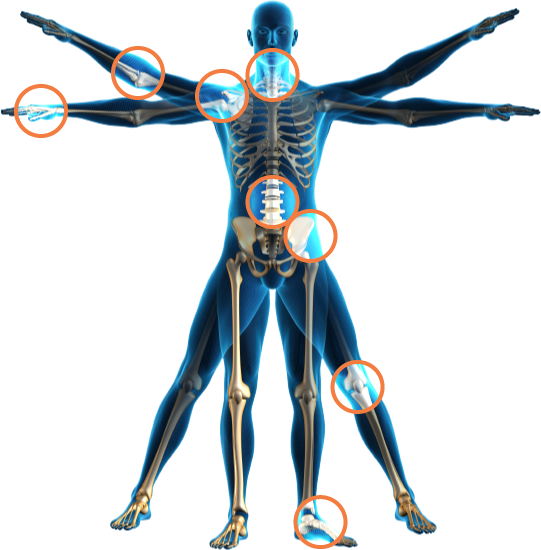
body_skeleton

Today there are hospitals that have embraced the use of stem cells therapy in treating orthopedic conditions that were rather not easily treated in the past.  They offer this autologous stem cell therapy, which embraces the regenerative power of mesenchymal stem cells to give patients another treatment option for dealing with orthopedic conditions such as osteoarthritis and other degenerative joint conditions.  Patients who have the following diseases can benefit from stem cell therapy;

  • Degenerative Joint Changes, Including Osteoarthritis
  • Disc-related Back Pain
  • Meniscus Tears
  • Non-Union Fractures
  • Avascular Necrosis
  • Bone Loss
  • Cartilage Defects
  • Osteonecrosis
  • Tendonopathies

Orthopedic Areas in which Stem Cell Therapy is applicable

Spine – the stem cell therapy is applicable in treatment of the degenerated intervertebral disk which is known to cause pain and morbidity to many patients. The stem cell therapy brings into the field of regenerative medicine some bits of effectiveness.  In treatment of spine, patients who fail to respond to conservative medicine are left with one option-surgery that may have limited success and is also very invasive. Cell-based tissue treatments, including mesenchymal stem cell injections for degenerative disc subjects have been shown to diminish the incidence of low back pain, with clinical results noting improvement in back pain and regeneration of the disc tissue. In cases where spinal fusions are necessary, the use of stem cells through bone marrow aspirate has shown greater success in obtaining fusion through bone formation as compared to standard fusion techniques. Daily the number of institutions using the stem cell therapy to treat orthopedic conditions is increasing.

Articular Cartilage – when the articular cartilage is damaged, the potential to repair it are limited and this can often lead to arthritic diseases many years later. This damage may be caused by injury. The vulnerability of the articular cartilage makes it important for it to be well handled in cases of injury. studies that have been done on the applicability of the stem cell therapy to repair damaged articular cartilage have shown that stem cell therapy have favorable outcomes in this area than current techniques of micro fracture and autologous chondrocyte implantation. Most studies use mesenchymal stem cells derived from the bone marrow.

orthopedic therapyOsteonecrosis – Osteonecrosis or avascular ischemia of the hip can be associated with progression to an advanced arthritic joint. Standard treatment for osteonecrosis has included cord decompression with limited results. Stem cell therapy holds key to success in this area of orthopedic treatment. Studies on this area have shown that patients treated with mesenchymal stem cells improved than those treated with cord decompression.

 Bone – some damages on the bone may require transplantation of the bone plus other bone components. This is the effective way of restoring the bone structure. Being that the mesenchymal stem cells can be differentiated into bone cells and be used to replace the damaged bone components, stem cell therapy becomes the most appropriate treatment for bone damage.

Tendons and Ligaments –  Autografts, allografts, and resorbable materials have been used to repair defects in tendons and ligaments however these methods puts the life of the patient at risk which may include formation of scars, donor morbidity and even tissue rejection. With autologous stem cell transplant all these risks are alleviated plus the mesenchymal stem cells may also be used alongside tissue allografts as this gives better results by improving the biochemical properties of the tissue allografts.

Stem cell therapy is a promising treatment for orthopedic diseases; you may tap into the unique medicinal properties of the stem cells to help you beat orthopedic conditions. Visit us at AWAREmed Health and Wellness Resource Centre at Myrtle Beach, South Carolina. Dr. Dalal Akoury (MD) an expert in integrative and regenerative medicine will be able to help.

Current Stem Cell Treatments for Orthopedic Conditions

Facebooktwitterpinterestlinkedin

Stem Cell Therapy May Offer an Effective Parkinson’s Disease Treatment

Stem Cell Therapy May Offer an Effective Parkinson’s Disease Treatment

The Parkinson’s disease has affected many people in the past and it still startles to know that this disease is still affecting millions of people across the globe. Doctors have been treating only the symptoms of this disease as there is no known cure of the Parkinson’s disease. Recently there has been lots of research on the field of integrative regenerative medicine to help in treatment of this disease. The stem cell therapy is one of the ways that have been investigated by researchers to establish if there is a possibility of this disease having a known cure which is effective.

Despite the fact that the Parkinson’s disease has no known cure, the cause of this disease is known. This disease is caused by the continued loss of dopamine-producing cells in the brain. Dopamine is a crucial brain chemical that helps to regulate movement and emotional responses among other functions.

When a person is suffering from this disease, he will suffer deficiency of dopamine. The Parkinson’s disease is known to target and kill dopamine-producing nerve cells, or neurons, in part of the brain called the substantia nigra. The effects of Parkinson’s disease on the nerve cells of the brain may be the reason for such problems in sleeping, motivation and thinking that Parkinson’s disease is known for but also it has been linked to the linked to the formation of clumps of a protein called alpha-synuclein in the brain. These abnormal protein clumps are called Lewy bodies and are dangerous in the body.

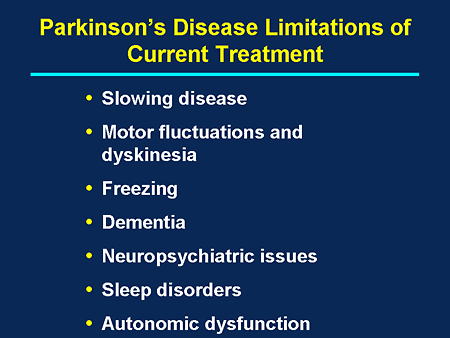
Continued death of the nerve cells results in Parkinson’s patients developing tremors and rigidity, as well as slowed movements. Other conditions that these patients will suffer from as a result of continued death of the nerve cells in the brain includes depression, sleeping disorders, dementia and even constipation. However dementia may be suffered at a much later stage when the damage on the nerve cells has spread widely. They may also lose their sense of smell.

Parkinson’s Disease

Due to the fact that depletion of dopamine causes Parkinson’s disease, doctors have been utilizing treatments that are useful in boosting the levels of dopamine din the brain. One of the most commonly used treatments is the use of a drug known as the Levodopa. This drug has been in use since 1960s when it was discovered. It works in a manner that supplements dopamine levels as it converts into dopamine while in the body. In this case the drug Levodopa stands in for the damaged neurons that ought to produce dopamine. Currently there are also other drugs that are used as dopamine to stimulate the nerve endings. Patients may also go through some therapies and put on special diets all aimed at improving the dopamine levels. In case the disease has advanced a patient may have to be treated through surgeries which may include deep brain stimulation with implanted electrodes. however, the treatments that have been mentioned above only work to mitigate on the effects of the symptoms of Parkinson’s disease but do not slow down or reverse the damage that the disease cause on the nerve cells in the brain. It has also been reported that even with the above treatments it reaches a time when the patient’s condition will deteriorate. There has also been a problem with early detection of the disease as mostly the disease is diagnosed lately after a patient has lost most of his dopamine and the nerve cells in the brain are already damaged. It is with the view of seeking a whole treatment for the disease that scientists began research on the ability of the stem cells to treat Parkinson’s disease.

The stem cell therapy may help

Parkinson’s disease is a dark medical field, its immediate cause isn’t known but scientists have today known which part of the brain is affected by this disease as well as the cells that are often affected by the disease. the stem cells which are known replicate several times giving rise to new cells are already being used to grow dopamine producing nerve cells in laboratories to aid the study of this disease. The stem cells are majorly used in the labs when the genetic cause of the disease is known. The disease destroys cells but through stem cells therapy, the damaged cells can be replaced by healthy new cells of the same type.

Research studies of 1980-90s bred hope

Parkinson's DiseaseIn 1980-90s researchers worked to find out if the cell replacement therapy could be used to quell the harmful effects of the Parkinson’s disease. The findings of these researchers have since been a foundation upon which current researchers increase the scope of their study on the effects of cell replacement therapy on the Parkinson’s disease. Particularly, Swedish, American and Canadian researchers have transplanted the developing nigral dopamine-producing neurons from human fetuses into animals and human patients with Parkinson’s disease. In these studies there were some great improvements while in other cases there were only modest changes.

A new study has since resurfaced. This study is much larger in scope and will include clinical trials. The study titled TRANSEURO aims at addressing the issues of consistency in efficacy as well as reduction in side effects associated with stem cell transplant. There is optimism that stem cell transplant to replace the damaged nerve cells could help in fighting this disease. Dr. Dalal Akoury (MD) is an expert in integrative medicine and a founder of AWAREmed Health and Wellness Center located at Myrtle Beach South Caroline. Visit her for more information on most lifestyle diseases.

Stem Cell Therapy May Offer an Effective Parkinson’s Disease Treatment


Facebooktwitterpinterestlinkedin

The risks causes and prevention of Obesity

The risks causes and prevention of Obesity: Why Obesity is still a threat

The risks causes and prevention of Obesity

The risks causes and prevention of obesity are very realistic. Obesity can be prevented and weight loss is also very possible.

This are not new thing to you about obesity. We have made effort to talk about the risks causes and prevention of obesity nearly in all the weight related articles we have posted in this link. And despite the efforts we are making together with many other weight concern institutions, the reported statistics is very worrying. American being one of the biggest casualties several reports have indicated that overweight and obesity are becoming epidemic. Not once but may times we have posted useful information that being overweight or obese puts you at risk for various chronic diseases including heart disease, diabetes, high blood pressure, cancer, stroke, gallbladder disease, osteoarthritis, and respiratory disorders. I believe that at the mention of these diseases your eye brows rises in amazement. I can tell that am being honest with you on this because the risk of developing these diseases is even higher when weight is concentrated near and around the waist line (the belly fat). If this describes your situation, I want to encourage you to talk to the experts at AWAREmed Health and Wellness Resource Center and doctor Dalal Akoury who is also the MD and founder of the facility, will be able to address all your concerns diligently and professionally.

In the meantime let me take a moment to draw to your attention to some of the available statistics about obesity and more so in America. Obesity is a growing problem. In view of the National Institutes of Health report, 60% of American adults are overweight and 35% are considered obese, while about 25% of American children are overweight or obese. The sad news is that the escalation of the problem is on a fast high way late at an abnormal high speed. There is great fear that if current trends continue, more than half of American adult population are likely to be confirmed obese inside the next 15 years. We appreciate that taking weight off and keeping it off, is difficult and despite the difficulties, many people who have made effort to lose weight, later relapse and gain it back either in small portion or in its entirety.

Despite continuing research on obesity, there are no medications, herbs, or supplements that can help you lose a significant amount of weight, and all have some side effects. The only way to lose weight is to reduce the amount of calories you eat and increase your activity level. These actions improve your health in many ways in addition to helping you lose weight.

The risks causes and prevention of Obesity: Signs and Symptoms

The most immediate indicator of the presence of obesity is usually determined by body mass index, or BMI. If your BMI is 25 or 30 or 40 then you are overweight, obese and extremely obese respectively. Doctor Akoury states that a high waist-to-hip ratio increases the risk for developing serious, even life threatening conditions associated with obesity. Some of the conditions that may accompany obesity include:

  • High cholesterol
  • Diabetes
  • High blood pressure
  • Heart disease
  • Stroke
  • Sleep apnea
  • Osteoarthritis
  • Gallstones
  • Cognitive dysfunction
  • Depression
  • Cancer
  • Asthma

The risks causes and prevention of Obesity: What Causes It?

Researchers know that obesity is the result of eating more calories than we burn off through activity, but a number of factors contribute to obesity some of which are listed below:

  • Diet and good nutrition – I will pose this question to you, what do you eat? If your food is rich in high-fat, high-calorie foods causes weight gain.
  • Living an inactive life without exercise – I would say that don’t try this at home because it has been established that sedentary people don’t burn as many calories as active people.
  • Genetics and relationships – Your genes may influence how much fat your body stores and where it is stored. However this alone may not mean that you will be obese.
  • Age particularly the old age – As we get closer to our sunset days, our rate of being active in life goes down gradually because at this stage, we often ignore physical activities and eventually lose muscle mass.
  • Psychological issues – Food is very interesting and how people behave with it. Did you know that some people overeat when they are upset or stressed? And you can imagine the consequences of stress and over eating put together.
  • Medications – Some drugs, such as corticosteroids, blood pressure medication, and tricyclic antidepressants, can cause you to gain weight.
  • Medical problems – Hardly will you find that people are becoming overweight or obese and in the contrary obesity is as a result of a medical conditions like Cushing syndrome (where the adrenal glands produce too much hormone) or hypothyroidism (where the thyroid gland doesn’t produce enough hormone). Conditions such as osteoarthritis cause people to be less active, which can lead to weight gain.
  • Prenatal environmental factors – Several studies show that adult men and women who were born small for their gestational age are more likely to be overweight or obese than those who were of normal size at birth. Maternal smoking and excess weight gain is also associated with offspring obesity.

The risks causes and prevention of Obesity: Risk Factors

The kind of lifestyle we live can impact on us either positively or negatively. For us to be on the safe side of life free from all weight related issues, we all have a duty to shun away from the following factors may increase your risk for becoming obese:

  • Living in an industrialized country, especially the United States where natural activities like walking has been taken over by escalators and high locomotives among many others
  • Genetically having family members who are overweight or obese
  • Not being physically active
  • Overeating
  • Eating a high-fat diet
  • Taking certain prescription medications
  • Having a hormone disorder, such as Cushing syndrome or hypothyroidism (underactive thyroid)
  • Being emotionally stressed (from the death of a loved one, for example), which may cause overeating
  • Prenatal exposures, such as smoking
  • Low-income individuals the most inexpensive foods tend to be high in fat and sugar
  • Early sexual or physical abuse
The risks causes and prevention of Obesity: Preventive Care

The best way to prevent weight gain is to eat a healthy diet and exercise daily. Keeping a food and exercise journal, where you record what you eat and how long you exercise, is an excellent way to get started. This is one of the best preventive measures we can easily adapt. And of course this will go hand in hand with good nutrition and a well-balanced diet. We advocate for prevention because it is easier to prevent than to treat the weight related complications. Therefore we would want to encourage you to schedule for an appointment with doctor Dalal Akoury for more professional insight.

The risks causes and prevention of Obesity: Why Obesity is still a threat


Facebooktwitterpinterestlinkedin