Category Archives: rapid addiction recovery for busy executives

Behavioral Addiction and Brain Function

Behavioral Addiction and Brain Function

Understanding Behavioral Addiction and Brain Function

Addictive behavior is a compulsion to repeat a rewarding non-drug related behavior repeatedly despite any consequences to the person’s physical, social, financial or mental well-being.  There are genetic factors involved here. The gene transcription factor known as ΔFosB has been identified as being one of the critical factors in the development of addictive states in both behavioral and drug related addictive behaviors.  Overexpression of this gene in the nucleus accumbens is both necessary and sufficient for the neural adaptations seen in addictive behaviors and drug addicts. A recent study suggested a cross-sensitization effect between drug-related behaviors and a natural reward which was mediated by ΔfosB. Besides this increased expression of  ΔfosB, there are many other similarities in the neurobiology of behavioral/drug addictions. 

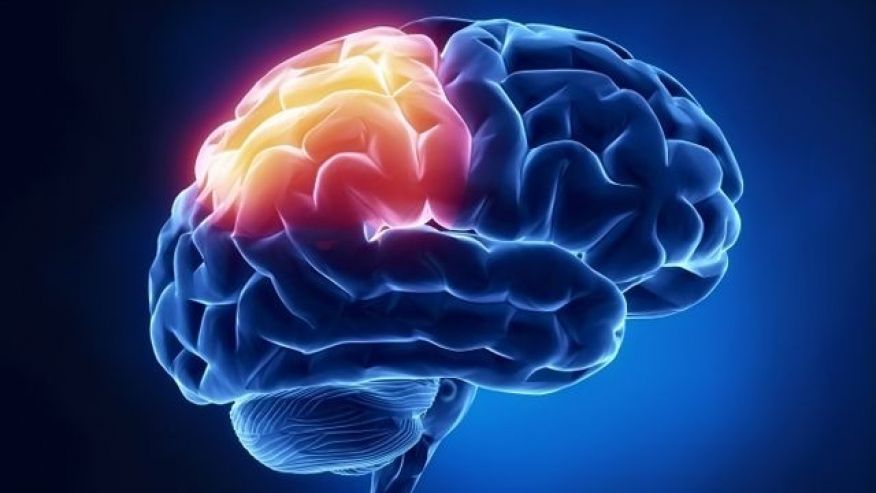
One of the most important discoveries in the diagnosis and treatment of addictions is the recognition of the drug-based reinforcement and, more importantly, the reward based learning process. There are several structures within the brain that are important in the conditioning process of behavioral addiction. These are called sub-cortical structures.  These sub-cortical structures taken together are called the reward system.  This reward system is something that we all have—it is a necessary survival process, much like digestion. 
Behavioral Addiction and Brain Function

One system being subjected to major study is the amygdala.  The amygdala is a sub-cortical structure that is involved in emotional significance and associated learning.  Research shows that dopamine-sensitive projections from the ventral tegmental area make possible a motivational or learned association with a specific behavior. This means that dopamine neurons play a significant role in the learning and sustaining of many acquired behaviors. 

Three stages 

There are three stages to the dopamine reward system:

  • the initial burst of dopamine
  • triggering of behavior
  • further, impact on the behavior

This means that the most common result of dopamine-based learning is to create addictive properties associated with certain behaviors. The way it works is that once the brain is electrically stimulated (possibly through the addictive behavior), there is a burst of dopamine.  This burst of dopamine further triggers the behavior involved, which encourages these already-stimulated neurons to increase the stimuli.  Once the behavior is triggered, it is very difficult to work away from the dopamine reward system. 

The other side of this equation is the newly found idea that the human brain can anticipate rewards, and can be triggered by the brain’s early detectors of the reward, and can start triggering the behavior that starts the dopamine reward system.  In some cases, it may lead to issues due to error.  These errors can be used as teaching signals to create complex behavior tasks over time. 

Diagnosis 

At the time this article was written, the diagnostic models used do not have the necessary standards to identify behaviors as addictions in a clinical setting. Behavioral addictions have been proposed as a new class of diagnosis in the DM-5, but the only category included in this class is gambling addiction. Internet gaming addiction has been proposed in the appendix as a condition for further study, but this does not help in the diagnosis and treatment of other behavioral addictions such as sex addiction, or the various types of eating addictions. 

Behavioral addictions are sometimes called impulse-control disorders.  These disorders, which include gambling, consumption of alcohol, sex addiction (not limited to but including the use of pornography and sexual intercourse) eating disorders, use of computers and video games, use of the internet, shopping, exercise and stealing (shoplifting) are increasingly recognized as being treatable addictions.
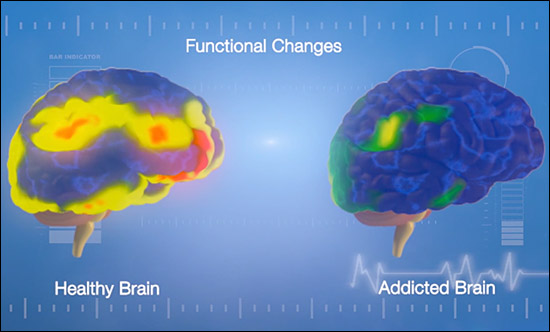
Brain Function

 In August of 2011, the American Society of Addictive Medicine issued the statement that defined all addictions regarding brain changes.  Their statement read in part, “Addiction is a primary, chronic disease of brain reward, memory, motivation, and related circuitry.”  This means that all addictions are potentially susceptible to treatment with pharmaceuticals.

 This is the first time that the American Society of Addictive Medicine has taken the position that substance abuse is not just about substance dependence.  It is about how the brain function of addicts differs from the brain function of non-addicts.  The emphasis here is not on the external factors that act on the reward system but on the system itself.  Food, sexual behaviors, shoplifting, and even chronic hair-pulling can all be linked to this “pathological pursuit of rewards” talked about in this new definition of addiction.

 The thing is, we all have this reward system.  It is a survival mechanism, creating the desire for things that offer satisfaction, like food and sex.  However, in a healthy person, there is a feedback system that limits our consumption.  In an addict, these feedback systems seem to either be absent or, in fact, dysfunctional to the point that instead of “enough” the addict wants “more”.  This is what leads to the unhealthy pursuit of these items. So anyone who has one addiction is vulnerable to others, but this also points to the possible development of effective treatment for addictions that have historically been hard to manage.

Understanding Behavioral Addiction and Brain Function

Facebooktwitterpinterestlinkedin
Biblical-sexuality

The Biblical View of Sexuality

Understanding Biblical sexuality

When one reads across the Bible, a wide range of topics are presented throughout is chapters. It primarily contains teachings that guide the human race on how to morally live. One human fundamental topic that has been explored throughout the scriptures book is sexuality. The Bible gives teachings on how human can exist morally as far as sexuality is concerned. There are those scriptures citing that talk of sexuality in great details. According to the Bible, sex as a practice is mainly viewed as a reproductive practice through which God, on the creation time intended for man to use to feel the Earth. Apart from reproduction, sex was also a manifestation of love between two married individuals and was sacred.  Here down is how the Bible views sexuality.

According to the Bible, Genesis, sex was supposed to be practiced by married individuals, who after becoming husband and wife, became one flesh. This infusion into one flesh or soul was enabled through making love. Gen 2:24, 25 reads, “A man will leave his father and mother and be united to his wife, and they will become one flesh”. Sex, as portrayed in the Bible, is, therefore, a tool for bonding a husband and wife into a lasting relationship.

Sexuality in the Bible is also viewed as a manifestation of marriage. Couples, according to the Bible, become married through an act of making love to each other. In the book of Exodus, the Bible says that having sex is in its self a form of marriage. It says, in the book of Exodus 22: 16, 17, “If a man seduces a virgin who is not pledged to be married and sleeps with her, he must pay the bride-price, and she shall be his wife. If her father utterly refuses to give her to him, he must still pay the bride-price for virgins. So the bible’s view on sexuality does differ greatly with the view taken by the contemporary world.

The Bible also portrays sex as a Godly gift that should be treasured and shared between two individuals who love each other and most importantly, husband and wife. Genesis talks of making love as a show of a man’s love to his wife, and the joy the two get as a result of doing the act. Gen 24: 67 say, “Isaac brought her into the tent of his mother Sarah, and her married Rebekah. So she became his wife, and he loved her, and Isaac was comforted after his mother’s death.”

Biblical sexuality

The Bible, therefore, emphasizes the purity of people and should therefore only be practiced when and only if one is married. Meaning that pre-marital sexual activities is not encouraged by the bible. And even those who get married are allowed by the Bible to practice fidelity in marriage. So married couple should only have sex with their marriage partners. Sex, therefore, had two purposes mainly, having children and for pleasure in marriage.

Sexual vices such as rape are also talked about in the bible. The Bible condemn such acts and just like in the contemporary society, the scriptures also provide for penalties subjected to those commit such offenses. In the ancient society, rape was punishable by death. The book of Deuteronomy clearly spells out the penalty. In Deuteronomy 22: 25, 27 we are told that, “But if out in the country a man happens to meet a girl pledged to be married and rapes her, only the man who has done this shall die, for the man found the girl out in the country, and though the betrothed girl screamed, there was no-one to rescue her.” The book also in different chapters, speaks strongly against other sexual immoralities such as pre-marital sex, and cheating among the married.

Prostitution is also condemned very strongly in the Bible. Viewing sex as a sacred gift given to man by God purposely for pleasure and reproduction after marriage, the bible is against prostitution as a practice. In the book of Leviticus, God gives Moses set of rules to help the Israelites live with high morals. One of the immoralities they are warned against is prostitution. In Leviticus 19: 29, it reads, “Do not degrade your daughter by making her a prostitute or the land will turn to prostitution and be filled with wickedness.”

Sexual immorality is also advised against in the Bible. In the book of first Thessalonians, the Bible advice humanity to desist from sexual immorality. 1 Thessalonian 4: 3-5 says that ” It is God’s will that you should be sanctified: that you should avoid sexual immorality; that each of you should learn to control his own body in a way that is holy and honorable, not in passionate lust like the heathen, who do not know God.” This sums up sexuality as viewed by the Bible.

Understanding Biblical sexuality

Facebooktwitterpinterestlinkedin
Zoloft_bottles

MEDICATION TREATMENT FOR SEX ADDICTION

  1. SSRI
  • An SSRI (Seroetoninergic) A seroetoninergic medication is any medication that modifies the effects of serotonin in the body. Serotonin is a chemical produced by certain brain cells which acts as a neurotransmitter. Neurotransmitters facilitate communication between the axons of brain cells. As such, serotonin is one of the regulators of mood, appetite, and sleep. Another primary effect of serotonin is to regulate the intestinal tract movements. Serotonin uptake in this area of the body increases gastrointestinal motility among other things. Serotonin’s cognitive functions include memory and learning.  Modulation of serotonin at brain synapses is thought to be the function of a class of antidepressants which are called SSRIs, The list of SSRIs is:
    • Prozac-one of the first antidepressants on the market, the activity of prozac was first observed in 1975 by scientists at the Eli Whitney Co. The USA granted the Eli Whitney Co a patent on Prozac in 1985, which expired in 2001. Generic versions are now availble. Prozac is used for the treatment of :
      • major depressive disorder
      • obsessive compulsive disorder
      • bulemia nervosa
      • panic disorder
      • menstrual dysphoric disorder
      • trichotillomania after cognitive therapy has failed

Zoloft_bottles

  • Paxil
    • Paxil has been on the market since 1992. It is marketed by the company SmithKleine Beecham, which changed its name in 2001 to GlaxoSmithKleine.  Generic versions of Paxil have been available since 2003 when it’s USA patent expired. Paxil is used for the following conditions:
      • Depression
      • Panic Disorder
      • Social Anxiety Disorder
      • Obsessive-Compulsive disorder
      • Menopausal Hot Flashes
      • Childhood Obsessive-Compulsive disorder
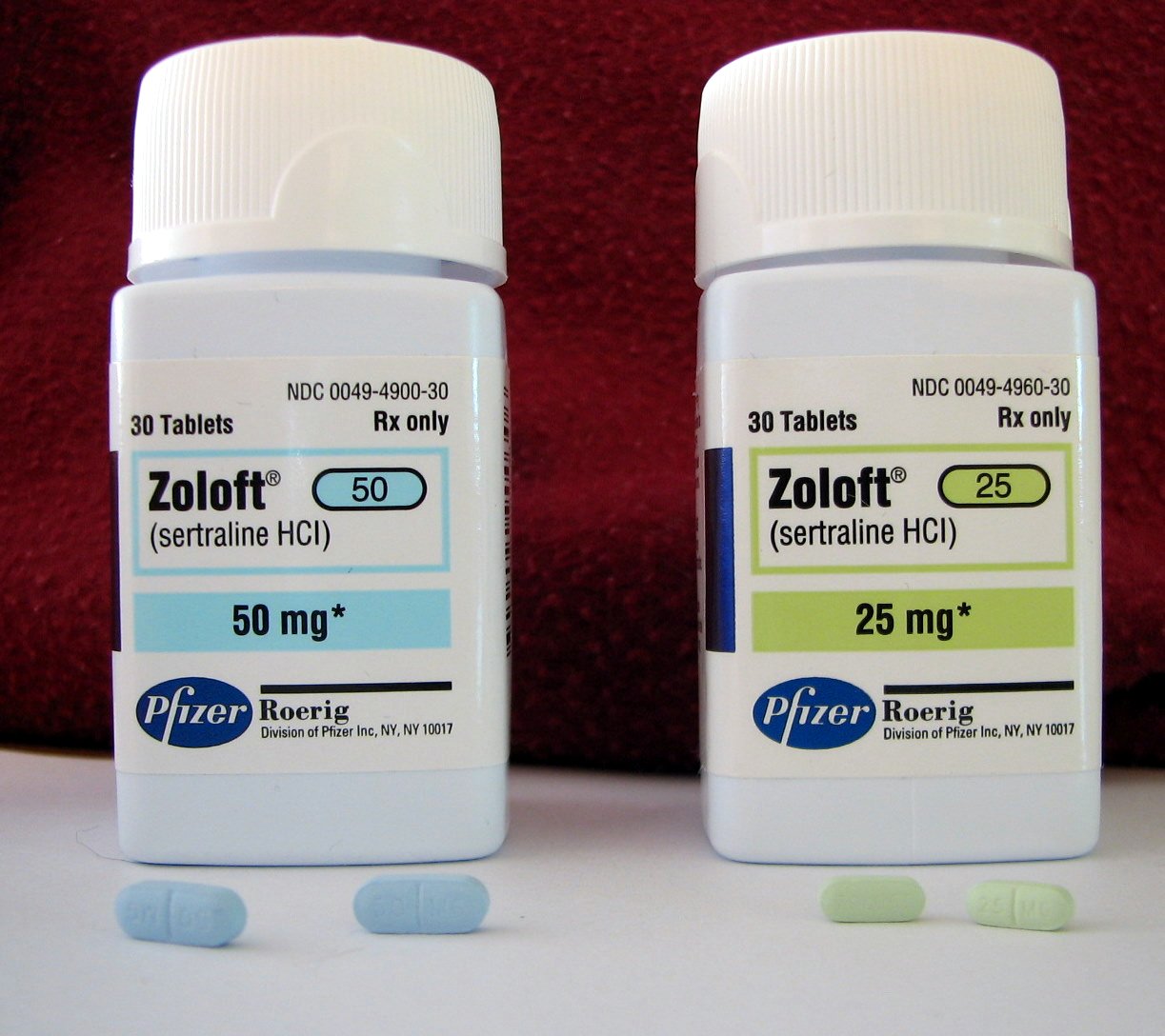
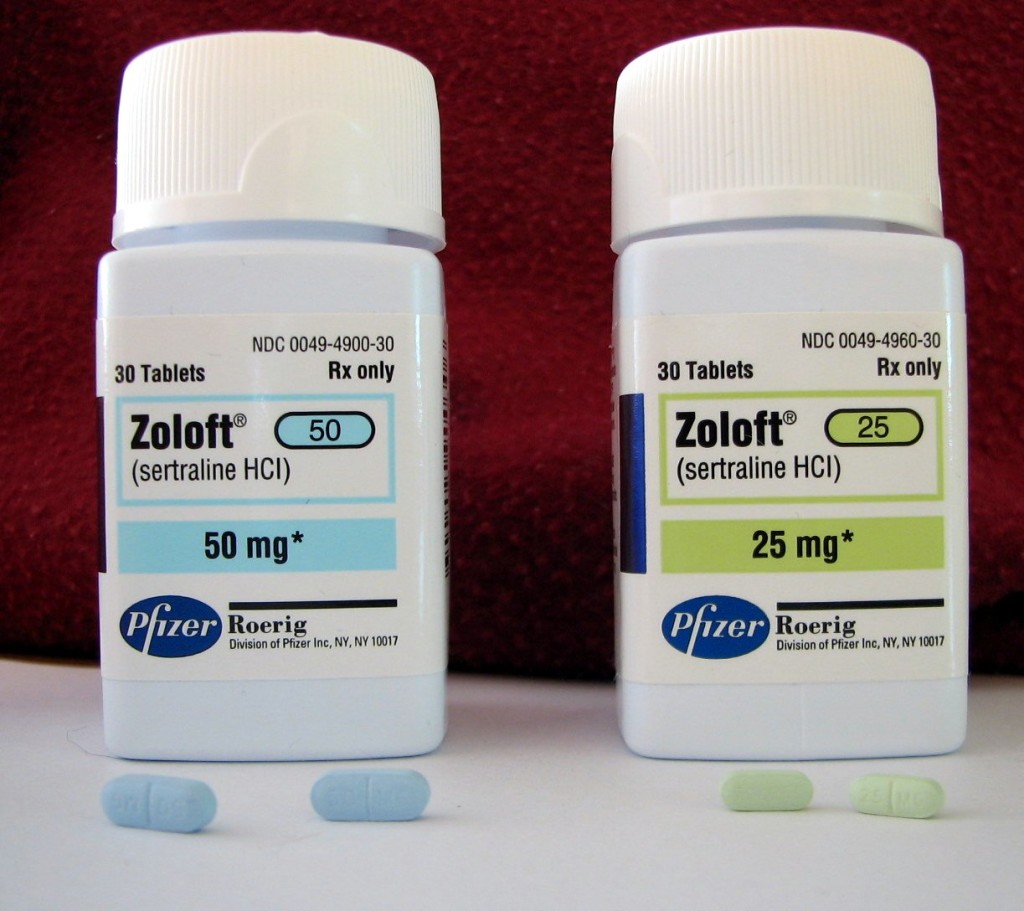
    • Zoloft
      • Zoloft has been available since 1991, when Pfizer introduced it. It is a very popular drug, having been prescribed over 41 million times in 2013.  This makes it the most popular antidepressant in the US and the second most prescribed psychiatric medication on the US retail market.  It is used for:
        • Major depressive disorder in adult outpatients
        • obsessive-compulsive disorder
        • panic disorder
        • social anxiety disorder
        • These last 3 disorders are considered appropriate for both children and adults to receive Zoloft..
          • Celexa
          • Celexa has been available since 1998. There are no generic equivalents to Celexa at this time. Celexa was first synthesized i1972 by the scientists at Lundbeck Pharmaceutical company and was first marketed in Denmark in 1989.  It was first marketed in the US in 1998. The patent expired in 2003, but no generic versions were found.  Celexa is approved for the following uses:
            • Major depression
            • Panic disorder

It also has the following off-label uses:

  • anxiety
  • panic disorder
  • dysthemia
  • premenstrual dysphoric disorder
  • body dysmorphic disorder
  • obsessive-compulsive disorder
    • It has been found to reduce the symptoms of diabetic neuropathy
  • Luvox
  • This drug was first synthesized in 1983, and introduced to the market in Switzerland and West Germany that year. It was approved by the FDA in 1994, and is available in India. One of the oldest SSRI, it was the first to be approved for obsessive-compulsive disease in children.
    • In the US, its only FDA approved use is as a treatment for OCD in both children and adults. However, in other countries it is also used for:
      • Major Medical Depression
      • panic disorders
      • social anxiety disorder
      • PTSD
      • obsessive-compulsive spectrum disorders
      • some evidence suggests it may be a useful adjunct to schizophrenia, helping to improve the negative depressive and cognitive symptoms of the disorder.
    • Lexapro
    • Lexapro was developed in a close cooperative effort by Lundbeck and Forrest Laboratories. This development took place in 1997, and the application to the FDA was submitted in 2001. It was approved by the FDA for use in major medical depression in 2002 and for generalized anxiety disorder in 2003.  In 2006 Forrest Laboratories was granted an 828 day extension on its patent.  That extension expired in 2011.  So far, no generics have been formulated.
      • This drug is used for the following diagnosis:
        • Major medical depression—US
        • Generalized Anxiety Disorder—US
        • Other countries
          • Major Depressive Disorder
          • Generalized anxiety disorder
          • Social Anxiety Disorder
          • Obsessive-Compulsive Disorder
          • panic disorder with or without agoraphobia
        • Naltrexone
        • Naltrexone is a drug used either as a daily oral medication or as an injectible “depot drug” on a monthly basis, or as a newly developed implant which must be renewed every several months. The advantage of the depot drug and the implant are that the patient is not required to see the doctor as often as they would if they were on the naltrexone pill. There is also an increased compliance rate as the patient only sees the doctor once per month or once every several months. Since this drug (as all psychopharmacuticals) has better results when the drug levels in the blood are steady, the implant gives the best results followed by the drug depot and then the pill.
        • Naltrexone is used for the prevention of alcohol consumption and the prevention of opiate relapse after detox.
Facebooktwitterpinterestlinkedin
Increasing sex performance

Female Sex Addiction and Mental Disorders

Discussion: Female Sex Addiction and Mental Disorders 

First, the good news:  Sexual addiction is a legitimate mental health disorder.  This is good news because for many years therapists were taught that there was no such thing as sexual addiction because sexual addiction does not necessarily have anything to do with drugs—either legal or illegal.  In fact, it might not involve other people at all.  The sex addict may be into self-stimulation, viewing pornographic materials (either hard copy or internet), or they may be strictly using fantasy as a means of escape. There are different types of sexual addiction, and there are differing degrees of the same.  What it comes down to is that your sexuality is causing problems in your life, and you cannot stop even when you want to.  This is sexual addiction.

 Researchers have found that those who are being treated for sexual addiction are likely to have another illness besides their addiction. In fact, many patients being treated for mental illness also have some form of addictive behavior.  This can be cigarette smoking, or it can be something else. The addiction is being used in some cases to mask the symptoms of a mental illness that causes more pain than the addiction itself does.

 female sex addiction2

There are few statistics available because female sex addiction and mental disorders is a new diagnosis. This is true even though sexual addiction is not a new subject.  It is simply one that was more likely to be classified as a form of OCD than as an addiction. Sexual addiction does carry overtones of OCD, but then so do most addictions.  The thing that distinguishes sexual addiction from OCD and other mental illnesses is that it arises because of the way our brain responds to the stimulation of sex.


Like many other types of addictions, sexual addiction stimulates our brains to release dopamine.  Dopamine is a chemical created in our brains that has an action very much like opiates.  It can, and does, make susceptible individuals feel “high”.  And in fact, people who are susceptible to such things are high, and react much like people who are high on other types of opiates.  This can be used in an unconscious manner to mask the pain of mental illnesses such as depression, ptsd, and anxiety. Of course, it can also start as a way to mask the pain of a mental illness and then escalate to a point where it is causing more pain than the original diagnosis.


Another thing that makes the announcement that sex addiction is a legitimate mental health issue is that the health professionals who are most likely to come across people who may have it now posses a tool that will allow them to assess their patients and help them to treat both the mental illness and the sexual addiction.  It is necessary when a patient has both an illness and an addiction that they be treated at the same time.  Otherwise, the mental illness will cause the patient to have trouble maintaining their sobriety (however that is measured) and the addiction will undermine the treatment for the mental illness.


Women who present with sexual addiction can also present with a variety of mental illnesses as well.  These can include depression, PTSD, anxiety, and other illnesses.  Again, the presence of sexual addiction will complicate the process of treatment for the primary mental illness.  This is because sexual addiction in women carries its own load of guilt, shame, and depression.  In addition, because of the sexual addiction they may have put themselves in positions where even more abuse took place and they may have a series of mental illnesses which have been either caused or exacerbated by the sexual addiction. An instance here is a woman who because she suffered trauma as a child, becomes sexually addicted. To feed that addiction, she may have been in a situation where she was either raped in such a fashion that she developed PTSD as a response, or she may develop deep anxiety because she is putting herself in danger of losing everything she has if the truth about her sex life comes to light.


In either case, this woman started out with PTSD and possibly depression.  Now, as a result of her trying to use sex as a mechanism to deny the pain she was in she is in even more pain.  This cycle can continue until she either receives appropriate treatment or she dies as a result of the amount of pain she is now in.

 This is why I said at the beginning of this article that the announcement that female sexual addiction is a legitimate addiction is a good thing.  It helps to lessen the stigma associated with female sexual addiction and helps to increase the chances of women who need help receiving it.

Discussion: Female Sex Addiction and Mental Disorders 

Facebooktwitterpinterestlinkedin
Alcohol kills

Points of action when faced with alcoholism

Points of action when faced with alcoholism: How can I avoid drinking?

Alcoholism

Points of action when faced with alcoholism will help you make the right decision towards your ultimate addiction recovery from your alcoholism problem.

Our children often find it very difficult to say no when offered a drink by their friends and this is not doing them any good in the fight against addiction. That is why it has become necessary for us at AWAREmed Health and Wellness Resource Center to share with us some few points of action when faced with alcoholism and even other substances. Before we get to that, it will interest you to note that AWAREmed Health and Wellness Resource Center is the brain child of doctor Dalal Akoury who is also the MD, President and founder of the same. Doctor Dalal Akoury is a veteran addiction expert who has offered quality and relentless addiction treatment to millions of people across the globe and is still delivering real time solutions to people to date. If you, your child or any one you know is struggling with any kind of addiction, then you can consult with her today by scheduling for an appointment right away. Otherwise for the young people we appreciate that if you are keeping friends who drinking or using drugs are, you may be willing and desiring to let go the drink but their influence won’t let you. That is why we are tailoring this article to suit your individual situation as follows.

Doctor Akoury agrees that even though you inner-self may be saying No, it can be very hard to say “no, thanks” boldly and openly. This happens because we always want to safeguard our relationships and to avoid the risk of feeling rejected or being left out. Even with those challenges, it is still important to stand firm and say no and stick to your No, this can be done in several different strategies. Like for instance you may want to turn down alcohol work for different people without letting them see you as being difficult or distancing yourself from them. For this reason, some people will find it helpful to say no without giving an explanation while others may think that detailing their reasons works better e.g. (“sorry I’m not into drinking,” “sorry I ‘am sitting an exam tomorrow,” sorry I am taking part in a very important game tomorrow,” or “my parents died from drinking and I am not following their footsteps” these are some of the example you can give and still remain relevant to your friends.

Besides the above points, If you still find it difficult to say no to your friends when they offer you alcohol, you can as well shift the blame to your parents or another adult for your refusal by saying that “I am sorry my parents are coming to pick me up soon,” “I ‘am sorry I have already gotten in serious trouble for drinking once with the authorities and I can’t do it again,” or “better still you may say that “my coach would kill me if I drink before the game,” these are some of the better ways of communicating your refusal to your friend and because they too (teen) experience the same challenges, they will surely excuse you without any form of victimization.

Points of action when faced with alcoholism: Marry making and outings

Marry making and outings are serious threats to sinking into alcoholism and therefore it is important that as an individual, each time you’re going to a party where alcoholic drinks will be served, it is important that you up your game plan by coming up with a working strategy towards escape in advance. You and a friend can develop a signal for when it’s time to leave. Besides that you can also make sure that you have plans to do something besides just hanging out in someone’s basement drinking beer all night. Plan a trip to the movies, the mall, a concert, or a sports event. You might also organize your friends into a volleyball, bowling, or softball team any activity that gets you moving. Self-esteem is a factor to consider it therefore means that girls or guys who have strong self-esteem are less likely to become problem drinkers than people with low self-esteem.

Points of action when faced with alcoholism: Where you can get help from?

If you think you have a drinking problem, getting help as soon as possible is very necessary. The best approach is to talk to an adult you trust. If you can’t approach your parents, talk to your doctor, school counselor, clergy member, aunt, or uncle. It can be hard for some people to talk to adults about these issues, but a supportive person in a position to help can refer students to a drug and alcohol counselor for evaluation and treatment. In some states, this treatment is completely confidential. After assessing a teen’s problem, a counselor may recommend a brief stay in rehab or outpatient treatment. These treatment centers help a person gradually overcome the physical and psychological dependence on alcohol.

Points of action when faced with alcoholism: What if I’m concerned about someone else’s drinking?

Because we owe one another the duty of care we must show concern to our friends who are strongly into alcohol and drugs. It is normal to be living in a home with one or both parents who are abusing alcohol and not just parents even other relatives. This can be annoying and in the process may make you angry, scared, and depressed. Even though this is a possibility it is important to appreciate that many people can’t control their drinking without help and that is why we all must show concern because alcoholism is an illness that needs to be treated just like other illnesses. One important point about alcoholism is that people with drinking problems many at times can’t stop drinking until they are ready to admit that they have a problem that needs to be sorted out professionally. During this period of denial, many family members and loved ones have a feeling of depressed and helpless. However the good news is that we have experts at AWAREmed Health and Wellness Resource Center under the able leadership of doctor Dalal Akoury who can help you get well in the most human way with a lot of dignity and high standard of confidentiality. All you need to do is to schedule for an appointment with doctor Akoury and you will have your life back and live it to the fullest.

Points of action when faced with alcoholism: How can I avoid drinking?


Facebooktwitterpinterestlinkedin