Category Archives: Alcohol recovery

addiction

Dabble addiction diagnosis of drug abuse

Dabble addiction diagnosis

Dabble addiction diagnosis of drug abuse can only be treated professionally

Dabble addiction diagnosis of drug abuse: Mental disorder and Co-occurring complications

Drug addiction is not by any standard good for anyone’s health. People who have recovered from this scourge will attest to that. Even though this condition is treatable patients are always in denial of what they are going through. This is the biggest challenges that must first be dealt with before any meaningful treatment can be administered. For sure without acknowledgment of the problem and willful acceptance, there is very little that any professional will do to help. That is why we put more emphasis about dabble addiction diagnosis also known as the dual diagnosis of substance abuse and mental health so that patients can the need for treatment. Speaking to the experts at AWAREmed Health and Wellness Resource Center under the leadership of doctor Dalal Akoury MD patient’s needs to understand that substance abuse problems and mental health issues don’t get better when they’re ignored.

And to be honest, any time wasted will cause much problem when treatment finally begins, in other words when dealing with matters addiction treatment should be immediate to rid of any possibilities of worsening the situation which is already frustrating. While appreciating that you may not want to be associated with drug addiction hence your reason for denial, surely you don’t have to feel this way. It is important to note that admitting you have a problem is the first step towards conquering your demons and enjoying life again. The following will help you come to terms with the problem at hand:

Dabble addiction diagnosis of drug abuse: Family history

If people in your family lineage have grappled with either a mental disorder such as depression or alcohol abuse or drug addiction, you have a higher risk of developing these problems yourself. Meaning if this is true then you are not the first it had to happen before.

Your sensitivity to alcohol or drugs: Are you highly sensitive to the effects of alcohol or drugs? Have you noticed a relationship between your substance use and your mental health? For example, do you get depressed when you drink? Interrogate that further.

Look at symptoms when you’re sober: While some depression or anxiety is normal after you’ve stopped drinking or doing drugs if the symptoms persist after you’ve achieved sobriety, you may be dealing with a mental health problem.

Dabble addiction diagnosis of drug abuse: Review treatment history

Finally, have you been treated before for either your addiction or your mental health problem? Did the substance abuse treatment fail because of complications from your mental health issue or vice versa? These will be very helpful to you in realizing that the problem you have is just like any other problem and treatment must be sought for immediately. Once you have noticed these then the next step is letting the professionals do their part by administering treatment so that the problem doesn’t escalate to some other complications. And for that reason, you may want to consider scheduling an appointment with doctor Akoury for the commencement of your recovery process today.

Dabble addiction diagnosis of drug abuse: Mental disorder and Co-occurring complications


Facebooktwitterpinterestlinkedin
smoking

Cancer disease development

Cancer disease development

Cancer disease development can be traced from very many ways including drug addiction

Cancer disease development: Types of cancer

Research findings have established that there is a strong scientific consensus of an association between alcohol drinking and several types of cancer. In its Report on Carcinogens, the National Toxicology Program of the US Department of Health and Human Services lists consumption of alcoholic beverages as a known human carcinogen. The research evidence indicates that the more alcohol a person drinks regularly over time, the higher his or her risk of cancer disease development in their lives. The effects are fatal when accounting for deaths resulting from the consumption of alcohol. From the available statistics, it was estimated that in 2009 about 3.5% of cancer deaths in the United State, were alcohol related. That percentage represents about 19500 people dying from this scourge. Experts at AWAREmed Health and Wellness Resource Center under the able leadership of doctor Dalal Akoury while studying the formation of different types of cancer, established that there is an emerging pattern of alcohol consumption and developing cancer including the following types:

Cancer disease development: Head and neck cancer

Alcohol consumption is a major risk factor for certain head and neck cancers, particularly cancers of the oral cavity (excluding the lips), pharynx (throat), and larynx (voice box). People who consume 50 or more grams of alcohol per day (approximately 3.5 or more drinks per day) have at least two to three times’ greater risk of developing these cancers than nondrinkers. The matter is even more complicated where the patient is also smoking thereby increasing the risk even much higher.

Esophageal cancer

The consumption of alcohol poses a major risk factor for a particular type of esophageal cancer commonly known as esophageal squamous cell carcinoma. Besides that, individuals who inherit a deficiency in an enzyme that metabolizes alcohol also have significantly increased risks of alcohol-related esophageal squamous cell carcinoma.

Liver cancer

Alcohol consumption is an independent risk factor for, and a primary cause of, liver cancer (hepatocellular carcinoma). (Chronic infection with hepatitis B virus and hepatitis C virus are the other major causes of liver cancer.)

Cancer disease development: Breast cancer

Ideally, no study about types of cancer can be done without touching on the breast cancer which is one of the most discussed types of cancer globally. In our case study following more than 100 epidemiological studies whose objective was to find any link between alcohol consumption and breast cancer, it was established in most of these studies that breast cancer is closely linked to alcohol intake. A meta-analysis of more than half of these studies revealed that women who drunk more than 45 grams of alcohol daily (3 drinks) had 1.5 times the risk of developing breast cancer compared to nondrinkers. The risk of breast cancer was, however, higher across all levels of alcohol intake. That is to say for every 10 grams of alcohol consumed daily (slightly less than one drink), researchers observed a small (7 percent) increase in the risk of breast cancer.

Finally, alcohol abuse is a threat to life as it introduces cancer into your life. You can have this prevented or corrected by seeking for immediate help from the experts at of AWAREmed Health and Wellness Resource Center by scheduling an appointment today and doctor Akoury will professionally and personally handle your condition.

Cancer disease development: Types of cancer

http://www.integrativeaddictionconference.com/wp-admin


Facebooktwitterpinterestlinkedin
Sharon and Dr. Akoury

Alcoholism boost cancer risk

Alcoholism boost cancer

Alcoholism boost cancer risk yet people still drink disorderly

Alcoholism boost cancer risk: What do you know about alcohol?

Good health and revenue for the authorities are competing for space when it comes to alcohol consumption. Despite the risks that come with alcohol, it is still legal for use. We spoke to the experts at AWAREmed Health and wellness Resource Center under the leadership of doctor Dalal Akoury MD about this and she was very categorical that alcoholism boost cancer risk as no other. With such competitions, what exactly is this drug alcohol? It is the common term used ethanol or ethyl alcohol which is a chemical substance found in beer, wine, liquor, some medicines, mouthwashes, household products and other essential oils scented liquids taken from plants. From the description, we can say that alcoholism boost cancer risk as we will be discussing progressively.

Alcoholism boost cancer risk: Alcohol content

Talking about the alcohol content, it will interest you to note that alcohol is produced by the fermentation of sugars and starches or yeast, it is equally important that we are aware of the main types of alcoholic drinks and their alcohol content. This is going to be very helpful to us as we explore the primary effects of alcohol to cancer and cancer patients. The alcohol content in various alcoholic beverages is as follows:

  • Beers and hard ciders: 3-7 percent alcohol
  • Wines, including sake: 9-15 percent alcohol
  • Wines fortified with liquors, such as port: 16-20 percent alcohol
  • Liquor, or distilled spirits, such as gin, rum, vodka, and whiskey, which are produced by distilling the alcohol from fermented grains, fruits, or vegetables: usually 35-40 percent alcohol (70-80 proof), but can be higher

According to the National Institute on Alcohol Abuse and Alcoholism, a standard alcoholic drink in the United States, for example, contains 14.0 grams (0.6 ounces) of pure alcohol. Generally, this unit of pure alcohol is found in

  • 12 ounces of beer
  • 8 ounces of malt liquor
  • 5 ounces of wine
  • 1.5 ounces or a “shot” of 80-proof liquor

Up to this point let me pose briefly and find out or justify why alcohol is the most abused drug globally. According to the federal government’s Dietary Guidelines for Americans 2010 just five years ago, the federation position or definition of what should be considered to be moderate alcohol drinking is a maximum of one drink per day for women and two drinks per day for men. Heavy alcohol drinking is defined as having more than three drinks on any day or more than seven drinks per week for women and more than four drinks on any day or more than 14 drinks per week for men. With that piece of information, you are now beginning to appreciate the realities of alcohol abuse.

Ideally what is considered heavy drinking per week is equivalent to what most people consume in just two hours daily. If in just two hours one would take this much, translate that into a day then to a week, a month and a year. It thus explains why this is the most abused drug in our societies and so the biggest facilitator of cancer risks among other health problems. We are certainly going to continue with this discussion in the next article but in the meantime, you can call doctor Akoury for further professional direction about alcohol abuse.

Alcoholism boost cancer risk: What do you know about alcohol?

http://www.I-AM-I.com/wp-admin


Facebooktwitterpinterestlinkedin
Stress

Addiction roots cause and triggers

Addiction roots cause

Addiction roots cause and triggers forms the basis of letting it go for freedom and good health

Addiction roots cause and triggers: The burden of stopping addiction

Everything that happens under the sun must begin from somewhere. As the human, we can be traced from our continent, nation, cities, villages, clans and family. From that, we can identify with our roots and get into the story. In the same way, the problem of drug addiction roots cause can also be understood from its known roots before we can talk of administering treatment. Understanding addiction root cause will include looking at various triggers for an addiction and why some user’s people appear to be more susceptible than others. In spite of what people say stopping addiction is an uphill task and many people do not understand why or how other people become addicted to drugs. The erroneous assumption is that those who abuse drugs lack moral principles or willpower and they could stop using drugs if they want to simply by choosing to change their behavior.

The truth is, drug addiction is complex and very complicated. Stopping abusing any substance is such an uphill task that takes more than good intentions or strong will. It is important to know that drugs change the brain in ways that foster compulsive drug abuse. Nonetheless, we are today luck that advancement in technology has simplified more about how drugs work in the brain and we are also aware that drug addiction can be successfully treated to help people stop abusing drugs and lead productive lives.

However, before the commencement of addiction treatment it is important to that we understand what addiction really is and the various factors which lead to the addiction. Experts at AWAREmed Health and Wellness Resource Center under the leadership of doctor Dalal Akoury MD are going to help us in this by looking at the various triggers for an addiction and why some people appear to be more susceptible than others. Therefore:

Addiction roots cause and triggers: What is drug addiction?

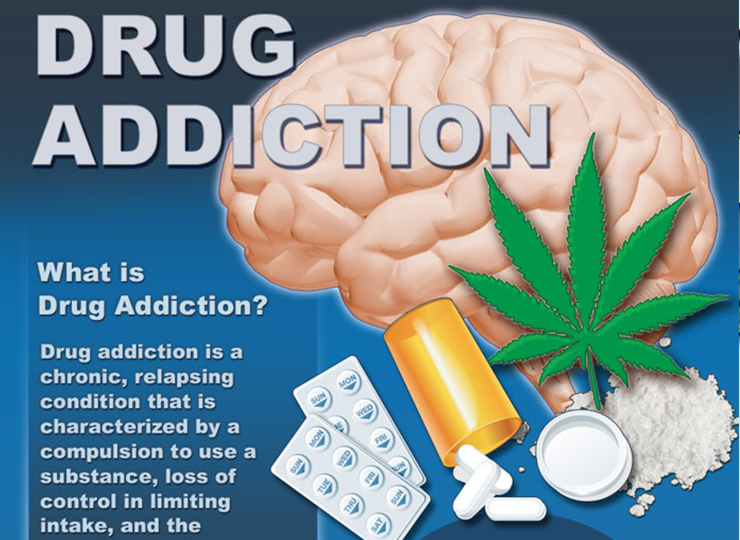
Addiction is a chronic problem, often relapsing brain disease that causes compulsive drug seeking and use despite all known harmful consequences to the addicted persons and to people around them. When we are opting for drugs in most cases it is never done forcefully. The new user gets in drugs on a willing basis, the problem that follows could be devastating in the sense that the alterations that take place in the brain over a period of time influence the addict’s ability to practice self-control and hinder their will to resist intense impulses to take drugs.

Like I said, today we are better informed of the availability of treatment procedures tailored to help people counter addiction’s powerful disruptive effects. Several studies have also established that mixing addiction treatment medications with behavioral therapy is one of the best ways to ensure success for most patients. Treatment methods that are tailored to each patient’s drug abuse patterns and any co-occurring medical, psychiatric, and social problems can lead to sustained recovery and a life free of drug abuse. It is important noting that during treatment process just like any other chronic disease patients can relapse and begin abusing drugs again. Nonetheless, when this happen, it does not indicate failure of treatment but rather it indicates that treatment should be reinstated, adjusted or an alternative treatment is needed to help the individual regain control and recover. We now want to encourage you that if this were to happen, you can schedule an appointment with doctor Akoury for timely remedial action.

Addiction roots cause and triggers: The burden of stopping addiction

http://www.awaremednetwork.com/


Facebooktwitterpinterestlinkedin
SUDs

Abandoning drug use for healthy skin

Abandoning drug use

Abandoning drug use for healthy skin by engaging in healthy activities

Abandoning drug use for healthy skin: Give up cocaine use

Throughout the globe, we are yet to get a single benefit of abusing drugs. In fact drug abuse besides ruining your health, it also destroys your skin complexion. That alone should trigger users into quitting and completely abandoning drug use not just for health skin but also the general wellbeing of their lives. And despite this knowledge, it’s worrying that drug-related complications are still on the rise. Cocaine is one of the most disturbing drugs that is rearranging peoples’ faces and turning them into a wave of wrinkles. One can only wonder what can be done. But as experts from AWAREmed Health and Wellness Resource Center under the leadership of doctor Dalal Akoury MD who is also a veteran addiction expert, it is evident the pain victims go through after using cocaine is unbearable.

Our point of focus is going to be on modalities of abandoning drug use for healthy skin and beauty. We are also going to mention how cocaine and stimulant-induced skin picking. And as we progress into the discussion, we want to share some experiences people have with drugs. For the purposes of confidentiality, I will refer to the patient as Commitment. After abusing cocaine for some time, one day he stood before his mirror and he didn’t like what he saw. What was before he was an increasingly common and distressing indicator of excessive cocaine and stimulant use. Skin picking was the problem. He spent several hours before the mirror squeezing and tweezing as the smallest of spots becomes a painful wound. Hair pulled out, bugs under the skin, insects or mites in his clothes and house.

We are going to rely on commitment’s experience to shed some light on this extremely upsetting, hidden behavior, examining the chemistry behind it, why it happens and the role cocaine and other stimulants have to play. This is a discussion you don’t want to miss but in the meantime, you can schedule an appointment with doctor Dalal Akoury the MD and founder of AWAREmed Health and Wellness Resource Center. She will be of greater help to you in all matters relating to addiction and beauty. Before we get to the discussion of Cocaine and stimulant-induced skin picking, it is important that you consider quitting drug abuse because of cocaine, for example, induces psychosis and foraging.

Abandoning drug use for healthy skin: Cocaine-induced psychosis and foraging

Chronic cocaine or crack use can result in cocaine-induced paranoia (CIP) and coke-induced compulsive foraging (CICF) type behaviors. ‘Compulsive foraging’ covers a cluster of cocaine-induced behaviors of which skin picking is just one. Another ‘foraging disorder’ is when coke users hunt for hours for specs of cocaine around a place where it was once used (also called ‘surfing’). Food deprivation or hunger increases the probability of foraging responses and because it’s an appetite suppressant, coke can make users vulnerable to malnutrition thus continuing foraging behavior. Skin picking is a foraging response and you need to consider quitting drug abuse not just for a flourishing beauty, but also for your general well-being.

Abandoning drug use for healthy skin: Give up cocaine use

http://regenerativepotential.com/wp-admin


Facebooktwitterpinterestlinkedin