Category Archives: Alcohol recovery

Addiction consequences

Substance abuse flow in the brain

Substance abuse flow

Substance abuse flow in the brain and this can be very dangerous

Substance abuse flow in the brain: When the brain is under influence of drugs

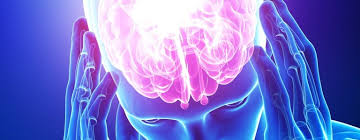
It is because of a well-functioning brain that we can competently say that we are healthy. Any negative effect on the brain affects human health adversely. And in particular when substance abuse flows in the brain life become very unbearable. This is because the brain is the engine that drives the human body meaning that if the brain is healthy, it will process and transmit healthy information to various parts of the body. On the other hand, when the brain is contaminated all the processed information will be contaminated too. That is why we need to understand, protect and maintain the brain in perfect health if we want to get full optimum from it. The brain must be cared for it and kept safe from all the substance abuse flow which are likely to bring damage to it. Therefore, that is going to be our focus of discussion in this article and even in the subsequent posting.

Substance abuse flow in the brain: The brain’s adaptation to the environment

Remember that the brain is the most dynamic and complex organ in our bodies. I believe that you are interested in finding out how to care for this most vital organ of your body. Therefore it will do you good to keep on the link to find out more from the experts at AWAREmed Health and Wellness Resource Center under the able leadership of doctor Dalal Akoury. According to these experts, the proper functionality of the brain delivers quality assurance of our very survival. Doctor Akoury says that when our brains (the human brain) functions well, we are constantly adopting or adjusting to our environment (our surroundings) changes well. What many may not know is that this smooth adaptation is the work of our brain. And ironically, it is the brain’s ability to be so adaptive that contributes to the formation of all manner of addictions. From the various studies conducted by researchers across the globe, it has been established that addiction has direct effect to the brain and that it causes changes to the brain in at least four fundamental ways:

  • Addiction causes changes to the brain’s natural balance (homeostasis).
  • Addiction alters brain chemistry.
  • Addiction changes the brain’s communication patterns.
  • Addiction causes changes to brain structures and their functioning.

The findings listed above will help us understand the importance of the brain and why we must protect it from the effects of drug addiction which has been sighted as one of the main course of damage to this very vital organ. Doctor Dalal Akoury and her team of experts from AWAREmed Health and Wellness Resource Center, are going to be very resourceful even as we discuss each of these fundamental changes that come with the effects of addiction to the brain progressively. You certainly don’t want to miss this and so we invite you to stay with us on the link and be enriched with this worthy health information. But in the meantime, if you are struggling with any kind of addiction, you may want to consult with doctor Akoury for a more professional undertaking today.

Substance abuse flow in the brain: When the brain is under influence of drugs

http://www.I-AM-I.com/wp-admin

Facebooktwitterpinterestlinkedin
porn addiction

Brain natural balance and drug addiction

Brain natural balance

Brain natural balance, drug addiction and strong central nervous system stimulant that can destroy the brain system and the well-being of the body

Brain natural balance and drug addiction: Homeostasis

One of the fundamentals in our response to the question of discussion “how does substance abuse affect the brain” is that addiction will always change the brain natural balance which is scientifically known as homeostasis. The truth is that addiction interferes with an important biological process called homeostasis. Scientifically the human body is considered as a biological system. All biological systems attempt to maintain a “normal” balance, known as homeostasis. Doctor Akoury says that the brain actually functions as the administrator of this balance by making various adjustments where is necessary to maintain a balanced, well-functioning, biological system. Each person’s “normal” balance is individually determined. Drugs of abuse and activity addictions lead to changes in this normal balance.

Chronic over-stimulation of the brain (like that which occurs in addiction) interferes with the maintenance of the brain natural balance (homeostasis). When the brain has difficulty maintaining homeostatic balance, the wonderfully adaptive brain makes adjustments. It does this by creating a new balanced set-point. The creation of a new balance is called allostasis. This may not be very clear to many, but let me make it simpler by using a daily life illustration. Take for instance if you add more weight by 20 units, you will try fitting into your clothing’s despite the discomfort. But with time this will not be bearable and so you will have to adapt to the new body size by buying new clothes that will fit you well. Once this is done you will be more comfortable and at this point you will get used to the fact that your cloths are now large size and not medium or small sizes as it used to be and in the process your homeostasis balance changes from medium to large. And with this adjustment you become comfortable again.

Take note that the reverse can also take place in the future where the added 20 units may be lost to keep healthy and when that happens you will be compelled to make further readjustment to your clothing size by buying smaller sizes. Therefore even though at this moment you will be healthy due to the loss, you will still need to make an unpleasant and costly adjustment by buying smaller clothes. This is very similar to the unpleasant adjustment the brain must go through when people try to give up their addiction. Although this is a positive change, we will be uncomfortable while the brain makes readjustments to suits the present circumstances.

Brain natural balance and drug addiction: The brains ability to cope

From the concept illustrated above, the brain’s wonderful ability to make the readjustments, it is important noting that, it is these changes that account for many behaviors associated with addiction such as:

  • The powerful and lustful need to obtain drugs or continue with the indulgence of harmful activities despite the harm to self or loved ones
  • The difficulty of quitting an addictive drug or activity, and
  • The obsessive, all-consuming nature of addictions such that little else in life matters

This is because addiction caused the brain natural balance to change and accommodate the addiction. Once changed, the brain requires the addictive substance or activity in order to maintain this new homeostatic balance. Drugs and alcohol are not helping us in anyway. Instead of the poor health and social discrimination we get from drugs, let’s seek for solution by scheduling for an appointment with doctor Dalal Akoury today for a one on one sharing of what you are going through and she will in the most professional way offer you lasting solutions to all your concerns.

Brain natural balance and drug addiction: Homeostasis

http://www.awaremednetwork.com/


Facebooktwitterpinterestlinkedin
Injected drugs

Drugs abuse prevalence hijacking brain functions

Drugs abuse prevalence

Drugs abuse prevalence hijacking brain functions and the drug peddlers are not helping either

Drugs abuse prevalence hijacking brain functions: How does it happen?

The pain of watching how drug abuse prevalence is taking over the functions of the brain is not only painful to the individual drug user, but also the family and even the community. We are not ignorant of the fact that the brain is the engine that drives life and the moment it stops, life equally stops. Even that we all acknowledge that the brain must be subjected to any undue pressure, our actions and behaviors has betrayed that. Drug abuse prevalence is not helping either in keeping the good health of the brain and this is what we want to engage the experts at AWAREmed Health and Wellness Resource Center on. This is a facility that was the brain child of doctor Dalal Akoury and its formation was primarily to offer solutions to people who are struggling with addiction. Therefore doctor Akoury is going to help us understand how substance abuse is hijacking individual’s minds even as it causes other chronic health problems to the body.

Drugs abuse prevalence hijacking brain functions: New standings into a common problem

Because of the consequences that comes with substance abuse, ideally nobody would on a voluntary basis wants to desire to develop an addiction, however many people get caught in its snare from very humble beginnings. And today looking at the prevalence of addiction it is amazing that drug use is almost getting out of hand. Take for instance the latest statistics from the government America where nearly 23 million Americans are addicted to either alcohol or other drugs representing a worrying figure of one in every ten being an addict. The statistics also indicate that more than two-thirds of people with addiction abuse alcohol. While the top three drugs causing addiction are marijuana, opioid (narcotic) pain relievers, and cocaine. These are not worth celebration. The sooner we find ourselves out of this statistics the better. It may seem a long journey, but with the help of experts from AWAREmed Health and Wellness Resource Center under the able leadership of doctor Akoury MD, this journey can be made shorter and bearable if only you can schedule for an appointment with her today.

Meanwhile in the past the perception about addiction was not right and people who developed signs of addiction were actually seen as people with questionable character and lacking in willpower. As such the remedy was punishment since they were considered wrongdoers besides that they were also being encouraged to make peace with the community by turning away from their bad habits? Nonetheless a lot is currently being done and scientific findings are changing this old perception of addiction. Today addiction is recognized as a chronic disease that changes both brain structure and function. Just in the same way as cardiovascular disease damages the heart and diabetes impairs the pancreas, addiction hijacks the brain. This happens as the brain goes through a series of changes, beginning with recognition of pleasure and ending with a drive toward compulsive behavior thanks to the drug abuse prevalence that has hijacked the functions of the brain.

Drugs abuse prevalence hijacking brain functions: How does it happen?

http://www.awaremednetwork.com/


Facebooktwitterpinterestlinkedin
Career and drugs

Brain pleasurable principle and drug addiction

Brain pleasurable principle

Brain pleasurable principle and drug addiction and when the brain needs to be protected the most

Brain pleasurable principle and drug addiction: Neurotransmitter 

One of the functions of the brain is to registers all pleasures as they happen and in the same way, irrespective of their origin. That is whether they are associated with a psychoactive drug, a monetary reward, a sexual encounter, or a satisfying meal. The fact is in the brain pleasurable priniciple has a distinct role which is the release of the neurotransmitter dopamine in the nucleus accumbens, a cluster of nerve cells lying underneath the cerebral cortex. Dopamine release in the nucleus accumbens is so consistently tied with pleasure that neuroscientists refer to the region as the brain’s pleasure center.

All drugs of abuse, from nicotine to heroin, cause a particularly powerful surge of dopamine in the nucleus accumbens. The likelihood that the use of a drug or participation in a rewarding activity will lead to addiction is directly linked to the speed with which it promotes dopamine release, the intensity of that release, and the reliability of that release. Therefore addictive drugs provide a shortcut to the brain’s reward system by flooding the nucleus accumbens with dopamine. The hippocampus lays down memories of this rapid sense of satisfaction, and the amygdala creates a conditioned response to certain stimuli.

Brain pleasurable principle and drug addiction: Learning the process

Previously it was believed that an experience of pleasure alone was enough to compel people in to consistent seeking of addictive elements or activities. However new research findings indicates that the situation may be more complicated. This is because dopamine’s are not only responsible for the experience of pleasure but are also playing a role in learning and memory which are the two key elements in the transition from liking something to being addicted to it. Currently the philosophy about addiction is that dopamine interacts with another neurotransmitter, glutamate to take over the brains system of reward related learning. Remember that this system has an important role in sustaining life because it links activities needed for human survival (such as eating and sex) with pleasure and reward.

Finally, it may interest you to note that the reward circuit in the brain may include areas involved with motivation and memory as well as with pleasure. Addictive substances and behaviors stimulate the same circuit and then overload it. And therefore repeated misuse of any addictive substances or behavior will cause nerve cells in the nucleus accumbens and the prefrontal cortex (the area of the brain involved in planning and executing tasks) to communicate in a way that couples liking something with wanting it, in turn driving us to go after it. That is, this process motivates us to take action to seek out the source of pleasure. This can be very unhealthy more so if the source of pleasure is drugs. Many often run to drugs for pleasure and as such, the prevalence of drug abuse is on the rise. We can choose individually and collectively to correct this by scheduling for an appointment with doctor Dalal Akoury MD, who is a veteran addiction expert and also the founder of AWAREmed Health and Wellness Resource Center for help today.

Brain pleasurable principle and drug addiction: Neurotransmitter 

http://www.I-AM-I.com/wp-admin


Facebooktwitterpinterestlinkedin
heroin addiction

Drug addiction tolerance development

Drug addiction tolerance

Drug addiction tolerance development can be motivated by depression

Drug addiction tolerance development: When the brain is under attack

By nature, rewards usually come only with time and effort. And like I had mentioned before, addictive drugs and behaviors provide a shortcut, flooding the brain with dopamine and other neurotransmitters. Our brains do not have an easy way to withstand the onslaught. Addictive drugs, for example, can release two to 10 times the amount of dopamine that natural rewards do, and they do it more quickly and more reliably. In a person who becomes addicted, brain receptors become overwhelmed. The brain then responds by producing less dopamine or eliminating dopamine receptors an adaptation similar to turning the volume down on a loudspeaker when noise becomes too loud. As a result of these adaptations, dopamine has less impact on the brain’s reward center. People who develop an addiction typically find that, in time, the desired substance no longer gives them as much pleasure. And because of that, the development of drug addiction tolerance begins  hence they have to take more of it to obtain the same dopamine “high” because their brains have adapted and that is what is known as tolerance.

Drug addiction tolerance development: Compulsion takes over

At this point, compulsion takes over. The pleasure associated with an addictive drug or behavior subsides and yet the memory of the desired effect and the need to recreate it (the wanting) persists. It’s as though the normal machinery of motivation is no longer functioning. The learning process mentioned earlier also comes into play. The hippocampus and the amygdala store information about environmental cues associated with the desired substance, so that it can be located again. These memories help create a conditioned response—intense craving—whenever the person encounters those environmental cues.

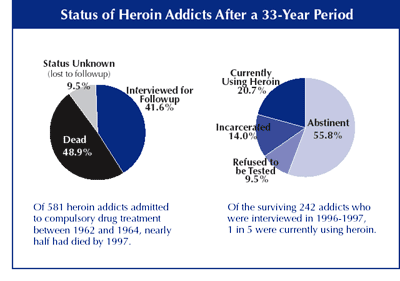
Cravings contribute not only to addiction but to relapse after a hard-won sobriety. From experience, experts from AWAREmed Health and Wellness Resource Center under the able leadership of doctor Dalal Akoury MD, says that any person addicted to heroin is likely to be in danger of relapse when he or she sees a hypodermic needle, like for example, while another person might start to drink again after seeing a bottle of whiskey. Conditioned learning helps explain why people who develop an addiction risk relapse even after years of abstinence. And that is why keeping close touch with the experts is very important.

The formation of this facility (AWAREmed Health and Wellness Resource Center) by doctor Akoury is to primarily make a difference in your life. We understand the dangers drug addiction tolerance can do to your health and all we want to do is to help you get back to your productive life and live it meaningfully. That is why, if you have any concern about addiction of any kind, you can schedule for an appointment with doctor Dalal Akoury today for the commencement of your recovery process.

Drug addiction tolerance development: When the brain is under attack


Facebooktwitterpinterestlinkedin