Category Archives: Alcohol recovery

Addiction Recovery

Exploring nutritional therapy in addiction recovery

Exploring nutritional therapy

Exploring nutritional therapy in addiction recovery by way of making healthy lifestyle choices

Exploring nutritional therapy in addiction recovery: Weight management and eating disorders

With the disturbing increase rate of drug addiction, it is becoming clearer that this problem needs to be fought from all angles.  And as we do this, the level of professionalism in dealing with this scourge must never be compromised. That is why according to the experts at AWAREmed Health and Wellness Resource Center under the able leadership of doctor Dalal Akoury MD, all the problems that are associated with weight management are a common nutritional concern which are also related to substance abuse. In the same way while exploring nutritional therapy in addiction recovery, all the detoxification programs are commonly seen to be leading to weight gain, as addicts who are being taken through the process often turn to food instead of their drugs of choice.

Exploring nutritional therapy in addiction recovery: Biochemical changes

Besides that biochemical changes also result in increased appetite and a preference for highly palatable foods, and confusion in hunger/fullness cues arise. However, for some, weight gain is important due to significant protein-energy malnutrition and low BMI as a result of substance use. Doctor Akoury is raising concern that increased consumption of lots of calories and weight if not managed properly can lead to other devastating health complications including obesity, diabetes, hypertension and cardiovascular disease, therefore it is very important that professionals in this discipline should monitor and counsel patients on healthful eating and weight management and that is what doctor Akoury and her team of experts at AWAREmed Health and Wellness Resource Center are doing relentlessly in giving their contribution towards fighting the scourge of addiction from our systems.

While in treatment, most patients reduce their levels of exercise either due to lack of time, the program structure, or lack of motivation. Increased abnormal liver tests are common in re-feeding among hospitalized drug addicts, which is theorized to be caused by a lack of exercise and increase in weight. According to a study conducted by the Journal of the American Dietetic Association, it was established that the daily weight change had a significant positive correlation with changes in serum alanine transaminase or aspartate aminotransferase concentrations from admission to discharge. Experts can therefore help in monitoring weight gain and laboratory results primarily to identify patient goals for achieving or maintaining a healthy weight. They can also work with professionals including the families and relatives of the victims to develop exercise programs during and after treatment that can help to level patients’ liver enzymes and manage their weight.

Doctor Akoury is of the opinion that with the high prevalence of eating disorders in the substance abuse population, care must be taken in making recommendations for weight management to ensure they aren’t too restrictive and weight gain or loss is monitored and steady. It is a point of great concern that up to 72% of women who are below 30 years of age and are struggling with alcoholism have eating disorder problems and besides that, other substances such as cocaine are associated with a higher prevalence of eating disorders, it is therefore very important that careful attention and precautions be taken when working with these populations, and for effectiveness in finding lasting solutions over this problem, even as you walk through the path of exploring nutritional therapy, consulting with doctor Dalal Akoury over this would be very necessary for you and your loved ones.

Exploring nutritional therapy in addiction recovery: Weight management and eating disorders

http://regenerativepotential.com/wp-admin


Facebooktwitterpinterestlinkedin
smoking

Substance abuse eradication through nutritional therapy

Substance abuse eradication

Substance abuse eradication through nutritional therapy
will help you get your life back prohressively

Substance abuse eradication through nutritional therapy: Objectivity in dealing with addiction

From the available statistics, it is evident that the complications relating to drugs addiction are not likely to go away anytime soon. It therefore means that we need to up our sleeves into bringing this ghost of addiction to manageable levels. In doing so, no stone must not be left unturned and everyone must be brought on board for the treatment operations to be meaningfully successful. For that reason, AWAREmed Health and Wellness Resource Center under the able leadership of doctor Dalal Akoury MD, and a veteran addiction expert of several decades is going to share with us in depth about substance abuse eradication through nutritional therapy tailored into eliminating this vice from our societies. This is very important not just to the direct victims of substance abuse but even to their loved ones who are equally affected even if it is indirectly. We are therefore going to concentrate on the pharmacotherapy in this article and progress into weight management in the next article which you really don’t want to miss.

Substance abuse eradication through nutritional therapy: Pharmacotherapy

Pharmacotherapy is a common component of addiction treatment. While exploring good nutritional therapy for substance abuse eradication, it is important to note that these medications are intended to improve mood stability and recovery success and to assist with any medical or mental health problems resulting from or co-occurring with detoxification. When exploring this working with experts is very important because they can help in the management of any nutritional implications of these medications says doctor Dalal Akoury.

According to the experts at AWAREmed Health and Wellness Resource Center, medication-assisted treatment for substance abuse has been effective for alcohol and opioid dependence immensely. It’s important for dietitians to be familiar with these common medications, because the side effects may influence patients’ nutritional status. Alongside that, dietitians need to be cautious when recommending supplementation in this population due to addicts’ quick-fix mindset and already-taxed bodies. Taking cognizance that a damaged liver may not be able to correctly process certain supplements, and the supplements may ultimately have a negative impact on liver health. And that not with-standing, according to a study conducted by the National Institutes of Health it was suggested that a common over-the-counter herbal supplement, N-acetylcysteine, can reduce the cravings of cocaine and heroin addicts and possibly alcoholics during withdrawal.

Finally Naltrexone (ReVia, Vivitrol, Depade), disulfiram (Antabuse), and acamprosate calcium (Campral) are used to treat alcoholism. Naltrexone, which also has been used with opiate and narcotic dependence, may cause anorexia, weight loss, nausea, and vomiting. Disulfiram may cause nausea and vomiting, and if patients ingest alcohol, they will become very ill. Therefore, care must be taken to ensure that all traces of alcohol are eliminated from patients’ diets, including any that may be used in recipes. Acamprosate calcium may cause an increase in appetite, increased weight, and taste changes. Dietitians should take note of these side effects and work with patients to identify ways to promote adequate nutritional intake. With all these worthy points about exploring nutritional therapy for substance abuse eradication, if you still have any area of concern that you need to be clarified, you can schedule for an appointment with doctor Dalal Akoury for a one on one professional touch today and you will never be the same again there-after.

Substance abuse eradication through nutritional therapy: Objectivity in dealing with addiction

http://www.awaremednetwork.com/ 


Facebooktwitterpinterestlinkedin
Why medical detox is necessary to addicts

Good neurotransmitters and moods for addiction healing

Good Neurotransmitters

Good Neurotransmitters and moods for addiction healing as away of containing substance abuse

Good neurotransmitters and moods for addiction healing: Feeding on good nutrition

In the process of seeking for solutions when it comes to overcoming drug addiction, people often go for very big things, big rehabilitation institutions and expensive and elaborate addiction professionals. I certainly don’t have any problem with that for it is very much in order since the most important thing is the reclaiming of one’s health and freedom from the scourge of addiction. However what many may not know or if they do, then they don’t care about is the avenue of nutrition as a tool of fighting and eliminating all sorts of addictions you may be privy to. For quite a while now we have been posting articles touching on the use of healthy nutrition in the fight against substance abuse and we are not about to stop. We want all of us to have the knowledge so that the work of dealing with drug addiction can be made easier and much lighter to both the direct and indirect victims. From the expert’s point of view, correcting addiction by good neurotransmitters and moods is one very important avenue available for containing the problem.

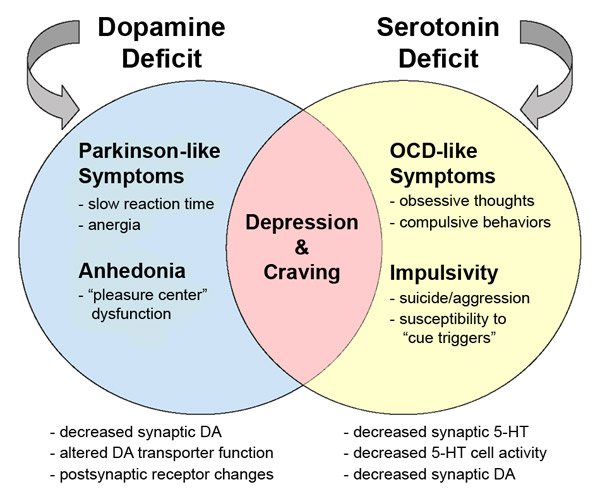
According to doctor Dalal Akoury (MD) a well-respected expert in addiction, it is important to note that psychoactive substances may lead to psychiatric problems because in many cases the substances can have toxic effects on brain chemistry. She adds that before detoxification is done, neurotransmitters are reduced due to poor nutrition which then alters the amino acid absorption and utilization. The implication of this is that the victims (addicts) are left feeling depressed, agitated and unregulated early in recovery. From the various studies conducted so far, it is believed that these imbalances will disappear over a couple of weeks but then again, they may also last as long as one year after an addict becomes sober further necessitating normalizing neurotransmitters and moods for the perfection in addiction healing process.

Good neurotransmitters and moods for addiction healing: Moods and behavior abnormalities

As we progress into the discussion, it is worth noting that for some, moods and behavior abnormalities may have been present before the substance abuse. With proper diagnosis of any possible underlying mental health disorders, a healthy diet and education on how nutrition influences mood and brain chemistry, recovery can be enhanced. An understanding of how food affects mood and the risk of substance abuse begins with macronutrients. And with carbohydrates being the body’s main source of energy it therefore means that without this macronutrient, the brain can’t function properly, blood sugar becomes unstable, and neurotransmitters become disrupted. Unstable blood sugar can lead to feelings of frustration, anxiety, and cravings. You can however avoid this by scheduling for an appointment with doctor Dalal Akoury today for a more professional input that will help you effectively in the normalizing neurotransmitters and moods for addiction healing.

Good neurotransmitters and moods for addiction healing: Feeding on good nutrition

http://www.integrativeaddictionconference.com/wp-admin 


Facebooktwitterpinterestlinkedin
porn addiction

Alcohol addiction significance in malnutrition

Alcohol addiction significance

Alcohol withdrawal odds threats, all these can be solved by defeating denial

Alcohol addiction significance in malnutrition: Liver toxicity

Being malnourished is a condition that deprives the body of the essential nutrients necessary for health and body comfort. It is very important to make all the observations to ensure that the body gets all the food nutrients it needs. In the quest of achieving this, there will be obstacle along the way and one of the main impediments of insufficiency of nutrients is the element of substance abuse and that is why this article is going to focus on the alcohol addiction significance in malnutrition. It is always our desire and objective to post informative health blogs and articles as a way of giving our contribution in the noble assignment of defeating the scourge of addiction from our societies. In that respect doctor Dalal Akoury who is also the founder of AWAREmed Health and Wellness Resource Center is going to take us through the discussion and we want to appeal to you to keep on the link and invite a friend so that we can have a healthy learning experience together. Meanwhile if this is causing you any problem, you can always consult with the experts from AWAREmed Health and Wellness Resource Center for professional direction.

Alcohol addiction significance in malnutrition: Why does alcohol addiction cause malnutrition?

By all standards alcohol is the world’s most abused substance. Ironically, it is also the most income generating business for authorities in terms of taxes levied on it. In other words am simply saying that despite its serious health consequences, it is legally allowed for human consumption. I have always appreciated that most authorities have put certain restrictions as controlling measures to minimize its consumption, but the truth is that these has not yielded any meaningful truth. This is because the effects of alcohol consumption is actually felt in all our families both directly and in directly. Our learning institutions are not left out either and young boys and girls are drinking disorderly to the amazement and deterioration of our morals. Now to the question “why do we say that alcohol addiction causes malnutrition”? It will surprise you to note that in this generation many alcoholics across the globe are malnourished for various reasons. Like for instance, victims of alcohol abuse will often suffer the high risk of being malnourished either because they take in very little of essential nutrients like carbohydrates, proteins, and vitamins, or because alcohol and its metabolism inhibit their body from performing its duty of properly absorbing, digesting and using those nutrients as effective as it should. This therefore brings in the significance of alcohol addiction in malnutrition in the picture. It is no wonder majority of alcohol consumers and particularly the alcoholics frequently experience deficiencies in vital food nutrients including proteins and vitamins, particularly vitamin A. the danger of these deficiencies is that if not addressed in good time, the victims risk being affected by serious and chronic liver disease and other serious alcohol–related disorders.

A complex relationship exists between a person’s alcohol consumption and nutritional status. Many people, including light to moderate drinkers who consume one to two glasses or less of an alcoholic beverage per day, consider those beverages a part of their normal diet and acquire a certain number of calories from them. When consumed in excess, however, alcohol can cause diseases by interfering with the nutritional status of the drinker. For example, alcohol can alter the intake, absorption into the body, and utilization of various nutrients. In addition, alcohol exerts some harmful effects through its breakdown (i.e., metabolism) and the resulting toxic compounds, particularly in the liver, where most of the alcohol metabolism occurs.

Alcohol addiction significance in malnutrition: Liver toxicity

http://regenerativepotential.com/wp-admin

Facebooktwitterpinterestlinkedin
drugs-alcohol-addiction-treatment

Building drug free and meaningful lifestyle

Building drug free

Building drug free and meaningful lifestyle begins with acknowledging the problem

Building drug free and meaningful lifestyle: Protecting yourself from relapse

Treatment of drug addiction is one that is full of challenges. Many people often find it difficult in building drug free and meaningful lifestyle because of the many challenges that come with this problem. One of such challenge is relapse nonetheless with this in the picture, you can support your drug addiction treatment and protect yourself from relapse by having activities and interests that provide meaning to your life. According to the experts at AWAREmed Health and Wellness Resource Center under the leadership of doctor Dalal Akoury MD, it’s important to be involved in things that you enjoy and make you feel and have a sense of belonging. When your life is filled with rewarding activities and a sense of purpose, your addiction will lose its appeal.

Adopt a pet – Yes, pets are a responsibility, but caring for an animal makes you feel loved and needed. Pets can also get you out of the house for exercise.

Get involved in your community – Replace your addiction with drug-free groups and activities. Volunteer, become active in your church or faith community, or join a local club or neighborhood group.

Look after your health – Regular exercise, adequate sleep, and healthy eating habits help you keep your energy levels up and your stress levels down. When you feel good, drugs are much less of a temptation. The more you can do to stay healthy, the easier it will be to stay sober.

Pick up a new hobby – Do things that challenge your creativity and spark your imagination, something you’ve always wanted to try.

Set meaningful goals – Having goals to work toward and something to look forward to can be powerful antidotes to drug addiction. It doesn’t matter what the goals are whether they involve your career, your personal life, or your health, just ensure that they are important to you.

Building drug free and meaningful lifestyle: Never let relapse keep you down

Relapse is a common part of the recovery process from drug addiction. While relapse is understandably frustrating and discouraging, it can also be an opportunity to learn from your mistakes and correct your treatment course.

What causes relapse? – Various “triggers” can put people at risk of relapsing into old patterns of substance use. Causes of relapse can differ for each person. Some common ones include:

  • Conflict with others (such as an argument with a spouse or partner)
  • Good times with others (such as having fun with friends or family)
  • Negative emotional states (such as anger, sadness, trauma or stress)
  • Physical discomfort (such as withdrawal symptoms or physical pain)
  • Positive emotional states (wanting to feel even better)
  • Social pressures to use (situations where it seems as though everyone else is drinking or using other drugs)
  • Strong temptations or urges (cravings to use)
  • Testing personal control (“I can have just one drink”)

Finally doctor Akoury says that the most important thing to remember is that relapse doesn’t mean treatment failure. Therefore instead of giving up, it is important that you get back on the wagon as quickly as you can. Call your sponsor, talk to your therapist, go to a meeting, or schedule an appointment with your doctor. When you’re sober again and out of danger, look at what triggered the relapse, what went wrong, and what you could have done differently. You can choose to get back on the path to recovery and use the experience to strengthen your commitment.

Building drug free and meaningful lifestyle: Protecting yourself from relapse

http://www.I-AM-I.com/wp-admin


Facebooktwitterpinterestlinkedin