Category Archives: Act Now

Career and drugs

Brain pleasurable principle and drug addiction

Brain pleasurable principle

Brain pleasurable principle and drug addiction and when the brain needs to be protected the most

Brain pleasurable principle and drug addiction: Neurotransmitter 

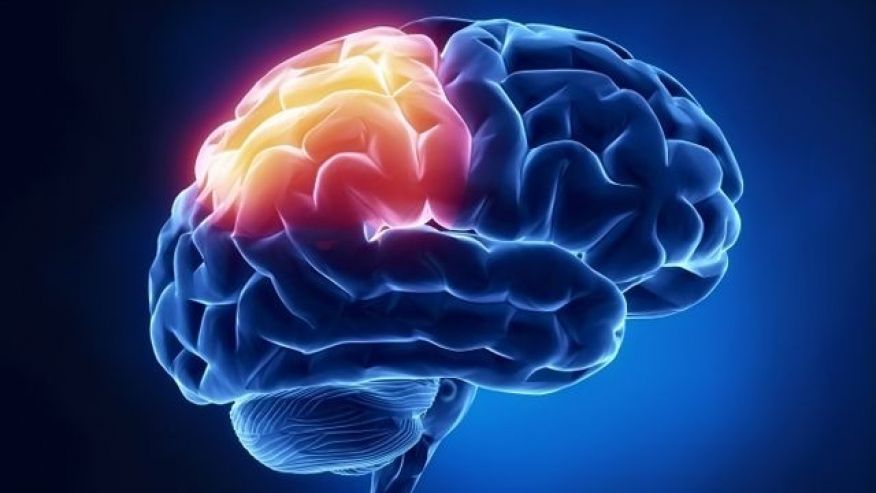
One of the functions of the brain is to registers all pleasures as they happen and in the same way, irrespective of their origin. That is whether they are associated with a psychoactive drug, a monetary reward, a sexual encounter, or a satisfying meal. The fact is in the brain pleasurable priniciple has a distinct role which is the release of the neurotransmitter dopamine in the nucleus accumbens, a cluster of nerve cells lying underneath the cerebral cortex. Dopamine release in the nucleus accumbens is so consistently tied with pleasure that neuroscientists refer to the region as the brain’s pleasure center.

All drugs of abuse, from nicotine to heroin, cause a particularly powerful surge of dopamine in the nucleus accumbens. The likelihood that the use of a drug or participation in a rewarding activity will lead to addiction is directly linked to the speed with which it promotes dopamine release, the intensity of that release, and the reliability of that release. Therefore addictive drugs provide a shortcut to the brain’s reward system by flooding the nucleus accumbens with dopamine. The hippocampus lays down memories of this rapid sense of satisfaction, and the amygdala creates a conditioned response to certain stimuli.

Brain pleasurable principle and drug addiction: Learning the process

Previously it was believed that an experience of pleasure alone was enough to compel people in to consistent seeking of addictive elements or activities. However new research findings indicates that the situation may be more complicated. This is because dopamine’s are not only responsible for the experience of pleasure but are also playing a role in learning and memory which are the two key elements in the transition from liking something to being addicted to it. Currently the philosophy about addiction is that dopamine interacts with another neurotransmitter, glutamate to take over the brains system of reward related learning. Remember that this system has an important role in sustaining life because it links activities needed for human survival (such as eating and sex) with pleasure and reward.

Finally, it may interest you to note that the reward circuit in the brain may include areas involved with motivation and memory as well as with pleasure. Addictive substances and behaviors stimulate the same circuit and then overload it. And therefore repeated misuse of any addictive substances or behavior will cause nerve cells in the nucleus accumbens and the prefrontal cortex (the area of the brain involved in planning and executing tasks) to communicate in a way that couples liking something with wanting it, in turn driving us to go after it. That is, this process motivates us to take action to seek out the source of pleasure. This can be very unhealthy more so if the source of pleasure is drugs. Many often run to drugs for pleasure and as such, the prevalence of drug abuse is on the rise. We can choose individually and collectively to correct this by scheduling for an appointment with doctor Dalal Akoury MD, who is a veteran addiction expert and also the founder of AWAREmed Health and Wellness Resource Center for help today.

Brain pleasurable principle and drug addiction: Neurotransmitter 

http://www.I-AM-I.com/wp-admin


Facebooktwitterpinterestlinkedin
heroin addiction

Drug addiction tolerance development

Drug addiction tolerance

Drug addiction tolerance development can be motivated by depression

Drug addiction tolerance development: When the brain is under attack

By nature, rewards usually come only with time and effort. And like I had mentioned before, addictive drugs and behaviors provide a shortcut, flooding the brain with dopamine and other neurotransmitters. Our brains do not have an easy way to withstand the onslaught. Addictive drugs, for example, can release two to 10 times the amount of dopamine that natural rewards do, and they do it more quickly and more reliably. In a person who becomes addicted, brain receptors become overwhelmed. The brain then responds by producing less dopamine or eliminating dopamine receptors an adaptation similar to turning the volume down on a loudspeaker when noise becomes too loud. As a result of these adaptations, dopamine has less impact on the brain’s reward center. People who develop an addiction typically find that, in time, the desired substance no longer gives them as much pleasure. And because of that, the development of drug addiction tolerance begins  hence they have to take more of it to obtain the same dopamine “high” because their brains have adapted and that is what is known as tolerance.

Drug addiction tolerance development: Compulsion takes over

At this point, compulsion takes over. The pleasure associated with an addictive drug or behavior subsides and yet the memory of the desired effect and the need to recreate it (the wanting) persists. It’s as though the normal machinery of motivation is no longer functioning. The learning process mentioned earlier also comes into play. The hippocampus and the amygdala store information about environmental cues associated with the desired substance, so that it can be located again. These memories help create a conditioned response—intense craving—whenever the person encounters those environmental cues.

Cravings contribute not only to addiction but to relapse after a hard-won sobriety. From experience, experts from AWAREmed Health and Wellness Resource Center under the able leadership of doctor Dalal Akoury MD, says that any person addicted to heroin is likely to be in danger of relapse when he or she sees a hypodermic needle, like for example, while another person might start to drink again after seeing a bottle of whiskey. Conditioned learning helps explain why people who develop an addiction risk relapse even after years of abstinence. And that is why keeping close touch with the experts is very important.

The formation of this facility (AWAREmed Health and Wellness Resource Center) by doctor Akoury is to primarily make a difference in your life. We understand the dangers drug addiction tolerance can do to your health and all we want to do is to help you get back to your productive life and live it meaningfully. That is why, if you have any concern about addiction of any kind, you can schedule for an appointment with doctor Dalal Akoury today for the commencement of your recovery process.

Drug addiction tolerance development: When the brain is under attack


Facebooktwitterpinterestlinkedin
drug-abuse

Illicit drug abuse counselor career training

Illicit drug abuse

Illicit drug abuse counselor career training is very important in the eradication of all drug related health complications

Illicit drug abuse counselor career training: What is substance abuse counseling?

The problem of substance abuse is one that is affecting everyone indiscriminatively across the globe. Studies have actually shown that millions of people suffer from illicit drug abuse each year. Therefore the question that we all beg to ask is what shall we do to have this problem brought to manageable levels? Doctor Dalal Akoury MD a veteran addiction expert founded AWAREmed Health and Wellness Resource Center with the sole objective of offering solution to all our concerns about substance abuse. At this facility we focus on Neuroendocrine Restoration (NER) to reinstate normality through realization of the oneness of Spirit, Mind, and Body, Unifying the threesome into ONE.

It is also important to appreciate that doctor Akoury is offering her exclusive NER Recovery Treatment to everyone including other physicians and health care professionals through training, clinical apprenticeships, webinars and seminars. Any qualified professional can now be a part of this truly successful and fast addiction recovery treatment. As you consider that opportunity, we will be discussing progressively the substance abuse counselor career training as a powerful tool of containing substance abuse. But in the meantime let us understand what substance abuse is as we progress into the discussion.

Substance abuse refers to the habitual use of a mind altering substance, whether it’s alcohol or drugs. Nonetheless we do appreciate that some drug users may find pockets of comfort from the substances they use, but this should not be taken to mean that such substances are good. The naked truth about drugs is that they are ultimately very harmful, it must also be noted that these substances are not only harmful to the users body, but can also cause serious damage to the soul. People who abuse substances like alcohol or drugs will often have their minds affected adversely with those substances to the point of being violent whenever they are under the influence of those substances.

Illicit drug abuse counselor career training: Why people abuse drugs?

Experts at AWAREmed Health and Wellness Resource Center say that there can never be any good reason as to why people should use drugs let alone abusing them. Unfortunately, users of the drugs have a number of reasons why they abuse alcohol or drugs. Some of the reasons may be extremely powerful. Like for instance, some may abuse drugs or alcohol because they are looking for a way to escape from their realities while others may abuse alcohol or drugs

because they want to have a sense of belonging with their peers. Doctor Akoury reaffirms that no matter the reason why people use drugs, there is a chance that they will become dependent upon them and that is when substance abuse counseling becomes very important. Substance abuse counseling is a type of counseling that can be used to help people overcome and conquer dependencies on substances, such as alcohol and drugs. Doctor Akoury says that in today society dealing with substance abuse is more important than ever because there are more and more drugs being created each and every day, not just in large cities, but also in smaller outlying suburbs. The boundaries of substance abuse have been dissolved, and no one is safe from its negative effects.

Illicit drug abuse counselor career training: What is substance abuse counseling?

http://regenerativepotential.com/wp-admin


Facebooktwitterpinterestlinkedin
drug abuse

Brain chemistry on communication and addiction

Brain chemistry

Brain chemistry on communication and addiction has nothing in common

Brain chemistry on communication and addiction: The necessities of protecting the brain

The brain chemistry on communication is very important in human life and it is the key to proper management of human systems all round. That is to say, whether the system is a group of family members, colleagues at work or in any other set up including as an individual. The body is actually no different and in fact in the absent of good communication our bodies will not function well. It will interest you to note that the brain is responsible for proper communication. Therefore if we want to understand addiction’s effect on the brain chemistry, it will be very important that we first appreciate how communication works. That is why we want to focus on the discussion of how addiction affects the brain chemistry on communication.

To do this, we are going to rely on the expert opinion from doctor Dalal Akoury MD and founder of AWAREmed Health and Wellness Resource Center. According to the experts at this facility, all the five senses e.g. sight, smell, taste, sound and touch will collect and transmit information about our environment. On receipt the brain will process and analyze this information. It must be noted that even though the brain performs this huge task of processing and analyzing information, it does so by relying on simple electrochemical process for communication.

The brain’s communication system permits specific areas of the brain to rapidly interact with other brain regions. The brain achieves this communication through a vast, interconnected, network of specialized cells called neurons. Our brains have billions of these neuronal connections. These neuronal connections form the foundation for an electro-chemical communication system.

Brain chemistry on communication and addiction: Addiction changes the brains proper functions

The composition of the brain is such that it has several sections or regions with each performing a distinctive role. All these sections communicate to each other for proper functionality of their specific roles. And besides the sections, the brain also must communicate to the rest of the body to coordinates the body’s systems like the digestive, cardiovascular and respiratory system among others. This can be illustrated well by taking the example of sports men and women. They must communicate to one another and coordinate as a team. That’s why the brain communication system is crucial for our health, well-being and the overall functioning. It is no wonder that when this communication system is altered, we are affected greatly. Doctor Akoury says that we are able to cope because the brain communication system is changing periodically and adapting to the new environments well. This way we are able to learn, remember and make adjustments to our changing circumstances. Drugs can easily alters this communication systems and therefore it is only fair that we appreciate how this communication system works so that we can understand some of the defining characteristics of addiction which may include cravings, withdrawals, compulsions, and the continued use of addictive substances and activities despite harmful consequences.

Brain chemistry on communication and addiction: The necessities of protecting the brain

http://www.awaremednetwork.com/

Facebooktwitterpinterestlinkedin
Alcohol and work

Impacting addiction knowledge in drug users minds

Impacting addiction knowledge

Impacting addiction knowledge in drug users minds can be very essential in controlling chronic illnesses associated with drugs and alcohol

Impacting addiction knowledge in drug users minds: Alcohol and drug addicts

The rate at which the prevalence of drug use is escalating is worrying that we can no longer keep quiet about it. The most valuable gift we can ever have is that of good health. If this virtue is under threat because of substance abuse, the all of us must pool together in finding lasting solutions. Impacting addiction knowledge in all drug users is very essential in dealing with the problem from the roots. That is why doctor Dalal Akoury MD and founder of AWAREmed Health and Wellness Resource Center is advocating to all people to seek foe more empowerment in addiction literacy by seeking for social skills training for the substance abusers to make a difference in their lives.

We appreciate that addiction being what it is, taking that bold decision may not be very easy for many people since addiction is something many would not want to associate with. But the most important thing is that we lend a helping hand to drug addicts and all alcoholics. Doctor Dalal Akoury MD and founder of AWAREmed Health and Wellness Resource Center are acknowledging that one common trait of many drug addicts and alcoholics are problems interacting with others in social situations. This is known as a lack of social skills. Sometimes this difficulty is what leads an individual into addiction in the first place. And some people have been addicted to substances for such a long time that it has affected their social development. Therefore if anyone is lucking social skills, then that calls for social skills training.

When opting for social skills training for an alcoholic or drug addict then these are some of the things that you must be ready to take the following into consideration: you must be ready to learn how to interact with friends, family members and even colleagues at work. You must also know how to interact in social situations especially when drugs and alcohol will be served or present and finally you must take a firm stand in declining any offer to use drug and alcohol in other words, you must be well armed with the refusal skills. That is to say when you say NO then it must remain that way irrespective of the prevailing circumstances. Doctor Akoury says that social skills training are closely associated with behavior therapy. Behavior therapy attempts to remove unwanted behaviors and replace them with desirable behaviors. It must be noted that for desired result, social skills training may not be very effective on its own but when combined with other cognitive behavioral therapy treatments, then its effectiveness can be realized. From the professional findings, it has been established that social skills training can significantly decrease the relapse rate for alcoholics and drug addicts.

Impacting addiction knowledge in drug users minds: Interpersonal relationships and substance abuse

Social skills training can teach drug and alcohol addicts how to relate with coworkers, friends, and family in a variety of social settings. Clients will learn such skills as: Listening as well as talking; that is, two-way communication, empathy, understanding unspoken clues such as body language and assertiveness, and how not to be taken advantage of. These are very essential and are only possible with the impaction addiction knowledge in drug users minds effectively.

Impacting addiction knowledge in drug users minds: alcohol and drug addicts

http://www.integrativeaddictionconference.com/wp-admin

Facebooktwitterpinterestlinkedin