Category Archives: Detoxification

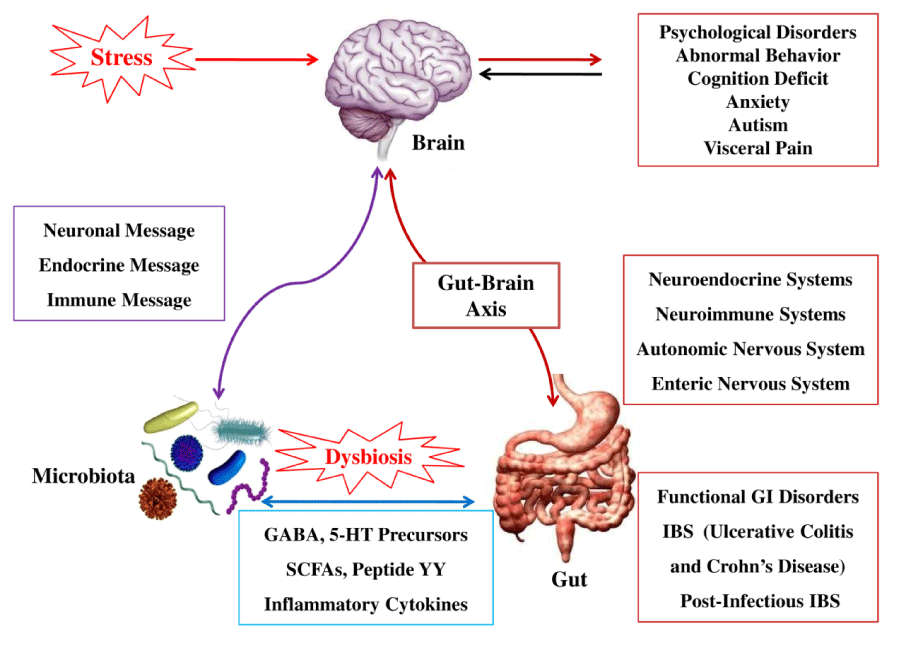
Gut-Brain-Skin-Microbiota Axis

Finding gut health treatment solution professionally
Finding gut health treatment

Finding gut health treatment solution professionally beginnes with understanding leaky gut symptoms in good time

Finding gut health treatment solution professionally: Replace

Having dealt with the first treatment option in the previous article we now want to progress to the second step which gives your body what it needs to rebuild the gut lining. Experts from AWAREmed Health and Wellness Resource Center have associated the inside of the small intestine to a towel covered with millions of little loops (called villi), which are further covered with millions of little fibers known as microvilli. If the gut is leaky, those fibers get matted thereby hampering regrowth and the absorption of nutrients from food and the vicious cycle continues because the villi need those nutrients to survive. Therefore to solve this riddle finding gut health treatment is very important and expert recommends:

Take more of whole foods: it is important to note that the body needs the components in their real, fresh food to repair any damage and rebuild healthy new tissue. Whole foods are full of vitamins, minerals, and phytonutrients, plus enzymes the small intestine needs to heal. You can also prioritize non-starchy vegetables and lean proteins by eat plenty of good, whole-food which help strengthen cellular membranes. Therefore as the body heals, it will trigger the elimination of toxins and other byproducts through the large intestine. And for this to happen effectively, the body will need lots of fiber inform of roughages from the food stuff from colorful vegetables, berries, legumes, nuts, seeds, and whole-kernel grains. Doctor Akoury advises that to be safe one should work towards taking at least 30 grams of fiber a day.

Supplement with glutamine: The most plentiful free amino acid in the body; glutamine supports immunity and digestion by fueling the cells that line the small intestine. Glutamine heals the intestinal lining more than any other nutrient and it is recommended that one takes 10 to 20 grams daily.

Consume more of omega-3 fatty acids: These are beneficial to the gut calming inflammation and rebuilding healthy cell walls. In animal studies, adding essential fatty acids improved the tight junctions between the gut lining’s cells and enabled the gut to fend off additional injury.

Finding gut health treatment solution professionally: Reinoculate

Once your body has patched up the leaks in the gut, you need to help it grow a healthy layer of good bacteria flora that help protect the GI tract and assist with digestion. These beneficial bacteria strengthen your immune system, improve metabolism, help your body make vitamins, and aid in the absorption of minerals. The two most important groups are lactobacilli and bifidobacteria.

Add a probiotic: High-intensity probiotic support rejuvenates and replenishes a microbiome damaged by antibiotics or a poor diet. Doctor Akoury recommends a high-potency probiotic of at least 50 billion active cultures twice daily. For added insurance, he says, choose one that is enteric-coated, meaning it will ferry the bacteria through the stomach’s acid and release them into the alkaline intestines.

Finding gut health treatment solution professionally: Repair and rebalance

Finally once you’ve got your gut on the road to wellness, it’s time to focus on lasting lifestyle changes. Sliding back into the habits that caused your leaky gut will only invite the return of health problems you want to avoid. Here are two key strategies for supporting ongoing gut health:

Eat mindfully: this may sound off show but nonetheless before taking your first bite, look at your food and take in its aroma. This will trigger the cephalic phase of digestion, an initial release of enzymes that help break down your food. And as you eat, chew thoroughly, paying attention to your food’s flavor and texture. Avoid multitasking or rushing while you eat. Take pauses and breaths between bites, allowing your digestive system to keep pace.

Calm your central nervous system: Under stress, the body’s nervous system kicks into fight-or-flight mode the opposite of its rest-and-digest mode. Recalibrate by cultivating a calmer, more centered state. Consider a daily meditation or yoga practice. Or on a stressful day, swap heavy weightlifting for a tai-chi class. Take note that each time when you change your thoughts you change your physiology as well.

Finding gut health treatment solution professionally: Replace

http://www.integrativeaddictionconference.com/wp-admin

Facebooktwitterpinterestlinkedin
heroin addiction

Defeating addictive habits and formations

Defeating addictive habits

Defeating addictive habits and formations is broad and wide including very essential foods can also be very dangerous

Defeating addictive habits and formations: Craving, withdrawal, relapse and triggers

It may be true that defeating addictive habits and formations can be very difficult once allowed to settles in an individual’s life. This school of thought is supported by several factors including denial and relapse among many others. But all the same this is one theory that needs not to be encouraged because defeating addictive habits is possible and with the right experts like doctor Dalal Akoury MD, President and founder of AWAREmed Health and Wellness Resource Center, this can even be achieved in relatively shorter time.

If you have been there, you will agree with me that besides relapse and denial, withdrawal is such an unpleasant experience that one wouldn’t want to repeat since it serves as a serious influence and a motivation to get back to your old habits. When this finally happens (getting back to your addiction), it becomes much more pleasurable to the victim even as the consequences of addiction sink further. And because of its pleasurable nature, it even becomes more rewarding and therefore it is bound to be repeated again and again.

Some drugs substances like alcohol and opiates, have withdrawal effects that are both physical and emotional. Other drugs or addictive activities may primarily involve around emotional symptoms. This characteristic of addiction occurs because of several changes in the brain meaning that we must do all it takes to ensure that defeating addictive habits and formations including craving, withdrawal, relapse, triggers of addiction are won. And with the help coming from doctor Dalal Akoury MD a veteran expert in addiction and her team of experts from AWAREmed Health and Wellness Resource Center this journey and mission is attained.

Doctor Akoury explains that as drug use or the addictive activities escalates the involvement of various brain regions associated with our emotional state also increases. Therefore the brain region that is most often associated with our emotional state is the extended amygdala. Experts are of the opinion that, this area of the brain plays an important role in addiction because of its association with emotions and stress. And like we had mentioned previously that addiction and stress are closely related, we are going to be looking at the two progressively as we progressed into the discussion.

Defeating addictive habits and formations: Amygdala

We all have memories about various events in our lives which can either be bad or good. These memories and emotions can be affected by amygdala. They can also be can be categorized as good or bad depending on the emotional states that happen during those events we are remembering. It is therefore very important to appreciate that these memories are formed from the brain and up on their formation, they are kept still within the brain along with the emotional attachment that occurred during those events.

In the same way an addicted person may only need to visualize about engaging in his addiction and that will be enough for him to experience pleasure. In that case, the memory of engaging in the addiction is stored with a pleasant emotional state and hence the pleasing memories of engaging with an addiction can lead to repeating those behaviors and eventually forms a habit. That explains why defeating addictive habits and formation is very important. And to effectively do that all you have to do is to call doctor Akoury to schedule for your appointment and your life will never be the same again.

Defeating addictive habits and formations: Craving, withdrawal, relapse and triggers

http://www.awaremednetwork.com/


Facebooktwitterpinterestlinkedin
stem cell therapy

Addressing cancer transplantation

Addressing cancer transplantation

Addressing cancer transplantation. It all begins with the elimination of substance abuse

Addressing cancer transplantation: Eliminating substance abuse

In case of malignancies, we are using patented methods of treatment with stem cells. These methods have proved their efficacy, have been approved by the Ministry of Health on April 20, 1999 and have been recommended for use in clinical practice. Transplantation of fetal stem cells is possible at all stages of oncological diseases like for instance:

Addressing cancer transplantation: At the initial stage of treatment

If surgery (tumor removal) cannot be started due to such complications as anemia, weakness, wasting, thrombocytopenia, depression, etc., transplantation of fetal stem cells prior to the tumor removal operation provides for the best preparation of the patient to surgery and best tolerability of the latter; it also accelerates the postoperative wound healing process, minimizes consequences and complications of anesthesia, and reduces the duration of the post-surgery rehabilitation period that allows for more rapid continuation of comprehensive treatment. In patients treated with the method of fetal stem cell transplantation prior to the operation, best tolerability of chemotherapy courses had been observed. Probability of metastatic process development diminishes as a result of increased anti-tumor immunity.

Addressing cancer transplantation: During the course of chemotherapy and radiotherapy (irradiation)

In case of such complications as leukopenia, agranulocytosis, thrombocytopenia, anemia, hepatitis, enteropathy, wasting, depression, alopecia, etc., transplantation of fetal stem cells promotes rapid (5 to 7 days) restoration of peripheral blood parameters after chemotherapy, improvement of the overall condition, and helps prevent complications. Transplantation of fetal stem cells provides an opportunity for carrying out more large-scale and intensive chemotherapy with a minimum risk without violating its timeframe.

Addressing cancer transplantation: After chemotherapy and radiotherapy (irradiation)

Transplantation of fetal stem cells is instrumental in restoring anti-tumor immunity and haemopoesis; it contributes to improvement of patient’s overall condition, decrease in weakness, as well as to improvement of their psycho-emotional status and quality of life.

Addressing cancer transplantation: Post-transplantation effects

Solid experience in cancer treatment allowed us to distinguish two stages in post-transplantation period that are different in time of development and clinical manifestations.

The first stage lasts for about one month and is characterized by emergence of early clinical symptoms that develop within a few hours after transplantation of fetal stem cells. We have described the early post-transplantation improvement syndrome: improvement in overall condition and appetite, decline in body temperature, diminishing weakness and sweating, restoration of self-care ability and increase in performance. This syndrome mostly occurs in patients with symptoms of severe intoxication and is often observed in patients with severe clinical course of the disease.

Also, a syndrome of psycho-functional changes is observed: reduction of somatic depression, improvement of emotional status, cognitive abilities, memory, and conative component.

The second stage of cell effect begins within one to two months after transplantation. It is related to reduced clinical manifestations of the disease and is characterized by stabilization of haemopoesis, improvement of the immunological profile, reduction of inflammatory effects, elevation of Karnovsky index, and improved quality of life.

Finally doctor Akoury reiterates that stem cell therapy contributes to formation of anti-tumor immunity; that can be used for preventing oncological diseases, as well as with the purpose of avoiding relapse and metastatic process. But even before we get there, most of the cancerous complications are as a result of substance abuse. This means that if we were to deal the prevention of substance abuse, cancer complications will be reduced greatly. Therefore as you consider taking the above treatment course, we also want to encourage you to talk to us about the major cause of cancer (drug addiction) so that we can fight the problem from all angles.

http://www.integrativeaddictionconference.com/wp-admin

Facebooktwitterpinterestlinkedin
Mental health healing

Detoxification goals in addiction recovery

Detoxification goals

Detoxification goals in addiction recovery. Understanding drug overdose and its remedies.

Detoxification goals in addiction recovery: The second treatment step

The major detoxification goals in addiction recovery is primary to remove any physical dependency of the drug(s) that you were using before. This is very essential because after the assessment (discussed in the previous article), the next step is often the most physically demanding. The greater demand is necessitate because it is at this point that your body needs to go through a detoxification process says doctor Dalal Akoury. It is important to take note that the process of detoxification can vary greatly depending on the drug you are detoxing from and how severe your usage is.

It is further important to note that depending on the outcome of the assessment process, our team of experts up on analyzing and evaluating your assessment feedback may decide whether or not we recommend inpatient detox or detoxing at home. That is to say that if you are suffering from a severe addiction then you are likely to get a recommendation to go through a residential detox which is entirely for your own good. Besides that in certain cases you may be prescribed for additional medication in order to help you come down off of your drug. Again, these decisions are made by the medical professionals within your recovery team.

Detoxification goals in addiction recovery: Withdrawal symptoms

Withdrawal symptoms can vary from one drug to another. However, because many drugs target the same neurological processes and influence the production of the same brain chemicals, withdrawal symptoms are often similar. Withdrawal symptoms are never guaranteed to carry the same severity as another persons’ that’s in recovery, as the severity of these symptoms are dependent upon a number of things including:

  • The drug(s) abused
  • The length of the addiction
  • The amount of the substance ingested during each use
  • Family history
  • Mental health condition

While withdrawal symptoms can differ depending on the above criteria, they also occur in different forms – emotional and physical. While emotional symptoms are bound to transpire no matter the abused drug, physical symptoms tend to be more selective towards those that abuse alcohol and opiates. Take note that common withdrawal symptoms can range from depression, irritability, insomnia, sweating, and an array of other symptoms.

Detoxification goals in addiction recovery: The key to success in detoxification

Finally the main key to success in this treatment phase is simply grit. Getting through withdrawal without relapsing is physically demanding and difficult work. You will be tempted to give in and give up. You might feel that the pain isn’t worth it, and that going back to your addiction is the best answer. This is often a point where one can easily loose on all the efforts that have been made. Doctor Akoury advices that patients’ needs to  keep in mind that any experience of extreme withdrawal symptoms are only temporary and patients need not to lose focus because in no time the experience will be long gone and you will be back on your feet again ready to overcome your addiction ghost.

Detoxification goals in addiction recovery: The second treatment step

http://www.integrativeaddictionconference.com/wp-admin


Facebooktwitterpinterestlinkedin
hormones and weight gain

Fix your weight-gain hormones with nine proven tips

If you didn’t know it, the pound you gain is determined by the hormones in your body. Studies have shown that hormones in your body influence the way fat is stored in your body as well as your appetite.

To save yourself the trouble, use these nine tips to fix your weight hormones.

  1. Insulin

Insulin is controls how sugar and fat are stored in your body depending on what you need at a particular time. To ensure that insulin functions as required, you need to normalise its levels in your body. To do this, you are required to minimise sugar as well as carbohydrate intake. Instead, take lots of protein and healthy fats found in fish and much more. You also need to exercise regularly.

  1. Leptin

The main purpose of leptin is to discourage overheating. Unfortunately, it might not do this if its levels in your body are either below or above what is required. Just like insulin you need to normalise it to increase its performance. The best way to do this is to eliminate foods that lead to inflammation such as sugary foods, exercise regularly and lastly, use supplements.

  1. Ghrelin

The main purpose of ghrelin is to alert you when you are angry. It reminds you that your stomach is empty, and it needs filling. Improper levels of this hormone might send wrong messages to your brain encouraging you to overeat. To improve its functionality, you’ll have to avoid foods with too much sugar and eat plenty of protein.

  1. Cortisol

This hormone is released when your body senses stress. It has also been realised that higher levels of this hormone can lead to overeating. So, you need to maintain it at proper levels by eating a balanced diet. You can also need to engage yourself in some activities that help relieve stress such as meditation, listening to music or getting a sound sleep.

  1. Estrogen

Oestrogen is a female hormone produced by the ovaries. Both low and high levels of this hormone may encourage weight gain. So, it is vital to maintaining it at correct levels. The best way to deal with it is, to eat large amounts of fibre, cruciferous vegetables, flax seeds and lastly, doing some exercise.

  1. Neuropeptide Y

Neuropeptide Y is a hormone produced by your brain’s cells as well as the nervous system. Its purpose is to encourage the eating of foods such as carbohydrates especially when you are hungry. Higher levels may encourage overeating. To lower its levels, you need to eat more protein, don’t starve yourself and lastly, eat lots of fibre that are soluble.

hormones and weight gain

  1. Glucagon-Like Peptide-I GLP-1

GLP-1 is a hormone that works best to maintain the blood sugar at proper levels. Higher levels of this hormone have been realised to decrease appetite. To increase the levels of GLP-1, you need to eat lots of protein, anti-inflammatory foods and lastly, leafy greens.

  1. Cholecystokinin CCK

Higher levels of this hormones reduced intake of food in both overweight persons as well as lean persons. To increase its levels, you are required to eat lots of proteins, healthy fats and fibre foods.

  1. Peptide YY PYY

Higher levels of Peptide YY is known to reduce appetite. To increase the levels of this hormone, you need to eat low-carb foods, plenty of protein as well as fibre.

Final Word

If you can control the levels of your hormones, you won’t need to worry about your weight


Call us today if you need help with these topics and more on 8432131480.

Facebooktwitterpinterestlinkedin