Category Archives: AWAREmed Health and Wellness Resource Center

Magnesium Depletion and Chronic Diseases

Magnesium Depletion and Chronic Diseases

The metabolism of carbohydrates and fats to produce energy (which includes ATP production) requires numerous magnesium-dependent chemical reactions. Magnesium is also required for a number of steps during DNA and RNA synthesis. Glutathione, an important antioxidant, requires magnesium for its production.

If that makes you think magnesium is such an essential metal then there is a host of more surprises for you. Magnesium is truly an essential mineral that your body requires for maintaining its normal nerve and muscles function. Magnesium helps keep the body’s immune system healthy. It is also essential in maintaining your heart rhythm and is necessary for the building of strong bones.

In addition, Magnesium is involved in a minimum of 300 biochemical reactions in the human body. This means that a deficiency in magnesium compound can lead to a wide range of disorders including muscle spasms, diabetes, heart disease, high blood pressure, migraines, anxiety disorders, cerebral infarction and even osteoporosis.

A deficit in magnesium also referred to as magnesium depletion is caused as a result of dysregulation of the state of magnesium in the body. This is the result of dysregulation of the mechanisms that control the metabolism of magnesium. These could occur in the form of a failure of these mechanisms causing magnesium homeostasis. It could also be as a result of intervention of iatrogenic or endogenous factors which eventually disturb the magnesium status.

Some studies observe that this depletion cannot be corrected simply by nutritional supplementation alone. Rather, certain specific dysregulation correction mechanisms are crucial in remedying the condition.
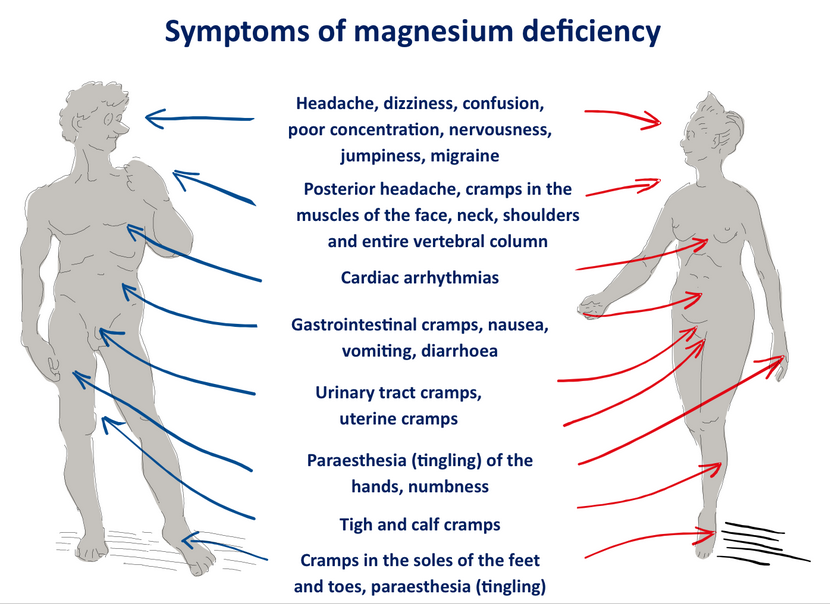
Magnessium_Deficiency

Magnesium depletion should be clearly differentiated from magnesium deficiency in the body. Deficiency is a disorder of magnesium that simply results from an inadequate intake of the mineral in the diet. An oral magnesium supplementation is recommended and is enough to correct the disorder.

High Risk Groups For The Magnesium Disorder

There are certain groups of people that are more vulnerable to the magnesium related disorders given its primacy in a number of body processes. Studies have identified long distance athletes as a potentially high risk group with regard to magnesium deficiency. These are people who conduct strenuous long distance exercise. They tend to lose electrolytes through their sweat and need to replenish their essential minerals such as sodium, phosphorus and potassium, but most particularly magnesium levels.

People who drink a lot of alcohol may also need adequate replenishing of magnesium lost during dehydration. Those who suffer diarrhea as well as others who may be dehydrated through other means also need to replenish their magnesium levels as well as the levels of sodium metal, potassium and phosphorus.

The elderly and those who have poor functioning kidneys may be subject to loss of magnesium through urine. This happens when the kidneys cannot retain the magnesium in the blood or reabsorb it through its tubules resulting in dysregulation of this essential mineral. Consequently the person’s system will not be excreting less magnesium when the mineral stores are low. In addition, the elderly naturally need the mineral since the amount of magnesium absorbed by the body decreases with old age as the amount excreted increases.

If you have any form of gastrointestinal disorders, chances are that your colon will not be able to absorb enough of the mineral. Most magnesium in the gut is often absorbed through the large intestines. This means that people with gastrointestinal disorders such as Crohn’s disease are faced with the risk a possible magnesium deficiency.

The same goes for those who consume high amounts of Fiber. The bodies’ ability to make use of magnesium has been found to be affected by taking in a lot of fiber in the diet. The ratio of this effect is yet to be established through further research. Still on the question of diet, low protein consumption is also said to have an effect on magnesium in the body.

Magnesium Sources

magnesiumMagnesium is found in a number of food products that can be found readily in the market. Foods high in magnesium include nuts, dark leafy greens, seeds, beans, fish, bananas, whole grains, dried fruit, avocados, yogurt and dark chocolate. This is however not the entire list of foods rich in magnesium. There are a lot of other products that contain magnesium in large amounts. These can be found at AwareMed. In fact, AwareMed is the best place where you can purchase magnesium.

Consuming too much magnesium may typically be dangerous and can make you diarrhea. This is why AwareMed emphasizes having the magnesium chelated.

Nuts, dark chocolate, molasses and seeds are high calorie foods and good sources of magnesium. They should thus be eaten in moderate amounts by those who have high body mass index (BMI).

Other sources of magnesium such as almonds, dark chocolate and spinach are rich in oxalates and these inhibit the absorption of some magnesium. The foods are however still good sources of the metal.

Noteworthy is, Brazil nuts are a rich source of selenium. Too much selenium may lead to unfavorable conditions like bad breath, diarrhea and even loss of hair.

The following factors may affect magnesium absorption

Absorption of the mineral may be enhanced by taking diet rich in fermentable carbohydrates such as those found in dairy, grains and fruits. Protein foods also may help with the absorption of magnesium while eating foods that are high in insoluble fiber is likely to deter magnesium absorption.

Grains, vegetables and seeds may contain phyrates that somewhat deter the absorption of magnesium. On the contrary, the soluble fiber as well as the fermentable carbohydrates that are found in the same foods are likely to counter this effect. This makes most plant foods a powerful source of magnesium.

Magnesium Depletion and Chronic Diseases


Facebooktwitterpinterestlinkedin

Vinegar the Blood Glucose Controller

Vinegar the Blood Glucose Controller: A Secrecy Weapon in the Kitchen Pharmacy

vinegarMost of the dishes in our fast foods restaurants are often accompanied with containers of vinegar. For a long time I never considered putting it into my plate of fries. After all, why would I, if I had all the spicy Hot and Sweet tomato-chili sauce right there with me? Why would I spoil my otherwise tasty meal with what I consider a predominantly female preference-the acidic stuff: Vinegar? This attitude has since changed!

I have come to appreciate the taste of vinegar. Truly some of our sensual responses depend on the attitudes we have previously formed about them. And if you are among the folks who still share my initial attitude toward vinegar then you need to understand what it brings with regard to diabetic conditions.

What studies have found

Recent studies carried out to assess the effects of vinegar have established that taking a given amount of vinegar dosage before meals have great positive results pertaining to the levels of blood sugar. 2 tablespoon portions which amount to about 30 ml dose of vinegar before taking two meals in a day over a period of four weeks was found to help Type 2 diabetic patients to lose weight while at the same time have their blood sugar levels dropped.

The vinegar portions do this by slowing down the dumping of sugar into the bloodstream after a meal. If you have either diabetes type 1 or type 2 therefore, and you take insulin, a shot of vinegar will thus slow down the absorption of sugar from the carbohydrates long enough to give your insulin time to work. Vinegar generally delays the need of body for insulin. It does not however eliminate that need. It only helps to change the glycemic index of the foods you take. This is to say that the vinegar is not a cute for diabetes, it is just a way of dealing with the sugar levels as a control mechanism. This should help clear the air for the rumors that vinegar is a cure for diabetics.

The substance contains a rich amount of organic acids, soluble fiber which is also referred to as pectin, and acetic acid. All these components aid the slow-down of the emptying of the stomach. They delay the digestion of the carbohydrates. With this delayed process of absorbing food from the large intestines, you are assured of a delayed sugar intake by the bloodstream.

Actual vinegar has not been deprived of any of the above compounds. Though vinegar supplements usually have been pasteurized and contain less compounds in them. The substance is known to stop the digestion of carbohydrates in the stomach to a given percentage.

This makes vinegar very useful to people with type 2 diabetes, whose pancreases apparently cannot release insulin fast enough, though they do release the hormone, to take care of all the carbohydrates digested from the food after you have eaten. This involves a case of higher amounts of sugar than the insulin can handle. Vinegar therefore works side by side with the ‘weak’ insulin to ensure the hormone can take its time in dealing with the blood sugars. The message here is: your body still needs insulin whether or not you are using vinegar.

The previous studies have aided the researchers in hypothesizing that the carbohydrates might eventually ferment in the individual’s small intestines. This in effect will create by-products that send a signal to the liver to initiate a negative response by not making as much cholesterol.

It is based on this ground that a number of practitioners have always thought of vinegar as being able to reduce cholesterol from the body. These researches confirm otherwise though. The vinegar only initiates a process that in turn produces a negative response toward the secretion of cholesterol. As such, the vinegar indirectly discourages the production of cholesterol but does not affect the amounts already in circulation in the body of the individual.

Vinegar-Is-One-Of-The-Most-Powerful-Health-Tonics

Using two groups of volunteers in a study have indicated no effect of vinegar on the levels of cholesterol in the body. The volunteers subjected to a dosage of vinegar however record no increase in their weight with significant weight losses without additional exercises or dieting though. This helps shade empirical light to the above discussion.

from a vinaigrette on a salad. The Arizona State researchers are considering creating a vinegar supplement, but caution that the vinegar supplements currently on the market do not contain acetic acid, which makes the treatment work to help with weight loss and lower blood sugar levels.

The way to describe how acidic foods affect or alter the glycemic index… is to say it is unexpected. The way vinegar lowers blood sugars is by slowing the absorption of digested sugars from the large intestine. The acid in vinegar is neutralized by bicarbonate in the intestines, and without the bicarbonate, glucose does not pass into the bloodstream quickly. Eating a vinegary pickle, or even taking a little shot glass of vinegar before a meal will reduce post-prandial blood sugar increases.

All that said, this is the summary of how acidic foods work: what happens is acidic foods significantly lower the glycemic index of a carbohydrate food, or a meal, by one-third. The reason lies in how your stomach and digestive system work (see above). Acidic foods slow down the emptying of your stomach. The food slows down your digestion, which slows down how quickly your blood sugar levels rise.

Vinegar the Blood Glucose Controller: A Secrecy Weapon in the Kitchen Pharmacy

Facebooktwitterpinterestlinkedin

Easing Menopause Naturally

Natural ways to ease Menopause

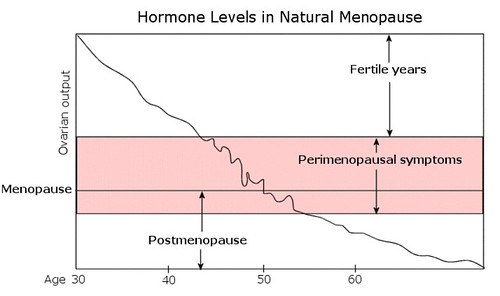
Any changes involving the reproductive cycle of a woman will always send gut wrecking feelings inside her. This is not different with menopause. A woman will naturally start experiencing menopause at the age of 45-55. Menopause is naturally that period when a woman stops receiving her monthly periods. It is characterized with symptoms such as hot flashes, mood swings, weight gain, depression, joint and muscle pains, loss of libido and insomnia.

For some women these symptoms can be a real issue to deal with. In others these symptoms appear even before the menopause, a stage called perimenopause. It is actually the time up to when you receive your last period. However not all women experience these symptoms during perimenopause or menopause.

What you need to understand is that menopause is just a natural stage of life that every woman must experience. It is not an illness that you have to be put on medication for. I have heard of women talking about their experiences when they hit menopause. Some of them are extremely severe while others are just mild. In few cases, some women do not even experience these symptoms except for the fact that they stop receiving their periods. Severe symptoms which may be a real issue may include things like; depression, insomnia, hot flashes and mood swings.

Some of you may be already experiencing these while others are heading there. If you are in the former category probably wondering whether or not you will experience severe symptoms or your transition will be normal. Whatever the case, the thought of heading to menopause is scary. That is normal. After all a woman’s body is prone to many physical changes which are always a little bit scary. It could be confusing to think about how to go about them. Be it pregnancy, menstrual cycle and so on. Approaching menopause is no different.

menopause-natural

Menopause symptoms can last longer that you think. In some women it can last for months while in others these symptoms go on for years. So is there a way out? I know if you are already experiencing menopause you are curious to know what you can do to ease these symptoms which are slowly taking control of you and driving you to the edge.

As you search the internet, you will find so much about how to ease menopause. Some are expensive and very hard to manage. There are however simple and natural ways through which you can handle this transition:

What’s the solution to menopause then?

  • Exercise

A lot has been said about exercise. You have heard that you cannot do without exercise if you want to live a healthy life. Most women forget exercise when they hit menopause. They tend to have this perception that they are growing old and do not therefore need to exercise.  Don’t let this transition stop you. After all it’s just a stage in life not the end of it. Go to that gym. Do yoga if you have to. Run for about 45 minutes in the morning. In short what I am trying to say is do all the exercises you used to do. If you were not exercising before, trust me when you hit menopause this is the time you need that exercise the most.  Research shows that exercise helps ease some of the symptoms of menopause such as weight gain, insomnia, depression, stress and anxiety.  Women in their menopause who exercise regularly do not gain weight unnecessarily. They tend to sleep well and it is also a remedy for depression and stress as it keeps all your senses alert.

Eating a healthy diet is one way of ensuring that you always live a healthy life. For women approaching menopause, eating a healthy diet is one way of balancing the hormones in your body. A healthy diet containing all the nutrients your body requires to remain healthy is recommended. Research has it that, taking a healthy diet for women experiencing or approaching menopause is a good way of easing hot flushes that emerge once in a while.  In regard to this always opt for a diet that is rich in vegetables, essential fats, proteins and carbohydrates. Most importantly don’t forget to include fruits in your diet. Avoid eating polished carbohydrates but always go for the whole grain. In order to keep your blood glucose balanced, ensure that you take one or two snacks a day. The secret here is to eat a balanced diet with the right nutrients. Oh, and don’t forget to take lots of water.  Water is a natural remedy for a healthy individual. It keeps you rejuvenated and youthful.

Stress is a great enemy to good health in women approaching menopause. The moment you start getting stressed, you are inviting depression to creep in. Stress has been noted to start in most women during the menopause transition. The minute you get stressed you cause an imbalance in your body hormones. This can lead to mood swings, emotional imbalance, and digestive problems. Stress has also been linked to menopause symptoms such as loss of libido and flash swings. As a woman always avoid stress. Remember that menopause is just a natural phase of life which you must go through. It does not mean that your life should now come to a halt just because you have hit menopause. No. Take it easy and enjoy all the little things life has to offer.

menopause

  • Emotional Wellness

I have heard of a story of a woman who thought her life was worth nothing because she had lost her house. She ended up suffering from chronic depression because of this. Why would you allow negative thoughts to cloud your mind? Does it mean that now, that you are approaching menopause that it’s the end of your existence?  Most women, who are in menopause or approaching menopause, end up in depression and swallowing antidepressant pills. Some women have had successful transition because they decided to take life easy. Menopause should not mean a pause on all the other aspects of your life. It does not mean that you should now cower in bed thinking life is done.  Think about all the positive things in life. Avoid living in the negative. Always keep track of all the good things in your life and start each day on a positive note. Also avoid anything that you feel only affects you negatively. Some for instance may feel that watching certain programs don’t go well with them but only leaves them feeling dejected.

  • Herbal Remedies

Some herbs have been known to ease menopause symptoms such as hot flushes. These remedies include:


  1. Black Cohosh: studies have shown that this herb helps reduce hot flushes.  Many women who have used it report to have been helped by it during menopause. This herb works by maintaining a balance in the hormonal levels thereby reducing the chances of getting hot flushes.
  2. Dong Quai: the herb is well known for its ability to balance the female hormones. It does not however contain estrogen and in this case it is not recommended for women who are experiencing heavy bleeding.
  • Flaxseed: it contains lignin substances. These substances are known to be effective in balancing hormonal metabolism in females. It is therefore necessary in reducing hot flashes during menopause.
  1. Ginseng: ginseng has been proved to reduce menopause symptoms such as mood swings and inability to sleep. It is also a great remedy for hot flushes.
  2. Evening Primrose Oil: this herb helps in balancing hormones thereby reducing hot flushes during menopause.

AwareMed empowers you with alternative methods to see you through a healthy menopause. Our experts will also recommend for you the best therapies in the event of a severe situation.

Natural ways to ease Menopause

Facebooktwitterpinterestlinkedin

Vampire Facelift for Facial Transformation

Vampire Facelift for Facial Transformation – Maintaining young and youthful look

Vampire Facelift

Vampire Facelift is currently the best for facial transformation. It is almost painless and does not have known side effects.

It is interesting how everyone would like to keep and maintain that young, tender and youthful look for as long as they live. The desire for a much younger look is so strong that even the natural aging process is being fought by all means. In the spirit of doing this many challenges are being experienced and more so by the ladies. This article brings the good news to the ladies of the discovery of vampire facelift the perfect solution to this problem. Now ladies talking to doctor Dalal Akoury the most experienced expert in this sensitive beauty condition reveals very important guidelines which when followed will give you that much youthful looks. One of the most and desired facial treatments Doctor Akoury is offering is the application of vampire facelift. As we get to the discussion, I will recommend that for any problem relating to the beauty of your skin and face, you can schedule for an appointment with doctor Dalal Akoury today.

The focus of discussion in this article will be Vampire Facelift and how effective it is. Vampire facelift was primarily established for people desiring to keep that healthy, youthful, and well moisturized young look skin naturally without the inconveniences of going through surgery. It is a systematic process that uses your own body’s healing and regenerative properties. This process does not take time with almost immediate result being realized on the same day and with continual skin regeneration benefit lasting for months after the procedure, and results can last for over a year.

It is important to note that Vampire Facelift® is not just a facelift procedure but rather a skin treatment procedure using the body’s own natural healing and growth factors that are derived from your own. Vampire Facelift is therefore a stylish procedure developed to facilitate and enhance volume in the face using a combination of hyaluronic acid like Restylane and platelet rich fibrin matrix (PRFM) which is a denser form of platelet-rich plasma (PRP).

Recovering Factors from a Patient’s Own Blood

The major component for Vampire Facelift is platelet-rich fibrin matrix which is derived from the patient’s own blood before being mixed with other factors. Platelet-rich fibrin matrix starts with a blood draw in the very way blood is drawn during any blood test after which the platelet-rich plasma (PRP) is detached by spinning the patient’s blood through a centrifuge to give a clear yellow serum after it is detached from the darker components made typically of red blood cells.

Platelet-rich plasma is used throughout the medical world for its wound and injury healing properties. It also stimulates the production of collagen and for tissue regeneration. These properties enable platelet-rich fibrin matrix as an ideal natural serum for revitalizing facial skin quality and volume with increased collagen production, blood supply, and new skin and fatty tissue generation, creating the youthful appearance that comes with generating new, healthier skin. The purpose of Vampire facelift is to correct what aging is introducing in your skin quality. How then does aging affect the quality of your skin? It does so in two major ways.

  • There is loss of volume from bone, muscle, fat, and skin. This can make the under eye area and cheeks look flat and hollow. The skin can look dull or gray instead of being rosy as it was when younger.
  • The loss of support of the skin results in drooping upper eyelids, lower eyelids, cheeks, jowls and sagging neck skin like the neck of turkey.

Adding Youthful Volume by using Hyaluronic Acid Fillers

The first step of The Vampire Facelift® is the application of injectable hyaluronic acid dermal filler like Restylane or Juvederm.

One of the two main components of the facial aging process is the loss of volume due to a reduction of facial bone, muscle and fat, also known as “the apples of the cheeks”.

Dermal fillers add youthful volume to the face, while keeping a natural appearance.

Hyaluronic acid fillers do not paralyze facial muscles like Botox, so volume is added without inhibiting facial movement or expressions.

Normally there is specific art application of fillers for a more vibrant natural and youthful appearance and you can be rest assured that Dr. Akoury will apply his natural artistic abilities with her professional skills and over two decades of experience to perform your procedure, all you need to do is to get in touch with her (Doctor Dalal Akoury) and you will not regret the look on your face anymore.

Revitalizing your Facial Skin from Within

For comfort and almost pain less process, the platelet-rich fibrin matrix is placed just after a numbing cream has been applied. Platelet-rich fibrin matrix contains at least eight of the body’s own concentrated growth factors to revitalize the face in various ways like:

  • Specific growth factors increase the formation of new blood vessels also known as neovascularization and increased blood flow to the skin, resulting in healthier, better and quality skin.
  • Other growth factors increase new cell formation for skin renewal.
  • Another growth factor spurs the formation of new collagen, the major element of facial skin that diminishes in facial aging.
  • Other growth factors activate the multi-potent stem cells already in the skin by tricking it into thinking there is an injury, resulting in the use of a combination of growth factors and stem cells to generate new fatty tissue. The new fatty tissue repairs skin that was never injured, resulting in the generation of new, younger-looking skin.
A quick procedure that keeps working for several months

Finally like I had indicated in the introduction while talking to doctor Dalal Akoury who is also the founder of AWAREmed Health and Wellness Resource Center, for professional input in calling doctor Akoury will be the starting point of ensuring that you get that youthful appearance you have been looking for. Doctor Akoury together with her team of experts appreciate that you need to get quick result and they will just do that, remember that the entire Vampire Facelift procedure only takes about an hour to complete. Within the hour all the steps including the: blood draw, preparation of the PRP, platelet-rich fibrin matrix, and The Vampire Facelift® treatment itself will be complete and your face will surprise you when you look into the morrow. Take that positive step of calling doctor Akoury today and experience the real professional touch and take not that since skin renewal and rejuvenation is using the body’s own active regeneration components, facial skin renewal is continual for about 3 months after the procedure while the overall effects of the Vampire Facelift® can last for over a year. Thank you for desiring to make a difference in your face with the best at AWAREmed Health and Wellness Resource Center.

Vampire Facelift the best for Facial Transformation – Maintaining young and youthful look


Facebooktwitterpinterestlinkedin

Shared Medical Appointment: An Innovative Practice Model

Shared Medical Appointment: An Innovative Practice Model

A visit to a physician can always be such a tense moment. This is often characterized with a lot of anxiety and high expectations on the part of the patient. As a patient you want to get well. Yet you are also torn between the desire to get well and the fear of negative outcomes. It is usually worse with chronic conditions such as diabetes, heart conditions, asthma and ulcers.

It is based on such considerations and a hoard of others that it becomes necessary for the medical practitioner to adopt a method or initiate one that is more likely to make the medical appointment a less excruciating experience.

If the practitioner is able to turn the tension of the moment into a fun filled experience then it is a definite straight up success. It is not just the victim who enjoys the benefit of the experience with the medic, rather, the medical expert also stands to derive considerable gratification from handling a satisfied patient. No palm wetting, no forehead sweats; just a cool and non-tense exchange between a medic and his or her patient.

Impetus for the shared medical appointment approach

The shared medical appointment can be said to be resulting from the above line of considerations, to make the experience a natural process.

This shared medical appointment model, also referred to as group visits, cluster visits or problem solving drop-in group medical appointments (DIGMA) has been orchestrated with the core objective of inspiring the medical practitioner to come up with, implement and appraise shared medical appointments chiefly for patients with diabetes.

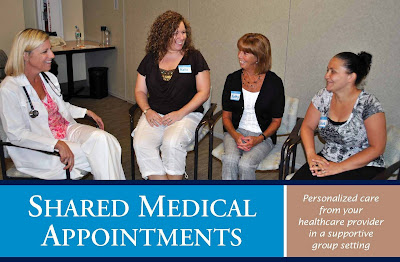
The model is basically an innovative approach that has a distinctly different methodology as opposed to the usual diabetes education classes. It involves a group of 12 to 16 patients meeting up with a doctor, medical assistant, behaviorist, nurse, and dedicated documenter for a time period of one and a half hours.

The traditional diabetic classes on the other hand usually address self-management techniques, the question of exercise and recommended nutrition for these patients. The group visits provide medical evaluation, the coordination and provision of precautionary services, mechanisms of adjusting medication, all which often miss in the ordinary diabetic classes.

The model succeeds in its conception as being innovative since it is found to improve the care offered to conventional patients of chronic disorders which primarily include diabetes as well as asthma, coronary disease, and urological conditions by aiding the use of available resources far more efficiently.

shared-Medical-appointments

The majority of successful shared medical appointment programs have included an element of case management and between-visit care coordination. The program is traditionally headed by a nurse, a physician or nurse practitioner.

If you set up a limited component of care management for group of patients who attend the programs of these cluster visits the program can be quite a useful step toward a wider use of care coordination within your field of practice.

A patient of diabetes may use these shared medical appointment programs in the place of a primary care or they can as well alternate the two sets of care arrangements: group visits and the one-on-one care units.

Other than the group education services typically offered in group visits, collective problem-solving, focused secluded or partially private health evaluations which allow for personalized medication adjustment; the programs may also involve ordering of referrals and preemptive services.

The sessions may always vary. They may go from one hour to even several hours depending with the physician-patient arrangements. Each session may have a varied number of attendees, with the typical maximum being 20 persons.

Benefits of the Group Visits Model

shared-medical-appointment Past medical records have indicated that patients generally enjoy interacting in a shared form of environment. There are less cases of tension associated with medical situations and this can always provide a lot of encouragement to those who attend the sessions while providing them with essential tips that may not be received in a short medical visit.

Physicians also benefit from the change of pace typical of these programs and have a chance to innovatively and much more thoroughly attend to the matters presented by chronic disorders which are common in most of the primary care circumstances.

Evaluations of the shared medical appointments have also reported a general increase in satisfaction levels of the patients and clinicians along with improved quality of care offered in the cluster situations. There have also been a reduction in the aggregate emergency section and specialist visits by these patients. This indicates a general possibility of increased perfection in following the directions provided during the sessions.

What makes the cluster visits even more beneficial is the communal environment created by the group approaches. Patients are able to share experiences freely and feel relieved by the existence of certain critical but shared experiences. It is human nature that you feel better when you know that you are not alone in your situation. Just the environment alone, the sight of many people supposedly in for the same course is enough to relax a patient’s nerves.

The patients attending the sessions are able to share their concerns collectively and get responses. This may help in two different ways. A patient who is either shy or simply unwilling to ask a pressing question may benefit from another patient asking the same. Secondly, a patient may get response to a question that he or she might have forgotten to ask the nurse or the physician in attendance. In general, the patients learn from the healthcare team in session, from one another as well as from the environment itself.

About the doctor

Dr. Dalal Akouri has years or experience attending to patients with various life threatening chronic illnesses and is proud to have improved the lives of such patients. You too can join this vast community of patients who have seen the fruits of her work by contacting het today.

Shared Medical Appointment: An Innovative Practice Model

Related articles

Facebooktwitterpinterestlinkedin