
Category Archives: addiction

Prescription Drug Abuse

Prescription Drug Abuse-Fueled by Ease of Access

Prescription

Prescription drug abuse can be challenging because one may not clearly know who is abusing and genuinely looking for painkiller to relieve pain

It is almost becoming common knowledge that when you talk of an addiction many will think of alcohol, cigarettes and drugs because of their addictive nature. What may not be in the public domain is that legal drugs prescribed by the medical doctors can also be addictive. This is what this article is going to discuss so that we can have better understanding of how prescription drugs affects those who may be addicted to them.

Many people would wonder just how they became addicted to whatever substance they are taking, the realization normally occurs during the addiction recovery process. It is during this process that addicts discover that the journey to addiction recovery is not an easy one and takes very long time and while tracing their steps backwards with a view of trying to comprehend the genesis of their addiction they can trace it to accessibility and affordability of the drugs. When these two factors are the case then an addiction very possible because there will be little hindrances to people using these addictive substances. We know that accessibility is easy and especially for those users of street drugs or alcohol what we are left pondering about is how easy it can be for addicts to access prescription drugs addictions because these drugs (opioids) can only be accessed from the pharmaceutical companies. How then is it possible for one to be addicted from these drugs? The assumption is that the legitimacy of prescription drugs makes them hard to be abused because for one to use so many prescription drugs they must be authorized by a medical doctor or pharmacies.

This in many cases is not so because those addicted to prescription painkillers and other medications get them much easier than what the general society believe. Addicts are becoming smarter daily to defeat the systems and take advantage of what friends, family members, and medical professionals have to offer. How then do they achieve this? According to a recent CDC findings, just about 15 percent of prescription drug abusers claim getting their substances from a dealer or a stranger. Since these substances do not always come from a “dealer,” it is important to identify what sources can help fuel prescription drug addiction:

Prescription Drug Abuse-Family and Friends

It may interest you to know that probably you may have willingly and with great caring concern given to your addicted friend or loved one a painkiller hoping that you are helping then get rid of their pain. Out of this good deed you may have facilitated an addiction to prescription drugs. According to an article from New York Daily News close relatives may not only be the easiest supplies of prescription drugs but also the most affordable. The article continues most people who abuse addictive prescription painkillers get them for free from friends or relatives, while drug dealers are a relatively uncommon source for those at highest risk for deadly overdoses, a government study found.

In an effort to reduce instances where relatives become the easiest and cheapest supplies it is advisable that medications should only come from qualified medical doctors and so anyone seeking for prescription drugs should get it from the authorized medical personnel. This is necessary because as a friend or a relative you may have the good intension to help but in the process your desire to help turn out to be harmful. The harm can be that intense in severe cases it may result in addiction or an overdose. Knowing the consequences of an addiction, we all ore one another the duty of care to ensure that we are all safe from this addiction problem, therefore since addicts may sometimes resolve to steal if all access is denied we must ensure that all drugs are kept to safety and out of their reach.

Prescription Drug Abuse-Doctors

When the habit graduates into addiction the victim will be very desperate and can choose to do anything so long as they get the substance. The doctors will normally give prescriptions to their patients to help them recover from their respective illnesses but when a given patient becomes addicted to the prescribed drugs then careful attention should be taken to the return patients less you become their source and consistent supply. The doctors must not administer treatment in haste without running test to positively identify the problem before giving a prescription. This is necessary because some of these cases may not be genuine but are only meant to dupe the doctor to advance supply.

Healthcare professionals must be on the spot light to those individuals who would want to use them to get the drugs often some of the use may not be legitimate. In many occasions people believe that a prescription from a medical doctor will guarantee them from addiction or misuse, this is not always the case. Some of the prescription abusers both beginners and high users will relay on their trusted physicians to continue getting their supply. Trust or not all healthcare professionals must live to their calling and only give prescription upon confirmation from the test result.

Prescription Drug Abuse-Subscription Drugs

We have discussed the effects, supply and certain remedies of these prescription painkillers and we are getting well informed of their negative effects but are they really? Prescription drugs are many and I will just let you know of the most commonly used for example Oxycodone. This is an opiate, a narcotic used to reduce severe pain. This drug is very addictive because it has close relationship with heroin as they extracted from the same ingredient, this is in fact common with most painkillers prescriptions and they have almost the same kinds of ingredients.

Prescription Drug Abuse-What Makes Them Addictive

As is already discussed all painkillers medication drugs has the element of narcotics in their contents/ingredients. Narcotics work by obstructing the pain receptors in the brain creating a comfortable feeling devoid of pain and relaxation. The problem is that this can only last for a while and when the intensity of the painkillers subsides the patients will not only get the pain back in full but will also have to deal with the withdrawal effects which normally come in the form of headaches, pains and nausea. This will be an incentive for such persons to even take the double portions of the painkillers to again confuse the pain and to avoid dealing with the withdrawal problems and the cycle continues. As the intensity of drugs develops in the body the more one become tolerant to the drug and will take even longer to get the same effect.

Prescription Drug Abuse-Help for Loved Ones asking for Prescription Drugs

Like I had said we all ore each other the duty of care and in particular when it comes to prescription addiction. If someone you know is desperate for prescription drugs, you may want to consider the possibility that they may be facing serious problem with addiction but before that you will need to understand the sources of prescription drug abuse, this way it will be possible for you to take action early enough to prevent serious health consequences or even fatality in a loved one. You can further be of help by recommending the services of an expert who will be able to medically examine the patient for proper medication. Dr. Dalal Akoury who is also the Founder of AWAREmed Health and Wellness Resource Center is not just an expert in this line but has had a long experience of more than two decades in offering her exclusive NER Recovery Treatment patients globally as well to other physicians and health care professionals through training, clinical apprenticeships, webinars and seminars. You will not just be treated of your addiction but will also be cared for professionally and with dignity. Any qualified professional or anyone for that matter can now be a part of this truly successful and fast addiction recovery treatment.

Prescription Drug Abuse-Fueled by Ease of Access


Facebooktwitterpinterestlinkedin

Understanding Alcohol, Its Effects and Categories

What is alcohol?

Alcohol is a tranquillizing liquid, which means it decelerates down your body’s responses in all kinds of ways. Just enough can make you feel gregarious; too much and you’ll have a hangover the following day, and may not even remember what you got up to; and way too much alcohol in a single term could put you in a coma or even kill you.Even though it is authorized for those aged eighteen years and over to buy and drink alcohol, that doesn’t mean it’sAlcoholism any less imposing than other drug.

Formal guidelines

Aimed at young people, it is endorsed that you don’t drink at all if you’re under fifteen year, as this can be expressly harmful. The best advice is not to drink alcohol until you are eighteen years of age. If you do choose to drink formerly then, reminisce to make sure you’re with a responsible fully-grown who will stop you doing anything that could be treacherous; On no occasion drink more than once a week, and on that one day young men are advised not to drink more than three to four units, and young women not to drink more than two to three units. For adults it is recommended men shouldn’t regularly drink more than three to four units a day and women shouldn’t regularly drink more than two to three units a day (regularly is drinking at this sort of level every day or most days of the week). After a night of heavy drinking, you shouldn’t drink for forty eight hours to let the body to recuperate.

Many individuals who see themselves as social drinkers are at risk of emerging with long term health situations because of the quantity they repeatedly drink. Most drinkers are unaware that regularly consumption more than the limits advised by medics can lead to a widespread range of long term health glitches, including cancers, strokes and heart attack.

Types of Alcoholic Beverages

The variety of alcohol types, different brands, and mixing ingredients is sometimes overwhelming. Syrup Magazine makes it easy for you to gain a clear understanding of each type of alcohol and mixing ingredients by breaking them down to their basic classes: Spirits, Liqueurs, Wines & Champagnes, Beers, and Mixers.

SPIRITS

  • GIN – a colorless alcoholic beverage made by distilling or redistilling rye or other grain spirits and adding juniper berries or aromatics such as anise, caraway seeds, or angelica root as flavoring.
  • VODKA – originally distilled from fermented wheat mash but now also made from a mash of rye, corn, or potatoes.
  • RUM – distilled from cane juice, or from the scamming’s of the boiled juice, or from treacle or molasses, or from the lees of former distillations. Also, sometimes used colloquially as a generic or a collective name for intoxication WHISKEY – distilled from grain, potatoes, etc., especially in Scotland, Ireland, and the United States. In t
  • TEQUILA – an alcoholic liquor distilled from the fermented juice of the Central American century plant Agave tequila.
  • BRANDY – an alcoholic liquor distilled from wine or fermented fruit juice.

LIQUEURS (FLAVORED SPIRITS)

Liqueurs are flavored spirits prepared by infusing certain woods, fruits, or flowers, in either water or alcohol, and adding sugar, etc. Others are distilled from aromatic or flavoring agents.

WINES & CHAMPAGNE

  • RED WINE – wine having a red color derived from skins of dark-colored grapes.
  • WHITE WINE – any wine of a clear, transparent color, bordering on white, as Madeira, sherry, Lisbon, etc.; — distinguished from wines of a deep red color, as port and Burgundy.
  • ROSE WINE – rose-tinted table wine from red grapes whose skins were removed after fermentation began.
  • CHAMPAGNE – a sparkling white wine made from a blend of grapes, especially Chardonnay and pinot, produced in Champagne.
  • SPARKLING WINE – any of various gassy wines, such as champagne, produced by a process involving fermentation in the bottle.
  • VERMOUTH – a sweet or dry fortified wine flavored with aromatic herbs and used chiefly in mixed drinks.
  • BEER-LAGER – a type of beer of German origin that contains a relatively small amount of hops and is aged from six weeks to six months.

NON-ALCOHOLIC MIXERS

alcoholWater, juice, sparkling beverages, syrups, coffee, chocolate. What are its short term effects? When a person drinks alcohol, the alcohol is absorbed by the stomach, enters the bloodstream, and goes to all the tissues. The effects of alcohol are reliant on on a variety of factors, including a person’s size, weight, age and sex, as well as the amount of food and alcohol expended. The disinhibiting effect of alcohol is one of the main reasons it is used in so many social situations. Other effects of moderate alcohol intake include dizziness and talkativeness; the immediate effects of a larger amount of alcohol include slurred speech, bothered sleep, nausea and vomiting. Alcohol, even at low doses, significantly impairs the judgment and coordination required to drive a car safely. Low to moderate doses of alcohol can also increase the incidence of a variety of aggressive acts, including domestic violence and child abuse. Aftermaths are another possible effect after large amounts of alcohol are consumed; a hangover consists of headache, nausea, thirst, dizziness and fatigue.

What are its long-term effects?

Lengthy, heavy use of alcohol can lead to addiction (alcoholism). Sudden cessation of long term, extensive alcohol intake is likely to produce withdrawal symptoms, including severe anxiety, tremors, illusions and convulsions. Long-term effects of consuming large quantities of alcohol, especially when joint with poor nutrition, can lead to perpetual damage to vital organs such as the brain and liver. In addition, mothers who drink alcohol during pregnancy may give birth to infants with fetal alcohol syndrome. These infants may suffer from mental hindrance and other irreversible physical abnormalities. In addition, research indicates that children of alcoholic parents are at superior risk than other children of becoming alcoholics

Can’t Stop Taking Alcohol? Get Help Here

A team of experts from New Frontier Medicine Academy have determination to work with you obstinately until you finally stop consumption. We treat all clients in a sole manner after listening to their problems and assessing their situations. Your well-being is our duty consequently, we will not only help you stop drinking but also get you back into a perfect shape. Heal your body, mind and spirit so you start a whole new life free of liquor and depression. Come to New Frontier for reliable results.

Understanding Alcohol, Its Effects and Categories

Facebooktwitterpinterestlinkedin

Epigenetic Mechanisms of Addiction

Epigenetic mechanisms of addiction-What is Epigenetic

Epigenetic

Epigenetic is used to denote the heritable alterations in gene expression which are not associated to the fundamental of DNA series

Epigenetic is a phrase used to denote the heritable alterations in gene expression which are not associated to the fundamental of DNA series; the alteration in phenotype without the alteration in genotype. Epigenetic alteration is a common and authentic happening though it may also be influenced by other factors like age, the surrounding or lifestyle, and the condition of illness. Epigenetic improvement can appear significantly like the way cells are terminally distinguish to end up as skin, liver, brain cells etc. or epigenetic alteration have more serious effects which can result in complications like cancer. By the way, we have about three systems include:

  • DNA methylation
  • Histone modification
  • Non-coding RNA (ncRNA)

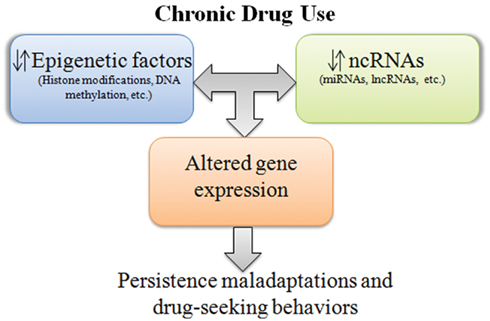
These systems are related gene silencing and are currently believed to pioneer and a withstand epigenetic alteration. This is an area that needs further studies and research to uncover the role of epigenetic in variety of human disorders and lethal diseases. Because a lot more research needs to be done let us use the introduction we have given in a bid to discussing the epigenetic mechanisms of addiction to better understand how it affects substance abuser health.

Epigenetic mechanisms of addiction-Drug addiction

The scourge of drug addiction demands massive medical, economical and emotional clung on the society in the form of excess and health complications, family crumbling, loss of income and crime. The estimates according to NIDA (National Institute on Drug Abuse) indicate that in US alone the total cost of drug abuse is beyond US$600 billion yearly. The greatest concern is that of the steady increase in drug abuse by the young people and the consistent abuse of prescription drugs. It goes without saying that these statistics confirms the serious need of more research into the neuronal effects of substance abuse and the mechanisms of addiction with a view of finding the original targets for administering treatment and thwarting the addictive ailments.

Even though we are all faced with great risk of substance abuse, a hand full of us will not be strong enough to resist the temptation of drug use and coercion for pursuing drugs and eventually suffers an addiction. Being in this category is majorly swayed by ones genetic composition and the mental and communal background in which drug coverage occurs. Even though the genetic involvement to risk for addiction is approximately 50%, the precise genes which are intricate remain virtually unidentified. The addictive phenotype can continue in one’s life like forever with drug craving and relapse taking place even after decades of self-discipline signifying that drugs prompt lasting alterations in the brain fundamental addiction behaviors.

The many cells of specific organism, even though they encompass basically identical complements of DNA, differentiate to form different tissues and organs through controlled variations in the transcriptional potential of each gene, based on environmental cues, cell-to-cell signals and probably other random factors. It is becoming indistinct that many of the same processes of gene regulation which are intricate in the usual differentiation of cells and tissues during development are also tied up in the adult organism to mediate cellular adaptation to environmental stimuli.

The procedures involved in the instruction of transcriptional potential are diverse and highly complex, and include activation and inhibition of transcription factors, alteration of chromatin and DNA structure, and initiation of non-coding RNAs. Increasing evidence which supports the hypothesis that each of these mechanisms of epigenetic regulation is directly affected by substance abuse and that such adaptation is one of the main processes by which drugs bring highly stable variations in the brain that mediate the addicted phenotype. This Review summarizes the findings that support this hypothesis, and highlights areas in which future research will extend this fundamental knowledge of addiction and exploit it for new therapeutics.

Epigenetic mechanisms of addiction-Drug action and gene transcription

Apparently similar syndrome of addiction may result from acquaintance to a wide variety of chemical substances or even rewarding activities, from cocaine to gambling to sex. One collective mechanism in these various forms of addiction is thought to be activation of the brain’s reward circuitry, which centers on dopaminergic neurons in the ventral tegmental area (VTA) of the midbrain and their projections to the limbic system in particular, the nucleus accumbens (NAc; also known as the ventral striatum), dorsal striatum, amygdala, hippocampus and regions of prefrontal cortex. This reward circuitry is activated by stimuli or pursuits that encourage evolutionary fitness of the organism, such as nutrient-rich foods, sex and social stimulation. As drugs of abuse activate this circuitry far more strongly and persistently than natural rewards, and without being associated with productive behavioral results, chronic exposure to drugs modulates brain reward regions partly through a homeostatic desensitization that renders the individual unable to attain sufficient feelings of reward in the absence of drug. An alternative, but not mutually exclusive, hypothesis of addiction focuses on incentive sensitization, whereby drugs alter the reward circuitry to cause increased assignment of incentive salience to drug cues, effectively making drug-associated environmental stimuli more difficult to ignore and leading to intense drug craving and relapse. Pathological drug-induced alterations in the reward circuitry further impair behavioral control over drug taking.

Essentially all rewarding drugs escalates dopaminergic transmission from the VTA to the NAc and other target limbic regions, even though they both employ partially distinct mechanisms and in some cases involve other neurotransmitter systems as well. The activities of drugs on the NAc are further complicated by the cellular heterogeneity of this brain region. Although drugs differ in their acute mechanisms of action, the common syndrome of addiction suggests that chronic activation of these distinct, acute mechanisms induces some shared molecular adaptations in brain reward regions that mediate the lasting nature of the addictive phenotype.

Transcriptional and epigenetic mechanisms of addiction

Having discussed the dynamics of epigenetic mechanism of addiction you must have noted that it is such an interesting medical application in the effort of solving the problem of addiction. Now let us bring the whole article down a summery form and expand your desired scope of research on this particular topic of epigenetic.

  • I will suggest that alterations in the transcriptional potential of genes, through the actions of drug-regulated transcription factors, chromatin modifications and non-coding RNAs, contribute substantially to the neuroadaptations that motivate addiction. This Evaluation is to highlights key examples of such transcriptional and epigenetic mechanisms of addiction, and identifies some of the novel potential targets for therapeutic intervention during the addiction process.
  • The nucleus accumbens a region which is central to the dispensation of reward and the addicting actions of nearly all substance abuse contains a difficult milieu of cell types. It receives input from and sends signals to several brain sections. Chronic revelation to drugs of abuse alters gene expression patterns, as well as the morphology (and ultimately the functional activity) of nucleus accumbens neurons neuroadaptations which pay significantly to the addiction process.
  • Epigenetic regulation causes many adaptations of an adult organism to environmental stimuli similar to those seen in drug addiction. Post-translational improvement of histone tails and direct modification of DNA, as well as transformed levels or activity of a host of other chromatin remodeling proteins, mediate the ability of drugs of abuse, after chronic exposure, to change the expression of precise genes in the brain’s reward circuitry.
  • The current study of chromatin regulation in addiction models backs the view that epigenetic changes at individual genes do not only change the steady-state levels of their expression but also their inducibility in response to a subsequent stimulus. I will suggest that these latent epigenetic changes, termed gene ‘priming’ and ‘desensitization’, alter an individual’s adaptability and contribute substantially to the addicted state.

In conclusion because a lot of further research needs to be done I will make suggestions about some of the possible areas that need to be researched on and they include the following:

  • What controls the recruitment or expulsion of individual transcriptional and chromatin-regulatory proteins to a particular target gene?
  • What controls the formation and maintenance of distinct epigenetic states at particular genes?
  • How are the actions of drugs of abuse, all of which initially target the synapse, transduced to the neuronal nucleus to regulate the epigenetic state and transcriptional potential of individual genes?

Epigenetic mechanisms of addiction-What is Epigenetic


Facebooktwitterpinterestlinkedin

Alcohol and Breast Cancer

Influence Of Alcohol On Breast Cancer

BREAST CANCER. What comes to one’s mind when they hear of it? Eight out of ten people will probably give ‘DEATH’ as their answer. Breast Cancer is a very dangerous disease, perhaps even the number one killer disease globally after diabetes and hypertension or high blood pressure as it is known in lay man’s language. Cancer is a disease that comes as a result of cells that have grown out of control in our bodies. There are however many types of cancer and are classified in different ways mostly by the type of cell that was affected originally, breast cancer is just one of them. It usually damages the cell by separating it hysterically to form lumps or masses of tissues called tumor.

Breast Cancer

How about ALCOHOL? Well alcohol in simple terms, is a substance or drink that gives someone or some people some kind of a high that they term as ‘ out of this world ‘ but in real sense ii is an organic compound whereby the hydroxyl functional group (-0H) is bound to carbon atom. In essence, the carbon centre must be saturated, having single bonds to couple other atoms. Alcohol and cancer mixed together is near fatal. Mostly people take alcohol in order to reduce the pain they are having because cancer is very painful, especially during chemotherapy. But is it necessary to consume alcohol even if it some sort of pain reliever? Well, there has been mixed reaction towards this debate.

Ironically, new research indicate that alcohol taken moderately among breast cancer survivors will immensely reduce their risk of dying from heart related diseases. Heart related disease is very popular with breast cancer survivors. Alcohol should not be used with the thought that it will cure breast cancer. It is important to take note that it will only benefit the ones that have survived from this ordeal. It is also not one hundred percent guarantee that all or anyone diagnosed with breast cancer will be a survivor.

Alcohol consumption earlier in life between ages 18 to 40 or even later in life more often will have great impact on breast cancer. You can however decrease your alcohol or just stop it all together but considering the health benefits it has on cardiovascular on breast cancer survivors, alcohol needs to be balanced by the help of one’s physician so that it becomes a win situation. It has also been noted that every woman who drinks more than six or more bottle of beer weekly has a higher risk of invasive breast cancer compared to those who don’t drink at all. The risks gets even higher on those who drink more than thirty bottles weekly. And this is irrespective of the type of alcoholic beverage taken. One should also take a deep look at her family history.

Factors that can alter a woman’s risk of breast cancer can also include first full term pregnancy which will also include exposure to ionizing radiation. Many research have not dug into this overtime. Making alcohol intake a habit after surviving cancer especially in early stages can however cause recurrence compared to those who abstain. This risk will be higher particularly in people who are overweight or older.

How do we prevent breast cancer?

Any cancer leave alone breast cancer can be prevented. Human life style has become so modern that people are living very carelessly without putting their health first. They are doing this by eating the wrong foods like processed foods and also consuming alcohol excessively.

Alcohol though when taken in moderation is not bad but moderation has also been overrated. One should consider completely quitting to avoid issues of dependency. Remember also excessive intake of alcohol at an early age is what may accumulate in ones blood stream and later cause cancer in the body. As much as cancer can be good in cancer survivors hearts, it is proper that we understand that too much of it can be detrimental.

Breast Cancer

Apart from reduction of alcohol intake, please quit smoking if you are already at it or simply don’t start. It is also very important for one to control their weight for health purposes even if it not for the prevention of breast cancer. Weight will come with other health risks too. Weight control will come with physical activities. If you are a breast feeding mother then you are in luck as breast feeding decreases chances of getting cancer especially when done more often. Don’t take too much 0f hormonal drugs. Don’t also expose yourself to too much radiation like x-rays. Please avoid this procedures if your chances of getting breast cancer will be more.

All said and done. Do you know that breast cancer can be prevented or even cured? Many a people will give up hope when they discover that they have this dreaded disease. Well, just follow a healthy life style and we will leave in a CANCER free world.

Influence Of Alcohol On Breast Cancer

Facebooktwitterpinterestlinkedin

Common Alcohol Withdrawal Symptoms

Are you having an alcoholism Problem?

addiction withdrawaAlcohol withdrawal refers to an assemblage of symptoms that may occur from suddenly discontinuing with the use of alcohol after chronic or prolonged ingestion. Not everyone who stops drinking experiences withdrawal symptoms, but most people who have been drinking for a long period of time, or drinking frequently, or drink heavily when they do drink, will experience some form of withdrawal symptoms if they stop drinking suddenly.

What Is It?

Alcohol withdrawal is the fluctuations the body goes through when a person suddenly stops consumption after prolonged and heavy alcohol use. Symptoms include trembling (shakes), insomnia, anxiety, and other physical and mental symptoms. Alcohol has a decelerating effect (also called a sedating effect or depressant effect) on the brain. In a heavy, long-term drinker, the brain is almost continually exposed to the depressant effect of alcohol. Over time, the brain adjusts its own chemistry to compensate for the effect of the alcohol. It does this by producing naturally stimulating chemicals (such as serotonin or norepinephrine, which is a relative of adrenaline) in larger quantities than normal. If the alcohol is withdrawn suddenly, the brain is like an accelerated vehicle that has lost its brakes. Not surprisingly, most symptoms of withdrawal are symptoms that occur when the brain is over stimulated. The most hazardous form of alcohol withdrawal occurs in about one out of every twenty people who have withdrawal symptoms. This condition is called delirium tremens (also called DTs). In delirium tremens, the brain is not able to smoothly readjust its chemistry after alcohol is stopped. This creates a state of temporary confusion and leads to dangerous changes in the way your brain regulates your circulation and breathing. The body’s vital signs such as your heart rate or blood pressure can change dramatically or capriciously, generating a risk of heart attack, stroke or death.

  • Pathophysiology

Alcohol withdrawal syndrome is mediated by a variety of mechanisms. The brain maintains neurochemical balance through inhibitory and excitatory neurotransmitters. The main inhibitory neurotransmitter is γ-amino-butyric acid (GABA), which acts through the GABA-alpha (GABA-A) neuroreceptor. One of the major excitatory neurotransmitters is glutamate, which acts through the N-methyl-D-aspartate (NMDA) neuroreceptor.

Alcohol enhances the effect of GABA on GABA-A neuroreceptors, resulting in decreased overall brain excitability. Chronic exposure to alcohol results in a compensatory decrease of GABA-A neuroreceptor response to GABA, evidenced by increasing tolerance of the effects of alcohol.

What causes withdrawal?

Alcohol thinning is a physical reaction to cutting down or discontinuing alcohol use. It is most common in people who are heavy drinkers because they have developed a tolerance to alcohol. Alcohol acts in the central nervous system by changing the balance of neurotransmitters, which are chemicals that send messages between nerves. Alcohol reduces the effect of excitatory neurotransmitters, and increases the effect of inhibitory neurotransmitters, altering the natural balance of the nervous system. Over time, the brain tries to fix this unevenness by increasing the activity of the excitatory neurotransmitters and reducing the activity of the inhibitory neurotransmitters. When alcohol is suddenly taken away, this compensatory effect keeps going, resulting in over activity of the excitatory neurotransmitters and under activity of the inhibitory neurotransmitters. This causes withdrawal syndromes.

What Are the Common Alcohol Withdrawal Symptoms?

Withdrawal symptoms are hinged on the amount you were drinking and for how long. Some persons will have only mild symptoms while others will have severe, even life-threatening symptoms.

  • Mild to moderate symptoms

These can start from six to forty eight hours after people stop drinking or cut down, and usually last one to five days. They include: Shaking, Sweating, Racing heart, Feeling sick and vomiting, Headaches, Trouble sleeping, Feeling anxious or agitated, and Hallucinations

  • Very severe symptoms

Seizures -Usually occur within the first two days, it occur in about 2-9% of alcohol dependent people. Delirium tremens’ Usually occur 3-4 days after stopping drinking and typically resolves within 3 days, it occurs in about 5% of people admitted to hospital for alcohol problems Includes: Vivid hallucinations, confusion and disorientation ,agitation and hyperactivity, Insomnia, trembling, racing heart, sweating and fever.

Diagnosis

addiction withdrawal symptomsAlcohol withdrawal is easy to identify if you have distinctive symptoms that occur after you stop hefty, habitual drinking. If you have a past experience of withdrawal symptoms, you are likely to have them return if you start and stop heavy drinking again. There are no specific tests that can be used to diagnose alcohol withdrawal. If you have withdrawal symptoms from drinking, then you have consumed enough alcohol to damage other organs. It is a good idea for your doctor to examine you prudently and do blood tests, checking for alcohol-related damage to your liver, heart, nerves in your feet, blood cell counts, and gastrointestinal tract. Your doctor will evaluate your usual diet and check for vitamin deficiencies because poor nutrition is common when someone is dependent on alcohol. It is customarily difficult for people who drink to be entirely honest about how much they’ve been drinking. You should bang your drinking history straightforwardly to your doctor so you can be treated safely for withdrawal symptom.

Obtain Expert Help and Care at the New Frontier Medicine Academy

Our good and hardworking team of experts from New Frontier will toil with you persistently until you lastly heal from alcohol withdrawal symptoms. We treat all consumers in an exceptional manner after listening to their problems and assessing their conditions. Your well-being is our duty consequently we will not only help you from alcohol withdrawing symptoms but also get you back into a faultless shape. Heal your body, mind and spirit so you start a whole new life free of liquor and depression. Visit New Frontier for reliable results.

Common Alcohol Withdrawal Symptoms

Facebooktwitterpinterestlinkedin
