Category Archives: addiction

The Role of O-shot and Orgasmic Meditation

The Role of O-shot in Orgasmic Meditation

There are millions of women who do not experience sexual satisfaction in their lives. Official figures put the percentage of women who experience one of the many forms of sexual dysfunction at between 30 and 50%. This means that all these women are unable to reach orgasm during sex, fail to have a sustained desire for sex or experience pain when having sex. The O-shot and orgasmic mediation (OM) are two new procedures that promise to not only change this trend but also revolutionize perceptions about female sexuality in general. In this article, we shall discuss the role of o-shot in orgasmic mediation.

What is the O-shot?

The o-short is a simple medical procedure that is performed on women. The procedure uses the platelets of a woman which are introduced to the vaginal tissue. The overriding goal of the o-shot is to enable a woman experience deep and satisfying orgasms during sexual intercourse, thus enabling her to lead a sexually fulfilling life. Of course there are many other additional benefits of having the o-shot, but it will suffice to concentrate on the main aim of the procedure which is to enhance your orgasms and make you be fully satisfied sexually.

The role of O-shot in Orgasmic Meditation

The role of O-shot in Orgasmic Meditation

How the O-shot Works 

The procedure for the o-short is simple. First, you will have to pay a visit to a professional practitioner. Currently, the therapy is not available globally so you will have to check with your doctor for its availability. The practitioner then gets a small sample of blood from your body. The blood is subjected to a special laboratory procedure that separates the platelets from the other components. Then the platelets are injected to your vaginal area.

The secret behind this process is that the platelets are able to stimulate growth of the vaginal tissue. Naturally, platelets play a leading role in the healing process in the body because they stimulate the development of stem cells. It is the same logic that is used in the o-shot therapy and orgasmic meditation. The platelets that are introduced to the vaginal area stimulate growth of the vaginal tissue. This increases the area of the tissue that is sensitive to stimulation during sex, thus boosting your chances of having orgasms.

What is Orgasmic Mediation?

So far, this is a practice about female sexuality that has been growing in popularity at a very fast pace. Started back in 2001, this form of sexual practice is carried out by women who would wish to experience the many benefits of orgasm. Participants usually have their clitorises stroked by individuals known as ‘strokers’ for a specified length of time until they get to orgasm. Of course there are standard procedures and regulations that are used to guide the process.

How Does Orgasmic Meditation Work?

One Taste, the company that is credited with popularizing this practice as a form of therapy for the entire body say that the aim of the  process is to enable a woman to form a deep connection with the person doing the stroking. So, it is better not to view orgasmic mediation as sex because it is not. It is a form of mediation that uses orgasm as a tool to help you get the best from the sensations that are associated with it. Reaching orgasm is not a goal in itself. Rather, it is best seen as a means to achieving what you need most, a form of deep relaxation and energy that can be harnessed for you overall wellbeing. That is what orgasmic meditation is all about.

The role of o-shot in Orgasmic Medication

From what we have learned so far, O-shot is a procedure that increases your ability to have orgasm. Orgasmic mediation, on the other hand, is a practice that helps you reap the benefits of an orgasm. It is then logical to say that that o-shot can play critical role in making orgasmic mediation successful.

The role of O-shot in Orgasmic Meditation

The role of O-shot in Orgasmic Meditation

By doing this, the o-shot enhances orgasmic mediation so that you achieve the following benefits. First, by successfully going through orgasmic mediation because of the effect of o-shot, you will be able to attain a higher level of vitality. This is a form of inner energy, a feeling of deep-seated ability and strength that flows from the inside of your body and is manifested in your outside appearance.

Second, the o-shot, helps orgasmic mediation build a deep sense of rapport, communication and connection between partners by indirectly enhancing the effect of orgasmic mediation. Since the o-shot is able to help you successfully go through your orgasmic meditation sessions, it indirectly helps you to reap one of the major benefits of orgasmic meditation, which is to enhance the level of connection between partners. This is achieved through the deep communication that takes place during orgasmic mediation sessions. You will be able to communicate quite freely with your partner during the process and this definitely enhances the sense of understanding and connection.

The o-shot can play a critical role in orgasmic mediation. All the benefits that you get from orgasmic meditation including overall relaxation, increase in vitality and even relief of pain can be greatly enhanced when you get the o-shot. Dr. Dalal Akoury of AWAREmed Health and Wellness Resource Centre has been active in this field, training physicians on use of the o-shot and much more. You can contact or visit us in Myrtle Beach, South Carolina for a wide range of highly personalized services.

The role of O-shot in Orgasmic Meditation


Facebooktwitterpinterestlinkedin

Breast Thermography & Prediction of Cancer Risk

Breast Thermography and Cancer Risk Prediction

In this article, we shall look at breast thermorgraphy and cancer risk prediction. Our focus shall be on discussing what breast thermography is, how it works and its role in predicting the risk of breast cancer.

What is breast thermography?

Breast Thermography and Cancer Risk

Breast Thermography

Breast thermography is one of the methods that are used to examine the internal structure of breasts as a means of detecting the possibility of breast cancer developing. Detection of breast cancer is one of the important elements in the overall management of the disease. That is why there are many different procedures that have been developed to help doctors detect the presence of cancerous cells in the breast of a woman pretty fast.

One such method entails the use of mammograms. These are special images that are generated using x-rays to view the internal structure of the breast as a way of testing for breast cancer. Mammograms have proven to be effective in screening procedures for breast cancer so far. Another one is biopsy. This is the most complicated and effective method of detecting breast cancer. Tissues are removed from the breast and subjected to thorough examination in the laboratory for the presence of abnormal cancer cells. It is actually the last step in the detection process.

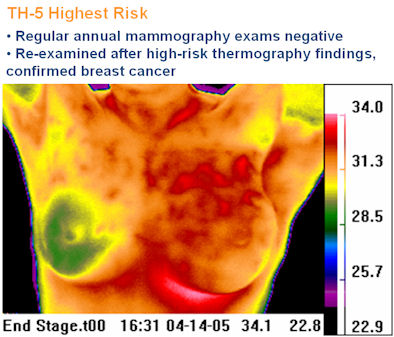
Lastly, breast thermography is based on the idea that diseased tissues do have a higher rate of biochemical activity and, therefore, emit a higher level of radiation than the other normal tissues. The method uses this logic to generate an internal view of the tissues of the breast.

What is the procedure for thermography?

Naturally, the human body emits a form of radiation known as infrared radiation. There is nothing new in this for nearly all objects emit this form of radiation, what matters is the type of radiation that is emitted in terms of its range. When properly functioning, the emission of radiation from the body is actually uniform. However, when cancer is developing at any part of the body, there is always abnormal activity taking place at the cellular level in the region.

The abnormal activity is seen in several ways. First, the cancer cells seek to get extra supply of blood through the process of angiogenesis. This increases the biochemical reactions taking place in the tissues in which cancer is developing. Second, the cells seek to induce development of their own supply systems within the body. Once again, this causes hyper cellular activity. Third, cancer cells tend to break away from the original lump and spread to other areas where they can invade healthy cells and grow afresh. Known as metastasis, this process increases the biochemical activity at the cellular level.

Using specialized equipment, doctors are able to get images of the breast tissues by stimulating specific reactions to the body. For example, using special procedures, doctors can stimulate the body to cool down suddenly and then observe what parts of the body (the breast tissue in this case) fail to cool down relative to the rest of the body. Such parts are marked for possible presence of cancer cells.

Highly advanced cameras are able to detect such anomalies in the biochemical activity of cells and translate them to highly complicated images that are interpreted by specialists. The results of breast thermography are not enough for a diagnosis of breast cancer to be made on a patient. What usually happens is that breast thermography is used as an initial procedure. The results determine whether or not other additional tests should be carried out. Besides, thermography has been successfully used to monitor the progress of treatment in patients of breast cancer. Therefore, its uses are diverse.

Role of breast thermography in cancer risk prediction

Breast Thermography and Cancer Risk Basically, this procedure has been hailed as an effective way of detecting the possible development of breast cancer in patients quite early. When properly used, breast thermography can play an important role in detecting the risk of breast cancer early thus allowing doctors to tackle the risk using the right measures.

There are several ways in which breast thermography is a useful tool in breast cancer risk prediction. For example, the procedure is usually used in conjunction with other clinical procedures to ensure that cases of breast cancer are detected early enough to allow for successful use of appropriate therapies. Usually, breast thermography is used in conjunction with mammograms and biopsy to detect and make accurate diagnosis in patients before a specific therapy is recommended.

Also, breast thermography plays a role in managing the risk of breast cancer by being used as a tool for ordinary breast checkups. Since the method is completely safe and quite fast, it is used as a means of conducting checks on the conditions of the breasts of patients on a regular basis. Studies have indicated that this approach produces positive results over the long term.

Further, when used for the first time on a patient and the results indicate an abnormal image of the breast tissue, the results of this method have been useful in accurately indicating the possibility of one developing breast cancer in the future. Therefore, when one gets a positive result from this test, it has been the norm to institute the right measures to ensure that if the inevitable occurs, it can be tackled quite easily and fast.

Breast cancer is a common health problem today. Here at AWAREmed Health and Wellness Resource Center, we have devoted our resources to helping patients of breast cancer go through treatment quite fast and effectively. We use various alternative treatment methods to reduce the side effects and boost the effectiveness of the treatment method being used. We are located in Myrtle Beach, South Carolina. Feel free to visit us or contact Dr. Dalal Akoury, a renowned cancer specialist for personalized solutions.

Breast Thermography and Cancer Risk Prediction


Facebooktwitterpinterestlinkedin

Immune Stimulation Therapy

What is immune stimulation therapy?

This is a form of treatment for cancer in which the immune system of a patient is stimulated in order to effectively combat the effect of invading cancer cells. Immune stimulation therapy is closely related to immunotherapy or biotherapy. However, it is accurate to view immune stimulation therapy as a component of immunotherapy. Immunotherapy can be seen as a method of treating cancer in which the immune system plays a leading role. The practice of immunotherapy is carried out using two major ways. In the first one; which is what we are concerned with; the immune system is stimulated to act against the effects of cancer cells. In the second method, additional compounds are introduced into the body to help fight cancer cells. This is what is commonly referred to as biotherapy.

The immune system and cancer

There is an interesting relationship between the immune system and how cancer develops in the body of a human being. The immune system is a complicated collection of processes, structures and connections that provides the much needed protection for the body. The environment we live in is full of foreign bodies in the form microorganism that are toxic to the body. It is the primary function of the immune system to not only prevent the entry such microbes into the body but also kill them in case they get in.

In destroying foreign bodies, the immune system makes use of white blood cells. Entry of foreign microbes into the body triggers a complex response process that leads to an increase in the production of white blood cells. The cells are able to engulf disease-causing microbes thus neutralizing the danger of the body being invaded and ran over.

To do this, white blood cells are able to detect the proteins that are found on the microbes. Since they understand the composition of all cells that are found in the body, entry of cells that have different compositions automatically triggers a defensive response.

immune stimulation therapy

The immune system is not efficient in destroying foreign antigens all the time. That is why treatments are sought for different diseases all the time. Cancer, in particular, presents serious complications to the immune system. First of all, cancer cells develop from normal healthy body cells. Through the process of mutation, erstwhile normal body cells develop cancer-like properties and set off on their own path with a different agenda: abnormal and unregulated growth. Because of their origin, cancer cells manage to evade the detection mechanism of the immune system.

Second, cancer cells do wage war against the immune system. By producing chemicals that inhibit the way the immune system works, cancer cells can be seen to be making preemptive strikes against the immune system, thus guaranteeing their own survival in the body.

It is these cells invest a lot in battling the immune system of a person that research in cancer treatment has discovered how important the immune system is in winning this war. The immune system is the major battlefield in the war against cancer.

Types of immune stimulation therapies

There are different types of immune stimulation therapies that are in use. Their common characteristic is that they work by stimulating the ability of the immune system to attack and act against cancer cells.

One of the methods by which they work is boosting the ability of natural enemies of cancer cells that are found in the body. For example, the body produces special chemicals called interleukins. These are compounds that play a crucial role in coordinating the way white blood cells work in the body. Also, interleukins are known to stimulate the production of white blood cells in general. Immunotherapy makes use of this relationship by increasing the level of this hormone in the body of patients. This way, the immune system is stimulated to act against cancer cells quite effectively.

Interferons are another type of compounds that are naturally made by the body to fight against cancer cells. Their ability to fight off virus infections and possible cancer development has been known for a long time. In immune stimulation therapy, their production in the body is highly boosted, thus empowering the immune system to fight against cancer cells in the body.

The fight against cancer cells is usually directed towards inhibiting their process of growth and development. Through angiogenesis and metastasis, cancer cells are able to develop, grow and spread across the tissues of the body. Interferons and interleukins work against them by undermining these processes.

immune stimulation therapyAnother way in which the immune stimulation therapy is used to treat cancer is special drugs that stimulate the immune system in specific ways. Usually, the cancer cells are able to evade attacks from the immune system because they disguise themselves as normal body cells. The immune system has an in-built mechanism that prevents it from attacking normal body cells. Therefore, theoretically, when this mechanism is stopped, the immune system is able to attack cells with fury. The good thing is that the fury is usually directed towards cancer cells. In practice, drugs have been made which do exactly this; temporarily stop the inbuilt mechanism of self-defense to give the immune system time to attack cancer cells. However, since the immune system attacks normal body cells as well under such conditions, these drugs usually have serious side effects on a patient.

Immune stimulation therapy holds promise as a way of helping the bodies of patients to fight off the effects of cancer cells naturally. There are several natural methods that are used to stimulate the immune system. The good thing in using such methods is that they do not produce side effects on patients. Here at AWAREmed Health and Wellness Resource Center, we offer different forms of natural methods of stimulating the immune system to help it fight against cancer. we understand the method as one that arms the immune system with weapons that it is best familiar with.

What is immune stimulation therapy?


Facebooktwitterpinterestlinkedin

Effects of Benzodiazepine

Sedative and Euphoric Effects of Benzodiazepine

BenzodiazepineBenzodiazepines are drugs that have been used in hospitals to curb pain, as anti-anxiety and for sedation. However these drugs are can be abused as they are rewarding in higher doses. For this reason many people have used these drugs for all the wrong reasons. What happens when you take these drugs depends on the dosage. When used as prescribed the work as anti-anxiety and for sedation but when abused they result in even more grave side effects.

Benzodiazepines are glycoproteins with an affinity for benzodiazepine receptors which act as specific binding sites for gamma aminobutyric acid shortly known as GABA. The GABA is the major inhibitory neurotransmitter in the CNS. Many scientists have proposed various action mechanisms but despite all these proposed action mechanisms, the exact sites and mechanisms of actions of these drugs is still a mystery unraveled.

The mechanism of action of these drugs is often based on this belief that these drugs affect CNS by interacting with a macromolecular protein complex in the neuronal membrane which includes GABAa receptors, high-affinity benzodiazepine receptors and chloride channels. The scientists are still working to find more about the mechanisms of action of benzodiazepines in the CNS but until now we can dwell more on their effects in the body and how to safely use them.

Occupation of the benzodiazepine receptor increases the affinity of the GABAa receptor for GABA. GABA potentiates the direct opening of the chloride ion channel, allowing an increased influx of chloride into the neuron. The inward shift of chloride ions hyperpolarizes and stabilizes the membrane, resulting in a net inhibitory effect on neuronal firing. Benzodiazepines alone have little effect on chloride ion channel permeability and depend upon the presence of GABA in the synapse for their actions.

Some of benzodiazepines are very similar in their chemical structures but their potency differs greatly and so is the rate of absorption and other pharmacological parameters. The potency of a benzodiazepine is correlated with its affinity for its binding site, the benzodiazepine receptor. In therapeutic use, the benzodiazepines, while differing in potency, have similar pharmacologic profiles.

It is believed that there are different types of benzodiazepine receptors in different areas of the CNS which produce the various pharmacological actions of the drugs. As the dose of benzodiazepine is increased, anxiolytic effects are first produced, followed by anticonvulsant effects, a reduction in muscle tonus, and finally sedation and hypnosis.

Clinically, benzodiazepines are used in the management of anxiety disorders, insomnia, seizure disorders, skeletal muscle spasticity, alcohol withdrawal, panic disorder and as premedicants prior to surgical or diagnostic procedures. Benzodiazepines have also been used in the management of nausea and vomiting associated with emetogenic cancer chemotherapy.

When taken benzodiazepines get widely spread in the body and accumulate preferentially in lipid rich areas such as the CNS and adipose tissue. The more lipophilic agents have the fastest rates of absorption and onset of clinical effects. Benzodiazepines and their metabolites are highly bound to plasma proteins. Steady state plasma concentrations of benzodiazepines and their metabolites are reached after about 5 elimination half-lives, typically, a few days to 2 weeks after initiation of therapy. The higher the concentrations of benzodiazepines   in the plasma the higher their sedative and euphoric effects. For sedative purposes the concentrations of benzodiazepine in the plasma are much lower than the concentrations of benzodiazepine in plasma that would evoke euphoric effects. This shows that that a person may have euphoric feelings after using higher doses of benzodiazepine than the doses needed for sedative purposes. However, the higher the doses of benzodiazepines the danger it beckons for higher doses may result in intoxication or even delirium which is characterized by ataxia, amnesia, stupor, impaired consciousness, nystagmus.

Mortality hazards of the use of Benzodiazepine

The benzodiazepines are clinically useful but that does not mean that they are free from any side effects. The use of benzodiazepines within the prescribed doses foe sedation and sleeping disorders may give relief and a reason to celebrate but as I have written earlier, these drugs are prone to abuse and as commonly abuse of any drug will always give rise to undesired effects. Though it has not been perceived to be as dangerous as other drugs of abuse such as opioids and ‘bath salts’ that can cause death instantly due to overdose, the side effects of benzodiazepine can lead to death in one way or another. These side effects include; dependency, withdrawal, rebound symptoms, daytime sedation, confusion, cognitive deficits, ataxia, dysarthria, diplopia, and vertigo. The use of benzodiazepines have been linked to motor vehicle accidents especially in the elderly. Benzodiazepines are often used in patients undergoing dialysis for their sedation effects. However a study done in japan where these drugs were used widely in dialysis patients showed that benzodiazepine use may be associated with an increased mortality risk.

Benzodiazepine increased rise of falls in Elderly

BenzodiazepineBenzodiazepine has also been found to increase falls in the elderly leading major fractures. The long term use of these drugs is also associated with nocturnal falls and still the elderly still fall victims. Rise in falls is one of the problems that can be linked to the effects of the drug on the elderly.

Finally, you need more information to stay away from dependence on alcohol and drugs as these have crippled societies and that is why here at AWAREmed we are dedicated to finding the best solutions to addiction and dependence on substances. Dr. Dalal Akoury (MD) is always in the mood of helping any patient to be addiction free. Do not hesitate to call on her for help in managing any sort of chronic pain or any type of addiction as well as other diseases.

Sedative and Euphoric Effects of Benzodiazepine

Facebooktwitterpinterestlinkedin

Endogenous Opioids

Endogenous Opioids and Opioid Receptors

endogenous opioidsThe term opioids are not new to many, it has been heard as the media is always abreast with all information about these opioid drugs which to the public are known mostly for the wrong reasons. People have got misinformed about these drugs so much that when you tell a layman that these drugs are used in hospital then to him you will something much worse than an alien. However to the medical fraternity these opioids are essentials that are hard to survive without. That said and left, back to the topic; Endogenous Opioids is a new term to many and if your prediction is as right as mine then you are hearing it for the first time. What does it really mean? The endogenous opioids are opiate-like substance, such as an endorphin, produced by the body. If you thought that you can live without these endogenous opioids then you need to wake up from your momentary slumber. Every day of our lives we face pain of all sorts even the most insignificant pains needs the actions of these opioids to give you peace.

Today, the endogenous opioid system is one of the most studied innate pain-relieving systems. The endogenous opioid system consists of widely scattered neurons that produce three opioids: beta-endorphin, the met- and leu-enkephalins, and the dynorphins. These opioids act as neurotransmitters and neuromodulators at three major classes of receptors, termed mu, delta, and kappa, and produce analgesia. The endogenous opioids works in the same manner as the narcotic opioids in that they bind to the same receptors and they also have both good and negative effects. There might be all sorts of information out there that you can lay your hands that may speak well of the opioids but the bitter truth is we all depend on despite the negative light they have been portrayed in.We are all naturally dependent on opioids for our emotional health. Both narcotics and internally generated endogenous opioids exert their action on the body by interacting with specific membrane receptor-proteins on our nerve cells.

There are three large pro-compounds that are produced by the body and these are: proenkephalin, prodynorphin, and pro-opiomelanocortin. However, endorphins can further decompose to small fragments, oligomers, which are still active. Oligomers pass the blood-brain barrier more readily. Enzymatic degradation of small-chain endorphins is accomplished by dipeptidyl carboxypeptidase, enkephalinases, angiotensinases, and other enzymes. This limits their lifetime in the unbound state.

Presynaptically opioid receptors inhibit transmission of excitatory pathways. These pathways include acetylcholine, the catecholamines, serotonin, and substance P. Substance P is a neuropeptide active in neurons that mediate our sense of pain. Endogenous opioids are also involved in glucose regulation. Opioid receptors are functionally designated as mu, delta, kappa among others. These categories can be further sub-classified by function or structure. Decoding the human genome has allowed the genetic switching-mechanisms that control the expression of each opioid receptor to be determined at the transcriptional and post-transcriptional level.

Opioid-driven inhibition of neuronal excitability is mediated by the activation of a variety of potassium channels in the plasma membrane. The disparate subjective and behavioral effects evoked by activation of the different categories of opioid receptor are typically not the outcome of different cellular responses, but reflect the different anatomical distributions of each receptor. Unlike kappa opioid receptors, however, both mu and delta opioid receptors internalize on exposure to agonists. Activation of any type of opioid receptor inhibits adenylate cyclase, resulting in a fall in intracellular cAMP and diminished action potential firing. This causes a reduced flow of nociceptive information to the brain. Conversely, opioid addicts undergoing withdrawal suffer elevated cAMP levels and enhanced protein kinase A activity, resulting in increased neurotransmitter release.

Role of Mu receptors in addiction

The Mu opioid receptors are the gateway to addiction. This is because they mediate positive reinforcement following direct or indirect activation. In an experiment where mice without mu receptors were used, it was found that the morphine’s analgesic and addictive properties are abolished in these mice. This shows that mu receptors mediate both the therapeutic and the adverse activities of opioids. The mice that were lacking mu receptors were found to lack of morphine-induced analgesia, reward, and dependence. The mice had increased sensitivity to pain. This shows that the mu receptors play a critical role in addiction. These mu receptors function as switches upon direct or indirect reinforcement of opioid abuse. Mu-opioid receptors are a key molecular switch triggering brain reward systems and potentially initiating addictive behaviors. The lack of mu-receptors abolishes the analgesic effect of morphine, as well as place-preference activity and physical dependence. This receptor therefore mediates therapeutic analgesia and adverse activities of morphine.

Opioid withdrawal symptom

endogenous opioidsWhen a person has been using the opioids for some time, he will become physically adapted to the drugs so much that when he stops abruptly he will experience the symptoms of withdrawal. Withdrawal is not only faced by opioid user only but also other sick people who are on other drugs as well. However to limit the withdrawal symptoms, there are some factors that come in handy. One of these factors is the pace and how you exit from using these drugs. Your doctor will be of help in helping you by developing safe exit strategies that will limit the withdrawal symptoms.

Finally, you need more information to stay away from dependence on alcohol and drugs as these have crippled societies and that is why here at AWAREmed we are dedicated to finding the best solutions to addiction and dependence on substances. Dr. Dalal Akoury (MD) is always in the mood of helping any patient to be addiction free. Do not hesitate to call on her for help in managing any sort of chronic pain or any type of addiction as well as other diseases.

Endogenous Opioids and Opioid Receptors

Facebooktwitterpinterestlinkedin