Category Archives: addiction

Understanding The Cancer Machine

The Cancer Machine

Cancer is a common medical condition that in the years has claimed the lives of not only the old folks but also the young. For years medical practitioners have worked tirelessly to find a breakthrough in the cure for cancer.

Surgery, radiation and chemo therapy are the leading cancer management techniques. Surgery seeks to remove the cancerous tumors from the patient before it spreads to other parts of the body. The other methods aim at killing the cancerous cells to stop their growth.

However, there has been a breakthrough in the medical field that has sent researchers investing greatly in it. This breakthrough has something to do with the Kanzius cancer machine. Researchers are investing in it in order to test its efficiency.

The Kanzius Machine

John Kanzius is a man who proved that cancer could be concurred. With no medical background or knowledge in science, the fellow built a radio wave machine he hoped would cure cancer. This may be hard to believe because he only did this with pie pans belonging to his wife.

Kanzius was diagnosed with leukemia which had cost him a lot through dozens of chemotherapy sessions. This is where the inspiration came from. Having undergone several sessions of chemotherapy he figured out that the medical field could do with something better.

Cancer patients did not have to endure the pain that comes with chemotherapy. Chemo therapy is meant to kill the cancer cells and slow down their multiplication.
The Cancer Machine

One day, he woke up at night and went to the kitchen. He stated assembling his wife’s pie pans to build a radio wave machine to help cure cancer. Later with $200,000 he was able to build a more advanced machine.

The Kanzius cancer machine has today proved to be a breakthrough in medicine. Researchers are now pouring millions of dollars to testing the machine.

The medical trials on the machine have still a long way to go before it becomes applicable. If the machine proves efficient, it will be the answer to millions of cancer patients who have to undergo expensive procedures like chemotherapy, radiation therapy and surgery to kill the cancer cells and remove cancerous tumors.

The cancer machine will destroy the cancer cells without the need for chemo therapy. The main reason Kanzius came up with the machine was to act as an alternative for chemotherapy. He himself having been a cancer patient, he was familiar with the shortcomings that come with chemotherapy.

The machine will work by destroying all cancer cells in the body. This will happen without the need for surgery or drugs. The good news is that, unlike other cancer management techniques, the Kanzius machine will have no side effects.

Cancer patients will be able to go through the cancer process without experiencing side effects that come with cancer, for example hair loss in patients exposed to chemotherapy.

How the Cancer Machine Works

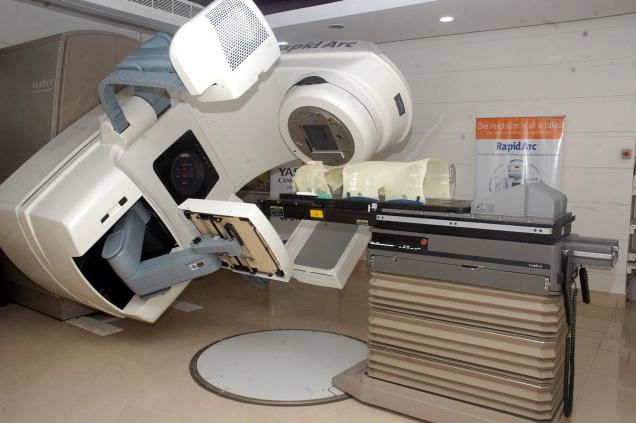
The cancer machine is made up of different radio wave boxes. Radio waves move from one box to another. This creates energy that is enough to activate gas that is contained in a fluorescent light. It is common knowledge among folks that, metal heats up when it is exposed to powered radio waves. A tumor that is injected with some kind of metal will be destroyed when a beam of radio wave is focused on it.

The cancer machine will require doctors to inject metal nanoparticles into the tumor. When this is done the tumor is then exposed to radio wave beams. This creates a process where the tumor is destroyed by killing the cells that make up the tumor. This happens without necessarily destroying the tissues that surrounds the tumor.

Researchers believe that use of molecules that are specially programmed to reach cancer cells and attaching to them nanoparticles, the machine will have the ability of targeting even the microscopic cells in the body.

The Cancer Machine

This cancer machine will prove to be a great relief to cancer patients. It will enable patients to recover from cancer without side effects.

Alternative ways of reducing cancer risks

Meanwhile before scientists can verify the workability of the Kanzius machine here are some ways to reduce your risk of getting cancer:

  • Take regular exercises
  • Reduce your intake of processed sugars, foods and grain carbohydrate.
  • Get sufficient night sleep
  • Reduce exposure to chemicals like pesticides and herbicides.
  • Avoid being overweight as obesity is a risk factor for cancer.
  • Always ensure that you take a balanced diet.

With these healthy procedures you will be able to a large extent reduce your cancer risk. Cancer is a lifestyle disease and your health depends on how you treat your body. You can find out more about this from Dr. Dalal Akoury who has wide experience with cancer patients. Many patients who have recovered bear testimony to her good work and wide knowledge and experience. For more health and wellness tips just visit www.awaremednetwork.com.

Understanding The Cancer Machine


Facebooktwitterpinterestlinkedin

All About Menopause Symptoms, Diagnosis & Treatment

Menopause Symptoms, Diagnosis & Treatment

Menopause is a stage in life. That said when it occurs at the right time it is normal and hence not a disease. Menopause refers to the time when a woman’s menstrual periods stop and her ovaries stop releasing ova. A woman is considered to have hit menopause once she has gone a year without having a menstrual period.  The normal menopause should be happening between 40-60 years of age. However most women hit menopause at 50 years of age. As menopause approaches the menstrual periods become irregular and the flow may either become thicker or lighter however it is not mandatory that these changes must accompany menopause.

Menopause is a normal process that should not cause any reason to worry, however there is also premature menopause. Premature menopause occurs before the age of 40 and can be caused by a variety of things, such as removal of the ovaries, autoimmune disorders, endocrinological reasons, or cancer therapy. Medical interventions, such as a hysterectomy –removal of the uterus may also prevent menstruation. If the ovaries are removed as well, production of the hormones estrogen and progesterone are stopped, causing the symptoms of menopause. Premature menopause should be treated as soon as possible as it may affect negatively the health of a woman.

menopause symptoms

Signs and symptoms of menopause

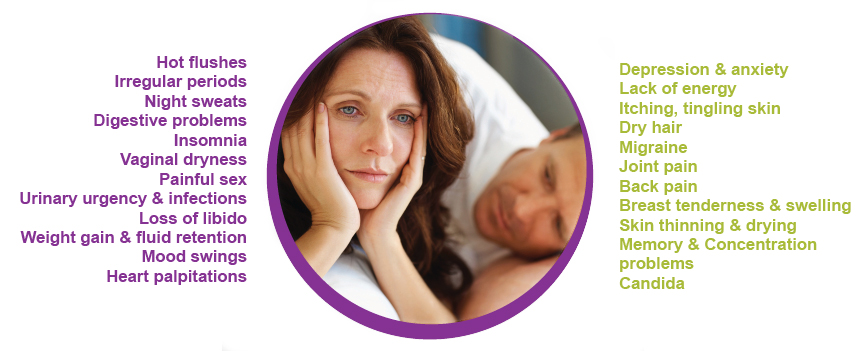
In most cases when a woman is approaching menopause her bleeding patterns will change. The flow may become lighter or heavier, longer or shorter, the time between periods may increase and there may be occasional missed periods. These changes may occur gradually in some women, but in other women they occur more abruptly. Apart from this change in bleeding patterns, there are also other physical and psychological signs and symptoms associated with menopause. In some women they are very mild while in others they are more severe. The symptoms may last for only a few months, or may continue for several years. The average length of time for menopausal symptoms to be experienced is three to five years.

Physical signs and symptoms may include:

  • Headaches
  • Joint and bone pain
  • Palpitations
  • Unusual skin sensations
  • Hot flushes
  • Sweating at night
  • Tiredness
  • Vaginal dryness. Note that during menopause there might be occurrence infections of the urinary tract and vagina due to the thinning of the vagina and bladder walls.

 Psychological signs and symptoms may include:

  • Loss of confidence
  • Forgetfulness
  • Difficulty sleeping
  • Anxiety
  • Reduced interest in sex
  • Irritability and mood swings
  • Difficulty concentrating

Causes of Menopause

Menopause is a very normal process that marks an end of a given lifestyle of a woman. When born a woman has ovaries that are to produce ovum when the right time comes. The release of these ova however has to be controlled by some hormones such as the Follicle stimulating hormone (FSH) and luteinizing hormone (LH) which are secreted by the pituitary gland as part of the normal menstrual cycle. The main work of these hormones is to stimulate the ovary to produce estrogen and progesterone and to release an ovum. As a woman ages, her ovaries don’t respond to FSH or LH as strongly as they used to. Over time, less and less estrogen and progesterone are produced and the woman stops releasing ovum hence the menstrual cycle ceases.

Premature menopause however is a cause for concern. If a woman cannot go through her periods before 40 then she needs to be helped. Premature menopause can be genetic or it can be caused by autoimmune diseases. These diseases produce antibodies that can damage the ovaries. Surgical removal of the ovaries causes artificial menopause, as can chemotherapy or radiation therapy to the pelvis to treat cancer. Different diseases may cause menopause in relation to the way they are treated for example in a case where an ovary is to be surgically removed the woman may become menopausal at an age below 40 which is considered premature menopause.

menopause  symptoms

Menopause Treatment

Menopause is a natural process that should not be treated, however it comes with certain symptoms that must be addressed medically to calm. One of the popular ways of fighting symptoms associated with menopause is the menopause hormonal therapy (MHT). MHT was initially known as hormone replacement therapy (HRT). It involves taking the hormones estrogen and progesterone. MHT can be very good at relieving moderate to severe menopausal symptoms and preventing bone loss. But MHT also has some risks, especially if used for a long time. MHT has been found to be very effective in reducing hot flashes and night sweats, poor sleep, irritability, treating vaginal symptoms, such as dryness and discomfort and pain during sex. Menopause hormonal therapy also helps in slowing bone loss and easing mood swings and depression that are common to women who have hit menopause.

As said earlier MHT has some risks too. It may cause the following;

  • Blood clots
  • Heart attack
  • Stroke
  • Breast cancer
  • Gall bladder disease

A woman’s health is controlled by the hormones, any decline in the levels of estrogen hormones may cause undesired effects on the health of a woman. To be safe from severe symptoms of menopause you need to Request Menopause Treatment Information Today. Contact Dr. Dalal Akoury by calling her on (843) 213-1480. She will surely be able to give a helping hand.

All about Menopause Symptoms, Diagnosis & Treatment


Facebooktwitterpinterestlinkedin

Estrogen Replacement Therapy

Estrogen Replacement Therapy

Estrogen replacement therapy (ERT)The estrogen hormone plays crucial roles in the life of a woman. Among other things this hormone is responsible for the maintenance of human skin. They improve collagen content and quality, increase skin thickness and improve blood supply to the skin, maintaining good moods in women. Estrogen has effects on other hormones too as it increases cortisol and Sex hormone binding globulin. Estrogens increase melanin and pheomelanin and reduce eumelanin.
The known basic roles of estrogen hormones in women is that it promotes the growth and health of the female reproductive organs and keeps the vagina moisturized, elastic and well supplied with blood. Moisturized vagina is safe for sex as it will not allow for bruises that may be a source of pain during sex. This hormone also makes the vagina elastic hence making it able to accommodate a good size of penis during intercourse without pain.  When this hormone declines all its functions will become unattended to making sex a rare practice for those in post menopause.

Despites its benefits, after menopause the ovaries of women stops producing certain hormones and this lead to lower levels of these hormones in the body. The hormones; progesterone, estrogen and testosterone plays certain crucial roles in the body of a woman.

The decline in the levels of this hormone leads to low sex drive among other problems. The person loses interest in sex and sexual intercourse becomes a once in a while indulgence as opposed to a regular activity that it was before menopause.

Low Estrogen Symptoms

Low estrogen levels are low moments for every woman. During this time women will suffer varied symptoms that lasts for varied length of time however few women will be able to know that they are suffering the symptoms as a result of decline in the levels of estrogen hormone. It is advisable that every woman should have her levels of estrogen hormone checked frequently to shun the chances of being debilitated by these symptoms. Symptoms of low estrogen hormones include the following

  • Vaginal dryness
  • Loss of libido
  • Mood swings
  • Hot flashes
  • Night sweats
  • Anxiety
  • Thinning hair
  • Weight gain
  • Arthritis
  • Difficulty concentrating

Estrogen replacement therapy (ERT) 

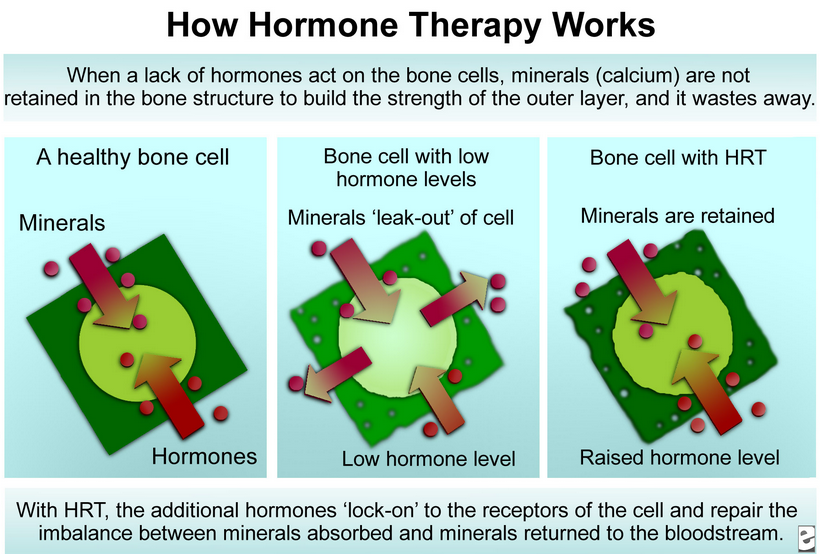
During menopause the production of estrogen hormones stops but the need for estrogen hormone still stands therefore the need to supplement this crucial hormone sets in, besides with low levels of this hormone women suffer such symptoms as hot flashes, vaginal dryness and osteoporosis among other conditions. Going for estrogen replacement therapy may help fight against the symptoms of menopause in women.

Estrogen Replacement Therapy has helped many women to win fight against post menopause symptoms. Here are some benefits of Estrogen Replacement Therapy.

  • Help prevent postmenopausal osteoporosis by slowing bone loss and promoting some increase in bone density.
  • Reduce the risk of dental problems, such as tooth loss and gum disease.
  • Maintain the lining of the vagina, reducing irritation.
  • Reduce the frequency and severity of hot flashes.
  • Improve moodiness and sleep problems related to hormone changes.
  • Increase skin collagen levels, which decline as estrogen levels decline. Collagen is responsible for the stretch in skin and muscle.

Risks associated with ERT

Despite its many benefits there are also risks associated with ERT. These risks may include;

  • Vaginal discharge.
  • Fluid retention.
  • Weight gain.
  • Breast tenderness.
  • Spots on skin may appear
  • In rare cases, an increased growth of preexisting uterine fibroids or a worsening of endometriosis.

Natural Estrogen Replacement

There are some risks associated with ERT, however the good news is that both diet and the right supplements provide some of the safest and most effective hormone balancing remedies. One of the favorite and best-researched foods for menopausal symptoms is flaxseed. Flaxseeds offer a high content of essential fatty acids and large quantities of a natural hormone-balancing substance known as lignins. Lignins are very potent anti-cancer agents for cancers that are hormone sensitive and extensive studies on both colon and breast cancer show that as little as 2 tablespoons per day is highly effective in reducing tumor growth. The best news of all: Lignins possess both anti-estrogen and estrogenic properties. With regard to menopausal symptoms, they are as effective as traditional HRT in lessening hot flashes and sweating. Grind up a couple of tablespoons a day and put it in your smoothie, yogurt, or cereal. You’ve then got one of the best sources for health, healing, and taking charge of your menopausal symptoms naturally.

Estrogen replacement therapy (ERT)

Another nature given remedy for low estrogen symptoms is the evening primrose oil, which is a source of GLA, an essential fatty acid has been found to be mostly helpful for getting rid of cramping, irritability, headaches, and water retention that are so common with PMS. But its benefits don’t just stop with PMS. It can also be used in a natural hormone replacement therapy in menopause. It works to suppress hot flashes and triggers the production of serotonin, the feel good hormone in the brain. Skin conditions like eczema, psoriasis, and plain old dry skin are marvelously helped with evening primrose oil and other GLA-containing botanicals. It is one of the most potent inner and outer menopausal and skin care treatments known.

Dr. Dalal Akoury of AWAREmed wellness and resource center is an expert in integrative treatment and has helped many women fight menopause symptoms naturally. If you’re struggling with menopause or dealing with low estrogen symptoms like hot flashes, joint pain and depression, estrogen hormone replacement therapy (ERT) may be the answer. Please call (843) 213-1480 to contact her.

Estrogen Replacement Therapy


Facebooktwitterpinterestlinkedin

Entertainment Industry and Relationship to Alcohol Addiction

People Employed In the Arts, In the Leisure and Hospitality Prone To Drinking

Many people indulge in drinking of alcohol as leisure. Most people have only evenings and weekends to grab their bottles of alcohol and feel the fun. However there are other people who have all the time they want and can engage in alcohol drinking at any time of the day without this affecting their work relationships or at least they will not face such stiff penalties for drinking alcohol during working hours such as suspension and loss of job. This group that enjoys the freedom to drink alcohol whenever they want and as much as they want are those employed in the arts, in the leisure and hospitality.

George Washington University Medical Center researchers compared the alcoholism rates of various professions. It was found that people who are employed in Arts, leisure and hospitality tops the chart at 15 percent. This group is followed closely by construction and mining at 14.7, retail at 9.7, finance and real estate tied at 9.2, and transportation at 8.2. At only 7.2 percent, professional hunters and fishermen are less than half as likely as artists to be alcoholics. For education, health, social services, it’s 5.4 percent. Public administrators trail the pack at 5.3 percent.

Alcohol addiction

This research however did not give reasons why people employed as artists, in leisure and hospitality engaged more in drinking alcohol than all the other work groups. It is therefore safe to give personal opinion to why these people drink more than any other work group. Here are some of the reasons why those who are employed in art, leisure and hospitality drink alcohol more than those who are employed as teachers, health workers and even those who offer social services.

Most of them own their Jobs

The reason why teachers, health workers and other public servants do not engage more in drinking is because they do not own their jobs and have to abide with certain stipulated codes of conduct failure to which they will lose their jobs. Public servants have nothing special  that can make them not drink as much as artists but the fact that they are employed and must please their employers at all times leaves them with only weekends and evenings to drink and revel.

Public servants are also expected to be the eyes of their profession. In that they ought to paint their profession in a manner that it will be respected by the society. School teachers bear this pressure that they have to be seen as role models by the students they teach and no student will have a drunkard scholar as a role model.

Artists are generally rich

Artists are known to earn much out of their little effort. Take for example an athlete like Usain Bolt who will run few seconds yet earn millions from it. He therefore has too much to spend as compared to a teacher who will work an entire month and still will be left with very little to spare. I am not trying to say that the rich generally drinks more than the poor but the nature of an athlete’s profession leaves him with all the reasons to celebrate as compared to other professional who have nothing to celebrate about their jobs but are merely glued to their jobs just because they need to earn a living from it.

Nature of their work

Where do musicians perform? In offices where only water can be drawn from a dispenser? No most artistes work in places where alcohol is the most available beverage. They perform in bars and clubs where alcohol is just meters away. He lives with the alcohol as he is working but the social workers and other civil servants do not have that immediate access to alcohol as much as the artistes and those working in hospitality. There are people who began working in the hospitality industry when they were not taking alcohol but due to the exposure they got they began indulging in alcohol. You may think it is a choice you make irrespective of where you are but the exposure to alcohol may have a great influence on you.

Addiction

Merrymaking Culture

The salient characteristic of hospitality industry is the merrymaking culture. Drinking alcohol and merrymaking are identical twins therefore it only suits the situation that people working in these areas embrace the culture. You will always be attracted to work where you feel you will enjoy the benefits of such work and that is why most people working in hospitality industry are heavy drinkers. Another reason for their drinking is that they have flexible working time that allows them to create time for their bottle.

Peer influence

In the entertainment industry is where you will find varied trends ranging from hairstyle to dressing code. This influence does not only end in dressing code and appearance of an artist but also in their behaviors. You will find that most upcoming musicians will ape the way of life their roles models live and since most of the artists are drinkers these upcoming artistes grow up knowing that as the norm and embracing it.

Alcoholism is a vice that should be fought by all means that is why we at AWAREmed Health and Wellness Resource Center are committed to availing help to addicts and offering them a place to call home. It does not matter what kind of addiction you are wrestling with right now, just call on Dr. Dalal Akoury (MD) today and begin your journey to victory against addiction.

People Employed In the Arts, In the Leisure and Hospitality Prone To Drinking


Facebooktwitterpinterestlinkedin

Alcoholism Increases the Risk to Diabetes

 Alcoholism Increases the Risk to Diabetes

Alcoholism is a vice that ought to be fought at all costs. This is because apart from the health risks and diseases associated with it, it also affects the economy of a nation. Today there are very many people who have been rendered liabilities to their families as a result of their addiction to alcohol. Most people who have become dependent on alcohol have no places to work. Even if they were employed they will lose their jobs as no organization is interested in employing a person who can’t control his craving for alcohol. Being drunk and disorderly is a common recipe for arrests and so it is not strange to hear men who have been jailed for assaulting their wives when under the influence of alcohol. These are the heavy penalties that our societies suffer as a result of alcoholism. However there are some problems that will affect the individual health wise and this includes diabetes.

Alcohol and Diabetes

What is diabetes?

Diabetes is a lifelong condition that is associated with high blood sugar levels.  The term  describes a group of metabolic diseases in which the person has high blood sugar level which is either caused by deficiency in  insulin production is  or failure of  the body’s cells do not respond appropriately to insulin, or both. Common symptoms associated with high blood sugar level are that the patients will typically experience frequent urination, they will become increasingly thirsty and hungry at the same time.

Diabetes is a serious disease that has disabled many people around the globe and so anything that may heighten the risk of getting this disease should be avoided. In 2013 alone it was estimated that over 382 people in the world had diabetes. That just shows how serious problem diabetes really is. The most common diabetes symptoms include frequent urination, intense thirst and hunger, weight gain, unusual weight loss, fatigue, cuts and bruises that do not heal male sexual dysfunction, numbness and tingling in hands and feet.

What is the relationship between diabetes and alcoholism?

Through numerous research studies scientists have been able to establish the fact that alcoholism can increase a person’s chances of getting diabetes. As known to many, diabetes type 2 is caused when there is insulin resistance. In an experiment done on rats it was found that binge drinking directly caused insulin resistance. In the past it was the link between binge drinking and diabetes had not been established but now scientist have proved that binge drinking alone aside from other factors as overeating can directly cause insulin resistance thereby leading to type 2 diabetes. People with a history of binge drinking have a higher risk of developing metabolic syndrome and type 2 diabetes.

A group of Researchers at the Diabetes Obesity and Metabolism Institute at the Icahn School of Medicine at Mount Sinai, in New York, published their findings in the 30 January issue of the journal Science Translational Medicine.  The scientists report that alcohol appears to disrupt insulin-receptor signaling by causing inflammation in the hypothalamus, an area of the brain that among other things is important for metabolic processes.

Alcoholism induces Insulin Resistance

Typically, the main role of the insulin receptor is to control the uptake of glucose. When there is a decrease in signaling of this receptor the cells will not be able to take up glucose, and this will result in too high sugar level in the blood a condition known as hyperglycemia among other consequences of type 2 diabetes.

Insulin resistance refers to a condition in which insulin does not bind properly to the receptor, thus hindering its ability to send the right signals to cells so they can use glucose for energy. This can happen even when the pancreas is producing enough insulin to keep glucose levels under control. One major symptom of insulin resistance is high levels of insulin in the bloodstream. This is a major component of metabolic syndrome, a group of risk factors that together increase the risk for type 2 diabetes, coronary artery disease, and stroke.

Senior author Christoph Buettner, an Associate Professor of Medicine, Endocrinology, Diabetes and Bone Disease, at the Icahn School of Medicine, is quoted in a research report saying; “Insulin resistance has emerged as a key metabolic defect leading to type 2 diabetes and coronary artery disease (CAD).” This statement shows the link between insulin resistance and type 2 diabetes.

“Someone who regularly binge drinks even once a week, over many years, may remain in an insulin resistant state for an extended period of time, potentially years,” he adds.

In their study, the researchers replicated human binge drinking by giving rats alcohol for three days while keeping another group of rats as controls. Both the groups had the same calorie intake but the control group was not fed alcohol. After the three days the researchers then ran a series of tests to check glucose metabolism. They found that even when there was no trace of alcohol left in their bloodstream, the binge drinking rats had higher levels of circulating insulin than the control rats this was a proof of insulin resistance in the drinking rats. This increase in circulating insulin hormone in the blood of drinking rats was induced by the alcohol.

Alcohol and Diabetes

Another author Claudia Lindtner, an Associate Researcher of Medicine, Endocrinology, Diabetes and Bone Disease at the Icahn School of Medicine, is quoted in the report saying; “Previously it was unclear whether binge drinking was associated with an increased risk for diabetes, since a person who binge drinks may also tend to binge eat, or at least eat too much.”

“Our data show for the first time that binge drinking induces insulin resistance directly and can occur independent of differences in caloric intake,” she concludes.

Drug Addiction is a vice that should be fought by all means that is why we at AWAREmed Health and Wellness Resource Center are committed to availing help to addicts and offering them a place to call home. It does not matter what kind of addiction you are wrestling with right now, just call on Dr. Dalal Akoury (MD) today and begin your journey to victory against addiction.

Alcoholism Increases the Risk to Diabetes


Facebooktwitterpinterestlinkedin