Category Archives: addiction

Career and drugs

Denying the frustrations of drinking problem

Denying

Denying the frustrations of drinking problem are common

Denying the frustrations of drinking problem: Alcoholism

Whereas alcohol consumption is not considered an illicit substance in all societies, the frustrations of drinking problems and denial by alcohol consumers is becoming an impediment in the effort of alcohol addiction management. According to the experts from AWAREmed Health and Wellness Resource Center under the able leadership of doctor Dalal Akoury’s care, denial is one of the biggest obstacles when it comes to getting help for alcohol abuse and alcoholism. Professionally it has been established that the desire to drink is so strong that the mind finds many ways to rationalize drinking, even when the consequences are obvious. By keeping you from looking honestly at your behavior and its negative effects, denial also exacerbates alcohol-related problems with work, finances, and relationships. When an addict is in denial, treatment becomes very difficult and that is why before any treatment can be administered, it is always very vital that the patients gets to acknowledge the existence of the problem and be willing to be helped fix the problem. Doctor Akoury is pointing out at certain pointers that allude to the fact that one is in denial as we progressed into the discussion as follows:

Denying the frustrations of drinking problem: If you have a drinking problem you may deny it by

  • Extremely underestimating how much you drink
  • Downplaying and underrating the negative consequences of your drinking to your health and that of your loved ones
  • Complaining that family and friends are exaggerating the problem
  • Blaming your drinking or drinking-related problems on others

When it comes to denial, users will always have a host of reason to validate their position of drinking. But will this change the facts about their drinking habits? Certainly not and just take a close look around you and you will notice that our surrounding offers a lot more elements to pass the blame on. It will not surprise you to have an addicted alcoholic refusing to acknowledge the fact that they have a problem by blaming it on their ‘unfair and un-accommodative boss’ for trouble at work or the married men passing it on their ‘nagging wife’ for your marital issues. These are common grounds for denial says doctor Dalal Akoury.

Instead of them looking at the real problem which is their drinking habit as a contributing factor to the problem, they would rather lean on someone or something. Doctor Akoury is confirming that while elements like work environment, relationship, and financial stresses do happen to everyone, an overall pattern of deterioration and blaming others may be a sign of serious trouble and should not be overlooked. Therefore if you find yourself rationalizing your drinking habits, lying about them, or refusing to discuss the subject, it is very important that you take a moment to consider why you’re being so defensive. Remember that if you truly believe that you don’t have a problem, there should be no reason for you to cover up your drinking or make excuses says doctor Akoury. However if you do have a problem, then wait no time and schedule for an appointment with doctor Akoury now for help.

Denying the frustrations of drinking problem: Alcoholism

http://www.awaremednetwork.com/

Facebooktwitterpinterestlinkedin

Alcoholism myths and drinking frustration

Alcoholism myths

Alcoholism myths and drinking frustration are real and the sooner your stop the better

Alcoholism myths and drinking frustrations: Denial

Many people are suffering because of alcoholism myths and concoctions. With the help of doctor Dalal Akoury MD and founder of AWAREmed Health and Wellness Resource Center, we are going to be sharing with you some of the alcoholism myths and concoctions so that you can make the right decisions in the treatment approach you choose. There are so many myths around drinking and we are going to share with you just but a few as follows:

Alcoholism myths and drinking frustrations: I can stop drinking anytime I want to

How I wish that this was true but more likely, you can’t but the bottom line is that this is yet another excuse to keep drinking. The truth is you don’t want to stop. By telling yourself that you can quit makes you feel in control, despite all evidence to the contrary and no matter the damage its doing.

My drinking is my problem. I’m the one it hurts, so no one has the right to tell me to stop

Doctor Akoury agrees with you that it’s true that the decision to quit drinking is up to you. But the truth is you are deceiving yourself if you think that your drinking hurts no one else but you. Alcoholism affects everyone around you and especially the people closest to you. Your problem is their problem.

I don’t drink every day, so I can’t be an alcoholic OR I only drink wine or beer, so I can’t be an alcoholic – Remember that alcoholism is NOT defined by what you drink, when you drink it, or even how much you drink. It’s all about the EFFECTS of your drinking that define a problem. Therefore if your drinking is causing problems in your home or work life, you have a drinking problem it therefore means that whether you drink daily or only on the weekends, down shots of tequila or stick to wine, drink three bottles of beers a day or three bottles of whiskey if they produce the negative effects then you have a problem which needs to be fixed.

I’m not an alcoholic because I have a job and I’m doing okay – You don’t have to be homeless and drinking out of a brown paper bag to be an alcoholic. Many alcoholics are able to hold down jobs, get through school, and provide for their families. Some are even able to excel. But just because you’re a high-functioning alcoholic doesn’t mean you’re not putting yourself or others in danger. Over time, the effects will catch up with you.

Drinking is not a “real” addiction like drug abuse – Alcohol is a drug, and alcoholism is every bit as damaging as drug addiction. Alcohol addiction causes changes in the body and brain, and long-term alcohol abuse can have devastating effects on your health, your career and your relationships. Alcoholics go through physical withdrawal when they stop drinking, just like drug users do when they quit.

Finally thought not an illicit drug, alcohol is a killer substance. The little controls put by different authorities are very inconsequential when it comes to the real damages associated with alcohol abuse. We have discussed a lot but take note, your health must come first and not the little pleasure you get when taking alcohol with your friends. Experts at AWAREmed Health and Wellness Resource Center under the able leadership of doctor Dalal Akoury care illustrates this with the wise say that a journey of a thousand miles begins with a single step. Therefore you can either begin the journey of destruction by taking the first sip or start the recovery journey by acknowledging that you have a problem that needs to be fixed and then call doctor Akoury to schedule for an appointment with her for the commencement of your recovery journey.

Alcoholism myths and drinking frustrations: Denial

http://regenerativepotential.com/wp-admin


Facebooktwitterpinterestlinkedin
alcohol-addiction-1-21

Alcoholism in depth understanding

Alcoholism in depth

Alcoholism in depth understanding. the consequences includes the development of cancer disease among other complications

Alcoholism in depth understanding: At what point do you begin noticing the problems with alcohol?

Available statistics indicate that alcohol is the most abused drugs globally. Ironically its consumption is freely allowed in all state constitutions. Begging the question that if alcoholism is that hazardous why is it legalized for consumption? In view of that worthy concern, we want to focus our discussion on the alcoholism in depth understanding and its complications in a series of articles primarily to raise awareness over this issue. We are going to be relaying on the expert opinions of the professional from AWAREmed Health and Wellness Resource Center under the able leadership of doctor Dalal Akoury (MD) who is also the founder of the facility.

According to these professionals, alcoholism is an addiction to the consumption or the misuse of all kinds of alcoholic beverages or any other mental illness and compulsive behavior accruing from alcohol dependency. Having known the meaning of alcoholism, the next point of concern is “at what point do you begin noticing the problems of alcoholism?” interestingly doctor Dalal Akoury states that alcohol being a legal substance will often be consumed freely by its users and in the process it enters into a person’s life with very little or no notice at all. This normally happens because of the fact that users of this substance normally take it for pleasure and enjoyment and because of its addictive nature, gradually it progresses to another level that the users did not intend to get to. Nevertheless let us explore further the possibilities and warning signs of alcoholism and alcohol abuse in the life of an addicted alcohol user progressively.

Alcoholism in depth understanding: Signs and symptoms of alcohol abuse

Substance abuse experts make a distinction between alcohol abuse and alcoholism which is also known as alcohol dependence. Unlike alcoholics, alcohol abusers have some ability to set limits on their drinking. However, their alcohol use is still self-destructive and dangerous to themselves or others.

Repeatedly neglecting your responsibilities at home, work, or school because of your drinking – For example, performing poorly at work, flunking classes, neglecting your kids, or skipping out on commitments because you’re hung over.

Using alcohol in situations where it’s physically dangerous – Like for instance drinking and driving, operating machinery while intoxicated, or mixing alcohol with prescription medication against doctor’s orders.

Experiencing repeated legal problems on account of your drinking – For example, getting arrested for driving under the influence or for drunk and disorderly conduct.

Continuing to drink even though your alcohol use is causing problems in your relationships – Getting drunk with your buddies, for example, even though you know your wife will be very upset, or fighting with your family because they dislike how you act when you drink.

Drinking as a way to relax or de-stress – Many drinking problems start when people use alcohol to self-soothe and relieve stress. Getting drunk after every stressful day, for example, or reaching for a bottle every time you have an argument with your spouse or boss.

Finally the above mentioned signs may not be conclusive and the more you know the better for your action plan. Therefore we recommend that you get in touch with the experts at AWAREmed Health and Wellness Resource Center for a more conclusive understanding of what you may need to do to protect yourself from this problem of alcoholism and alcohol abuse.

Alcoholism in depth understanding: At what point do you begin noticing the problems with alcohol?

http://www.awaremednetwork.com/

 

Facebooktwitterpinterestlinkedin
Misuse of alcohol

Alcoholism indulgent and why its abuse the most

Alcoholism indulgent

Alcoholism indulgent and why its abuse the most. For sure correcting alcoholism devastation begins with acknowledgement of the problem.

Alcoholism indulgent and why its abuse the most: The interconnected factors of alcoholism

It’s not always very easy as a consumer of alcohol to see or notice when your alcohol usage is or has crossed the line from moderate or social use to problem or disorderly drinking. However it is important to note that alcoholism indulgent as a way of hiding or running away from certain frustrations and stresses of life is not always a very healthy idea. It this is your choice path, then be rest assured that you have taken the first lane of destruction thanks to the addictive nature of alcohol. Doctor Akoury says that irrespective of what you may be going through, taking alcohol as a coping mechanism is a terrible mistake that we must refrain from because by doing that, you are sailing in a very dangerous territory which must be avoided by all means possible.

Experts at AWAREmed Health and Wellness Resource Center under the able leadership of doctor Dalal Akoury MD, have established that there are so many interconnected factors in this problem of alcoholism and some of those factors may include the following: genetics which is primarily concern with how you were raised, your social environment, and your emotional health. Like for example we can be able to illustrate this by walking down to the US where some racial groups such as American Indians and Native Alaskans, are seen to be at more at risk than others of developing alcohol addiction. Besides that people who have a long family history of alcoholism or those who associate closely with heavy drinkers are also more likely to develop drinking problems.

Alcoholism indulgent and why its abuse the most: The connection of mental problems

In spite of all these, it is also very important to take note that those people who are suffering from mental health problem such as anxiety, depression, or bipolar disorder are also particularly at risk, because they are likely to use alcohol to self-medicate. How then do you get to know if you have a drinking problem? Most of the drinking problem indicators come from the consumers themselves? The following are some of the observations you may be interested in:

  • Black out or being forgetful of what you did when you were drinking.
  • If you always the feelings that you have to drink in order to relax or feel better.
  • Telling lies to others or making efforts in hiding your drinking habits.
  • The feelings of guilt or shame about your drinking.
  • When you are making a custom to drink regularly more than you intended to at any given time.
  • When you have friends or family members who are increasingly getting worried about your drinking problem.

Finally one common fact according to doctor Akoury is that since drinking is a common practice in many cultures, the effects vary so widely from person to person, it’s not always easy to figure out where the thin line is between social drinking and problem drinking. Nonetheless what is important for you is that how is alcohol affecting you and your loved ones. Therefore it is important to appreciate that if your drinking is causing problems in your life, then that’s a very strong indication that you have a drinking problem. And with that in mind, the sooner you schedule for an appointment with doctor Akoury for help over your alcohol abuse problem, the better.

Alcoholism indulgent and why its abuse the most: The interconnected factors of alcoholism

http://www.I-AM-I.com/wp-admin


Facebooktwitterpinterestlinkedin
gut-neurotransmitters

Stopping brain damage from addiction consequences

Stopping brain damage

Stopping brain damage from addiction consequences is very essential for good health

Stopping brain damage from addiction consequences: The pathological activity

Did you know that drugs are the major cause of the death of the brain cells? The brain is one of the most sensitive organs in any human body where everything starts and ends. Death is always registered the moment ones brain stops functioning. Therefore we all have a duty of keeping the good health of the brain primarily by stopping brain damage from the consequences of drug abuse. To do this, we are going to be consulting with doctor Dalal Akoury MD, to help us in the unlocking some of the sensitive things that we must do to keep the proper functionality of the brain. And in line with that, experts at AWAREmed Health and Wellness Resource Center under the able leadership of doctor Dalal Akoury, are registering that, drug abuse could be the worst cause of damage to the brain.

Stopping brain damage from addiction consequences: Prognosis of recovery

As we progress into the discussion, it is worth noting that the degree of the brain damage from drug abuse is always defined by the prognosis of recovery. Sometimes unfavorable changes in the brain of a drug addict are so much overwhelming that they are not even able to realize the problem let alone the need for treatment. And even if they are, the deformed psyche, expressed in loss of willpower, doesn’t allow them to complete the treatment and refrain from using the drugs. Nonetheless such situations often come to the extreme cases. Besides that under normal circumstances addiction often creates a center of addiction in the brain, or so-called a generator of pathological activity for drug craving.

To illustrate this, let us take an example of a condition we are all familiar with that of epilepsy. This disease is characterized by periodically recurrent seizure syndrome and when a small portion of the brain cells (it can be quite small in size), figuratively speaking, “going crazy”. From time to time they reach the level of excitation which covers the whole brain. As a result, a person loses consciousness, falls down, the total muscle spasms make him convulse. When he comes regains his consciousness, he doesn’t remember what happened to him. Medically these “haywire” cells are called the generator of pathological activity. Now the connection is that about the same generator is formed in case of a drug addiction. However in this case the generator is that of attraction to drugs, self-excitation of which with different periodicity may also cover the entire brain and cause an uncontrollable, overpowering desire to take drugs thereafter. The activity of the generator leads to a constant, obsessive thoughts about drugs. Without treatment, this generator can persist for years, even if the person does not use the drugs during that time. Along with the formation of the generator of attraction to drugs, there is another type of brain damage from drug abuse, to the nervous system of a drug addict.

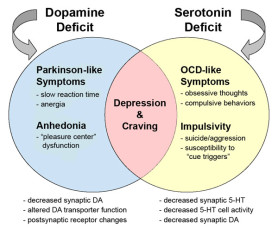
Another reason why stopping brain damage from drug abuse is necessary is because the regular drug poisoning leads to severe changes in metabolism in the cells of the nervous system and especially in brain cells. These cells contain neurotransmitters which are the active substances whose presence in the inter-neuron synapses provides the transmission of electrical impulses to effectuate the functions of all kinds of nervous activities, including the higher nervous activity of a man’s mind, emotions, feelings, willpower, and so on. Doctor Akoury reiterates that the constant presence of the outer psycho active chemical substances badly affects the processes of neuro-transmission in the brain. .

It’s fair to say, that shortly after the “fix”, the deficit of neurotransmitters in an addict’s brain temporarily shifts back to “normal”, and the victim feels better for a while. However, with each subsequent dose of narcotic, the further infringements in neurotransmitter systems of the brain ultimately become more and more profound.

Stopping brain damage from addiction consequences: The pathological activity

http://www.awaremednetwork.com/

Facebooktwitterpinterestlinkedin